Meet the Committee – Isla Gladstone

What is your role on the NatSCA Committee?

I help promote information sharing and collaboration between NatSCA and closely allied subject specialist network the Geological Curators’ Group. These groups share core aims and, increasingly with loss of specialist curatorial posts, a membership. It’s exciting to explore how we can capitalise their individual strengths for the benefit of natural sciences collections and the people who work with them. 

Job title and institution

Senior Curator (Natural Sciences), Bristol Museum & Art Gallery, Bristol Culture

Twitter username

@isla_gladstone

Tell us about your day job

I work with a small team (Biology Curator Rhian Rowson and Geology Curator Deborah Hutchinson) to curate over one million natural sciences specimens of all shapes and sizes. As many a curator will recognise, this varies from high level strategic work to lifting, shifting, labelling and cleaning – a medley of activities to enable diverse access to and preserve these astonishing collections.

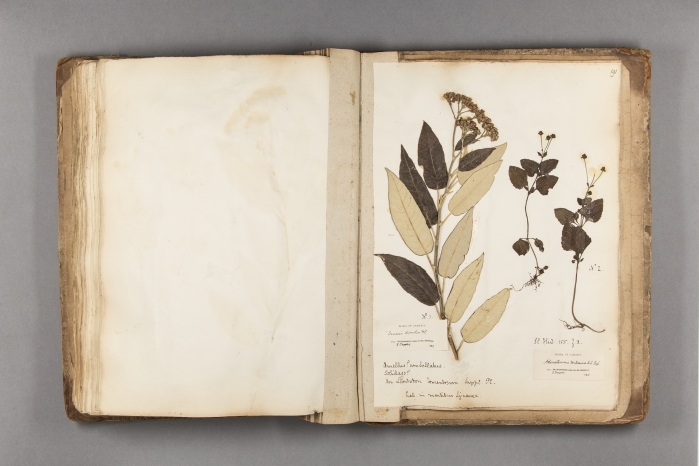
Medicinal plant on a page from Bristol’s earliest natural sciences collection – the Broughton herbarium, Bristol & Jamaica, 1779-90. (C) Bristol Culture.

Continue reading

NatSCA Digital Digest – January

Happy New Year, and welcome to the first Digital Digest of 2018. We have lots of news, conferences, and jobs to keep you entertained for the rest of the ‘working week’. Read on…

What Should I Read?

Palaeontologists have made public the discovery of a new giant bat found in New Zealand, and the media has gone mad for it. Its scientific name (Vulcanops jennyworthyae) was chosen to commemorate the Roman god of fire (specifically including that of volcanoes, making him rather relevant to New Zealand), as well as the hotel in the village in which it was found (also named after Vulcan – that is the Roman god, not Spock’s home planet), and the scientist who found the first fossils; Jenny Worthy.

If you’d like to know all about the Chair of the Geological Curators’ Group, Matthew Parkes, then a perusal of the new blog Six questions for a geological curator would be a good place to start.

The third blog article I’d like to recommend actually came out mid December but it has a lot of interesting points that are important for those working with natural history collections to consider, and so is worth another mention; Four ways natural history museums skew reality.

Continue reading

Meet the Committee – Roberto Portela Miguez

What is your role on the NatSCA Committee?

I have been the Secretary for the Society since 2014 and on the committee, since 2011. NatSCA and its membership have contributed significantly to my development as a curator and collection manager, so I am very grateful for the opportunity to serve the society in this capacity now.

Job title and institution

I am the Senior Curator in Charge for the Mammal Section at the Natural History Museum, London.

The Museum collection contains an estimated 500,000 mammal specimens and over 8,000 of those are type specimens. This makes it one of the largest and most comprehensive collections in the world.

Twitter username

@bertieportela

“Fashion is key for fieldwork” says Roberto

Continue reading

Making the Most of a Move

Making the Most of a Move: Geological Curators’ Group Conference, Day Two

We like to share the goodies in the field of natural history, so in the first ever cross-over of its kind, Part I (comprising Day One) of this blog can be found over on the Geological Curator’s Group website. No need to take the time to google it, let me give you a hand over there.

Night Early Morning at the Museum

The only thing that beats going to a natural history museum is visiting it when you’re not meant to be. The trump card of such a visit, is when you’re allowed to go to parts of the collections, not normally accessible to the general public. After a day in the lecture theatre, the 35+ members of the “Making the Most of a Move” conference assembled the following morning outside the Natural History gallery of the National Museum of Ireland, in order to tick off every one of the above, on the Museum Treats Bingo Card*.

Continue reading

The Curious Life of a Museum Curator

Working as a curator in a museum is an odd job. It is the best job on the planet. But it is like no other I know of. There are an enormous range of daily tasks a curator carries out, and these are not without their quirks. Here are a few oddities museum curators deal with regularly:

Curators are not Indiana Jones

I’ve written about this before in more detail, but no, we are not Indiana Jones. When we introduce ourselves to new people, the response is sometimes ‘oh, just like Indiana Jones.’ This is a common misconception, albeit a rather flattering one. We do see some dangerous action in the field: dozens of beetles and flies on family friendly bug hunts, slipping on jagged rocks when rock pooling. However, some, many, most do not have whips under their beds. Curators do not steal ancient relics from temples (there are laws against those sorts of things). We are just as determined and passionate as Indy, but very different.


A museum curator and Indiana Jones. Can you tell the two apart? (Photo left Public Domain. Photo right by author)


“You’re Ross from Friends

This is a another common response when a museum curator tells someone what they do. And yes, Ross Geller (played by the excellent David Schwimmer), was a museum curator before becoming a university lecturer in the wonderful sit-com Friends. Ross worked at the fictional Museum of Natural History as a palaeontology curator. His work spanned enormously for a national museum, where his expertise ranged from human evolution to dinosaurs. Ross Geller is the closest thing to a museum personality curators have ever had. To be honest, this isn’t a bad thing. He was pretty cool. Curators can relate to his slightly obsessive geekiness and matter of fact way of thinking. For me, Ross is a legend on screen. As a teen watching Friends his character was actually extremely influential – I could relate to his nerdy, slightly awkward persona. In fact, without Ross Geller I wouldn’t have thought about a career in museums.

Continue reading