Meet the Committee – Donna Young

What is your role on the NatSCA committee?

My main role over for the last four years has been organising our annual conferences at York, Bristol, Derby and Cambridge museums.

There’s a lot of work involved in putting the programme together and it’s a great team effort, along with our fantastic treasurer and the staff based at the various venues. I have found it very rewarding to see us expand our audience and develop our programme themes.

I am currently a member of the of the journal editorial board and NatSCA bursaries/grants sub-committee.

Job Title & Institution

Curator of the Herbarium: World Museum, National Museums Liverpool.

Twitter Username

@HerbariumDonna

Donna Young, hard at work on the herbarium. (C) National Museums Liverpool.

Continue reading

Willows in the Wind: Digitisation of the Tullie House Herbarium

Excited (botanical) chatter, the inexorable flashing of camera equipment, intrigued visitors gathering around our new gallery space; this was our Virtual Flora of Tullie Herbarium Project, funded by the Bill Pettit Memorial Award at the start of 2017.

The scope of the project, between 30th of May to 26th of September 2017, was to use a team of volunteers to begin photographing and cataloguing our (“ex”) University of Lancaster herbarium. This significant acquisition of 35,000 vascular plant sheets is a highly data rich and well-provenanced collection with invaluable information on the historical and contemporary distribution of species across the UK and beyond. Almost a third of the specimens were collected from Cumbria, much of it collected during a major 30 year survey of the flora of Cumbria; an exemplar model of field surveying which is aspired to by Botanical Society of Britain and Ireland (BSBI) recorders today. The survey work culminated in the team leader’s (Geoffrey Halliday) highly comprehensive publication of A Flora of Cumbria. No other herbarium has a comparable recent (1968+) collection of Cumbrian material.  But despite the importance of this recent acquisition, none of these specimens were digitised.

Thanks to the Bill Pettit Memorial Award funding this was all about to change.

Continue reading

Meet the Committee – Isla Gladstone

What is your role on the NatSCA Committee?

I help promote information sharing and collaboration between NatSCA and closely allied subject specialist network the Geological Curators’ Group. These groups share core aims and, increasingly with loss of specialist curatorial posts, a membership. It’s exciting to explore how we can capitalise their individual strengths for the benefit of natural sciences collections and the people who work with them. 

Job title and institution

Senior Curator (Natural Sciences), Bristol Museum & Art Gallery, Bristol Culture

Twitter username

@isla_gladstone

Tell us about your day job

I work with a small team (Biology Curator Rhian Rowson and Geology Curator Deborah Hutchinson) to curate over one million natural sciences specimens of all shapes and sizes. As many a curator will recognise, this varies from high level strategic work to lifting, shifting, labelling and cleaning – a medley of activities to enable diverse access to and preserve these astonishing collections.

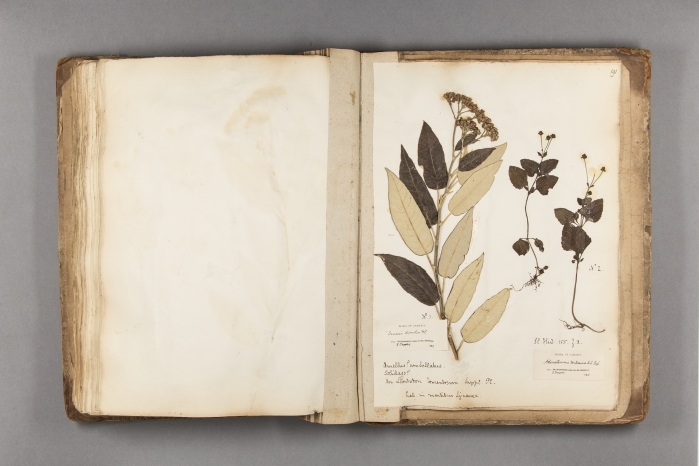
Medicinal plant on a page from Bristol’s earliest natural sciences collection – the Broughton herbarium, Bristol & Jamaica, 1779-90. (C) Bristol Culture.

Continue reading

NatSCA Digital Digest – January

Happy New Year, and welcome to the first Digital Digest of 2018. We have lots of news, conferences, and jobs to keep you entertained for the rest of the ‘working week’. Read on…

What Should I Read?

Palaeontologists have made public the discovery of a new giant bat found in New Zealand, and the media has gone mad for it. Its scientific name (Vulcanops jennyworthyae) was chosen to commemorate the Roman god of fire (specifically including that of volcanoes, making him rather relevant to New Zealand), as well as the hotel in the village in which it was found (also named after Vulcan – that is the Roman god, not Spock’s home planet), and the scientist who found the first fossils; Jenny Worthy.

If you’d like to know all about the Chair of the Geological Curators’ Group, Matthew Parkes, then a perusal of the new blog Six questions for a geological curator would be a good place to start.

The third blog article I’d like to recommend actually came out mid December but it has a lot of interesting points that are important for those working with natural history collections to consider, and so is worth another mention; Four ways natural history museums skew reality.

Continue reading

Meet the Committee – Roberto Portela Miguez

What is your role on the NatSCA Committee?

I have been the Secretary for the Society since 2014 and on the committee, since 2011. NatSCA and its membership have contributed significantly to my development as a curator and collection manager, so I am very grateful for the opportunity to serve the society in this capacity now.

Job title and institution

I am the Senior Curator in Charge for the Mammal Section at the Natural History Museum, London.

The Museum collection contains an estimated 500,000 mammal specimens and over 8,000 of those are type specimens. This makes it one of the largest and most comprehensive collections in the world.

Twitter username

@bertieportela

“Fashion is key for fieldwork” says Roberto

Continue reading