During the course of my work in the Natural History Division of the National Museum of Ireland, (NMI) I came across a couple of boxes of bird skins that were in the wrong place. By deciding to move them to their correct place, I opened a metaphorical can of worms. It turned out that these 200 bird skins had been assigned modern numbers during a volunteer project 16 years ago. In the intervening period, the original accession number had been discovered. Never one to leave a wrong number in place, I took on the challenge to renumber this collection before rehousing them.
The Donor
First, I read the acquisition register and found the donor to be a gentleman named Colonel James Grove White, a career British Army officer. Upon retirement, Grove White came to live in Co. Cork in the south of Ireland, and like many British men in Ireland at that time, he came to hold high office during various periods, and was very active in the local community. It was during his time in Ireland, almost 100 years ago, that he donated his collection of “Ceylonese” bird skins. Presumably these were collected by him while on duty in Sri Lanka, although there is no documentation in the NMI to contribute the field collection details, other than the labels on the birds themselves.
Written by Claire Dean, Curatorial Assistant at Tullie House Museum and Art Gallery, Carlisle, and MA Preventive Conservation student at Northumbria University.
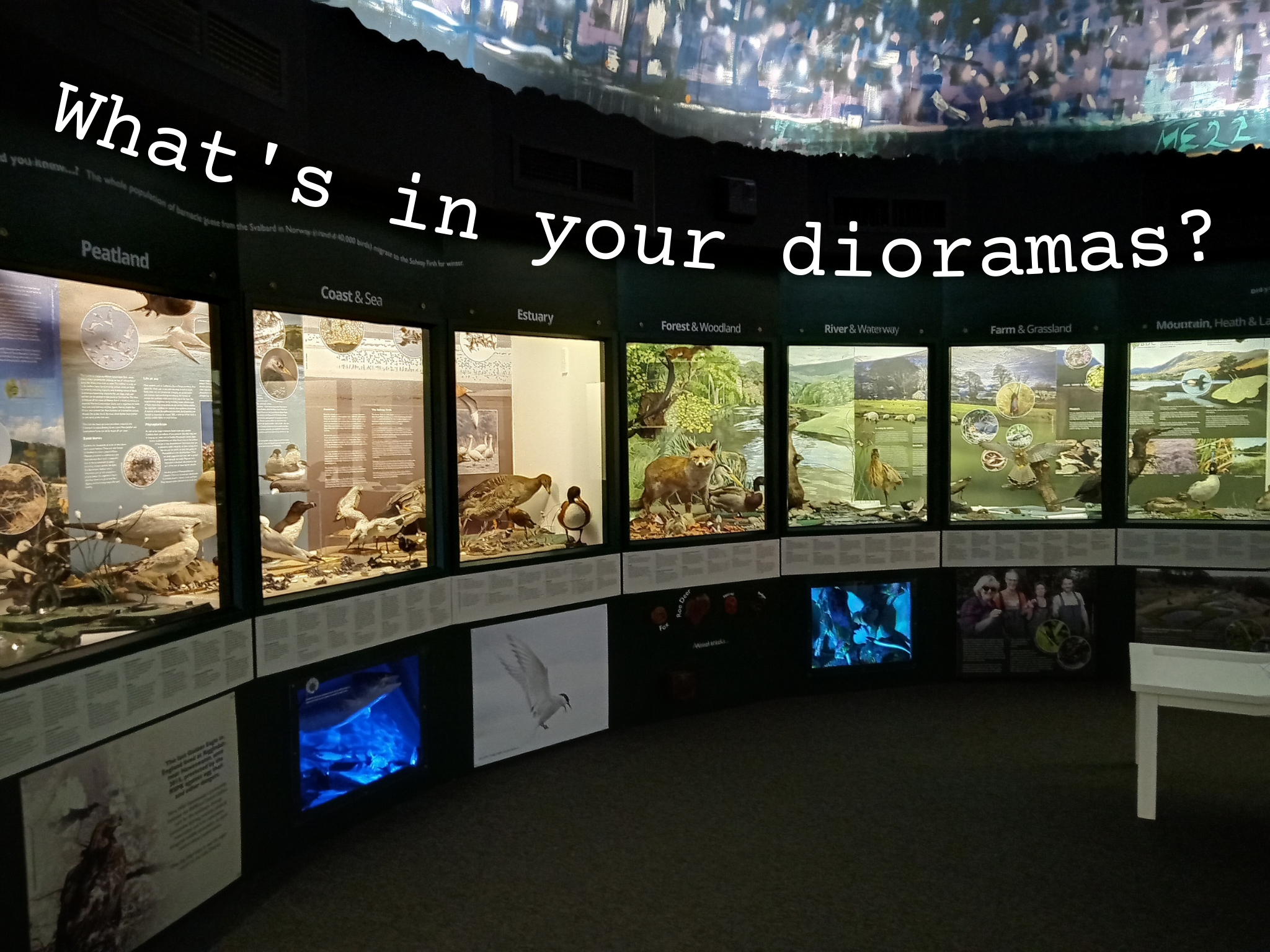
The wildlife dome at Tullie House Museum and Art Gallery Carlisle, C. Dean
In many old dioramas, material mysteries abound. As a Curatorial Assistant at Tullie House, I’ve encountered a tree trunk made from a Robinson’s fruit juice box, a fake roof that contained fibrous signs of asbestos, and a hodgepodge of unidentifiable paints and old plastics. The museum’s new-in-post Biodiversity Curator discovered pests thriving amongst the real vegetation and a 30-year-old slice of bread in a garden scene.
Dioramas aim to create the illusion of real habitats for their taxidermy inhabitants, and they use a huge range of materials to do so. After decades of neglect and destruction there is now wider recognition that habitat dioramas can instil a sense of wonder in visitors that no amount of digital wizardry can replace. Through my dissertation research for an MA in Preventive Conservation at Northumbria University, I wanted to find out more about what materials have been used in dioramas over time, how these might impact the preservation of specimens, and what we can do to better protect the dioramas that remain. I put a call out to ask, ‘What’s in your dioramas?’ through an online survey and received 30 responses from people with experience in a range of different sized institutions and private practice.
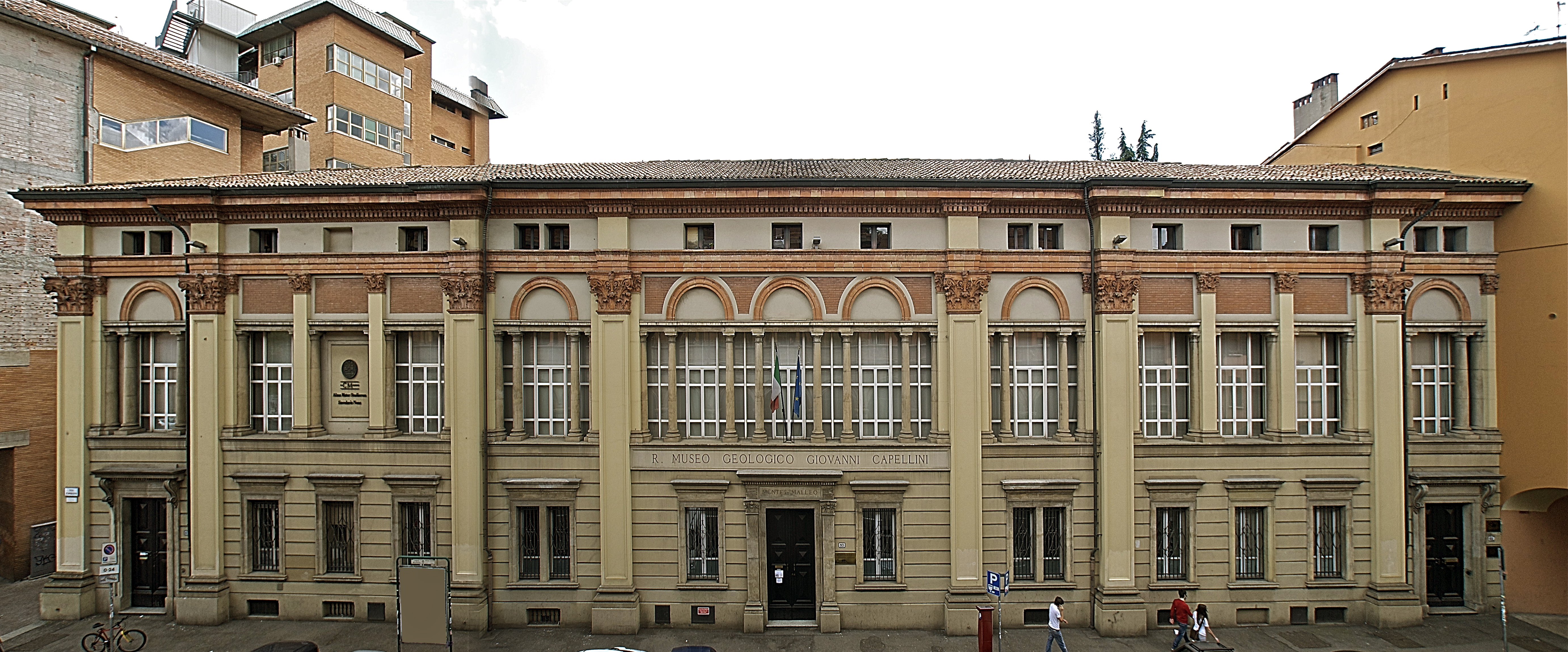
The Geological Collection “Museo Giovanni Capellini” is part of the University Museum Network in Bologna (SMA – Sistema Museale di Ateneo). The museum is in an 18th-century building and includes a core of 16th-century geological and paleontological collections dating back to one of the oldest natural history museums in the world, created by Ulisse Aldrovandi in 1556. Most of the two million specimens now hosted in the museum though, were acquired by Professor Giovanni Capellini (1833-1922), holder of the first chair of geology established in Italy and rector of the University of Bologna. The museum holds important (both historically and scientifically) collections of rocks, fossils and documents from all around the world (Europe, Africa, North and South America), including the 1909 cast of Diplodocus carnegii, which is a popular touristic attraction in Bologna.
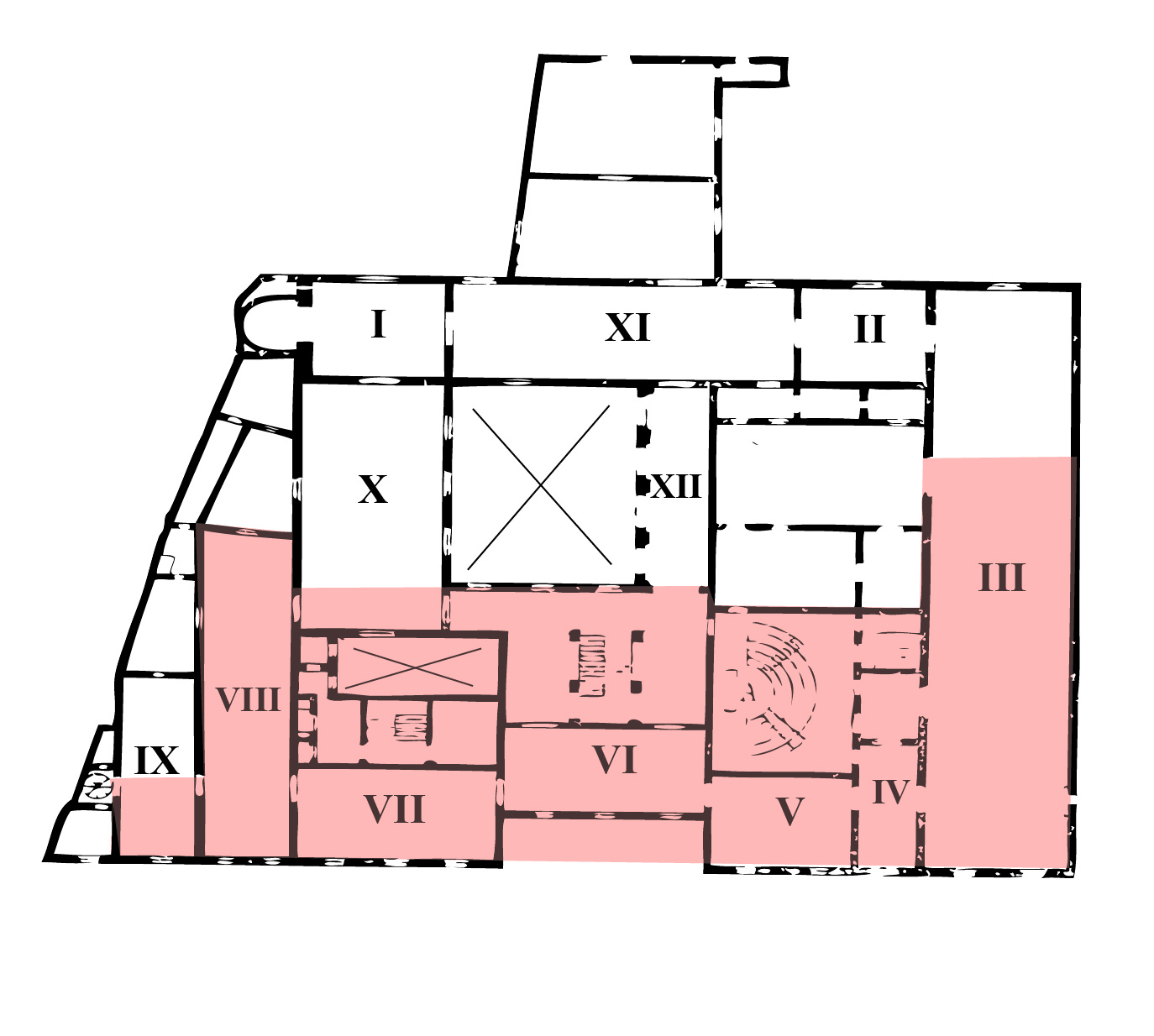
After Capellini’s death in 1922 little was done for the museum, in the early 1960s, when the new-born Institute of Geology and Paleontology was built, the museum building was literally cut in half and the collections crowded into half the original space.
Structural issues arose due to this move, and the museum was closed to the public for almost 30 years. After a major renovation, funded for the ninth centenary anniversary of the University in 1988, the museum was given a new lighting and heating system, reopened to the public and it welcomes several thousand visitors a year since then. The building is now solid (as an old 500-year-old lady can be), but again nothing has been done since, and what looked like a good compromise in the eighties is now obsolete.
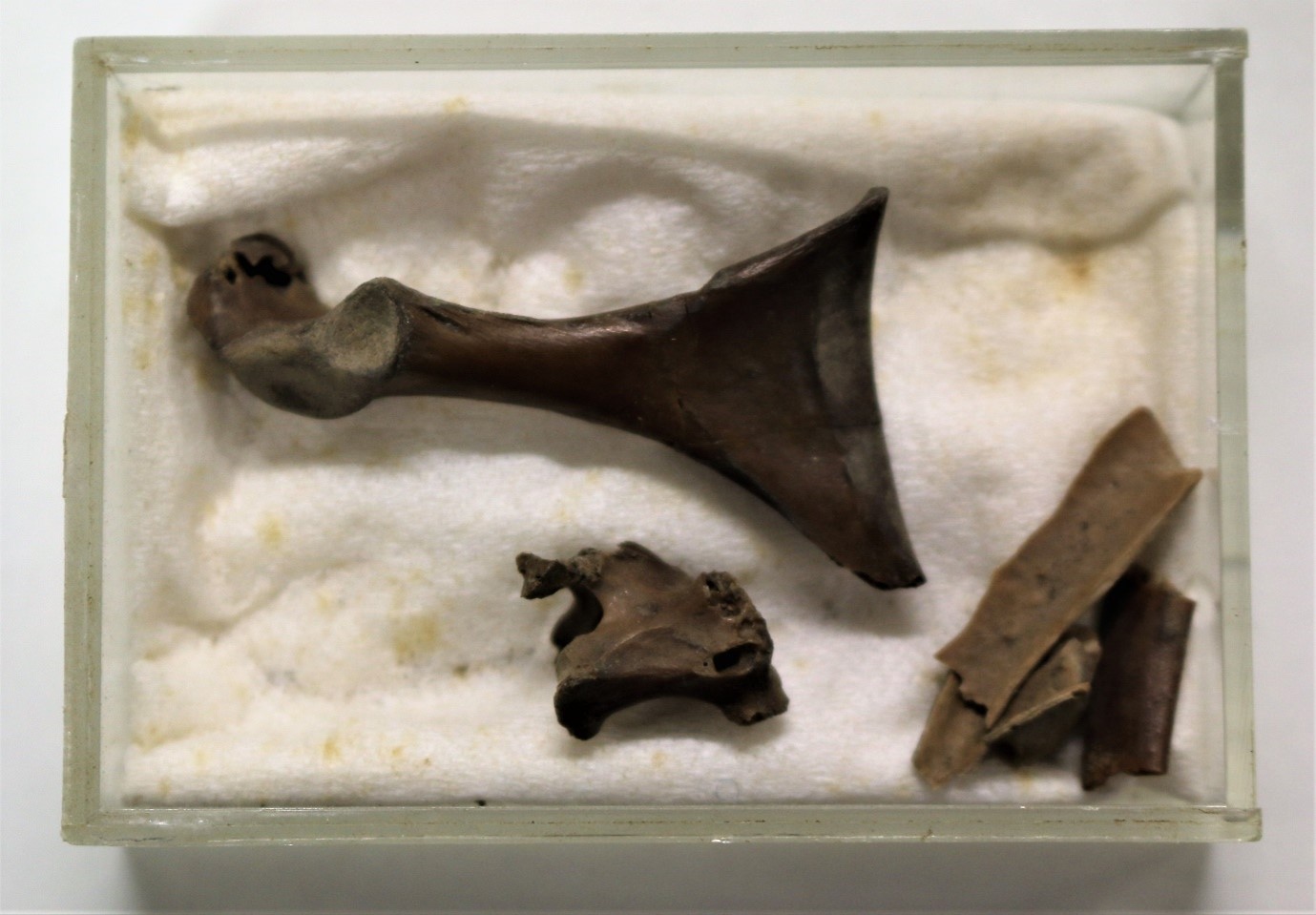
In November 2021 National Museums Scotland acquired a remarkable collection of fossil bird skeletons dating from the Eocene, approximately 54.6-55 million years ago. The story of how this collection ended up in Edinburgh is a very long one and began more than 25 years ago.
“Please can you show me your collection of Eocene birds?” This was the question that greeted me when I first met a Mr Michael Daniels more than 25 years ago. Visiting the museum with his wife Pam and his daughter Caroline, who lived in Edinburgh, this meeting would be the beginning of a long friendship and long-term correspondence, which ended sadly in 2021. My answer was “Well I would love to show you our collection of Eocene birds, but we don’t have any.” Michael proceeded to tell me about his remarkable collection of several hundred skeletons and part skeletons that he had discovered in nodules of the London Clay, which had eroded out of the cliffs at Walton-on-the-Naze in Essex. In later years I visited Michael and Pam at their home and got to see the collection in its countless drawers and boxes in his study. I was astonished at the amazing variety of specimens of all shapes and sizes. Many of the bones were minuscule, requiring great patience and skill to extract from the substrate.
Michael Daniels was a passionate self-taught palaeontologist, who visited various fossil sites outside London and further afield in southern England from his home at Loughton near Epping Forest. He developed a more specialised interest in the Tertiary Eocene London Clay in the early 1970s, having been a founder member of the Tertiary Research Group in 1969. On retirement in 1985 he moved with his wife to Holland-on-Sea, so that he could pursue this interest at Walton-on-the-Naze.
Written by Patti Wood Finkle, Collections Manager, Pennsylvania State University, based on a presentation with Valerie Innella Maiers, Ph.D., Professor of Museum Studies, Casper College at the joint SPNHC & NatSCA conference in Edinburgh, Scotland, June 2022.
“Year of the Student” focuses on how college and university museum staff can attract students to their museums by employing a variety of programs and collaborations. Like many campuses natural history museums, the Werner Wildlife Museum had difficulty attracting college students who either had no idea it was there, or only remembered it as a dark and dusty place with a towering, menacing polar bear. After attending a few New Student Orientation events (there are several each semester) to chat with incoming freshmen, we realized that we needed to show them that the museum was inviting and relevant. After brainstorming, several ideas came to the forefront. One was to work with the museum studies program, which the museum had done successfully in the past, and another was to develop programs and partnerships that would bring new groups to the museum.
The museum studies class was an engaging group to work with. In collaboration with staff, the most recent group curated both an art show that featured works from the Casper College permanent collection and juried a community art show. The students researched artists, and artwork, designed and produced the exhibition pamphlet, took professional photographs for curation records, and installed both shows. They also planned and executed an opening reception in the museum space. The program attracted the attention of their fellow art students, faculty, and engaged the public who attended the opening.
Casper College Museum Studies student putting the finishing touches on the art show installation. Credit- Patti Wood Finkle
Another program that engaged both current students and the public were creative writing workshops that were offered in the evenings in collaboration with the English faculty. These programs were created to engage a new audience and to utilize the museum in a less traditional (at least to us) manner. Several of the faculty members are published authors who enjoy delving into their preferred writing style and were encouraged to do so in these workshops. Using the specimens in the museum as inspiration during the cold winter nights, participants were able to tap into experiences and creativity that surprised even the most seasoned writers. From poetry to reductive writing, to traditional storytelling, each participant produced works that were gathered and published in house. This publication was the first time some of the students had shared their work with a wider audience.
Other outreach efforts centred around visiting the students where they gathered. We attended more orientation events and developed an on campus “passport” that brought students to the campus museums, the art gallery, the archive, the greenhouse, and other overlooked destinations. Staff started bringing touch specimens to the dorms one evening each month. By the third month, we had a few regulars who would stop by to see what new objects we had brought with us. Work-study students assisted at these events, giving them the opportunity to engage with their peers, which can be less intimidating for the students on both sides of the table.
Casper College Museum Studies students interacting with visitors at the art show opening. Credit- Valerie Innella Maiers & Patti Wood Finkle
These engagement strategies worked well and both campus museums saw an increase in student visitation. The takeaway lesson museum staff learned was that talking to the students one on one, through courses, or in small groups; demystifying the visitor experience through peer-to-peer engagement; and outreach to student dominated areas (dorms, welcome fairs) increased awareness and interest in the institutions. Student engagement is an ongoing process that should be adaptative, interesting, and educational while supporting the museums and the students they serve.