When Art Recreates the Workings of Natural History it can Stimulate Curiosity and Emotion

Natural history is one of the branches of science whose methods and traditions are most often referenced by contemporary artists. A flock of the installations that we find in leading galleries echo, reflect, borrow from and parody the ways that natural history works.

Sometimes these artists pick apart the way that natural history is “done” in museums – Joseph Cornell’s mini display cases; Ruth Marshall’s knitted animal pelts; Tessa Farmer’s “fairies” made from real insect carcasses; Polly Morgan’s modern take on taxidermy and Damien Hirst’s various preserved specimens all invite us to consider the ways that museums represent nature, and the role of museum specimens.

Elsewhere artists point to natural history as a part of our human society, performed in the wild, beyond the walls of museums and universities. For example, Natural Selection by Andy and Peter Holden (currently at The Towner Gallery in Eastbourne until 20th May) tells the story of the people obsessed by the illegal practice of collecting bird eggs.

Work in the museum and in the wild are two central pillars of natural history. One artist who shadows the practices of both is the American artist Mark Dion. His exhibition, Theatre of the Natural World, is showing now at the Whitechapel Gallery in London until 13th May. As a natural historian who works in museums and undertakes fieldwork, I am always interested in art that encourages me to step back and reflect on how my profession actually operates.

Sometimes what it shows me is funny, sometimes it’s sad, and sometimes it’s disturbing. Such art can be a highly effective means of communicating just how absurd some aspects of natural history are. Much of Dion’s work highlights the subjective, peculiar and inconsistent ways that taxonomy operates: it is an entirely human construct intended to place order on the impossibly disordered living world.
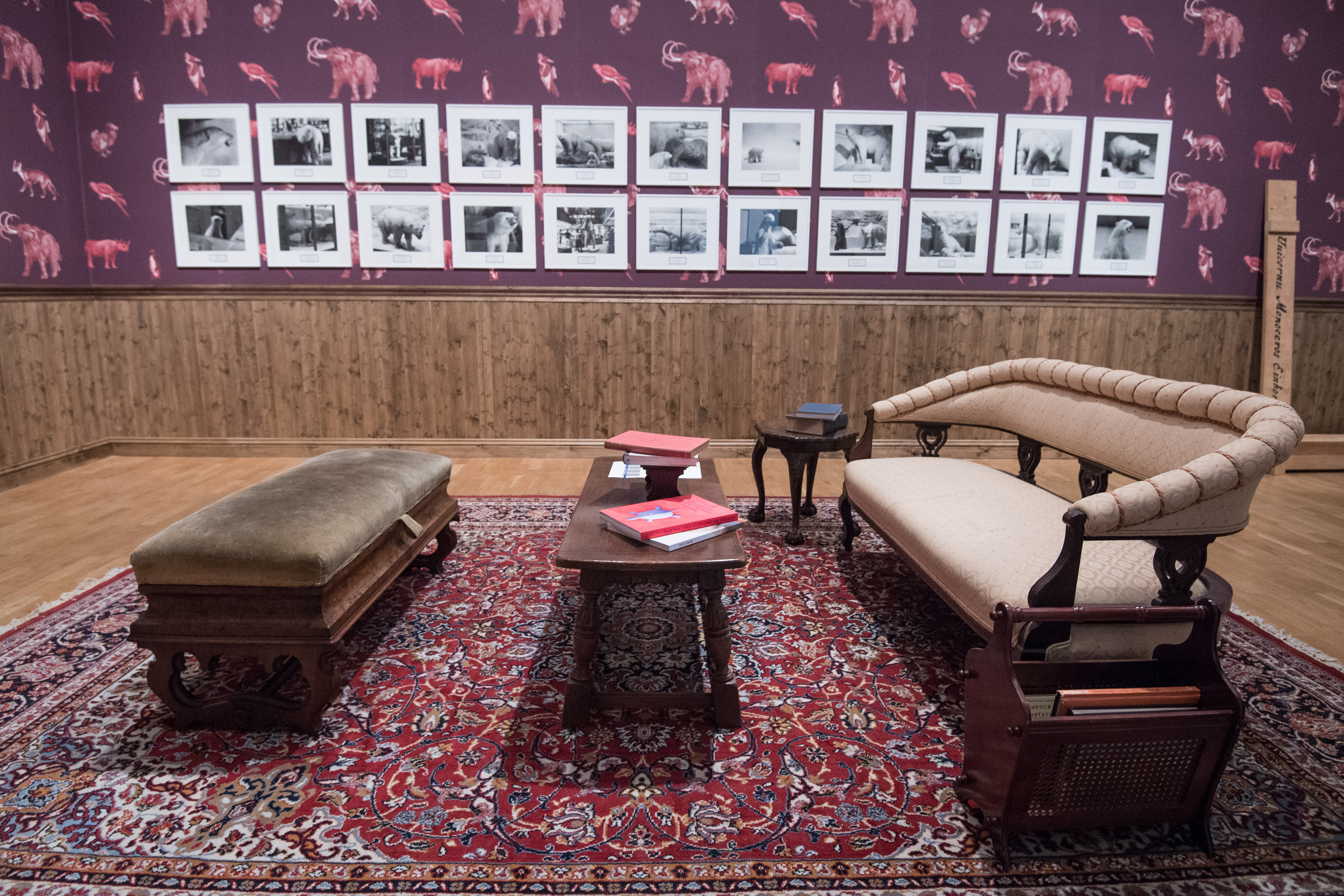
Mark Dion
The Naturalist’s Study, 2018
Installation view of Mark Dion: Theatre of the Natural World at Whitechapel Gallery, London, 2018
Photo: Jeff Spicer/PA Wire

Continue reading →

Taxidermy Koala – The Language of Natural History

This article has been re-posted from the Grant Museum of Zoology blog, with permission of the author Jack Ashby.

With generic terms like mankind and Homo sapiens (“wise man”), people of all genders are well aware that it is the masculine that has dominated the vocabulary of humanity. Not so in the animal kingdom.

Across UCL Culture we are celebrating the centenary of some women first getting the vote in the UK in a number of different ways. In the run up to International Women’s Day, here on the blog our Specimens of the Week will be exploring themes like women in natural history, female specimens, and – in this case – the language of natural history. This week’s Specimen of the Week is…

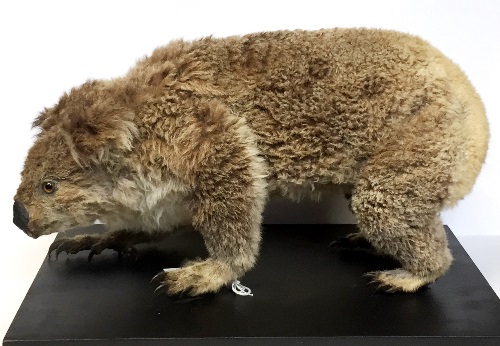
Koalas are one of many Australian mammals that are named after a characteristic that only females have. Their scientific name Phascolarctos means “pouched bear”. LDUCZ-Z65. (C) UCL Grant Museum of Zoology

***The Taxidermy Koala***

I find it interesting to think about animals that are named after features that only one sex has. How would you feel if your species was defined by a characteristic that you yourself didn’t possess?* My own passion is the mammals of Australia. Unlike many other groups (for example there are entire groups of insects that can only be identified by studying male genitalia), for those animals which are named for sex-specific features, Australian mammals are almost** universally named after things that only appear in females.

Continue reading →

Willows in the Wind: Digitisation of the Tullie House Herbarium

Excited (botanical) chatter, the inexorable flashing of camera equipment, intrigued visitors gathering around our new gallery space; this was our Virtual Flora of Tullie Herbarium Project, funded by the Bill Pettit Memorial Award at the start of 2017.

The scope of the project, between 30th of May to 26th of September 2017, was to use a team of volunteers to begin photographing and cataloguing our (“ex”) University of Lancaster herbarium. This significant acquisition of 35,000 vascular plant sheets is a highly data rich and well-provenanced collection with invaluable information on the historical and contemporary distribution of species across the UK and beyond. Almost a third of the specimens were collected from Cumbria, much of it collected during a major 30 year survey of the flora of Cumbria; an exemplar model of field surveying which is aspired to by Botanical Society of Britain and Ireland (BSBI) recorders today. The survey work culminated in the team leader’s (Geoffrey Halliday) highly comprehensive publication of A Flora of Cumbria. No other herbarium has a comparable recent (1968+) collection of Cumbrian material.  But despite the importance of this recent acquisition, none of these specimens were digitised.

Thanks to the Bill Pettit Memorial Award funding this was all about to change.

Continue reading →

Meet the Committee – Isla Gladstone

What is your role on the NatSCA Committee?

I help promote information sharing and collaboration between NatSCA and closely allied subject specialist network the Geological Curators’ Group. These groups share core aims and, increasingly with loss of specialist curatorial posts, a membership. It’s exciting to explore how we can capitalise their individual strengths for the benefit of natural sciences collections and the people who work with them. 

Job title and institution

Senior Curator (Natural Sciences), Bristol Museum & Art Gallery, Bristol Culture

Twitter username

@isla_gladstone

Tell us about your day job

I work with a small team (Biology Curator Rhian Rowson and Geology Curator Deborah Hutchinson) to curate over one million natural sciences specimens of all shapes and sizes. As many a curator will recognise, this varies from high level strategic work to lifting, shifting, labelling and cleaning – a medley of activities to enable diverse access to and preserve these astonishing collections.

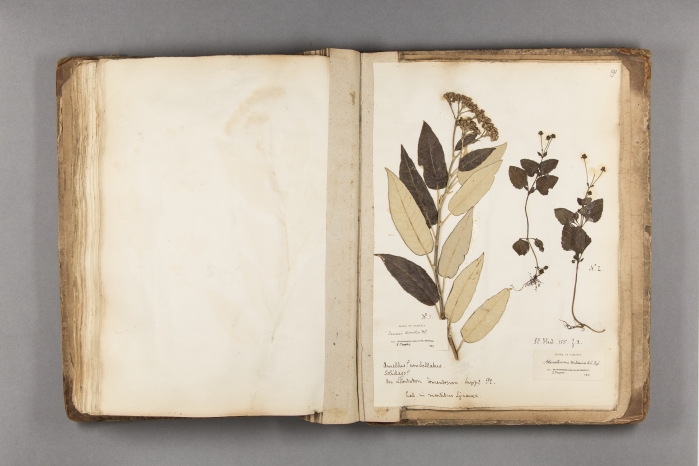
Medicinal plant on a page from Bristol’s earliest natural sciences collection – the Broughton herbarium, Bristol & Jamaica, 1779-90. (C) Bristol Culture.

Continue reading →

NatSCA Digital Digest – December

Save the Date!

The NatSCA conference and AGM will be at Leeds City Museum on Thursday 26th and Friday 27th April 2018!

The conference theme is: The museum ecosystem: exploring how different subject specialisms can work more closely together.

This conference aims to lead us outside our comfort zone and explore how working closely with different disciplines and departments can not only strengthen our own areas of expertise, but museums as a whole. The museum ecosystem is vast and not limited to just museums as it includes universities, local organisations, funding bodies, artists, communities and many other stakeholders.

We are inviting you to propose presentations and posters that focus on sharing ideas, tips and mechanisms that will help inform the work of other attendees. Proposals are welcome from colleagues across all disciplines (not just natural history!)

To submit your abstract, please download and complete a submission form and send your completed form to conference@natsca.org.

Continue reading →