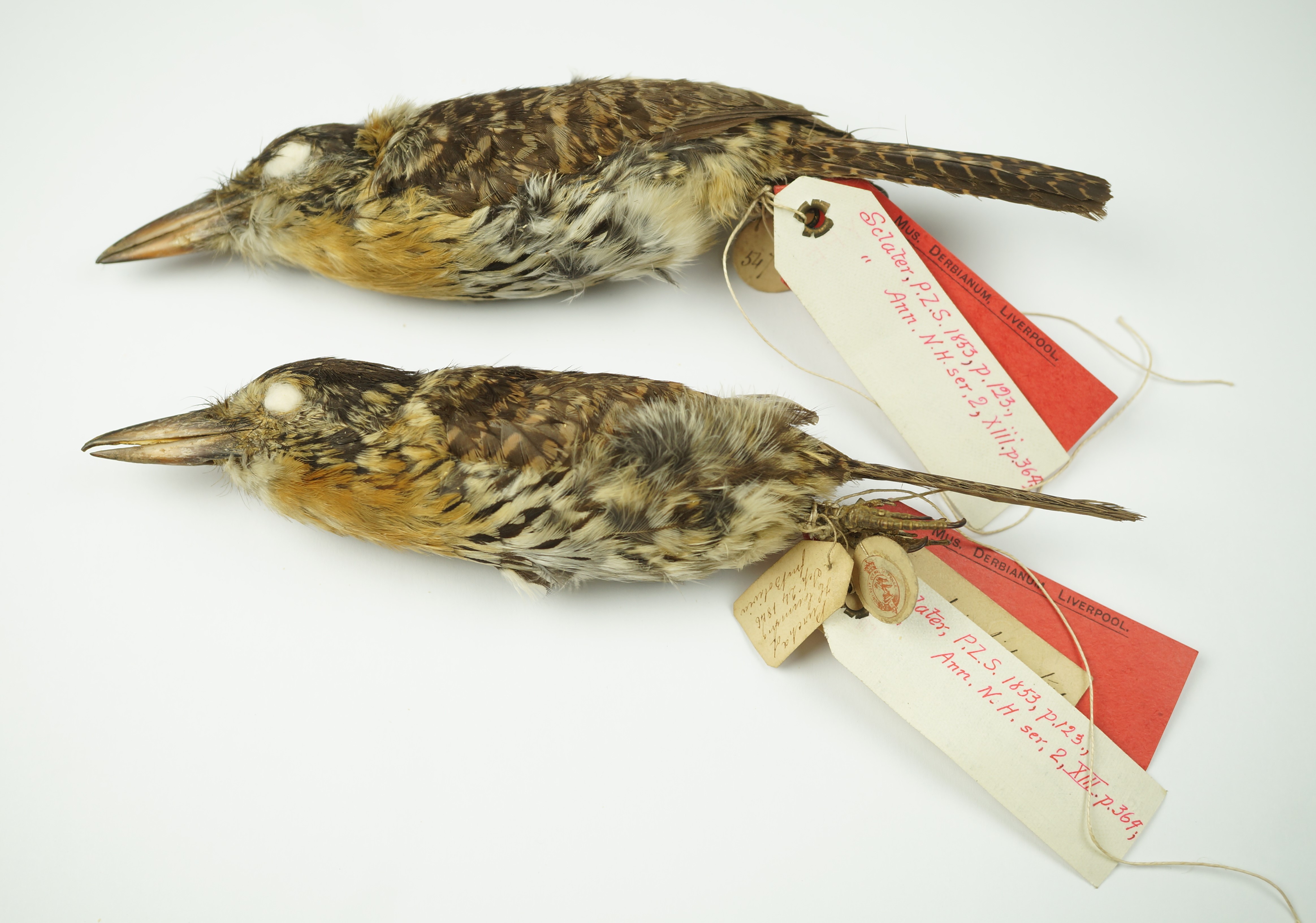
NatSCA Digital Digest – July 2022

Compiled by Olivia Beavers, Assistant Curator of Vertebrate Zoology at World Museum, National Museums Liverpool.
Welcome to the July edition of NatSCA Digital Digest.

A monthly blog series featuring the latest on where to go, what to see and do in the natural history sector including jobs, exhibitions, conferences and training opportunities. If you have any top tips and recommendations for our next Digest please drop an email to blog@natsca.org.

Sector News

SPNHC / BHL / NatSCA Conference 2022

Just over a month ago the SPNHC/ BHL / NatSCA conference was underway. As my first SPNHC and first NatSCA conferences, it was a great introduction into the sector and I enjoyed meeting all of the NatSCA members that were able to attend the event! One of the highlights were the National Museums Scotland store tours! If you missed out, you can get a glimpse of the natural history collections here.

Yorkshire Natural History Museum

The Yorkshire Natural History Museum is a new, small public museum opening in Sheffield – Saturday August 13th 2022! The museum includes geology, palaeontology and botany collections with a significant research collection of fossils from the Yorkshire Lias. Their website is currently under construction but you can check out their twitter account @YorkshireNHM.

Harnessing the Power of Natural Science Collections – Community Event

This event is currently underway, but if you’re quick you might catch the last half! The event is open to all UK natural science collection holders, interested in attending and learning more about the scoping work and the next steps in the plans for a national digitisation programme. Held via Microsoft Teams, July 14th, between 10:00-12:00. Please follow this link to access the meeting. 

Continue reading
Freezing Specimens And How To Mitigate Freezer Burn.

Written by Jazmine Miles Long, Taxidermist. https://www.jazminemileslong.com, Twitter: @TaxidermyLondon; Instagram: @Jazmine_miles_long

In my opinion there isn’t one system to do things correctly in taxidermy, every museum or taxidermist may have their own preferences and strategies already in place. This is simply a guideline that works for me, and I hope it can help others to mitigate some of the problems I encounter when working with skins that have been frozen in a way that has accelerated freezer burn. Following this advice might get more time out of frozen specimens and give you a greater chance that they can be mounted once the budget or staff time is there to pay for taxidermy or processing cabinet skins.

What is freezer burn?

Freezer burn happens when the moisture is evaporated out of the animal’s skin and muscles over time in the freezer. Most specimens even if they are well packed in the freezer will still get some freezer burn over a long period of time but it will be much worse if the specimen is poorly packaged or has something absorbent (like a paper label) inside the bag with it.

You can tell if a specimen has freezer burn because it will look white and dry in areas such as the feet, hands, around the eyes, ears, and mouth. And when you start skinning the skin will be yellowed and hard to remove rather than red, fleshy, and easy to peel away.

Firstly, I advise to always freeze your specimens before handling or skinning them. At a minimum you could record the specimen’s weight before freezing as this measurement is affected slightly after freezing. I personally would not take any other measurements until after they have been thoroughly frozen (unless you want to collect live parasites). As the animal dies, any parasites on the skin of the animal will leave the body as it cools and hop onto the next willing subject which will be you or any living creature in your lab! A note that fleas are not killed over night, if you freeze a fox for example leave it in there for at least two weeks before defrosting. It completely depends on the temperature of your freezer however so if you start to defrost an animal the fleas will defrost first, so if there is movement you know to refreeze! Obviously very large animals may need to be skinned straight away, so in this case my advice is wear appropriate PPE.

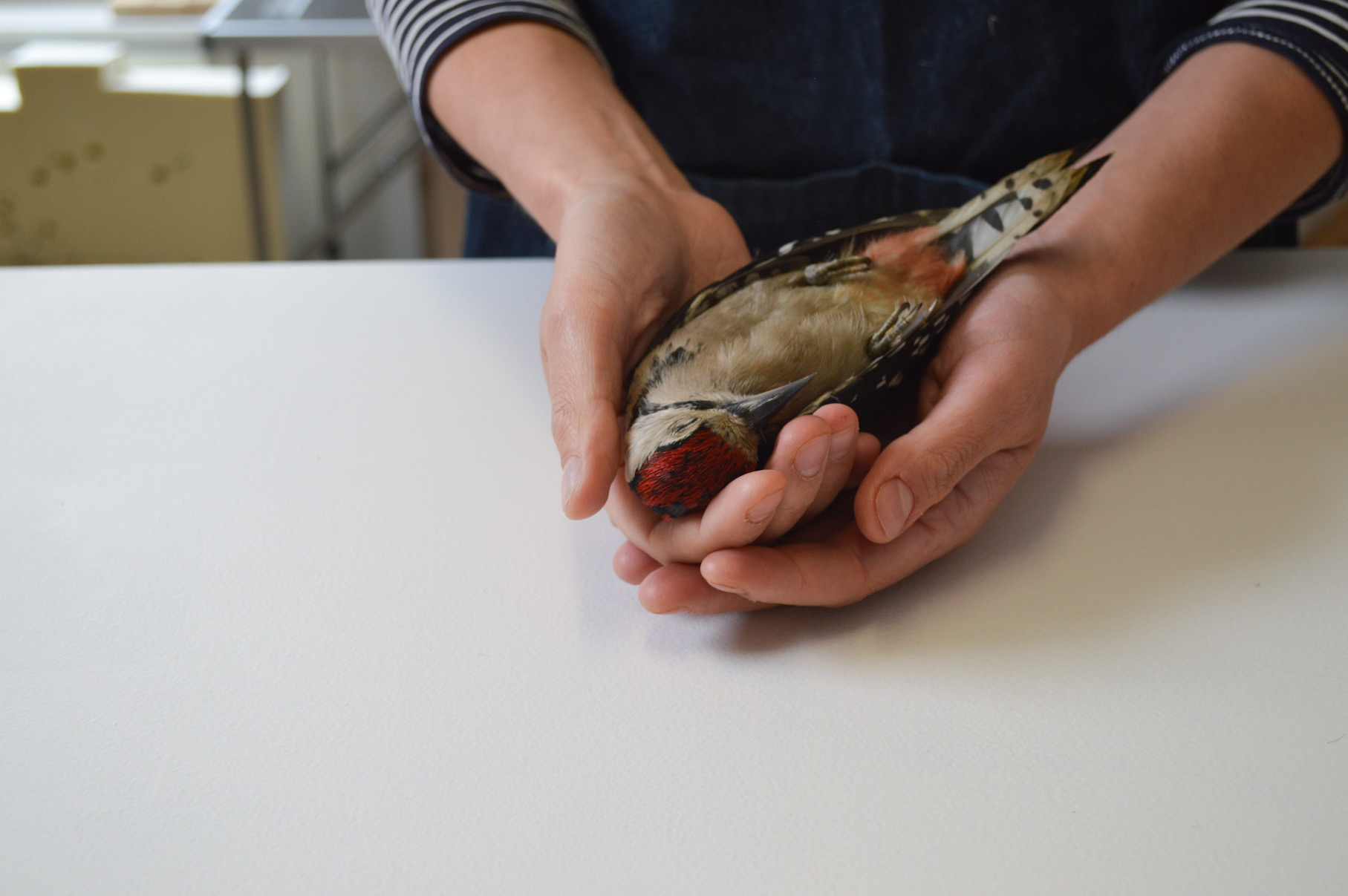
Great Spotted woodpecker. Image by Jazmine Miles Long.
Continue reading

Vertebrate Collections of the Institute of Biology, UNAM, Move to the New Building of the National Biodiversity Pavilion in Mexico City.

Written by Fernando A. Cervantes, Professor and Curator of Mammals, Department of Zoology, Instituto de Biología, UNAM.

Mexico is a megadiverse country and has 10% of the world’s species. The Institute of Biology of the National Autonomous University of Mexico (IBUNAM) houses the National Biological Collections (NBC), which contain the largest and most important representation of museum specimens of Mexican biodiversity in Mexico. These include 10 zoological collections, a herbarium, and a botanical garden (Zambrano and Reynoso, 2003). Among the highlights are the National Insect Collection (CNIN), with more than 3,000,000 specimens, the National Herbarium (MEXU), with more than 1,500,000 specimens, and the living collections of the Botanical Garden. They all collaborate in the elaboration of the national biological inventory and their specimens provide knowledge on the presence, distribution, and evolution of biological diversity (Cervantes et al. 2016).

   The NBC are located at the IBUNAM facilities in the Ciudad Universitaria campus, south of Mexico City, Mexico, where they have been for approximately 22 years now. However, the rapid growth in the number of specimens in each of the collections over the last few decades has meant that the space in which they are currently housed is no longer sufficient. At the same time, the number of academic personnel associated with the NBC, students, equipment, and materials have grown in parallel and demand the need for more space to allow for the proper functioning of the NBC.

Continue reading

Wikipedia, Museum Volunteers And The New Normal

By John-James Wilson, Curator of Vertebrate Zoology, World Museum, National Museums Liverpool.

Like most museums across the country, World Museum suspended its volunteer programmes shortly before the first national lockdown in March 2020. This was meant to be a short-term measure but with curators continuing to work hybridly our volunteers haven’t yet returned. Organisations like Volunteer Scotland have advised volunteers to consider if and how they can work remotely.

While some museums had existing remote volunteering activities (see great examples here and here), which saw increased participation, World Museum’s vertebrate zoology collection didn’t. An additional challenge for us has been that remote access to our collections database is limited to staff with a VDI. With the pandemic still with us for some time to come (Chris Whitty has said it will be 5 years) we have started exploring ways to engage both new and long-serving volunteers with the collection online.

During lockdown, Auckland Museum published a Wikimedia strategy citing the provocative 2018 talk by Adam Moriarty which championed the importance of collection information featuring, not solely on museum’s own webpages, but in places like GBIF and Wikipedia. This reinforced our view that we need to improve the collections’ presence in Wikipedia. Wikipedia articles are created by volunteers and can be edited by anyone with a standard web browser, potentially providing a valuable activity for remote volunteering.

Continue reading

Giving Collections An Extra Life – Making Video Games That Promote Collections Engagement (For Free)

Written by Glenn Roadley, NatSCA Committee Member, Curator of Natural Science at The Potteries Museum & Art Gallery.

(Note: this article includes interactive games. If they don’t work, your organisation may have blocked game websites through your network)

You might think that playing video games falls at the opposite end of the hobby-spectrum when compared to getting engaged with nature. But the immersion and creativity allowed often provides many of the same benefits, and nature is used as inspiration for many of the most popular video games. In this way video games can become a gateway to learning about nature in the real world – did you know that the highest grossing media franchise of all time (step aside, Marvel) started as a video game about collecting fictional animals to help a scientist with their biological recording project? You’ve probably heard of it. And the Animal Crossing franchise, a game series where a core activity involves collecting insects and fish to donate to the local museum, has sold over 70 million copies.

Games like Pokémon and Animal Crossing show that natural science collections are already on to a winner when it comes to subject matter and gaming. The collections are full of characters and stories, and games should be considered as another way to provide access to these.

The benefits of games are well-established (stress relief, improvement of memory and development of problem-solving skills are among the benefits often cited) and Learning Through Play is already a central part of how museums engage with their audiences. Many museums have used computer games to bring their interpretation to life (https://www.museumnext.com/article/how-can-games-in-museums-enhance-visitor-experience/).

Continue reading