Our Top Ten Most Fantastic Blogs of 2018

Written by Dr Emma Nicholls, Deputy Keeper of Natural History at the Horniman Museum and Gardens.

In case you missed out on any of our articles from last year, here is a handy round-up of the ‘must-reads’, as voted* for by you, the public. It is always useful for us at NatSCA to look back at what blogs from the previous year readers have found the most interesting. It helps to inform us of what types of articles we should look to be publishing in the coming months. Last year you seemed captivated by a wide variety of things, from Crochetdermy® to conservation, and booze to bones. Here’s a look back at 2018, and the top ten most read NatSCA blogs of the year!

Coming in at number 10…

10- Private Bone/Taxidermy Collection: The Good, The Bad and The Illegal

9- Wild About Portsmouth – Discovering Portsmouth’s Natural History Collection

8- Caring for Natural Science Collections – My First NatSCA Conference

7- Harry Higginson: Distributing Dodos in the 1860s

6- Transforming Scientific Natural History 3D Data into an Immersive Interactive Exhibition Experience

5- NatSCA Conservation Photo Competition

4- Crochetdermy® at the Horniman

3- The Curious Life of a Museum Curator

2- When Art Recreates the Workings of Natural History it can Stimulate Curiosity and Emotion

…and in first place…

1- When Museums Get it Wrong – Did We Accidentally Accession Someone’s Holiday Booze?

If you have an idea for an article you would like to submit, or if you would like to write something but need help with the inspiration, do get in touch with us at blog@NatSCA.org.

* These articles received the top number of hits for the year. We didn’t take an actual vote!

NatSCA Digital Digest – February

Compiled by Sam Barnett, NatSCA Volunteer and PubSci Committee Member.

What should I read?

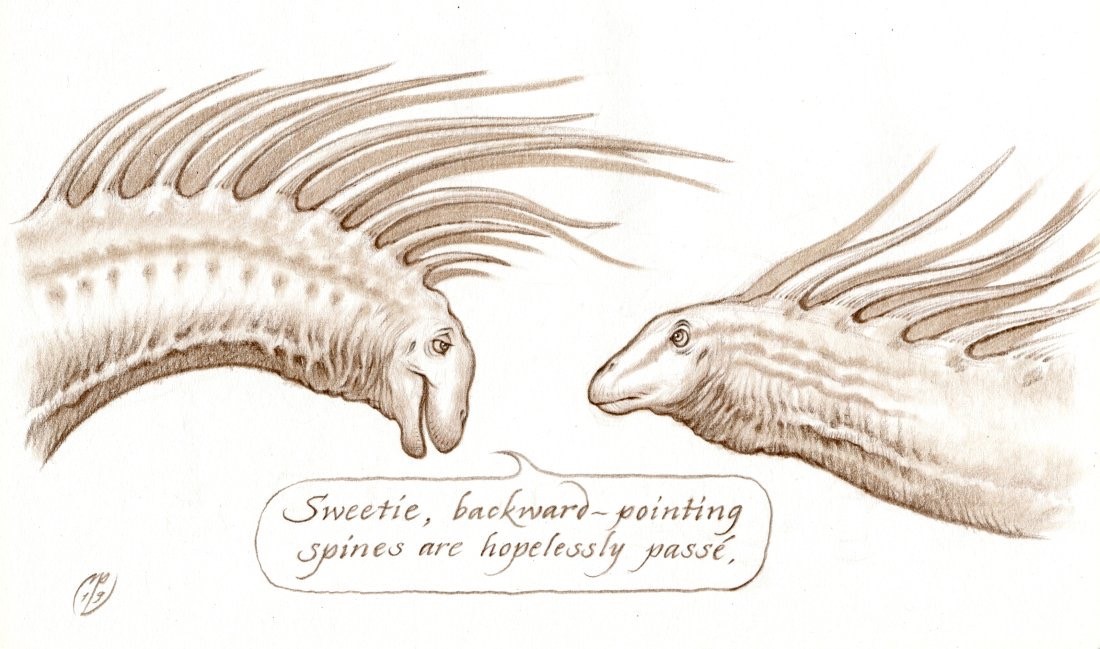
If you’ve not been keeping up with your South American sauropod discoveries, this next item might have completely passed you by. A new dinosaur has been named Bajadasaurus pronuspinax and hails from the Bajada formation of Patagonia. It bears a similarity to Dave Hone’s favourite dinosaur Amargasaurus but with far more flamboyant adornments – as illustrated here by Natee Himmapaan. You can read all about Bajadasaurus over at Nature or you can find a very good piece on it by Ed Yong here.

Bajadasaurus pronuspinax. (C) Natee Himmapaan.

In China, Qiang Fu and colleagues have proposed an earlier date for flowering plants; much, much earlier. This has been met with some cynicism from the palaeobotanical community and we’re looking forward to seeing how that plays out. Continue reading →

NatSCA Digital Digest – January

Compiled by Dr Emma Nicholls, Deputy Keeper of Natural History at the Horniman Museum and Gardens.

What Should I Read?

Prolific author Darren Naish (of TetZoo) has pulled together a collection of exciting tetrapod-based scientific discoveries of 2018 in his latest article The Most Amazing TetZoo Themed Discoveries of 2018.

The government of New Zealand is under pressure to act on the trade of moa bones. This article is good food for thought re private sales of fossils; Moa for sale: trade in extinct birds’ bones threatens New Zealand’s history.

Of interest to many more of us than just curators, the top three most popular 2018 blogs posted on the Geological Curators’ Group website are:

1) Pyrite Oxidation: Where Are We Now? an excellent and informative article on the menace of pyrite decay

2) Up Inside Historic Dinosaurs about the Crystal Palace Dinosaurs, and

3) Contradictions, Conundrums and Lies which looks at the issues we face in museums!

Continue reading →

Collectors, Collections and the Geology of SW Britain – A View from the Audience

Written by Nadine Gabriel, a recent UCL geology graduate and an emerging museum professional.

This article is a joint paper for the Geological Curators’ Group and the Natural Sciences Collections Association, and has subsequently been published on both blogs.

On the 18th September 2018, I attended the Collectors, Collections and the Geology of Southwest Britain meeting. This joint meeting between the Geological Curators’ Group (GCG) and the History of Geology Group (HoGG) was held at the Bath Royal Literary and Scientific Institution (BRLSI), and it was also my first ever GCG event! If you have an interest in British geology, you probably know that the southwest of Britain has amazing geology, but this meeting – with around 80 attendees – also looked at the people who have dedicated their lives to exploring this geologically diverse region.

The day started off with a keynote speech from Steve Etches who spent over 35 years collecting fossils from the Jurassic Kimmeridge Clay deposits of southwest England. His collection of over 2,300 fossils found an exciting new home in 2016; the Etches Collection museum in Kimmeridge, Dorset. It was interesting to find out about the difficulties associated with starting a museum from scratch, but despite the initial challenges, the museum looks incredible and is filled with a diverse array of scientifically important specimens.

Many of the talks focused on the enthusiastic collectors of the southwest. My favourite story was about Charles Moore (1815-1881), a palaeontologist from Ilminster, Somerset. In 1858, he purchased three tonnes of gravel from Holwell, Somerset for 55 shillings. This massive purchase turned out to be filled with Rhaetian (208.5 to 201.3 million years old) fish, mammal and reptile fossils. Moore also collected fossils from the Lower Jurassic limestone of Strawberry Bank in Ilminster, and these fossils are now cared for by our hosts, the BRLSI. During the coffee break, Matt Williams (the BRLSI collections manger) showed us a selection of Moore’s stunning fossils.

Continue reading →

Harry Higginson: Distributing Dodos in the 1860s

Written by Clare Brown, Curator of Natural Science, Leeds Museums and Galleries.

Curators are often asked to name their favourite object. I’ve got loads and swap between them all the time: the adult longhorn beetle that emerged from someone’s wooden sofa after a few years of chewing, our thylacine mount, the dude-y little rock hyrax with attitude, the Peruvian “mummy’s eyes” (read squid lenses), that gorgeous La Brea tar pits water beetle… My favourites at the moment are our dodo bones. Yes they’re dodo bones and so, obviously, are amazing but the story behind how Leeds came to have them is wonderful too.

It all started in 1838 in Thormanby near York where little Harry Higginson was born. He progressed through school in Leicester and an apprenticeship in Manchester to a railway construction job in Mauritius in 1862. Harry’s completely brilliant ‘Reminiscences of Life and Travel‘ is a great read. It’s packed full of amazing 19th century colonial derring-do from out-galloping the monsoon in a gorge to unbelievable childcare practices (burying them up to their necks in sand) to feeding a friend a dead – and extremely tough – donkey ‘as a lark’. It is in this book that Harry describes the moment when the dodo story gets more interesting:

“Shortly before the completion of the railway I was walking along the embankment one morning, when I noticed some [locals] removing some peat soil from a small morass. They were separating and placing into heaps, a number of bones, of various sorts, among the debris. I stopped and examined them, as they appeared to belong to birds and reptiles, and we had always been on the lookout for bones of the then mythical Dodo. So I filled my pocket with the most promising ones for further examination.”

And guess what? They were dodo bones and Higginson then kindly sent a box full to York, Liverpool and Leeds Museums. We all still have them.

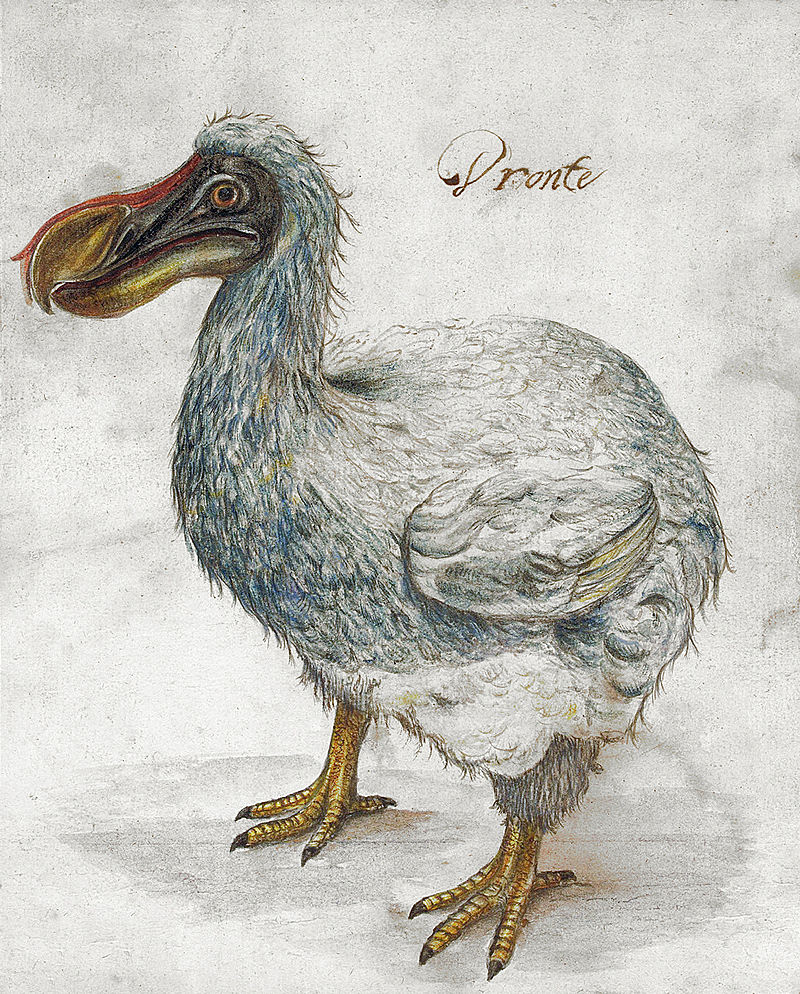
This beautiful watercolour of a dodo dates back to the 17th Century. During this period, ‘dronte’ (as seen in the image) was the word used in Dutch, French and Italian for the dodo. © Image in public domain.

Continue reading →