Wikipedia, Museum Volunteers And The New Normal

By John-James Wilson, Curator of Vertebrate Zoology, World Museum, National Museums Liverpool.

Like most museums across the country, World Museum suspended its volunteer programmes shortly before the first national lockdown in March 2020. This was meant to be a short-term measure but with curators continuing to work hybridly our volunteers haven’t yet returned. Organisations like Volunteer Scotland have advised volunteers to consider if and how they can work remotely.

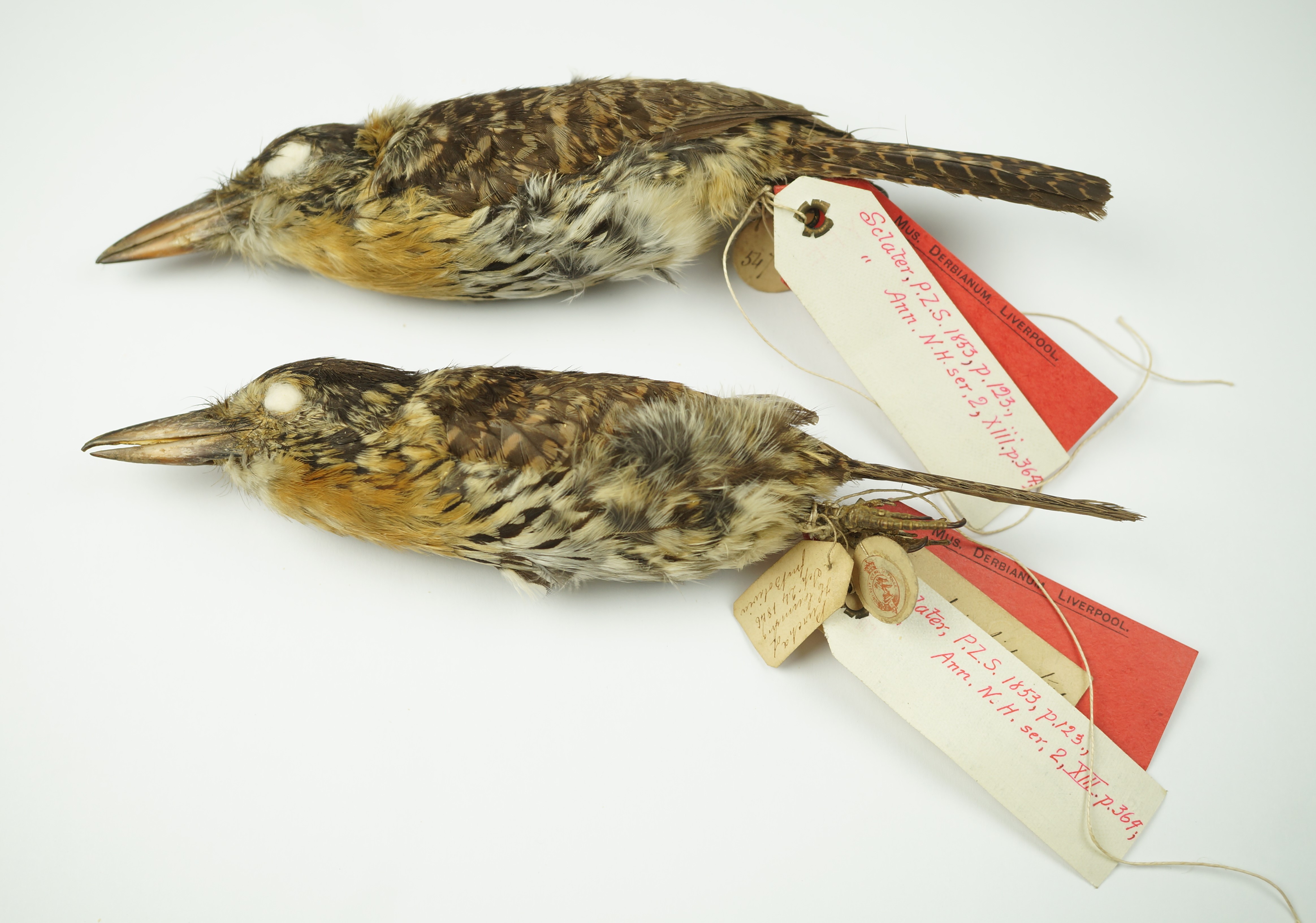
While some museums had existing remote volunteering activities (see great examples here and here), which saw increased participation, World Museum’s vertebrate zoology collection didn’t. An additional challenge for us has been that remote access to our collections database is limited to staff with a VDI. With the pandemic still with us for some time to come (Chris Whitty has said it will be 5 years) we have started exploring ways to engage both new and long-serving volunteers with the collection online.

During lockdown, Auckland Museum published a Wikimedia strategy citing the provocative 2018 talk by Adam Moriarty which championed the importance of collection information featuring, not solely on museum’s own webpages, but in places like GBIF and Wikipedia. This reinforced our view that we need to improve the collections’ presence in Wikipedia. Wikipedia articles are created by volunteers and can be edited by anyone with a standard web browser, potentially providing a valuable activity for remote volunteering.
Continue reading

Giving Collections An Extra Life – Making Video Games That Promote Collections Engagement (For Free)

Written by Glenn Roadley, NatSCA Committee Member, Curator of Natural Science at The Potteries Museum & Art Gallery.

(Note: this article includes interactive games. If they don’t work, your organisation may have blocked game websites through your network)

You might think that playing video games falls at the opposite end of the hobby-spectrum when compared to getting engaged with nature. But the immersion and creativity allowed often provides many of the same benefits, and nature is used as inspiration for many of the most popular video games. In this way video games can become a gateway to learning about nature in the real world – did you know that the highest grossing media franchise of all time (step aside, Marvel) started as a video game about collecting fictional animals to help a scientist with their biological recording project? You’ve probably heard of it. And the Animal Crossing franchise, a game series where a core activity involves collecting insects and fish to donate to the local museum, has sold over 70 million copies.

Games like Pokémon and Animal Crossing show that natural science collections are already on to a winner when it comes to subject matter and gaming. The collections are full of characters and stories, and games should be considered as another way to provide access to these.

The benefits of games are well-established (stress relief, improvement of memory and development of problem-solving skills are among the benefits often cited) and Learning Through Play is already a central part of how museums engage with their audiences. Many museums have used computer games to bring their interpretation to life (https://www.museumnext.com/article/how-can-games-in-museums-enhance-visitor-experience/).

Continue reading

The First Steps Of An Epic Move

Written by Clare Valentine, Head of Life Science collections, Natural History Museum, London.

Securing £182m to build a new science and digitisation centre in March 2020 was an incredible moment for the Natural History Museum, and the culmination of many years of hard work across the organisation to make the case for better facilities for the collections and research. The support from the Department for Culture, Media and Sport provides an opportunity to secure the future of the collections by moving them into bespoke, accessible storage, to accelerate digitisation of the collections to expand access for researchers globally and transform the study of natural history through an investment in new analytical facilities, technologies and techniques.

Receiving confirmation of the funding just a matter of days before the UK shutdown for the best part of 2 years didn’t come without its challenges, but it’s been incredible to see the progress that has been made towards our immense plan to build the centre and move tens of millions of specimens there by 2027.

Continue reading

A Sunfish, a Sheriff and a Register

By Eimear Ashe, Documentation Officer, National Museum of Ireland – Natural History.

NatSCA friends, I’d like to tell you a little about our current Inventory Project in the National Museum of Ireland (NMI) – Natural History. But first, back in 2009-2017, we ran a project that allowed us to catalogue 170,000 specimens in our collections management system (Adlib). We proposed another project to continue these efforts. The start date of the project regrettably coincided with the pandemic as well as the untimely loss of a key colleague (Dr Matthew Parkes). We regrouped and decided to postpone the physical inventory of objects and instead to focus on the work that could be done remotely by the team of inventory assistants.

On this project, I manage a team of three contracted inventory assistants. The cataloguers work on Natural History for two or three days per week, and other NMI projects for the rest of their week. I spend one full day each week doing project-related work, that is, supervision, answering queries, checking work and reporting.

Continue reading

Many Hands Make Light Work

Written by Milo Phillips, Assistant Curator of Entomology at Leeds Museums and Galleries.

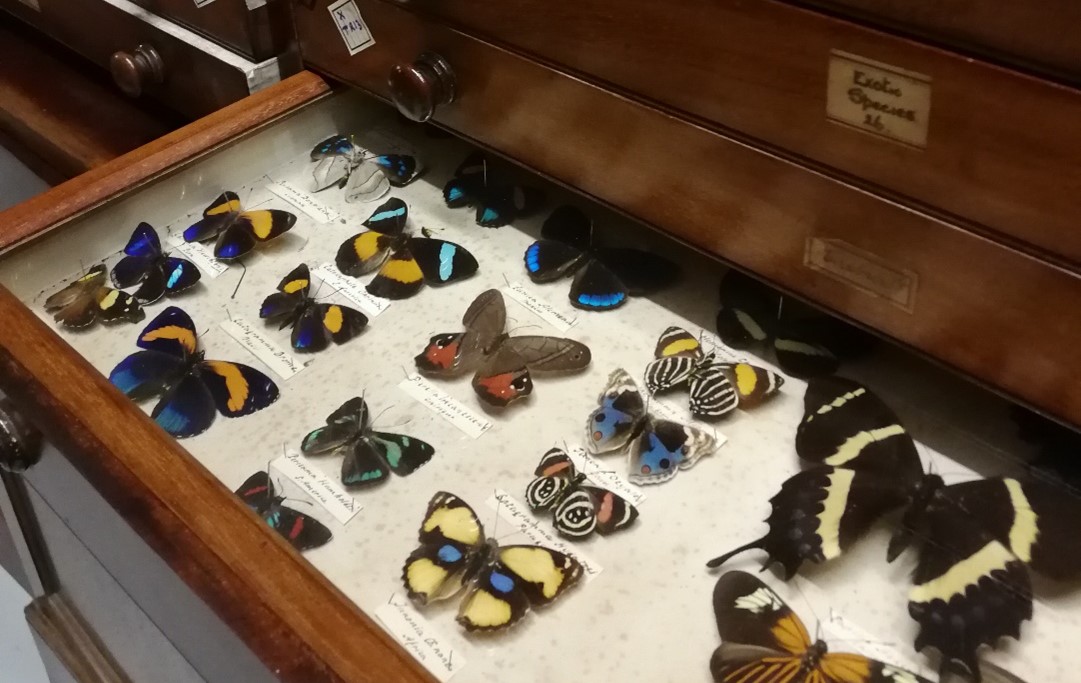
The past couple of years have seen a significant shift toward digital alternatives throughout the museum sector, from online exhibitions to webinars and remote conferencing, with our collections and their stories reaching a potentially global audience, more so than ever before. While much is being done to boost engagement with collections in new and exciting ways, museums on the whole have yet to harness the power of this shift when it comes to collections management.

The value of our natural science collections lies in their accessibility, in how open they are to this growing audience, from our local schools to researchers around the world and everyone in-between.

As our collections grow and our technology improves, digitization has become an important part of maintaining natural history collections. Using a citizen science approach, and bringing museum audiences on-board, we can turn collection management into a way of improving our collections, while simultaneously facilitating a deeper and more meaningful level of engagement with our objects and their stories.

Zooniverse is a free online platform built to facilitate a crowdsourced approach to large data sets and, while traditionally used by academic research groups, is an ideal solution to tackling tasks with much more efficiency than lone curators or even dedicated teams might be able to achieve. Projects can either be restricted to a specific group of users or opened up to the public for anyone to contribute their time to.

Continue reading