A Prize Winning Brown Bear in Sofia.

Written by Richard Crawford, who has just completed a PhD thesis at the University of the Arts London, entitled ‘Re-presenting taxidermy; Contemporary Art interventions in Natural History Museums’.

I am used to seeing trophy specimens in mainstream natural history museum collections – for example, the crouching tiger shot by King George V in 1911 that is on display in the natural history galleries at the Royal Albert Museum in Exeter – but I was surprised to see a taxidermy specimen of a big Brown Bear at the National Museum of Natural History, Sofia, holding a medal that it had been awarded at the Berlin International Hunting Exhibition in 1937.
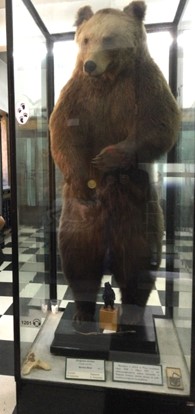
The prize winning brown bear in Sofia Natural History Museum

The 1937 Berlin International Hunting Exhibition showcased all manner of hunting trophies including mounted antlers, boar heads, bear skins and various taxidermy animals. It also featured demonstrations with live animals, including hunting eagles and a pack of beagles. The event was given official approval by the then prime minister, Hermann Goering, who opened the exhibition amid fluttering Nazi flags and rows of hunters dressed in smart grey uniforms. In his opening remarks, Goering stated his view, that hunting could promote international peace:

Continue reading

What is Taxidermy? An Intimate Relationship between Death and Maker.  

Written by Jazmine Miles Long, Taxidermist. https://www.jazminemileslong.com, Twitter: @TaxidermyLondon; Instagram: @Jazmine_miles_long

For taxidermy to exist an animal must have died. This brutal truth creates unease and leaves the viewer to ponder how the death occurred. And secondly how the death and the body is managed. A fluffy rabbit, cute and cuddly in life, suddenly becomes hideous and untouchable in death. Due to my profession, I am raising a child who has been exposed to dead animals and the concept of death his whole life. This has not made him desensitised to death, I’d say the opposite. He is deeply hurt by the death of any animal; he is a self-proclaimed vegetarian and last week at the age of 4 he asked me if his job when he grows up could be to stop people eating animals. He shouts at cars to slow down in case they hit anything and one of my favourite things he asks me when we meet new people is if they are a vegetarian or a carnivore eyeing them up suspiciously. Does a good understanding of death at a young age give a person greater empathy for animals and take us closer to not seeing them as ‘other’? 

When my son is asked what a taxidermist does, he says they look after animals when they die. I get at least one phone call a week from someone mourning their dead pet, I give advice on what to do next, ideas for memorials and how to store the body in the freezer while they decide what to do. I didn’t expect as a taxidermist to be a councillor, a listening ear, someone who is qualified to talk about death. 

Continue reading

Book Review: A Historical Directory of Taxidermists.

Reviewed and written by Jazmine Miles Long, Taxidermist. https://www.jazminemileslong.com, Twitter: @TaxidermyLondon; Instagram: @Jazmine_miles_long

A Historical Directory of Taxidermists: Bird and Animal stuffers, Naturalists, Beast and Bird Preservers in Southwest England and Wales. Early 19th C to Mid-20th C.

A directory complied by Kelvin Boot
Published by MPM Publishing
2022
ISBN 978-1-7397161-0-3
Contact – kelvinbootbooks@gmail.com

This book is a must have for any researcher exploring the lives and work of taxidermists from Southwest England and Wales during the 19th and 20th Century. 140 pages in black and white including some images of taxidermists trade labels.

The book is a thorough directory of the taxidermists trading in the area at the time, the introduction cites how the directory was researched, exploring printed documents, not only naturalists publications but newspapers, trade directories and census records where taxidermists may have been mentioned or advertised. Exploring what the life of a taxidermist may have been like and how just like today it was the ‘celebrity’ taxidermists that would have been more likely to be written about.

Continue reading

Freezing Specimens And How To Mitigate Freezer Burn.

Written by Jazmine Miles Long, Taxidermist. https://www.jazminemileslong.com, Twitter: @TaxidermyLondon; Instagram: @Jazmine_miles_long

In my opinion there isn’t one system to do things correctly in taxidermy, every museum or taxidermist may have their own preferences and strategies already in place. This is simply a guideline that works for me, and I hope it can help others to mitigate some of the problems I encounter when working with skins that have been frozen in a way that has accelerated freezer burn. Following this advice might get more time out of frozen specimens and give you a greater chance that they can be mounted once the budget or staff time is there to pay for taxidermy or processing cabinet skins.

What is freezer burn?

Freezer burn happens when the moisture is evaporated out of the animal’s skin and muscles over time in the freezer. Most specimens even if they are well packed in the freezer will still get some freezer burn over a long period of time but it will be much worse if the specimen is poorly packaged or has something absorbent (like a paper label) inside the bag with it.

You can tell if a specimen has freezer burn because it will look white and dry in areas such as the feet, hands, around the eyes, ears, and mouth. And when you start skinning the skin will be yellowed and hard to remove rather than red, fleshy, and easy to peel away.

Firstly, I advise to always freeze your specimens before handling or skinning them. At a minimum you could record the specimen’s weight before freezing as this measurement is affected slightly after freezing. I personally would not take any other measurements until after they have been thoroughly frozen (unless you want to collect live parasites). As the animal dies, any parasites on the skin of the animal will leave the body as it cools and hop onto the next willing subject which will be you or any living creature in your lab! A note that fleas are not killed over night, if you freeze a fox for example leave it in there for at least two weeks before defrosting. It completely depends on the temperature of your freezer however so if you start to defrost an animal the fleas will defrost first, so if there is movement you know to refreeze! Obviously very large animals may need to be skinned straight away, so in this case my advice is wear appropriate PPE.

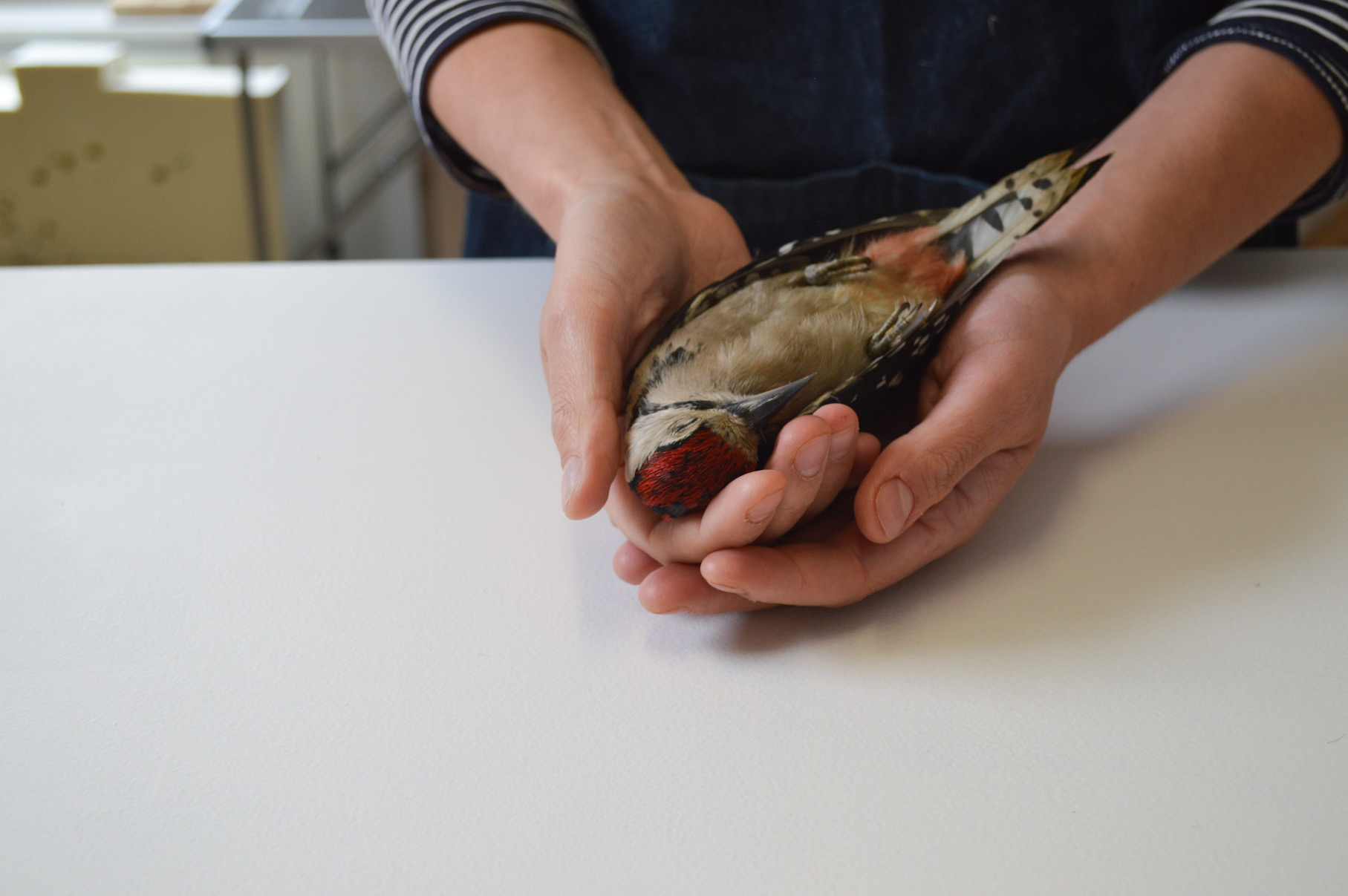
Great Spotted woodpecker. Image by Jazmine Miles Long.
Continue reading

Animal Afterlives: Photography, Dioramas, and Forgetting that Taxidermy is Dead

Written by Jack Ashby, Assistant Director of the University Museum of Zoology, Cambridge.

A key aspect of taxidermy is that it permits the viewer to forget the animal is dead – something that is rather hard to miss when considering skeletons, specimens preserved in fluid, or insects with a pin stuck through them. Allowing ourselves to be tricked into thinking we are looking at a living, breathing – albeit very still – creature is surely one of the reasons that museum visitors so often ask, “Is it real?” when encountering taxidermy on display.

Eventually, it is the stillness that breaks the illusion, along with the obvious realisation that, no, it simply isn’t possible for a live tiger/antelope/walrus to be sat there behind glass in an urban building.

Continue reading