Portrait of a Sensitive, Armoured Snout

Unraveling an ancient mystery

Picturing the world of the prehistoric is often likened to a jigsaw puzzle: one in which each new piece starts a whole new puzzle. Your pieces are scattered across all the museum stores in the world or weathering out of the ground. The quality is variable and some of the pieces are warped. In some cases we get lucky and find an immaculately preserved specimen, like the ones being uncovered in China, with evidence of soft tissue still preserved. In other cases, we must rely on osteological correlates in living animals to work out what’s going on.

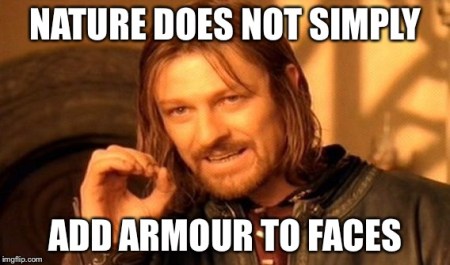
Palaeontologist Mark Witton recently wrote a post about a group of predatory dinosaurs called abelisaurs. These animals have a rough, cornified texture to their skulls. Living animals with a comparable bone texture usually have hardened, reinforced skin. Hippopotamus faces regularly endure blows from rival hippo teeth and, while scarring occurs, lasting damage is usually avoided. Some theropod dinosaurs* show bite scars on their faces which suggest that something similar was happening with these too. Hardened, armoured skin would be very useful here. However…
IMG_4521

Continue reading

Unexpected Natural History in a Sporting Museum

As a Curator at a Sporting Museum you may be wondering how my blog relates to Natural Science Collections… I am lucky enough to work at the National Horseracing Museum; part of the National Heritage Centre for Horseracing and Sporting Art, recently shortlisted for Museum of the Year 2017!

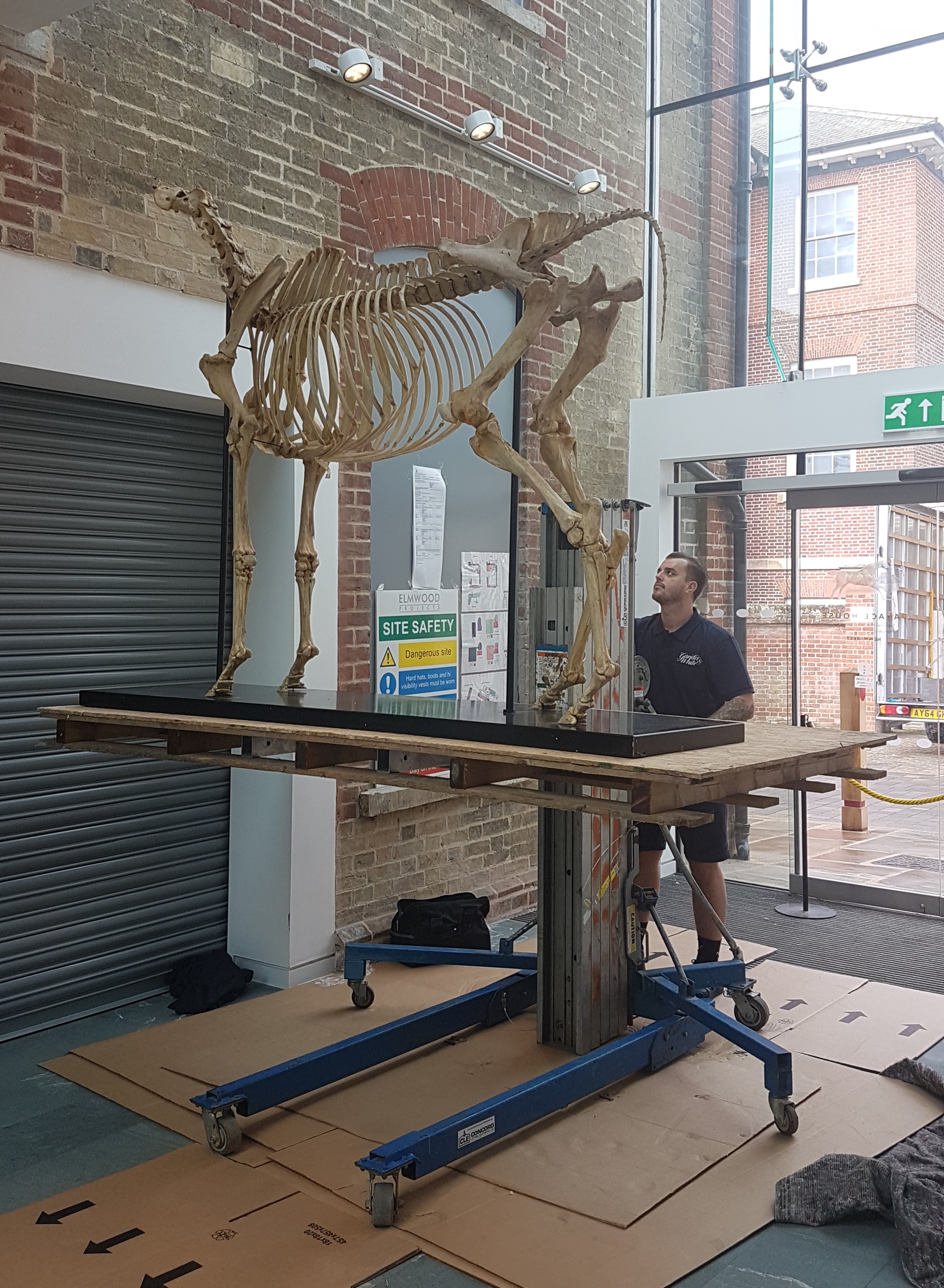
A major redevelopment and move to a 5 acre site has allowed the Museum a huge expansion.  Our new galleries include exhibitions dedicated to the science of the sport and the racehorse. Within these we are fortunate to possess some specimens on long term loan as well as some wonderful new loans from our fellow, and more obviously natural science, museums.

The redevelopment has been a great way to (rapidly) develop collection handling, packing and moving skills!

The redevelopment has been a great way to (rapidly) develop collection handling, packing and moving skills! (© National Heritage Centre for Horseracing and Sporting Art and Animal Health Trust).

The skeleton of racehorse Hyperion was on display in our old Museum and formed the main focus of the previous scientific displays along with a small veterinary collection.  We have a few other equine specimens in the permanent and loan collection; two taxidermied horse heads, a tail and, my particular favourite, our mini spirit collection of 3 horse forelimbs and an aneurysm. Continue reading

‘Provocative Practice’: New Ways of Working with Natural Science Collections

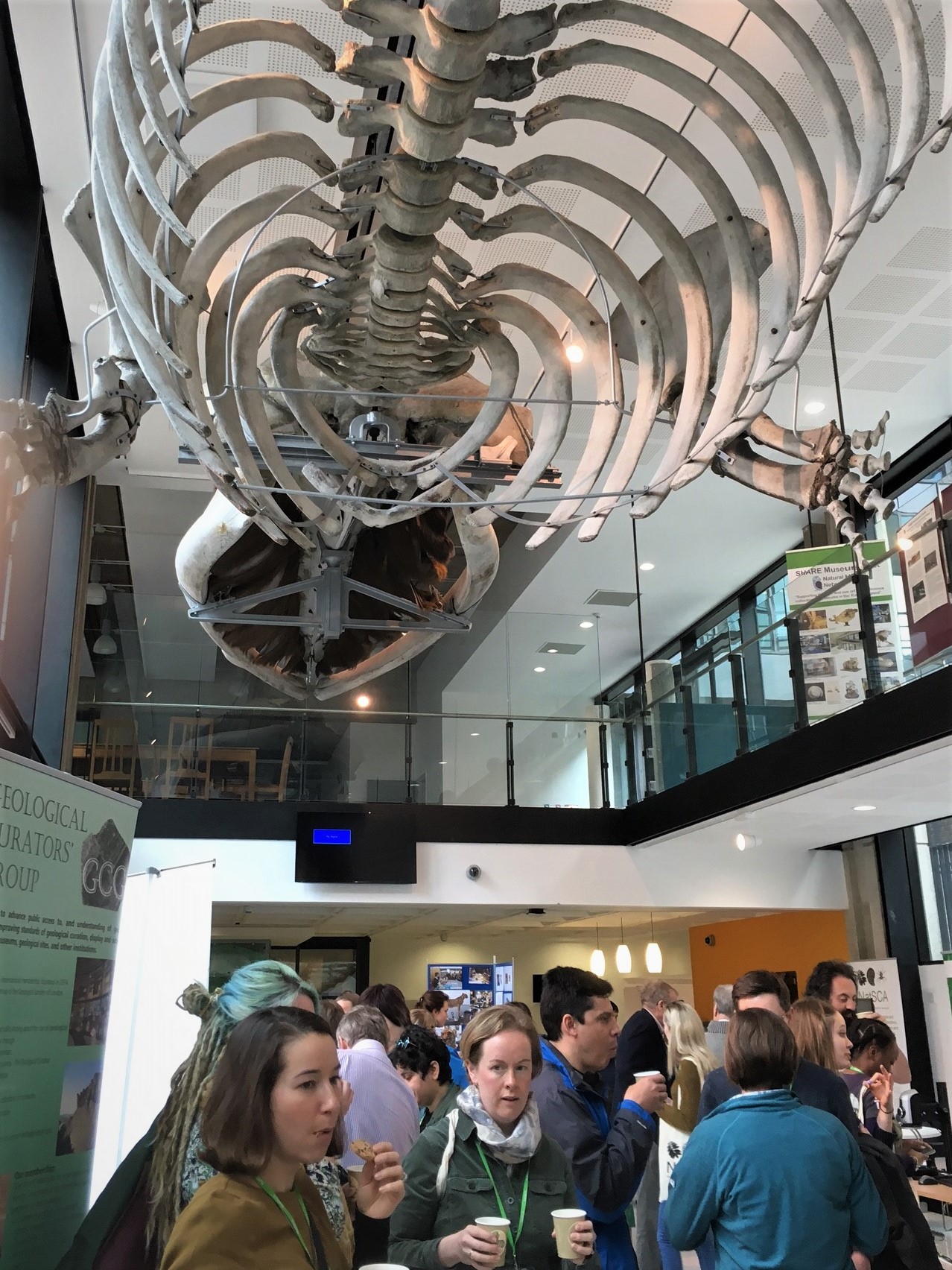
A 70 foot long whale skeleton hangs overhead a fantastic ‘collection’ of natural science curators, collection managers, conservators, and education and museum professionals, busily gathering around and eagerly greeting each other at this year’s annual Natural Sciences Collections Association (NatSCA) conference. As Natural History Museum ‘fly’ specialist Erica McAlister tweeted: “If that fell that’s most of UK’s natural history curators & conservators wiped out”.

NatSCA delegates gathering below the newly hung Fin Whale. Photograph by Simon Jackson, shown thanks to University Museum of Zoology, Cambridge.

This year’s event (#NatSCA2017), at the University Museum of Zoology, Cambridge, had a record 110 delegates, and as such was the biggest NatSCA conference to date. At the heart of the conference was the new Whale Hall, part of an enormous redevelopment project of the David Attenborough Building. As many of us marvelled at the huge leviathan overhead, the rest of us rushed between advertising sponsor stalls, exchanged ideas, caught up with one another and most importantly, fuelled up on coffee!

Feeling inspired, we were ready to begin this year’s talks on the theme: “Evolving Ideas: Provocative New Ways of Working with Collections” as Paolo Viscardi, NatSCA Chair, keenly ushered us in to the main lecture theatre. Continue reading

NatSCA Digital Digest – June

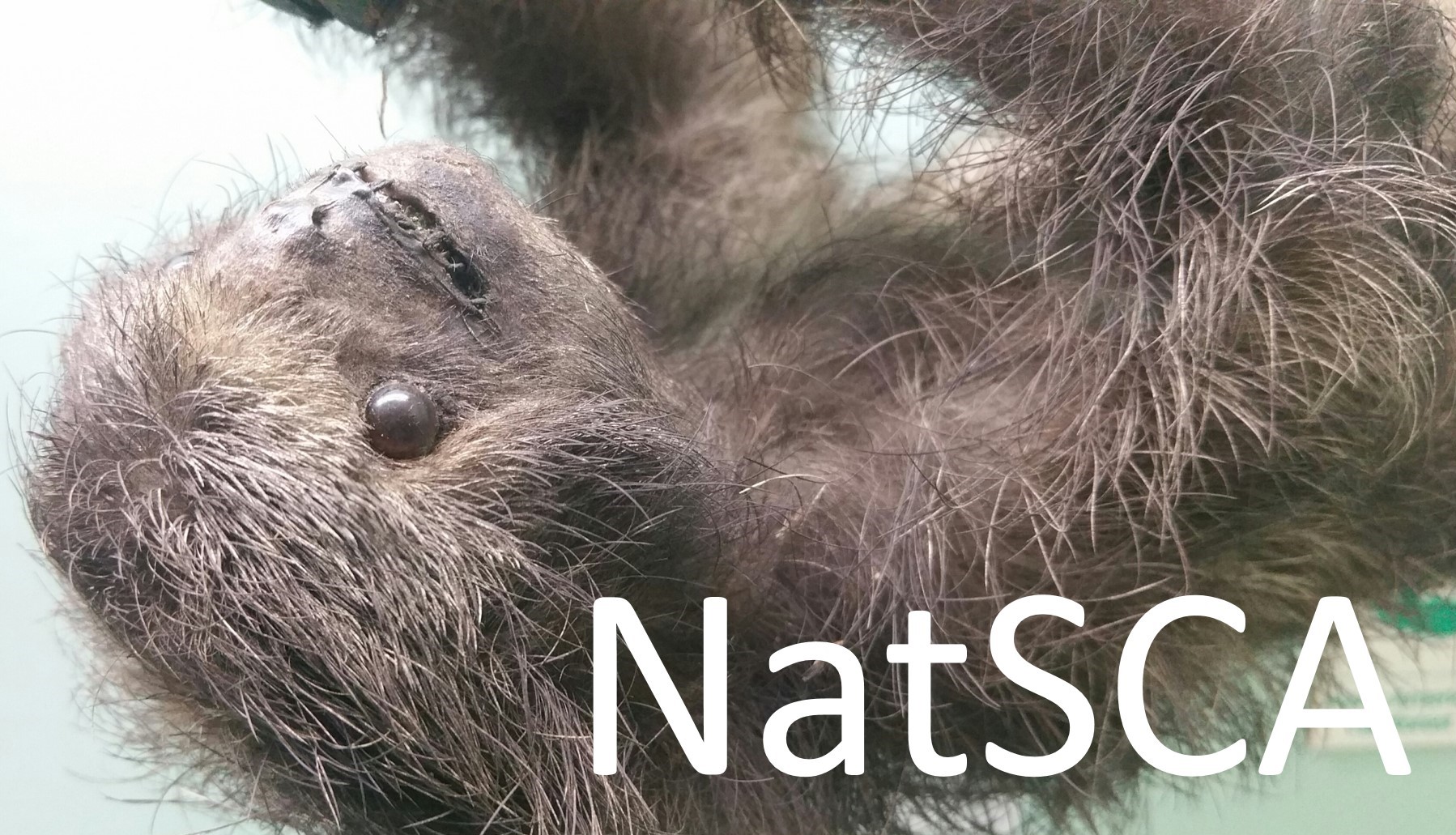
Three-toed sloth (C) Horniman Museum and Gardens

What Should I Read?

Four new dinosaurs all under one article, plus a good reason to check what’s in your museum stores more carefully. Dr Dave Hone introduces a cavalcade of new giant dinosaurs.

We all want to live in a perfect world where all museum records are available online, so why don’t we just digitise everything huh? Peel Art Gallery, Museum and Archives tackles The Question so many of us seem to get asked: Why don’t archivists digitize everything?

Not so much a blog or article to read, but definitely something to have a quick look at for it’s wow factor alone. If you’re looking for inspiration for your next event, be it for children or adults, it doesn’t come much better than these balloon animals and insects. These incredible balloon sculptures are by artist Masayoshi Matsumoto, and are just amazing. Continue reading

National Gorilla Day! (or Racist Skeletons in our Closets)

Happy National Gorilla Day!

We don’t usually cover “national *insert_animal* day” specially on this blog, but this year we’re particularly excited about gorillas because a book was recently published that contains a comprehensive list of all the gorillas held in natural science collections worldwide.

Screenshot 2017-05-26 at 12.31.47 - Edited

This impressive resource has been compiled by John Cooper and Gordon Hull over the course of many years and not only are specimens listed, their collection and/or acquisition data are also reported. Cooper and Hull have also offered suggestions for use of specimens in collections as well as guidance on the different types of preservation available and how they can be achieved. This only forms part of the book, with the first section more concerned with the health and conservation of these impressive animals. Continue reading