How Do You Do Decolonial Research in Natural History Museums?

Written by Jack Ashby, Assistant Director of the University Museum of Zoology, Cambridge.

Subhadra Das and Miranda Lowe’s paper, Nature Read in Black and White: Decolonial Approaches to Natural History Collections (2018) acted as a wake-up call to our sector, effectively founding a discipline in natural history museums. In the five years since, a lot of work has begun to address the colonial legacies underpinning collections of animals, plants, fungi and rocks.[i] The principal aims of this work include telling more honest stories about the different kinds of injustice involved in the acquisition of collections; and addressing the fact that our museums have long been prioritising narratives elevating white individuals over everyone else. In doing so, it is hoped that a greater diversity of people will feel represented by our museums, thereby enhancing the relevance of the collections.

Natural history collections dwarf those of any other museum discipline, and unlike sectors which have been thinking about this for decades, the practices underpinning their creation have not traditionally prioritised recording associated cultural or social histories. Like others who felt inspired by Subhadra and Miranda’s call to action, faced with contemplating how to begin to unpick the stories hidden behind literally millions of ‘scientific’ specimens, it was fundamental to consider the question, where do you start with decolonial research in natural history museums? Obviously, there is no one answer, but I thought it could be helpful to list a few possible approaches. One underlying element is to recognise how colonialism and its framings have shaped the way that events took place – from major historical moments to minute individual acts – and how the stories about these events have been told.

Below is a list of possible starting points for research, with examples of what that could look like in practice (in reality most of these overlap). For me, each has something to say about the entwined human and environmental costs of the colonial project – questions that natural history museums are uniquely placed to address.

Continue reading
NatSCA Digital Digest – July 2023

Compiled by Milo Phillips, Assistant Curator of Entomology for National Museums Scotland.

https://natsca.blog/wp-content/uploads/2018/10/natsca-logo-small-ggg.jpg?w=326&h=124

Welcome to the July edition of NatSCA Digital Digest.

A monthly blog series featuring the latest on where to go, what to see and do in the natural history sector including jobs, exhibitions, conferences, and training opportunities. We are keen to hear from you if you have any top tips and recommendations for our next Digest, please drop an email to blog@natsca.org.

https://natsca.blog/wp-content/uploads/2018/10/natsca-logo-small-ggg.jpg?w=326&h=124

Sector News

HOGG Conference & Field Meeting

There’s still time to register for the upcoming The History of Geology Group (HOGG) conference & Field Meeting. The event will be hosted at Trinity College Dublin, Ireland and will take place between Tuesday 15th and Friday 18th August 2023 on ‘Aspects of the history and progress of geology in Ireland’. 

The programme includes the one-day conference and three days of field and archive visits, including a visit to the birthplace of modern seismology, and opportunity to look at material not often open to view.

Registration is €17 (£15) and can be completed through Eventbrite by clicking here. For more information, visit the event page or email duncan.hawley.hogg@gmail.com

Continue reading

Hunterian Heads: Cleaning Large Skeletal Specimens

Written by Caitlin Jenkins, Project Conservator at Parliamentary Archives (previously Assistant Conservator at Royal College of Surgeons of England).

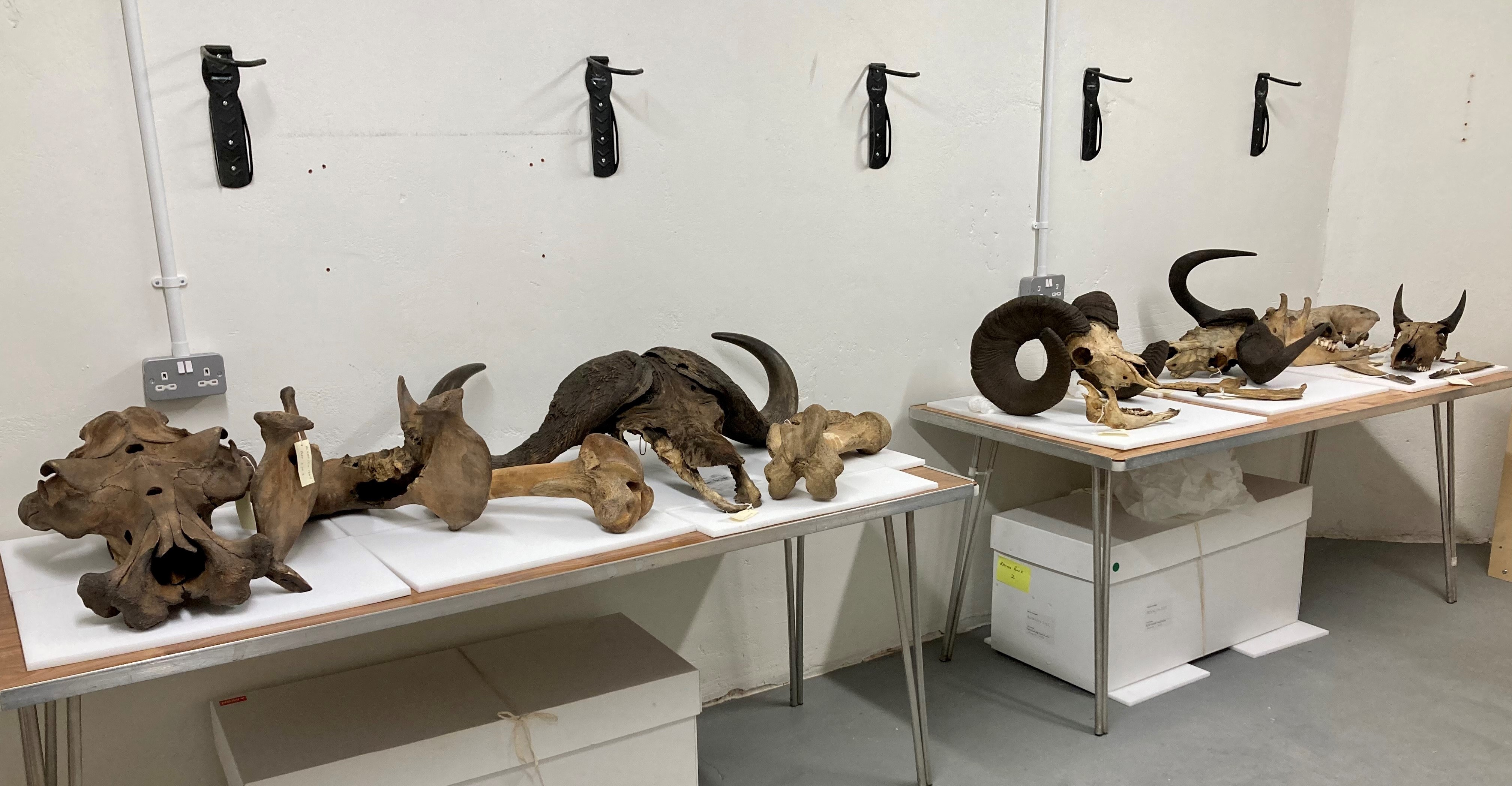
The Hunterian Museum at the Royal College of Surgeons (RCS) in London closed in 2017 for redevelopment. This necessitated the temporary removal, storage, and condition assessment of its contents. One particularly challenging project was the conservation of 19 large animal skulls. These specimens are part of the museum founder John Hunter’s original collection, dating from the 18th century.

Although the skulls had been sealed in secure crates since the museum’s closure, most had some noticeable dust and dirt accretions and needed attention before they could be redisplayed. Due to their size and number, a team of conservators from Virtu Conservation Housekeeping was brought in to assist with this task. There was a lack of suitable bench space to accommodate so many large specimens at once, so temporary cleaning stations were set up.

Continue reading

People and Plants Workshop Three: Sharing Knowledge in the Amazon

March 10th, 2023, Royal Botanic Gardens, Kew

Written by Fiona Roberts (Collaborative ESRC PhD student, Cardiff University & Amgueddfa Cymru-National Museum Wales) and Violet Nicholls (Assistant Curator in Herbarium, Portsmouth Museums).

This post is dedicated to Dr Dagoberto Lima Azevedo (1979-2023), Tukano researcher, translator, scholar, author and a voice for the Indigenous peoples of the Rio Negro in the northwestern Amazon.

The third and final workshop of a one-year project ran in March 2023, at Royal Botanic Gardens, Kew. The project, “People and Plants: reactivating ethnobotanical collections as material archives of indigenous ecological knowledge”, began in January 2022, and was supported by NatSCA (Natural Sciences Collections Association). Funded by the Arts and Humanities Research Council (AHRC), it was led by National Museums Scotland, the Powell-Cotton Museum and Royal Botanic Gardens, Kew. 

The workshop ran in partnership with Museu Goeldi, Brazil and the Department of Cultures and Languages, Birkbeck, University of London. It addressed the question, ‘how ethnobotanical collections in museums can best be used to support Indigenous communities?’. Dr Dagoberto Lima Azevedo, from the Federação das Organizações Indígenas do Rio Negro, and Claudia Leonor López Garcés (Museu Paraense Emílio Goeldi) travelled from the Brazilian Amazon for the event. They met with fellow panellists Professor Mark Nesbitt (Royal Botanic Gardens, Kew), Professor Luciana Martins (Birkbeck, University of London), Cinthya Lana (University of Gothenburg) and Dr William Milliken (Royal Botanic Gardens, Kew).

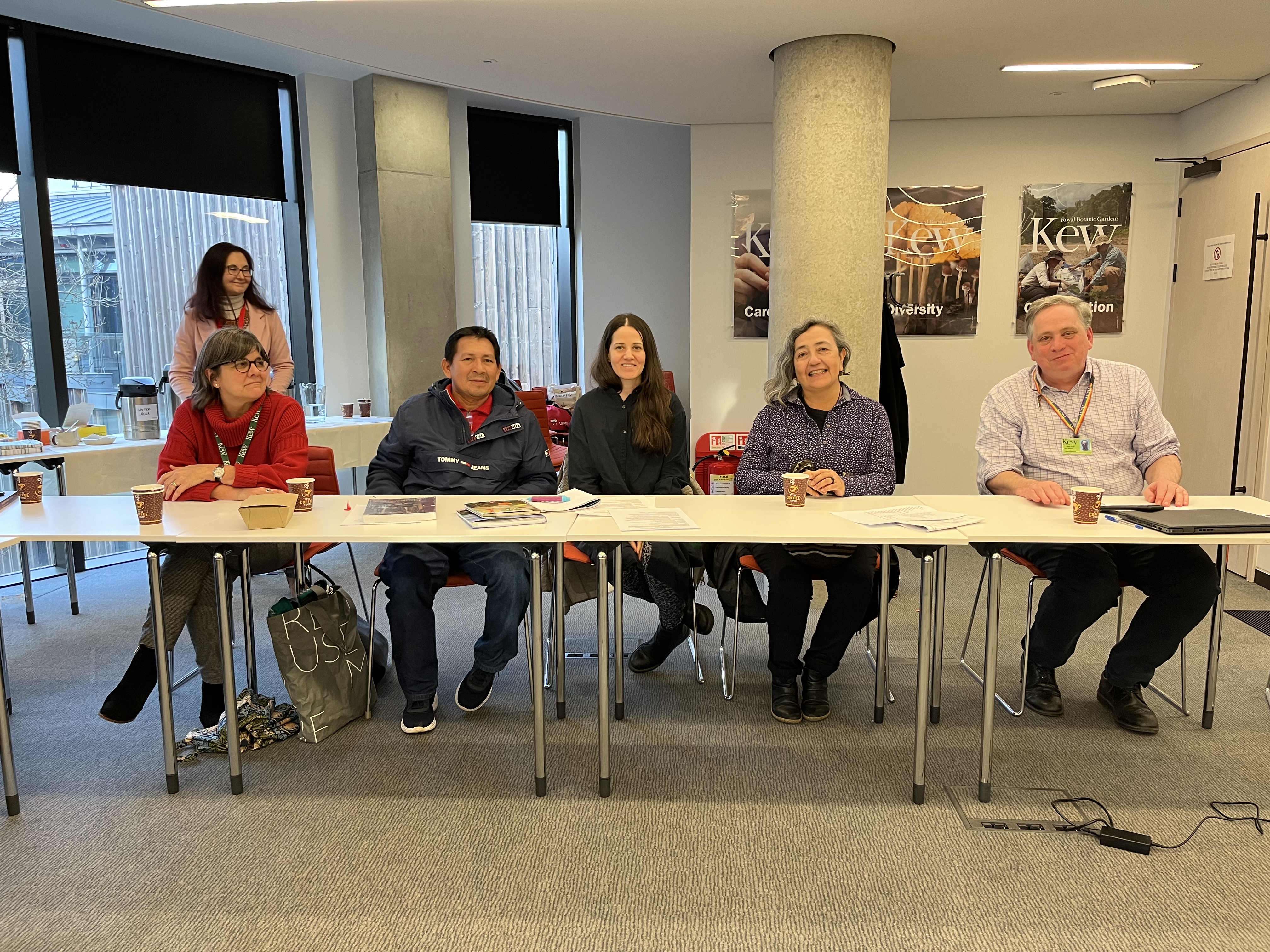
Fig. 1. Some members of the panel at the workshop with, from left to right, Cynthia Sothers, Luciana Martins, Dagoberto Lima Azevedo, Cinthya Lana, Claudia Leonor López Garcés and Mark Nesbitt. Photo by Gayathri Anand.

The Richard Spruce collection (1849-1864) was used as a case study. Spruce collected plants and recorded their uses in South America, and is considered to be an early ethnographer, as he also recorded the traditions and customs of the different communities that he met on his travels.1 He collected over 14,000 herbarium specimens in the Andes and Amazon regions, and 350 items are in his ethnobotanical collections.2

Continue reading

NatSCA Digital Digest – April 2023

Compiled by Milo Phillips, Assistant Curator of Entomology for National Museums Scotland.

Welcome to the April edition of NatSCA Digital Digest.

A monthly blog series featuring the latest on where to go, what to see and do in the natural history sector including jobs, exhibitions, conferences, and training opportunities. We are keen to hear from you if you have any top tips and recommendations for our next Digest, please drop an email to blog@natsca.org.

Sector News

Registration for the NatSCA 2023 conference closes on April 20th so get booking ASAP. The conference will be held on Thursday 27th and Friday 28th April 2023. Stoke-on-Trent Museums will be hosting the conference at The Potteries Museum & Art Gallery. The conference will include gallery and collection tours, presentations, poster sessions and the annual AGM. For all the info and to register, check out our webpage.

Register via Eventbrite through the NatSCA website: https://www.natsca.org/natsca2023. Members can access discounted booking rates by entering a promo code which has been distributed. If you are a NatSCA member and have not received a code via email, please contact membership@natsca.org. We look forward to seeing you later this month!

SPNHC Conference

The 38th Annual Meeting of The Society for the Preservation of Natural History Collections is being held in San Francisco, California 28 May – 2 June 2023. Early bird registration ends this Friday 15th April. See details and registration here.

Science, Gender & Sociability in a Northern City c. 1775-1820 Conference

This interdisciplinary event brings together scholars in women’s history, the history of science, literature, theatrical performance, music and historical archaeology from across the UK and the US, to contextualise and analyse the diary of Jane Ewbank (1778‒1824). More information on speakers, and links for bookings, can be found here. The conference runs Thursday 8th to 10th June 2023.

Continue reading