Hunterian Heads: Cleaning Large Skeletal Specimens

Written by Caitlin Jenkins, Project Conservator at Parliamentary Archives (previously Assistant Conservator at Royal College of Surgeons of England).

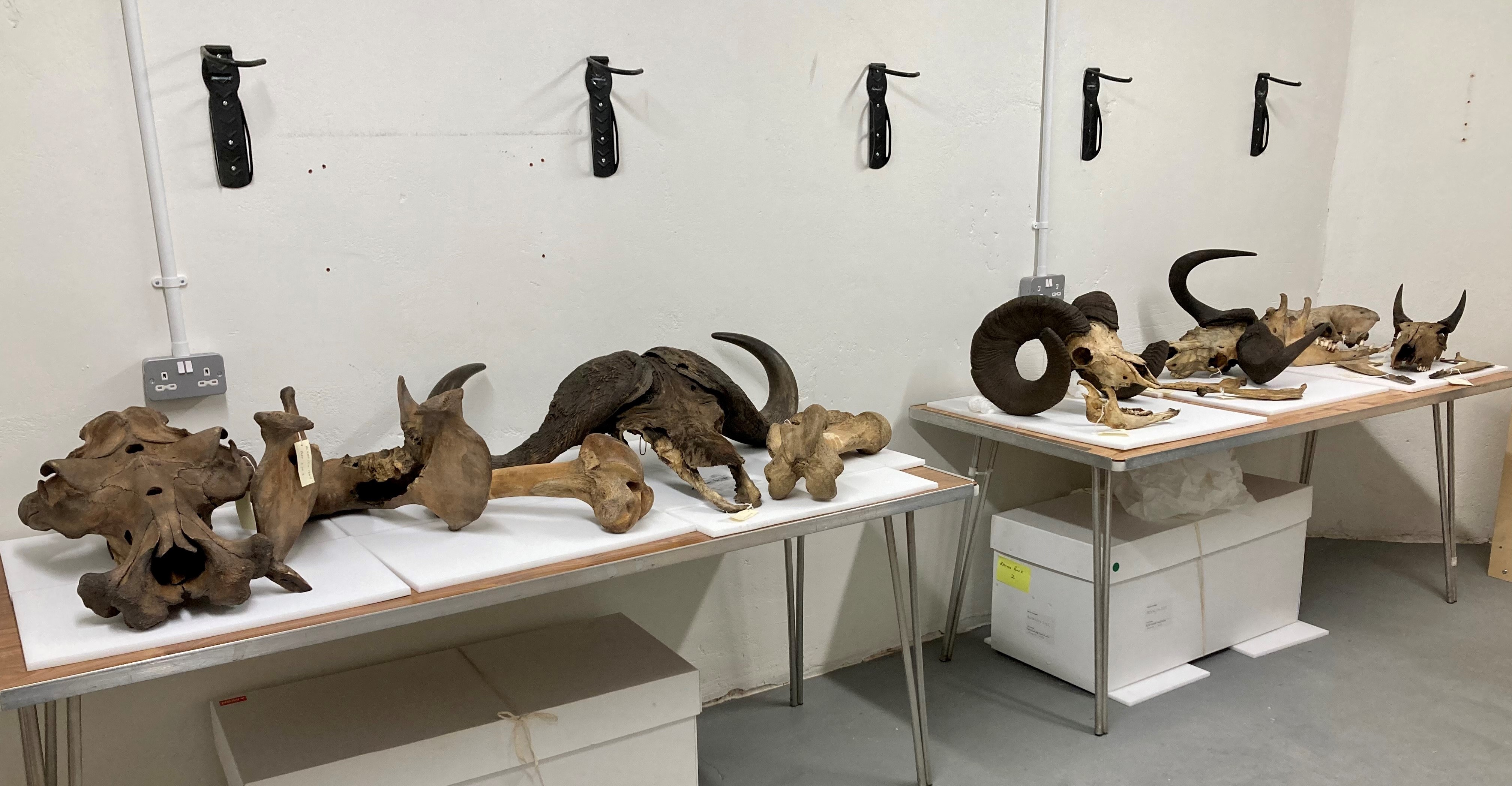
The Hunterian Museum at the Royal College of Surgeons (RCS) in London closed in 2017 for redevelopment. This necessitated the temporary removal, storage, and condition assessment of its contents. One particularly challenging project was the conservation of 19 large animal skulls. These specimens are part of the museum founder John Hunter’s original collection, dating from the 18th century.

Although the skulls had been sealed in secure crates since the museum’s closure, most had some noticeable dust and dirt accretions and needed attention before they could be redisplayed. Due to their size and number, a team of conservators from Virtu Conservation Housekeeping was brought in to assist with this task. There was a lack of suitable bench space to accommodate so many large specimens at once, so temporary cleaning stations were set up.

Continue reading

People and Plants Workshop Three: Sharing Knowledge in the Amazon

March 10th, 2023, Royal Botanic Gardens, Kew

Written by Fiona Roberts (Collaborative ESRC PhD student, Cardiff University & Amgueddfa Cymru-National Museum Wales) and Violet Nicholls (Assistant Curator in Herbarium, Portsmouth Museums).

This post is dedicated to Dr Dagoberto Lima Azevedo (1979-2023), Tukano researcher, translator, scholar, author and a voice for the Indigenous peoples of the Rio Negro in the northwestern Amazon.

The third and final workshop of a one-year project ran in March 2023, at Royal Botanic Gardens, Kew. The project, “People and Plants: reactivating ethnobotanical collections as material archives of indigenous ecological knowledge”, began in January 2022, and was supported by NatSCA (Natural Sciences Collections Association). Funded by the Arts and Humanities Research Council (AHRC), it was led by National Museums Scotland, the Powell-Cotton Museum and Royal Botanic Gardens, Kew. 

The workshop ran in partnership with Museu Goeldi, Brazil and the Department of Cultures and Languages, Birkbeck, University of London. It addressed the question, ‘how ethnobotanical collections in museums can best be used to support Indigenous communities?’. Dr Dagoberto Lima Azevedo, from the Federação das Organizações Indígenas do Rio Negro, and Claudia Leonor López Garcés (Museu Paraense Emílio Goeldi) travelled from the Brazilian Amazon for the event. They met with fellow panellists Professor Mark Nesbitt (Royal Botanic Gardens, Kew), Professor Luciana Martins (Birkbeck, University of London), Cinthya Lana (University of Gothenburg) and Dr William Milliken (Royal Botanic Gardens, Kew).

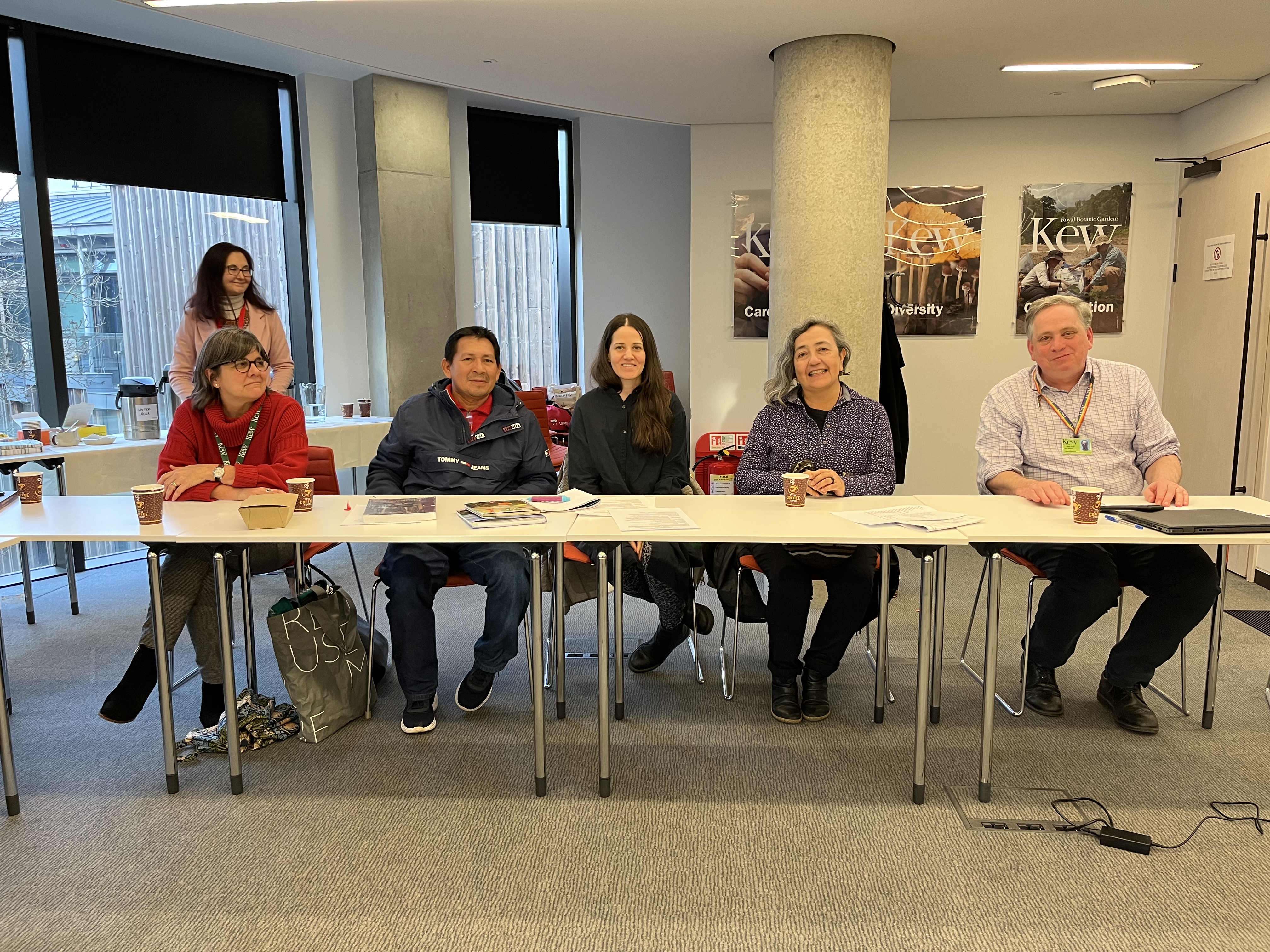
Fig. 1. Some members of the panel at the workshop with, from left to right, Cynthia Sothers, Luciana Martins, Dagoberto Lima Azevedo, Cinthya Lana, Claudia Leonor López Garcés and Mark Nesbitt. Photo by Gayathri Anand.

The Richard Spruce collection (1849-1864) was used as a case study. Spruce collected plants and recorded their uses in South America, and is considered to be an early ethnographer, as he also recorded the traditions and customs of the different communities that he met on his travels.1 He collected over 14,000 herbarium specimens in the Andes and Amazon regions, and 350 items are in his ethnobotanical collections.2

Continue reading

NatSCA Digital Digest – April 2023

Compiled by Milo Phillips, Assistant Curator of Entomology for National Museums Scotland.

Welcome to the April edition of NatSCA Digital Digest.

A monthly blog series featuring the latest on where to go, what to see and do in the natural history sector including jobs, exhibitions, conferences, and training opportunities. We are keen to hear from you if you have any top tips and recommendations for our next Digest, please drop an email to blog@natsca.org.

Sector News

Registration for the NatSCA 2023 conference closes on April 20th so get booking ASAP. The conference will be held on Thursday 27th and Friday 28th April 2023. Stoke-on-Trent Museums will be hosting the conference at The Potteries Museum & Art Gallery. The conference will include gallery and collection tours, presentations, poster sessions and the annual AGM. For all the info and to register, check out our webpage.

Register via Eventbrite through the NatSCA website: https://www.natsca.org/natsca2023. Members can access discounted booking rates by entering a promo code which has been distributed. If you are a NatSCA member and have not received a code via email, please contact membership@natsca.org. We look forward to seeing you later this month!

SPNHC Conference

The 38th Annual Meeting of The Society for the Preservation of Natural History Collections is being held in San Francisco, California 28 May – 2 June 2023. Early bird registration ends this Friday 15th April. See details and registration here.

Science, Gender & Sociability in a Northern City c. 1775-1820 Conference

This interdisciplinary event brings together scholars in women’s history, the history of science, literature, theatrical performance, music and historical archaeology from across the UK and the US, to contextualise and analyse the diary of Jane Ewbank (1778‒1824). More information on speakers, and links for bookings, can be found here. The conference runs Thursday 8th to 10th June 2023.

Continue reading

NatSCA Digital Digest – March 2023

Welcome to the March edition of NatSCA Digital Digest.

Compiled by Olivia Beavers, Assistant Curator of Vertebrate Zoology at World Museum, National Museums Liverpool.

A monthly blog series featuring the latest on where to go, what to see and do in the natural history sector including jobs, exhibitions, conferences, and training opportunities. We are keen to hear from you if you have any top tips and recommendations for our next Digest, please drop an email to blog@natsca.org.

Sector News

NatSCA Conference 2023

Registration is open for the Annual Conference & AGM of the Natural Sciences Collections Association will be held on Thursday 27th and Friday 28th April 2023. Stoke-on-Trent Museums will be hosting the conference at The Potteries Museum & Art Gallery. The conference will include gallery and collection tours, presentations, poster sessions and the annual AGM. The focus this year is:

So how do we actually do all this? Hopeful futures and turning theory into practice for big issues in natural history collections

This is the “How To…” conference for people working with natural history collections. The last few years have seen unprecedented changes in the expectations for what the museum sector can deliver. Global and local social and environmental issues have coincided to reinforce the needs of museums to consider their reinvention and relevance.

Register via Eventbrite through the NatSCA website: https://www.natsca.org/natsca2023. Members can access discounted booking rates by entering a promo code which has been distributed. If you are a NatSCA member and have not received a code via email, please contact membership@natsca.org. We look forward to seeing you in April!

SPNHC Conference

The 38th Annual Meeting of The Society for the Preservation of Natural History Collections is being held in San Francisco, California 28 May – 2 June 2023. Full details here.

Unnatural History Museum session

This session will be held on 22nd March 2023 on the topic of decolonising natural history museums. 

“We are at a crucial historical moment, in which the International Union for Conservation of Nature Red List has announced a catastrophic decline in global biodiversity. Yet nature is, necessarily, interpreted in museums, through taxidermy dioramas and skeletal mounts; virtual tours and digital databases; image, text and film. The Unnatural History Museum brings together museum professionals and academics across disciplines to platform vital conversations about the museum mediation of the natural world during the sixth mass extinction.”

Each session is hosted on Zoom to allow for international participation, and takes the format of short presentations focussed around a specific theme, followed by a synthesised Q&A and roundtable discussion. To register and find out more click here.

Continue reading

4th MOBILISE Training School: “Next Step in the Digitisation Process of Natural History collections: Publishing of Biological, Geological, Palaeontological and Mineralogical data”.

Written by Olivia Beavers, Assistant Curator of Vertebrate Zoology at World Museum, National Museums Liverpool.

In December I was selected, along with 17 others, to attend the 4th MOBILISE Action Training School held in Brussels, 6–7th February. This training school gave an opportunity for students and professionals of Natural History Institutions from Europe and Israel to learn more about the publishing of our collections’ data sets. A crucial aim of the training school was to learn how to map data to the Darwin Core Standard, and as a result, create a Darwin Core Archive file to be uploaded to GBIF.

The Training School consisted of two parts: the first was an introduction to the group. This was conducted online and addressed theoretical issues associated with our datasets. Part 2 was the two-day, face to face trip to Brussels to check the cleaning and validation of our data for it to be ready for publishing on GBIF (for Biological Data) or GeoCASe (for Geological, Palaeontological and/or Mineralogical data).

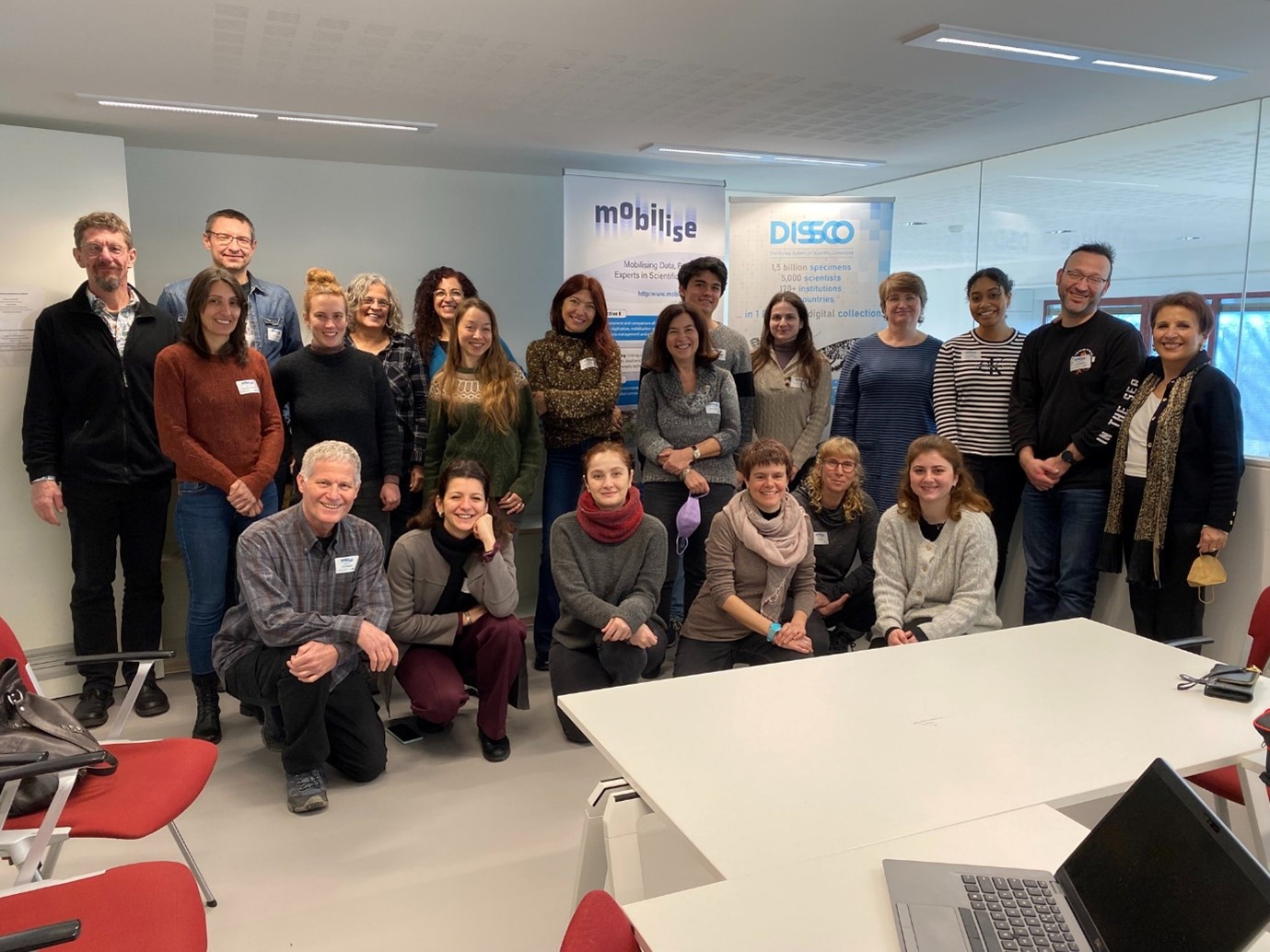
A group photo of the 21 attendees and group leaders at the 4th MOBILISE Action Training School, Brussels
Figure: 1 A group photo of the attendees and group leaders at the 4th MOBILISE Action Training School, Brussels ©Katerina Voreadou
Continue reading