Packing the Blaschka Glass Models 

Written by Julian Carter, Principal Conservator Natural Sciences, Amgueddfa Cymru – Museum Wales, Cardiff

During the late 19th century, Leopold Blaschka (1822-1895) and his son Rudolf (1857-1929) produced thousands of beautifully detailed glass models of a wide range of sea creatures, and other animals, for natural history museums and aquaria all over the world. The work has since been hailed as “an artistic marvel in the field of science and a scientific marvel in the field of art”. The work of the Blaschka’s remains remarkably contemporary today, working as they did on the cusp of design, craft, and industry. Crossing the boundaries of science and art, the surviving models today have a value that makes them irreplaceable. 

The idea for making lifelike renditions of sea creatures out of glass arose from the difficulty of preserving and displaying soft-bodied animals such as jellyfish, marine worms, and sea anemones. Preserving such animals in a lifelike way is difficult as techniques such as fluid preservation cause colours to quickly fade and shapes to become distorted. Leopold Blaschka devised a solution to this problem by using his glass working skills to accurately model these animals out of glass and other materials available to him and went on to establish a successful business supplying glass models to museums worldwide during the latter half of the 19th century. 

The model of the sea anemone Actinia mesembryanthum (right) based on a plate (left) from Phillip Henry Gosse’s Actinologia britannica. A history of the British sea-anemones and corals which Leopold Blaschka used for the early sea anemone models that he built.
Continue reading

Conservation Matters in Wales – Christmas Conference 2023

Written by Sebastien Lherondel-Davies, 2nd year BSc student, Swansea University, whilst on placement at National Museum Cardiff and Swansea Museum.

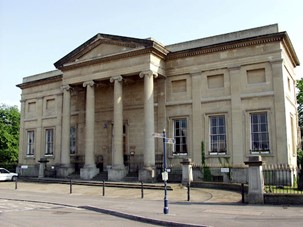
On Wednesday 13th December 2023, conservators and curators from all over Wales gathered in Swansea for the first in-person Conservation Matters Wales Christmas Conference since the pandemic. Conservation Matters Wales is a collaboration between Amgueddfa Cymru – National Museum Wales, the Federation of Museums and Art Galleries in Wales, and Cardiff University. The event, hosted by the delightful Swansea Museum, was an opportunity for professionals in the museum collections conservation sector to come together and share the wide range of projects they have been working on. The conference provided us with the chance to present our research project on a historic Lepidoptera collection. 

Swansea Museum
Continue reading

Hunterian Heads: Cleaning Large Skeletal Specimens

Written by Caitlin Jenkins, Project Conservator at Parliamentary Archives (previously Assistant Conservator at Royal College of Surgeons of England).

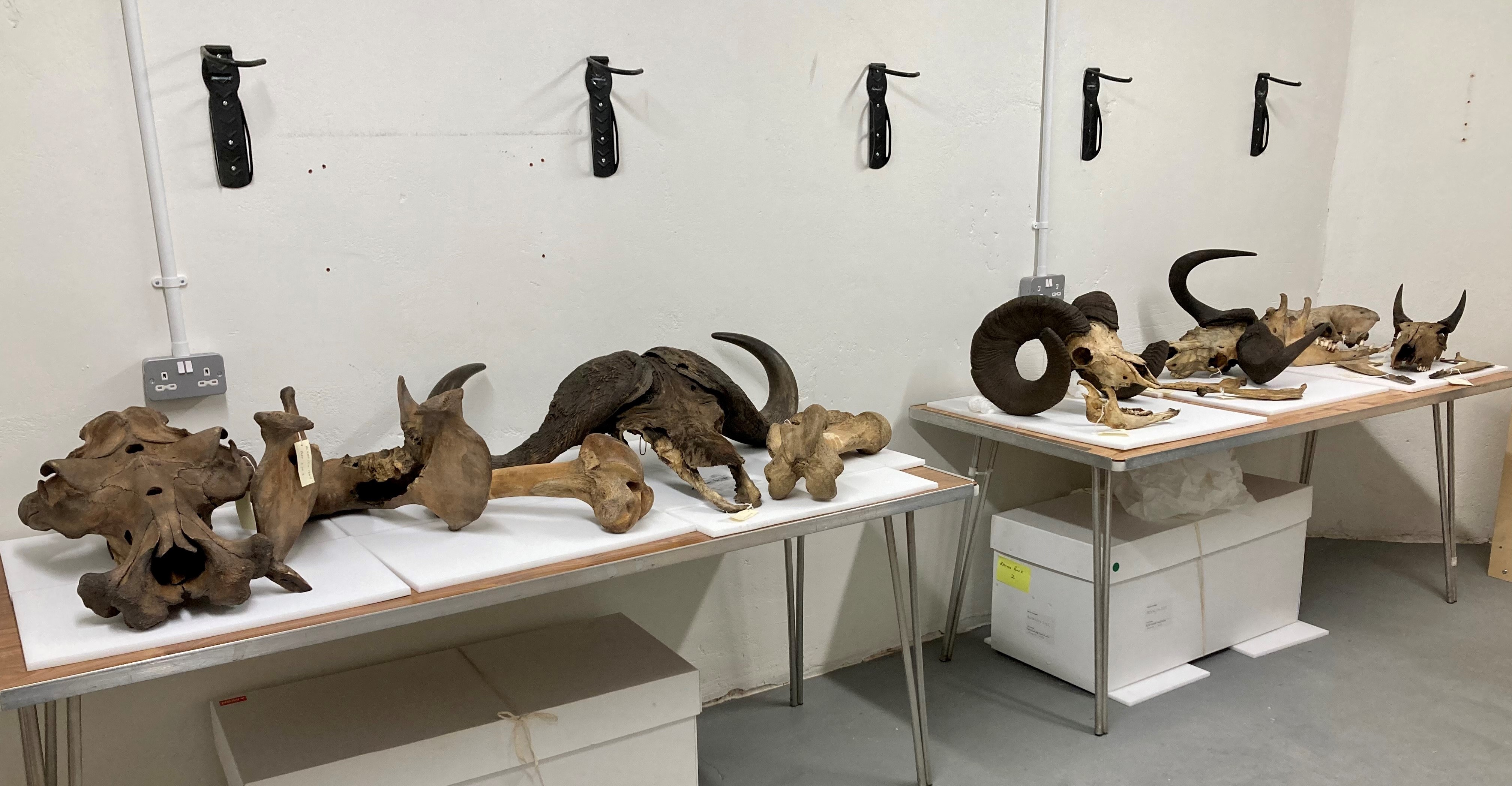
The Hunterian Museum at the Royal College of Surgeons (RCS) in London closed in 2017 for redevelopment. This necessitated the temporary removal, storage, and condition assessment of its contents. One particularly challenging project was the conservation of 19 large animal skulls. These specimens are part of the museum founder John Hunter’s original collection, dating from the 18th century.

Although the skulls had been sealed in secure crates since the museum’s closure, most had some noticeable dust and dirt accretions and needed attention before they could be redisplayed. Due to their size and number, a team of conservators from Virtu Conservation Housekeeping was brought in to assist with this task. There was a lack of suitable bench space to accommodate so many large specimens at once, so temporary cleaning stations were set up.

Continue reading

‘Dino Takedown’ at the Natural History Museum of Denmark.

Written by Bethany Palumbo, ACR, Head of Conservation Unit, The Natural History Museum of Denmark.

At the Natural History Museum of Denmark, work is currently underway to prepare and move thousands of specimens to a new building, located in the Botanical Gardens in Copenhagen. One such specimen is ‘Misty’ our beloved 17-meter-long Diplodocus. Misty has been welcoming visitors to the Zoological Museum since 2014 and is a much-loved part of our exhibitions.

Taking this specimen down was symbolic in many ways. It was a goodbye to the old building but also a celebration of the new building and future of the museum. We wanted to commemorate this milestone and so we decided to make the Diplodocus deinstallation into an outreach event called the ‘Dino Takedown’. This would create a rare opportunity for the public to watch the deinstallation process, ask questions and further understand the types of conservation work we do in a museum.

Continue reading

Exploring Materials in Natural History Dioramas

Written by Claire Dean, Curatorial Assistant at Tullie House Museum and Art Gallery, Carlisle, and MA Preventive Conservation student at Northumbria University.

The wildlife dome at Tullie House Museum and Art Gallery
The wildlife dome at Tullie House Museum and Art Gallery Carlisle, C. Dean

In many old dioramas, material mysteries abound. As a Curatorial Assistant at Tullie House, I’ve encountered a tree trunk made from a Robinson’s fruit juice box, a fake roof that contained fibrous signs of asbestos, and a hodgepodge of unidentifiable paints and old plastics. The museum’s new-in-post Biodiversity Curator discovered pests thriving amongst the real vegetation and a 30-year-old slice of bread in a garden scene.

Dioramas aim to create the illusion of real habitats for their taxidermy inhabitants, and they use a huge range of materials to do so. After decades of neglect and destruction there is now wider recognition that habitat dioramas can instil a sense of wonder in visitors that no amount of digital wizardry can replace. Through my dissertation research for an MA in Preventive Conservation at Northumbria University, I wanted to find out more about what materials have been used in dioramas over time, how these might impact the preservation of specimens, and what we can do to better protect the dioramas that remain. I put a call out to ask, ‘What’s in your dioramas?’ through an online survey and received 30 responses from people with experience in a range of different sized institutions and private practice.

Continue reading