NatSCA Digital Digest – December 2024

Compiled by Olivia Beavers, Assistant Curator of Vertebrate Zoology at World Museum, National Museums Liverpool.

Welcome to the December edition of NatSCA Digital Digest.

A monthly blog series featuring the latest on where to go, what to see and do in the natural history sector including jobs, exhibitions, conferences, and training opportunities. We are keen to hear from you if you have any top tips and recommendations for our next Digest, please drop an email to blog@natsca.org.

Sector News

NatSCA Conference & AGM 2025

The 2025 NatSCA conference Call for Papers is open! The deadline to submit is 5pm GMT Friday 17th January. In the meantime, don’t hesitate to reach out to the committee with questions. (conference@natsca.org) We look forward to reading your submissions!  

Making a Difference: Showing the Positive Impact of Natural History Collections

The Annual Conference & AGM of the Natural Sciences Collections Association will be held on Thursday 8th and Friday 9th May 2025 at The University of Manchester, Manchester Museum.

Natural history collections are involved in a huge range of work that has enormous positive impacts on people and the planet – this is a conference to share these stories. The #NatSCA2025 conference invites proposals for presentations looking at impact, how our work is making a difference, how we measure it, how we show success, and how we advocate for collections.

We seek ideas from the natural history collections community, educators, collaborators, and beyond. We are interested in practical lessons, unique solutions, new collaborations, and to show what has and hasn’t worked. We are particularly looking for presentations that share the differences museums are making in:

Continue reading

Make Plastic History

Written by Glenn Roadley, Curator of Natural Science, The Potteries Museum & Art Gallery, Stoke-on-Trent.

In May 2023, Professor Claire Gwinnett reached out to me with an opportunity to host a public event at The Potteries Museum & Art Gallery (PMAG). Claire, Professor of Forensic and Environmental Science at Staffordshire University, is an expert in the study of plastic pollution and has worked with the museum before to lead activities at our various science events, so immediately thought of us when seeing the call for applications for the British Academy’s SHAPE Involve and Engage grants. The programme offered grants of up to £8,000 for innovative engagement activities which highlight humanities research, with partnerships between academic and cultural institutions eligible to apply. Claire and I put our heads together and came up with a plan for a day of family-friendly activities aimed at raising awareness of plastic pollution and the research being undertaken to tackle it. At the centre of these activities would be a workshop run by Dan Lewis, an artist who uses plastic fragments found on the beach to create works of art.

Continue reading

NatSCA Digital Digest – September 2024

Compiled by Olivia Beavers, Assistant Curator of Vertebrate Zoology at World Museum, National Museums Liverpool.

Welcome to the September edition of NatSCA Digital Digest.

A monthly blog series featuring the latest on where to go, what to see and do in the natural history sector including jobs, exhibitions, conferences, and training opportunities. We are keen to hear from you if you have any top tips and recommendations for our next Digest, please drop an email to blog@natsca.org.

Sector News

GCG 51st Winter Seminar and AGM – Call for Abstracts Now Open

The Geological Curators Group have announced the details for their Winter Seminar Reciprocal Relationships: how can partnerships help us and our collections develop?  and AGM taking place at Oxford University Museum of Natural History 11 – 13th November 2024. The dates include an evening icebreaker, presentations, workshops, AGM, conference dinner and a field trip.

The deadline for abstracts is October 14th 2024. Please follow the link for further details: https://www.geocurator.org/events/180-agm51 .

Continue reading

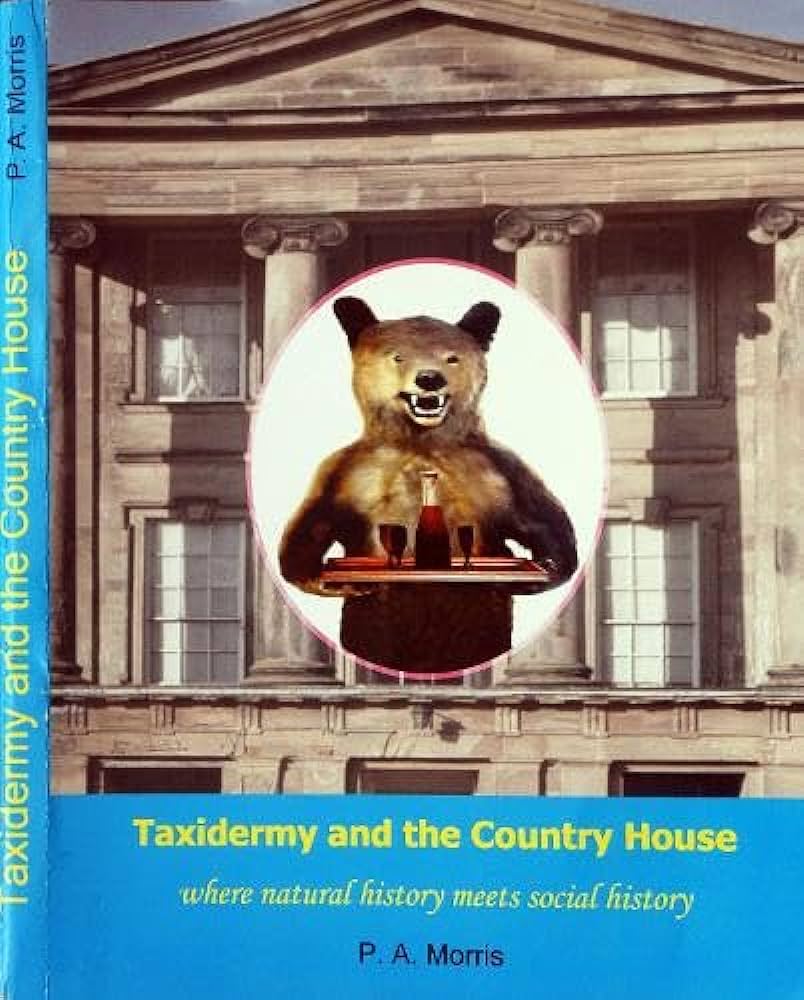
Taxidermy and the Country House: Where Natural History Meets Social History – a review 

Written by Jack Ashby, Assistant Director of the University Museum of Zoology, Cambridge.

Pat Morris is the authority on the history of British taxidermy, and there is arguably no-one better to write an exploration of the specific context of taxidermy collected for and displayed in private country houses. Although their materiality is identical, by their nature, these collections are often conceptually very different – the antithesis, even – to those in public museum. These differences are not the focus of the book, nonetheless this perspective offers great potential to help us consider more roundly the story of taxidermy and those that made and collected it.

The similarities museum and country house collections do share include their origin-stories, and of course the practicalities of preserving specimens. Like museums, these private collections trace their histories back to cabinets of curiosities. Preservability was fundamental to what could be kept, and Morris begins by explaining that early cabinets of curiosities in country houses were mainly items that required no preservation – dry materials like shells and bone. The only skins that were widely kept were those that could be simply dried without being prone to insect attack, which is why durable specimens like taxidermy crocodiles, hollowed-out armadillos and inflated pufferfish were commonplace in these early collections, rather than the birds and mammals which later became the norm.

Continue reading