NatSCA Digital Digest – December

Save the Date!

The NatSCA conference and AGM will be at Leeds City Museum on Thursday 26th and Friday 27th April 2018!

The conference theme is: The museum ecosystem: exploring how different subject specialisms can work more closely together.

This conference aims to lead us outside our comfort zone and explore how working closely with different disciplines and departments can not only strengthen our own areas of expertise, but museums as a whole. The museum ecosystem is vast and not limited to just museums as it includes universities, local organisations, funding bodies, artists, communities and many other stakeholders.

We are inviting you to propose presentations and posters that focus on sharing ideas, tips and mechanisms that will help inform the work of other attendees. Proposals are welcome from colleagues across all disciplines (not just natural history!)

To submit your abstract, please download and complete a submission form and send your completed form to conference@natsca.org.

Continue reading

Making the Most of a Move

Making the Most of a Move: Geological Curators’ Group Conference, Day Two

We like to share the goodies in the field of natural history, so in the first ever cross-over of its kind, Part I (comprising Day One) of this blog can be found over on the Geological Curator’s Group website. No need to take the time to google it, let me give you a hand over there.

Night Early Morning at the Museum

The only thing that beats going to a natural history museum is visiting it when you’re not meant to be. The trump card of such a visit, is when you’re allowed to go to parts of the collections, not normally accessible to the general public. After a day in the lecture theatre, the 35+ members of the “Making the Most of a Move” conference assembled the following morning outside the Natural History gallery of the National Museum of Ireland, in order to tick off every one of the above, on the Museum Treats Bingo Card*.

Continue reading

The Addition of Enthusiasts

In a blog series hosted by the Horniman Museum, each month I (the Deputy Keeper of Natural History at said Museum) select a specimen from our collections, do a little research, hopefully find out some riveting and hitherto unknown piece of historical information about it that can be added to our database, and write a blog in a format accessible for the general public. It is one of my pride and joys in my job as it covers so many different aspects of museum life- public engagement, outreach, research, museum documentation, collections management, etc. This month I managed to go a step further and incorporate not just exhibition content into the article (British Wildlife Photographer Awards temporary exhibition), but also a new avenue of research and interest; a 6000 strong army of hawfinch enthusiasts who take to Twitter to record sightings of this shy but glorious little bird. I asked the followers of @HawfinchesUK if they would like to publish an image they had taken and was subsequently presented not just with photographs, but with fascinating insider information of the birding world that I may not have found by my own research.

What a wonderful collaboration of scientists and enthusiasts, and an exceptional reward for the utilisation of social media. Please enjoy:

Continue reading

The Curious Life of a Museum Curator

Working as a curator in a museum is an odd job. It is the best job on the planet. But it is like no other I know of. There are an enormous range of daily tasks a curator carries out, and these are not without their quirks. Here are a few oddities museum curators deal with regularly:

Curators are not Indiana Jones

I’ve written about this before in more detail, but no, we are not Indiana Jones. When we introduce ourselves to new people, the response is sometimes ‘oh, just like Indiana Jones.’ This is a common misconception, albeit a rather flattering one. We do see some dangerous action in the field: dozens of beetles and flies on family friendly bug hunts, slipping on jagged rocks when rock pooling. However, some, many, most do not have whips under their beds. Curators do not steal ancient relics from temples (there are laws against those sorts of things). We are just as determined and passionate as Indy, but very different.
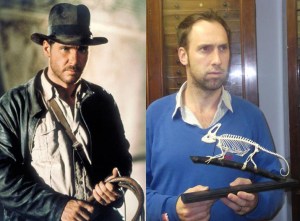
 

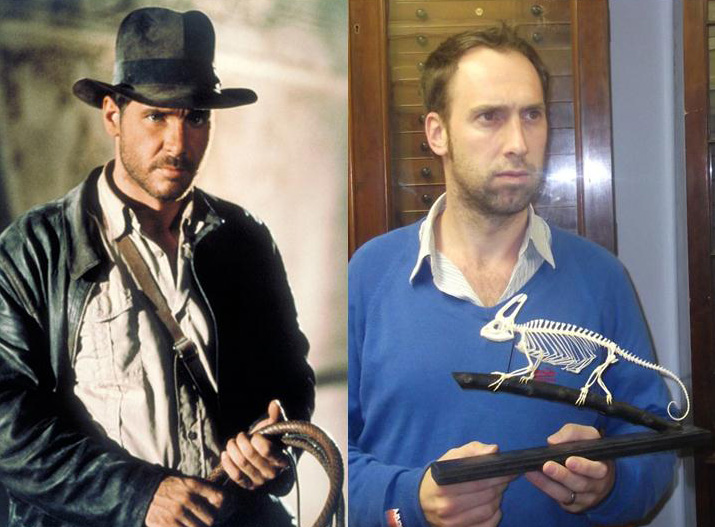
A museum curator and Indiana Jones. Can you tell the two apart? (Photo left Public Domain. Photo right by author)


“You’re Ross from Friends

This is a another common response when a museum curator tells someone what they do. And yes, Ross Geller (played by the excellent David Schwimmer), was a museum curator before becoming a university lecturer in the wonderful sit-com Friends. Ross worked at the fictional Museum of Natural History as a palaeontology curator. His work spanned enormously for a national museum, where his expertise ranged from human evolution to dinosaurs. Ross Geller is the closest thing to a museum personality curators have ever had. To be honest, this isn’t a bad thing. He was pretty cool. Curators can relate to his slightly obsessive geekiness and matter of fact way of thinking. For me, Ross is a legend on screen. As a teen watching Friends his character was actually extremely influential – I could relate to his nerdy, slightly awkward persona. In fact, without Ross Geller I wouldn’t have thought about a career in museums.

Continue reading

NatSCA Digital Digest – November

What’s been Happening?

The 2017 GCG Conference in Dublin was a resounding success. Our resident blogger Emma-Louise Nicholls has been co-opted onto the GCG committee – well done Emma!. I was unfortunately unable to attend the conference but I’m hoping that someone who did will volunteer a write-up for us.

Museums everywhere have been going all spooky for Hallowe’en. The Horniman Museum in Forest Hill turned their monthly lates event into the Bloody Late, a tour-de-force of spooky music and blood-curdling tours.

The Tetrapod Zoology Convention doubled the turn-out of previous years – made possible in part due to the venue change from the London Wetland Centre (near Hammersmith) to The Venue (near Holborn). NatSCA member Heather’s talk on the History of Zoos was great, as was our patron Ben Garrod’s account of working with David Attenborough and other windows into the world of TV science communication. There were lots of other great talks besides, which we will mention as we go along. The palaeoart workshop this year was mural-themed and presented an interesting challenge to create multiple species to scale across geologic time. My animal was a Microraptor, which I drew in the foreground because it was so small. Other people had sauropods in the background and they were still so big they were escaping the paper in places. Several write-ups of this event have been made – you and find some of them here and here. If you want to be kept informed about next year’s TetZooCon, I encourage you to join the Facebook group – they already have all the speakers lined up for next year if it remains a one-day event. They might stretch it to two if there’s enough interest.

Continue reading