Top NatSCA Blogs of 2023

Compiled by Jen Gallichan, NatSCA Blog Editor.

To celebrate all of your wonderful contributions to the blog in 2023, here is a round up of the top ten most read blogs of the year. I want to take this opportunity to thank everyone who contributed an article. And what a bumper year it has been with articles covering decolonisation work, collections moves, exhibitions, workshops, collections research and management. The NatSCA blog is driven solely by your contributions and it is stands as a testament to the hard work you are all in doing despite challenging times.

I am pleased to say that the 2024 blog calendar is open for business, so drop me a line if you would like to contribute.

In descending order…

10. William Thomas March, a Jamaican Collector, Naturalist and Early Pioneer of Biological Data Recording in Jamaica. Written by Olivia Beavers, Assistant Curator of Vertebrate Zoology at World Museum, National Museums Liverpool. We kick of with a great blog looking at the work Olivia Beavers has been up to in Liverpool to highlight the work of a collector whose contributions to understanding Jamaican biodiversity are not yet fully recognised.

9. People and Plants Workshop Three: Sharing Knowledge in the Amazon. Written by Fiona Roberts (Collaborative ESRC PhD student, Cardiff University & Amgueddfa Cymru-National Museum Wales) and Violet Nicholls (Assistant Curator in Herbarium, Portsmouth Museums). The People & Plants workshops were an interesting series of training events focusing on decolonising collections. This article reviews the last of these events which addressed the question of how ethnobotanical collections in museums can best be used to support Indigenous communities.

Continue reading

Preparing Collections for a Big Move

Written by Ellie Clark (Collections Move Team Lead) and Lizzy Devenish (Collections Move Team Lead Digitisation), Natural History Museum, London.

Introduction

The Natural History Museum is in the process of preparing 38 million specimens to be moved, 28 million of which will be rehoused to a new Science and Digitisation Centre at Thames Valley Science Park (TVSP) in Reading – the largest move of natural history specimens globally. Part of NHM Unlocked, this is an ambitious programme to secure the future of our irreplaceable collections, accelerate scientific research and enhance the Museum’s public offer. 

As part of this process, new workflows are being developed to ensure the safety of specimens before, during and after the move. Below, Team Leads Ellie Clark and Lizzy Devenish discuss a couple of ways this is currently being accomplished.

Physical Interventions Survey

It is important to gain a good understanding of the condition and housing needs of specimens before they move to TVSP. To do this, the NHM Unlocked Moves Team are currently undertaking a Physical Interventions Survey across the Palaeontology Collections to better understand these needs. The level of preparation needed varies from specimen to specimen depending on several factors including current storage, specimen condition, size of specimen and collection type. The ultimate aim of the survey is to provide an initial assessment for the time and resources needed for specimen preparation by curatorial and conservation teams to facilitate the safe movement of specimens to the new site.

Continue reading

Biobanking on a Shoestring

Written by Louise Gibson, ZSL biobank manager at the Institute of Zoology, Zoological Society of London (ZSL).

Lurking in the depths of the Zoological Society of London (almost 200 years old), are vast collections of frozen, wet, and dry biological specimens. Amassed over several decades, procurement of these items has come via scientific fieldwork researching wildlife conservation, standard pathological investigation of captive animal mortality, contributions from Border Force and police wildlife crime investigations, and from the occasional public donations, dropped off on our doorstep.

Photo of octopus preserved in formalin – a octopus was left on the doorstep of ZSL, 2021, donor unknown. © Louise Gibson/ ZSL

Although the collections are extensive, knowledge of their contents is limited to those who have collected samples or managed them, many of which have long since left ZSL. Potential was seen to create a biobanking programme with the objective of preserving the collections and the knowledge that comes with them and in turn creating an accessible biological archive open to the scientific community and beyond. As a not-for-profit charity with minimal resources, we are aiming to achieve this on a shoestring budget.

Continue reading

Top NatSCA Blogs of 2022

Compiled by Jen Gallichan, NatSCA Blog Editor.

A very Happy New Year to all of our readers and contributors! Being the blog editor is a great job as I get to read all of your fantastic posts first and hear about all of the great work going on out there with natural history collections. To reflect on this, here is a round up of the most read blogs that came out in 2022 in case you missed any of them. A huge thank you to everyone who contributed an article, the blog continues to go from strength to strength and this is purely as a result of your work and writing. The 2023 calendar is half full already – so if you are considering submitting something for later in the year, do drop me a line and get it scheduled in.

10. A Foot In The Door – Finding Collections Work As A Trailing Spouse In A Foreign Country. Written by Caroline Grounds, Freelance Zoological Collections Assistant, Musée national d’histoire naturelle, Luxembourg. A lovely blog about finding your niche in a new country, and showing that collections work has no borders.

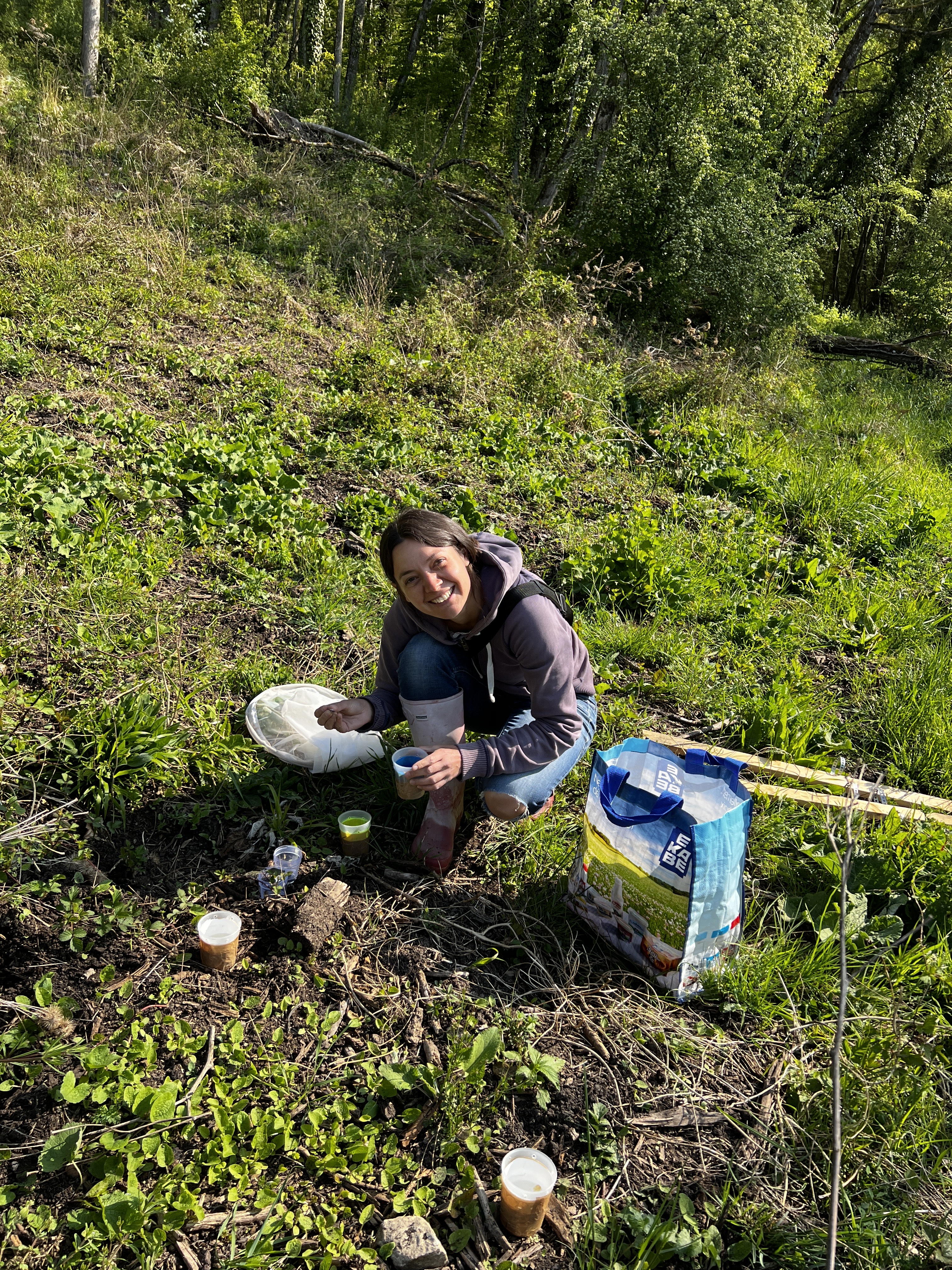
My happy place: sorting bees from by-catch from pan traps which we set up throughout the country. © Dylan Thissen

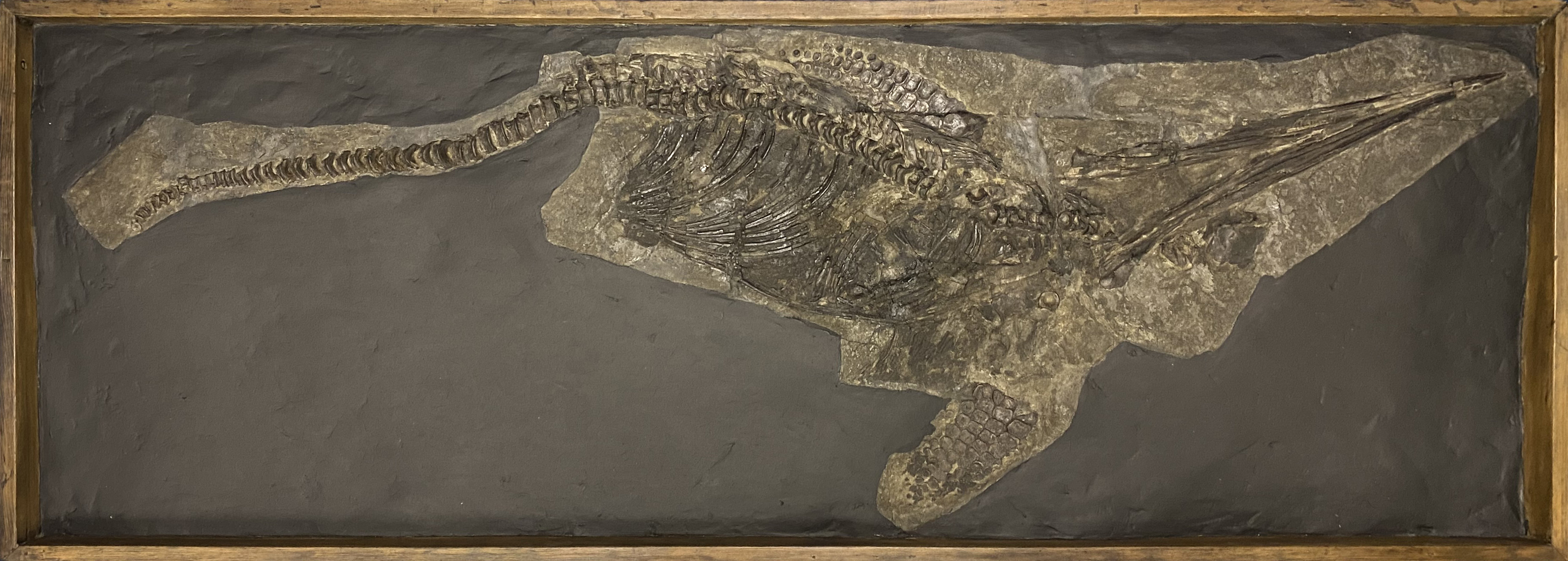
9. Thomas Bateman’s Ichthyosaurs. Written by Alistair McLean, Curator of Natural Science, Sheffield Museums Trust. Documenting the conservation work (part funded by the Bill Pettit award) that helped restore two beautiful Ichthyosaur specimens.

Continue reading

Reflecting on a Collections Move During the Pandemic, the Royal Horticultural Society Herbarium one year on.

Written by Clare Booth-Downs, Herbarium Curator, Royal Horticultural Society Herbarium.

Moving On Up, To Move On Out

The Royal Horticultural Society Herbarium (RHS), which holds approximately 150,000 specimens and associated ancillary collections, had outgrown its original storage space.  The building of a new dedicated science and collections centre, RHS Hilltop, which opened in late June 2021, provided a solution to this. Hilltop, the home of gardening science, includes a larger, purpose built facility, the 1851 Royal Commission Herbarium.

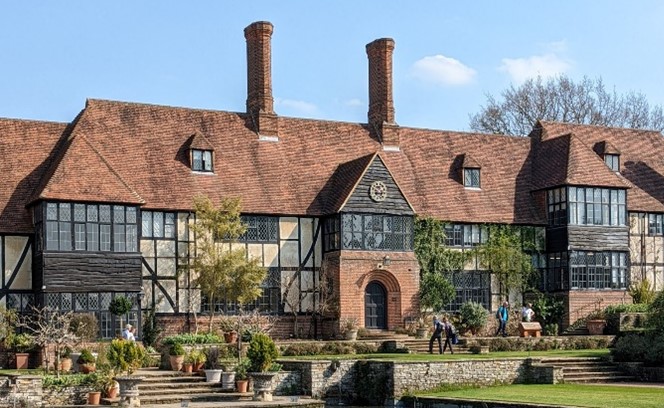
The Laboratory, RHS Wisley, Surrey. Image by Clare Booth-Downs. © Royal Horticultural Society.
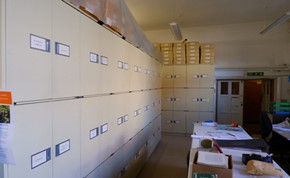
Interior of the original RHS Herbarium showing the overspill on top of the cabinets. Image: Yvette Harvey.

Increasing the capacity of the herbarium was vital as the collection is expected to expand at a fast pace over the next few years.  With a full time plant collector now in place, the RHS’ ultimate aim is to hold a specimen of every species and cultivar of garden plant growing in the U.K. It is estimated this will be a collection numbering 400,000 specimens by 2050.

This repository will act as a reference point for gardeners, breeders, students and researchers as well as for ‘non-traditional’ herbarium visitors, for example, artists and designers looking for inspiration for fabrics and jewellery.  This is alongside one of the Society’s own research foci, as described by Professor Alistair Griffiths, RHS Director of Science & Collections, “In the UK, we’ve got a massive diversity of cultivated plants, originating from around the world, and all have potential for nature-based solutions.  We’re going to work towards a database of the garden plants and their uses from an environmental, and health and wellbeing perspective”.

Continue reading