Impressions of My First NatSCA Conference

Last April I had the opportunity to attend the NatSCA conference at Leeds City Museum. I have been a member of NatSCA since I came to live in the UK three years ago and finally this year, thanks to one of the NatSCA bursaries, I was able to attend the conference. With more than 70 participants from all over the UK and beyond each day, more than 20 talks, interesting stands showing projects and new technology, good coffee and lunch in a uniquely-shaped hall, the event was very successful.

Over the two-day conference, I met colleagues from work, I recognised familiar faces from previous events and the most exciting part was to meet new people and to hear about the amazing projects and experiences from different experts in the museum environment. We also heard about the benefit of working with communities, schoolchildren, teachers, volunteers, undergraduate students, artists and many other groups.

After thinking carefully about what really impressed me (a difficult job with so many good talks), I would like to highlight the following topics.

Facing Challenges and Thinking Up New Strategies to Engage

The first two talks about the exhibition Dinosaurs of China in Nottingham really impressed me. The project involved extraordinary team work in organising the loans, the trips, the installation of the tallest dinosaur skeleton ever displayed in the UK, and the running of a very successful event with large numbers of visitors. The second talk showed brilliantly the role of theatre to enhance the visitor’s experience and engage the public while also showing a good marketing strategy. Moreover, selecting the artist with the required performance skills was very demanding work.

Continue reading

So You Think You Know About Dinosaurs?

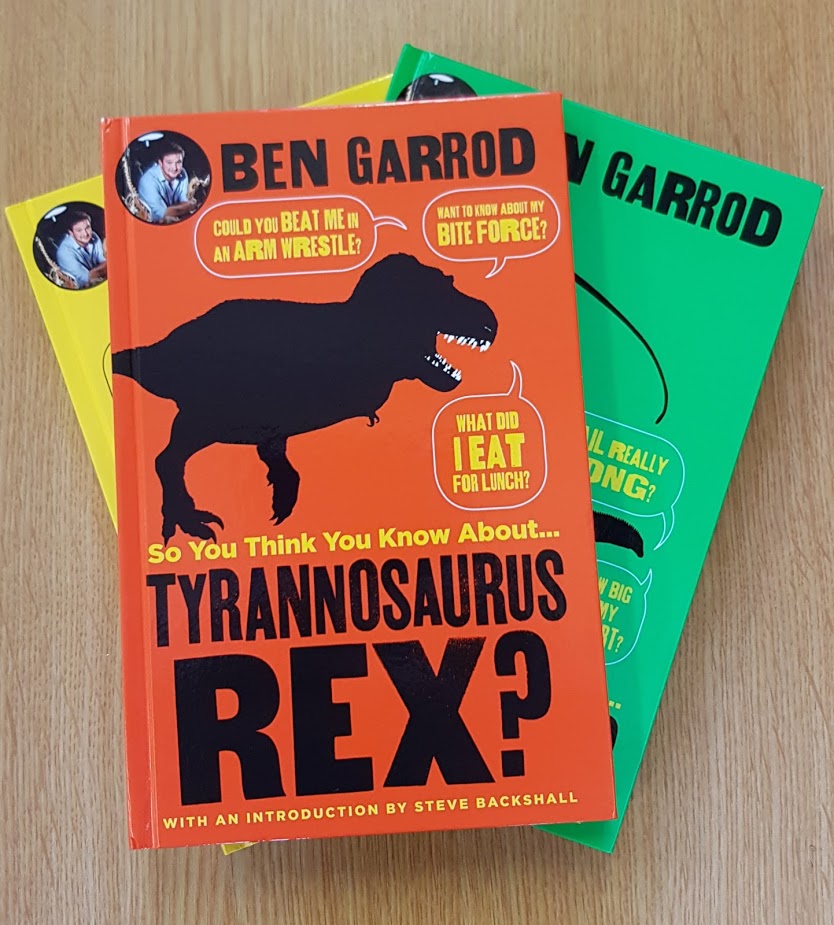
Ben Garrod’s new book series could be a hit with audiences of all ages.

So you think you know about dinosaurs? The evocative title perfectly reflects the contradictory upbeat attitude and challenging facts of Ben Garrod‘s series of dinosaur books for children. Each book is focused on a different dino species and is chock full of hard facts and science aimed at enthralling, teaching and challenging kids to think for themselves. While at an absolutely ANCIENT age of 23 years I am perhaps not the demographic that Ben is aiming at, nonetheless I immensely enjoyed these charming books and surprised myself by learning a lot about Triceratops, Diplodocus and Tyrannosaurus Rex.

Continue reading

Playing with Time

Cave palaeontology collections as vessels of truth and creativity…

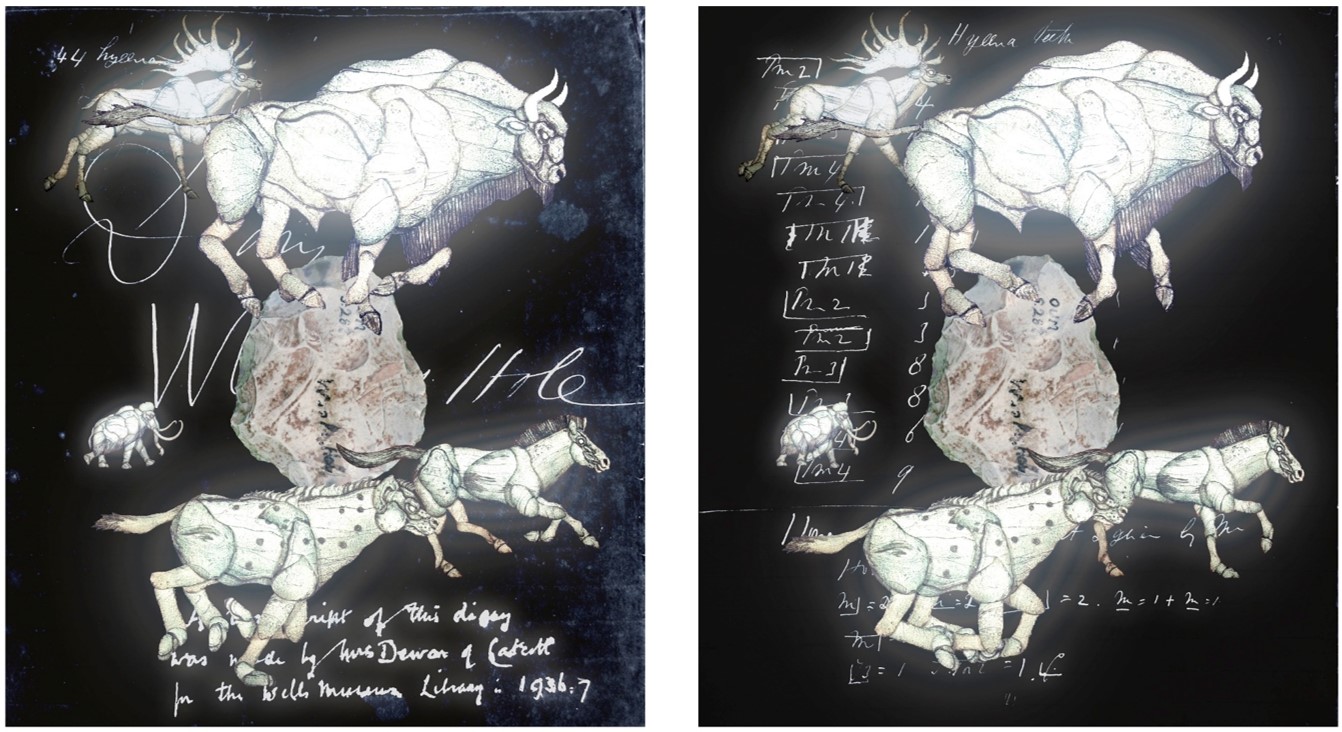
Big Beasts Stalk The Mind of Sir William Boyd Dawkins. Two pages from a flip-book showing animated giant deer, steppe bison, spotted hyaena, horse, pages from Sir William’s notebook relating to the excavation of the Hyaena Den at Wookey Hole and a Palaeolithic hand axe unearthed there. (C) Sean Harris.

Beasts of tooth and claw have always stalked the darker corners of my mind. But we could probably all say that couldn’t we? However, a recent creative collaboration – for which Wells and Mendip Museum’s seminal collection of Pleistocene mammal bone provided the focus – presented a new slant on the mind/ cave analogy.

My grandparents, who exerted such a powerful influence on my formation, did their very best to nurture a natural scientist of some shape or form. They would, I think, have been proud of a geologist, ornithologist, zoologist – also perhaps an archaeologist; maybe even an anthropologist. Someone of great standing and integrity, qualities probably manifest in a really solid moustache.

Consequently, growing up, I spent a lot of time in museums, in hides and ranging across fields with a geologist’s hammer; all activities accompanied with a notebook and pencil. However, to the considerable bafflement (and perhaps frustration) of my well-intentioned elders, a compulsive urge to express the images and narratives that formed themselves in my mind’s eye – ironically borne of hours gazing into cases at the minutiae of taxidermied creatures, patinated bones, geological specimens – won out and instead of a scientist they got an artist and animator.

However, having now, over the course of a career, worked with a diverse array of researchers in museums and conservation organisations, I know that I’m on the same spectrum as a great many of them – albeit perched at a slightly different position along it. Whilst our motivations and the languages we use to communicate our discoveries may be different, we’re all explorers of a type. I wish I could have the opportunity to explain that to my grandmother – though maybe she knew it anyway.

Continue reading

Taxidermy Koala – The Language of Natural History

This article has been re-posted from the Grant Museum of Zoology blog, with permission of the author Jack Ashby.

With generic terms like mankind and Homo sapiens (“wise man”), people of all genders are well aware that it is the masculine that has dominated the vocabulary of humanity. Not so in the animal kingdom.

Across UCL Culture we are celebrating the centenary of some women first getting the vote in the UK in a number of different ways. In the run up to International Women’s Day, here on the blog our Specimens of the Week will be exploring themes like women in natural history, female specimens, and – in this case – the language of natural history. This week’s Specimen of the Week is…

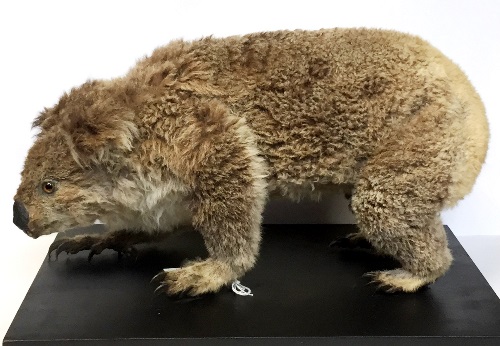
Koalas are one of many Australian mammals that are named after a characteristic that only females have. Their scientific name Phascolarctos means “pouched bear”. LDUCZ-Z65. (C) UCL Grant Museum of Zoology

***The Taxidermy Koala***

I find it interesting to think about animals that are named after features that only one sex has. How would you feel if your species was defined by a characteristic that you yourself didn’t possess?* My own passion is the mammals of Australia. Unlike many other groups (for example there are entire groups of insects that can only be identified by studying male genitalia), for those animals which are named for sex-specific features, Australian mammals are almost** universally named after things that only appear in females.

Continue reading

Meet the Committee – Isla Gladstone

What is your role on the NatSCA Committee?

I help promote information sharing and collaboration between NatSCA and closely allied subject specialist network the Geological Curators’ Group. These groups share core aims and, increasingly with loss of specialist curatorial posts, a membership. It’s exciting to explore how we can capitalise their individual strengths for the benefit of natural sciences collections and the people who work with them. 

Job title and institution

Senior Curator (Natural Sciences), Bristol Museum & Art Gallery, Bristol Culture

Twitter username

@isla_gladstone

Tell us about your day job

I work with a small team (Biology Curator Rhian Rowson and Geology Curator Deborah Hutchinson) to curate over one million natural sciences specimens of all shapes and sizes. As many a curator will recognise, this varies from high level strategic work to lifting, shifting, labelling and cleaning – a medley of activities to enable diverse access to and preserve these astonishing collections.

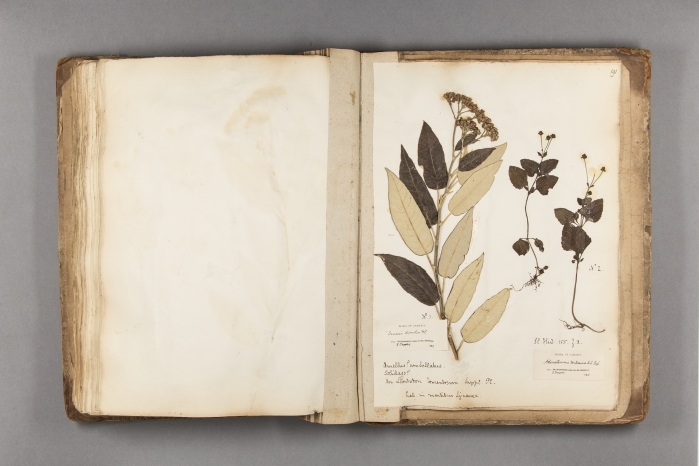
Medicinal plant on a page from Bristol’s earliest natural sciences collection – the Broughton herbarium, Bristol & Jamaica, 1779-90. (C) Bristol Culture.

Continue reading