‘Provocative Practice’: New Ways of Working with Natural Science Collections

A 70 foot long whale skeleton hangs overhead a fantastic ‘collection’ of natural science curators, collection managers, conservators, and education and museum professionals, busily gathering around and eagerly greeting each other at this year’s annual Natural Sciences Collections Association (NatSCA) conference. As Natural History Museum ‘fly’ specialist Erica McAlister tweeted: “If that fell that’s most of UK’s natural history curators & conservators wiped out”.
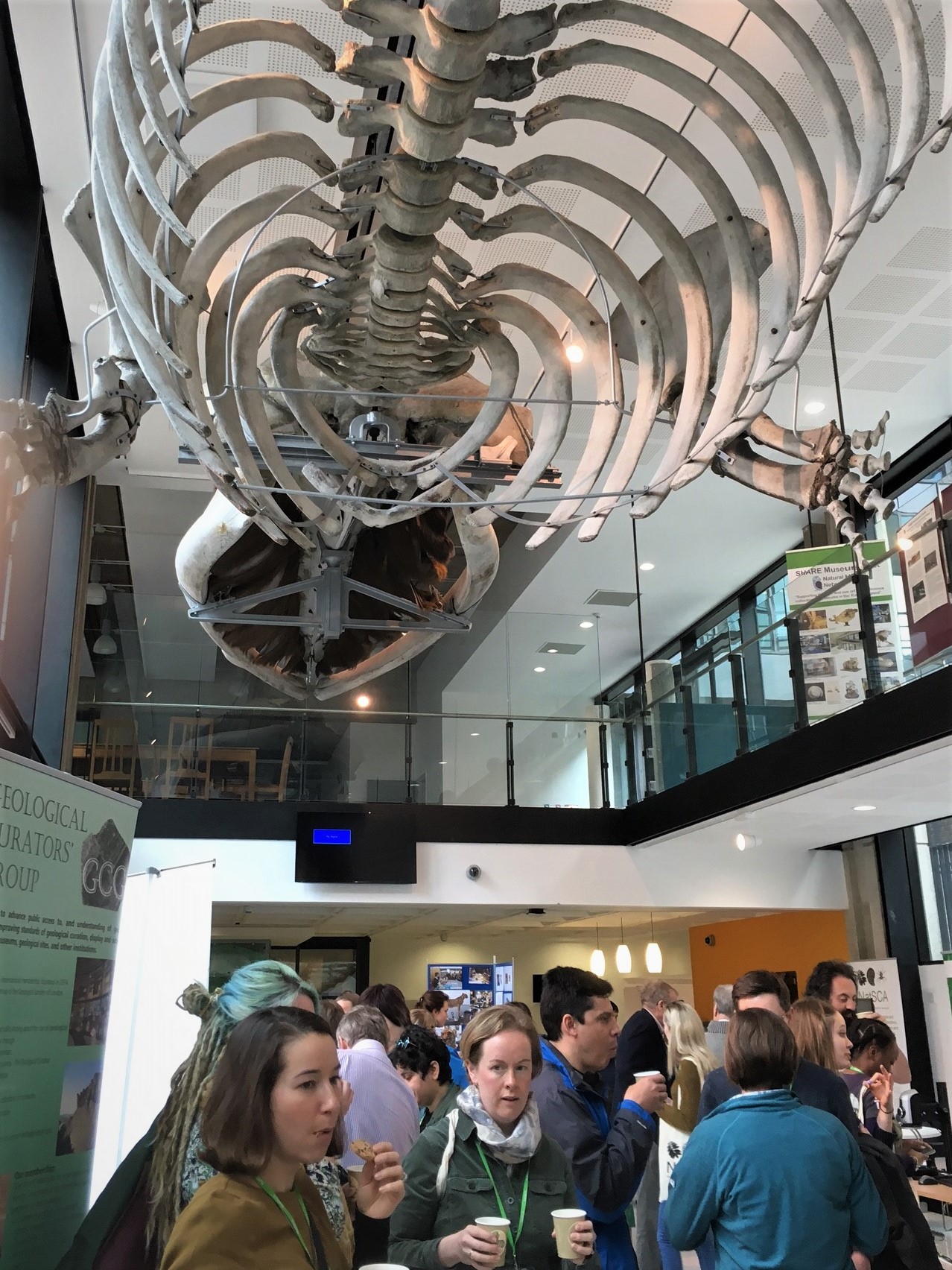
NatSCA delegates gathering below the newly hung Fin Whale. Photograph by Simon Jackson, shown thanks to University Museum of Zoology, Cambridge.

This year’s event (#NatSCA2017), at the University Museum of Zoology, Cambridge, had a record 110 delegates, and as such was the biggest NatSCA conference to date. At the heart of the conference was the new Whale Hall, part of an enormous redevelopment project of the David Attenborough Building. As many of us marvelled at the huge leviathan overhead, the rest of us rushed between advertising sponsor stalls, exchanged ideas, caught up with one another and most importantly, fuelled up on coffee!

Feeling inspired, we were ready to begin this year’s talks on the theme: “Evolving Ideas: Provocative New Ways of Working with Collections” as Paolo Viscardi, NatSCA Chair, keenly ushered us in to the main lecture theatre. Continue reading

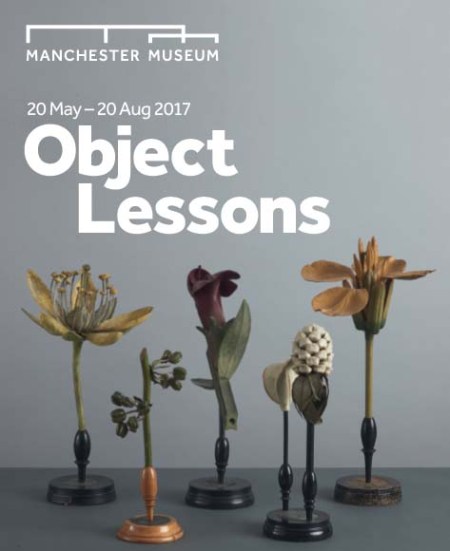
Object Lessons; Manchester Museum

Most curators have those niggling objects at the back of their stores. Models and illustrations previously used for teaching or display in the dim and distant past, but kept for a rainy day. Not quite real objects and not the kind of thing you would necessarily want to accession.

Well, we’ve embraced these wonderful objects in our new exhibition: Object Lessons.

Brendel Models, George Loudon Collection

Brendel Models, George Loudon Collection

Object Lessons celebrates the scientific model and illustration collection of George Loudon. Each of these finely crafted objects was created for the purpose of understanding the natural world through education, demonstration and display.

The object-rich exhibition will look at this incredible collection through themes such as Craftsmanship, the Teaching Museum and the Microscopic. Continue reading

Not Just Old Birds in Cases

This article is reposted from the Stories from the Museum Floor blog by the Visitor Team at Manchester Museum

Not Just old Birds in Cases – The Value of Natural History Collections

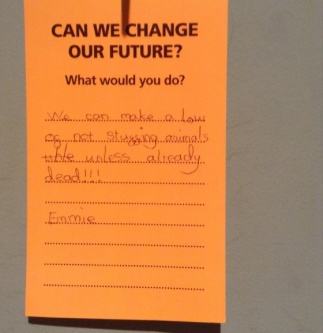
The most recent exhibition ‘Extinction or Survival?’ at Manchester Museum has brought many interesting ideas and suggestions from a wide group of visitors about how we can change our future. Several comments have mentioned animals kept in museums and collections, for example, “Stop killing animals to put in a museum” or “help all the animals by collecting DNA … and … not get stuffed like … in museums”. These comments have inspired me to write about the importance of natural history collections, especially the value of bird collections.

deana 2Comment card left at the ‘Extinction or Survival?’ exhibition at Manchester Museum, 2017.
Whether collecting birds for science is still necessary remains a hotly debated topic. However, the value of scientific collections cannot be questioned. Research or reference collections are still making crucial contributions in documenting biodiversity in time and space, and understanding species’ ecology and evolution, vital for conservation strategies. Furthermore, collections and museum have an important role in preserving and caring for past and present natural heritage and providing educational opportunities. Continue reading

NatSCA Digital Digest – April

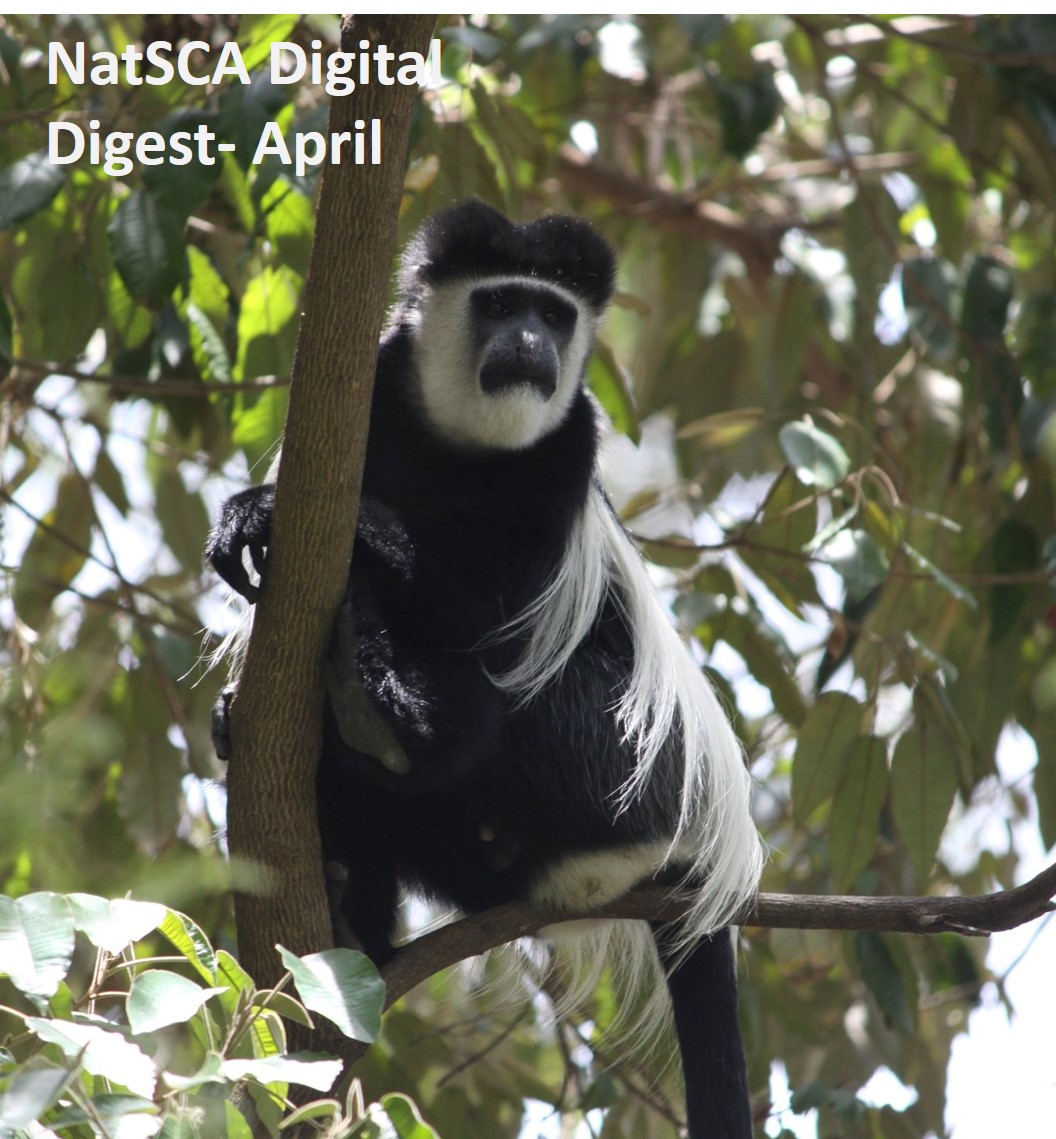
Colobus monkey © E-L Nicholls

What Should I Read?

I came across a very entertaining blog by Lily Nadine Wilks which looks at the frustrations of museum documentation in Mysteries of the Past. She has been working on the Charles Lyell digitisation project at the Oxford University Museum of Natural History.

Having noticed lately that there are more harlequin ladybirds in my house than there are Lego sets*, I was interested to come across A decade of invasion – a story of Harlequin Ladybird in the UK. I can’t believe THAT many ladybirds exist in the UK having only arrived in 2004. They are clearly a prolific species, if only I could teach them to write research papers. Continue reading

Top Ten Most Read Blogs of 2016

Blogs to shout about (Dakshin, 2013, image in public domain)

Blogs to shout about (Dakshin, 2013, image in public domain)

2016 was a busy year for the NatSCA blog, we published 26 blogs from a super range of authors on an exciting variety of topics. When looking at the analytics of the blog to see what’s popular, it became apparent that people don’t just read what’s current in terms of publication date, they read what’s relevant to them at the time. This means that on top of the 26 blogs published last year, a further 102 blogs dating back to 2012 were also viewed from our archive, in 2016.

Since its inception in August 2012, there have been 182 blogs published on the NatSCA website, and so with such a large number, it’s really interesting to see what grabbed people’s attention, or search engines, the most. Continue reading