Conservation of a Venus Flower Basket

Venus flower basket. (NOAA, 2012, Image in public domain)

Venus flower basket. (NOAA, 2012, Image in public domain)

At The McManus: Dundee’s Art Gallery and Museum, a proposed case re-display was to focus on design. Thus the Art Curator and the Natural Historian got together and produced 13 grubby Venus flower baskets (a type of glass sponge).

As a trained objects conservator I have seen many items come across my desk, however these were a first. Never having seen these deep sea siliceous sponges before, I found them quite fascinating. There are 13 in our collection and at least one of them came from the Challenger Expedition of 1870. The sponges themselves offer a fascinating insight into the first date hotel; a young shrimp couple enter the skeleton of the sponge and mate for life – a jolly good love affair or entrapment? Whichever side you fall on, the actual construction of the sponge is what fascinated the Art Curator. The lattice work formation of the skeleton, which is incredibly strong and functional yet also beautiful, has inspired architects and engineers. Norman Foster’s ‘Gherkin’ building owes a lot to this design of nature. Even David Attenborough listed them in his ‘Attenborough’s Ark’ aired in 2012. Continue reading

How to Store Taxidermy

We all know that discussing issues with other museum professionals within Subject Specialist Networks is an efficient way of disseminating information within the sector, but the following article provides a perspective from a generalist commercial storage company; a voice we don’t usually hear from.

Safestore, the UK’s largest self-storage provider, recently made a video series called ‘Stuff is Great‘ which focused on collectors and their individual passions. Among other client case studies, the series featured Suzette Field and her collection of taxidermy specimens. The following article, How to Store Taxidermy, was written by Safestore themselves and provides useful guidance on how to use these public facilities for storing such material.

This taxidermy collection featured in the Safestore project 'Stuff is Great'. © Safestore

This taxidermy collection featured in the Safestore project ‘Stuff is Great’. © Safestore

As any taxidermy enthusiast will know, a sizable collection can take years to build.  During that time your life and circumstances will change; you may welcome children into your life, move home, change job, all the while accumulating more pieces.  At some point you may be faced with the challenge of storing your taxidermy and with the right know-how it’s not as painful a process as it sounds!

Safestore recently stored a taxidermy collection and found it to be the safest environment for high value taxidermy.  Your attic or garage may seem like a cheaper alternative but both locations are affected by the changing climate throughout the year, putting undue stress on your collection.

Follow these tips for storing your taxidermy safely…

  1. Use wooden crates.

Using a wooden crate for each taxidermy piece means you can affix the mounts to the inside of the crates.  This will keep the taxidermy from touching the inside of the crate and allow air to circulate the piece.  Cardboard isn’t sturdy enough for large taxidermy pieces and doesn’t offer the same protection.

  1. Keep the damp away.

Storage units are typically very dry but the climate can vary from time to time.  Add silica gel packets to each crate as they will absorb any moisture in the air and keep your taxidermy dry.

  1. Keep the pests away.

Moths and small bugs would love nothing more than nibbling away at your taxidermy pieces so using ‘no pest strips’ or moth killer strips will help to keep your crates critter free.

  1. Climate and humidity.

When looking for self storage units for your taxidermy, ensure your unit is somewhat climate controlled.  Units on the outer edge of the building may be more prone to temperature changes so ask for a unit that remains cool and dry throughout the year.

Taxidermy is expensive and some pieces are one of a kind, therefore it is imperative to ensure your items are safe and secure once in storage.  Look for self storage facilities with 24hr CCTV, restricted access, sole key holder policies and intruder alarms.

  1. Check!

It’s super important to check your taxidermy from time to time, especially if you’re storing for a number of months.  Make sure you replace the pest strips and silica packets and check for any signs of damage or stress.  It’s easier to rectify a problem sooner rather than later!

Ultimately taxidermy is for displaying and enjoying, however if you’re in need of an interim home for your collection you’re not short of options.  Keeping your pieces safe and in good condition is easy so long as each item is packed with due care and is stored somewhere out of harm’s reach.

By Tiffiny Franklin, Digital Outreach Executive, Safestore

Cold Case Curation

Museums have many curious objects behind closed doors. Recently, volunteers discovered some ‘cold ones’ at Tullie House Museum and Art Gallery Trust.

Behind Closed Doors

If museums are icebergs, then museum exhibits are just the tip; and the remaining 90% or so of specimens are tucked away safely behind closed doors. Many people, lucky enough to have visited these museum storage areas (‘behind-the-scenes’), will be familiar with almost endless rows of racks and shelves packed with all sorts of different objects, ranging from Chinese vases to taxidermy monitor lizards. But few non-curators would be familiar with the idea of freezers full of dead animals!

We have two large freezers, at our off-site storage facility, packed full of animals; we needed to know exactly how many animals were in there and where they were from, hence this project- Cold Case Curation. The specimens also have excellent provenance; labels with location details including specific grid references and dates. Therefore this Cold Case Curation project was as much a biological survey (albeit indoors) as a detailed museum inventory.

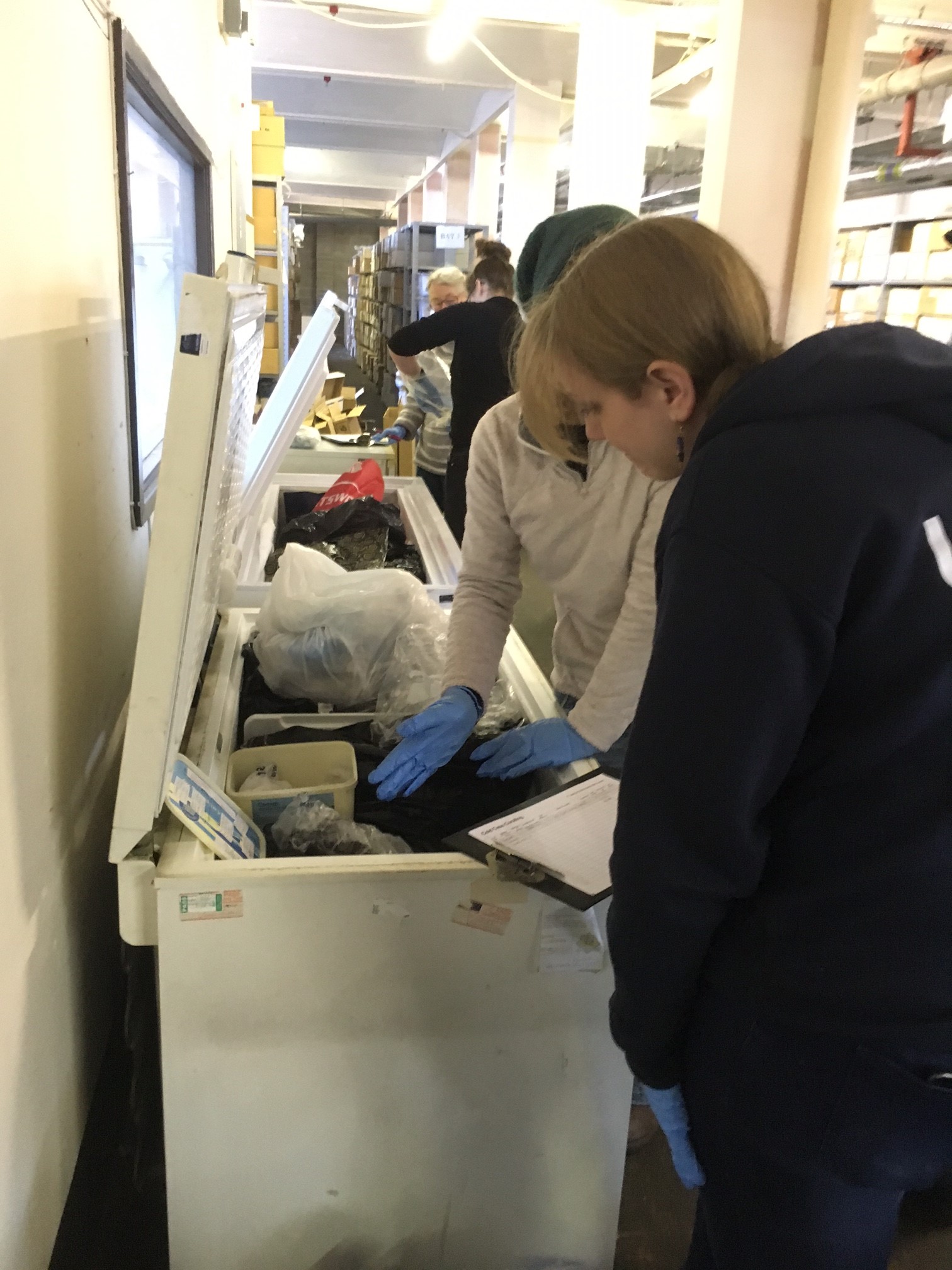
Cold Case Curation in action; the team of five volunteers “surveying” the “fauna” of our freezers

Cold Case Curation in action; the team of five volunteers surveying the ‘Fauna of our Freezers’.

Volunteer-Power

Enter our team of volunteers. They were specially recruited for a day for this Cold Case Curation task; to survey the frozen fauna, matching specimens against existing inventory records. This was a joint initiative with our Cumbria Biodiversity Data Centre (hosted at the Museum), to capture biological records. Most of our volunteers are long-term with the Museum and the Centre, and are current university students.

As our team of five volunteers eagerly crowded around the two huge freezers, they were fascinated with the idea of freezing animals to preserve them before they are stuffed and prepared as taxidermy specimens (but don’t worry, they all died naturally!).

In teams, the volunteers enthusiastically worked their way through documenting the freezer contents. 241 individual specimens later, we had documented 11 species of mammal and 48 species of bird. Interesting discoveries included a bittern, a little grebe chick, 10 waxwings and a white-tailed tropic bird (with stomach contents). Volunteers delighted in handling iconic British species including 54 red squirrels and 24 barn owls.
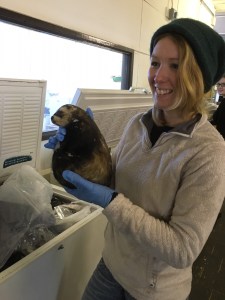
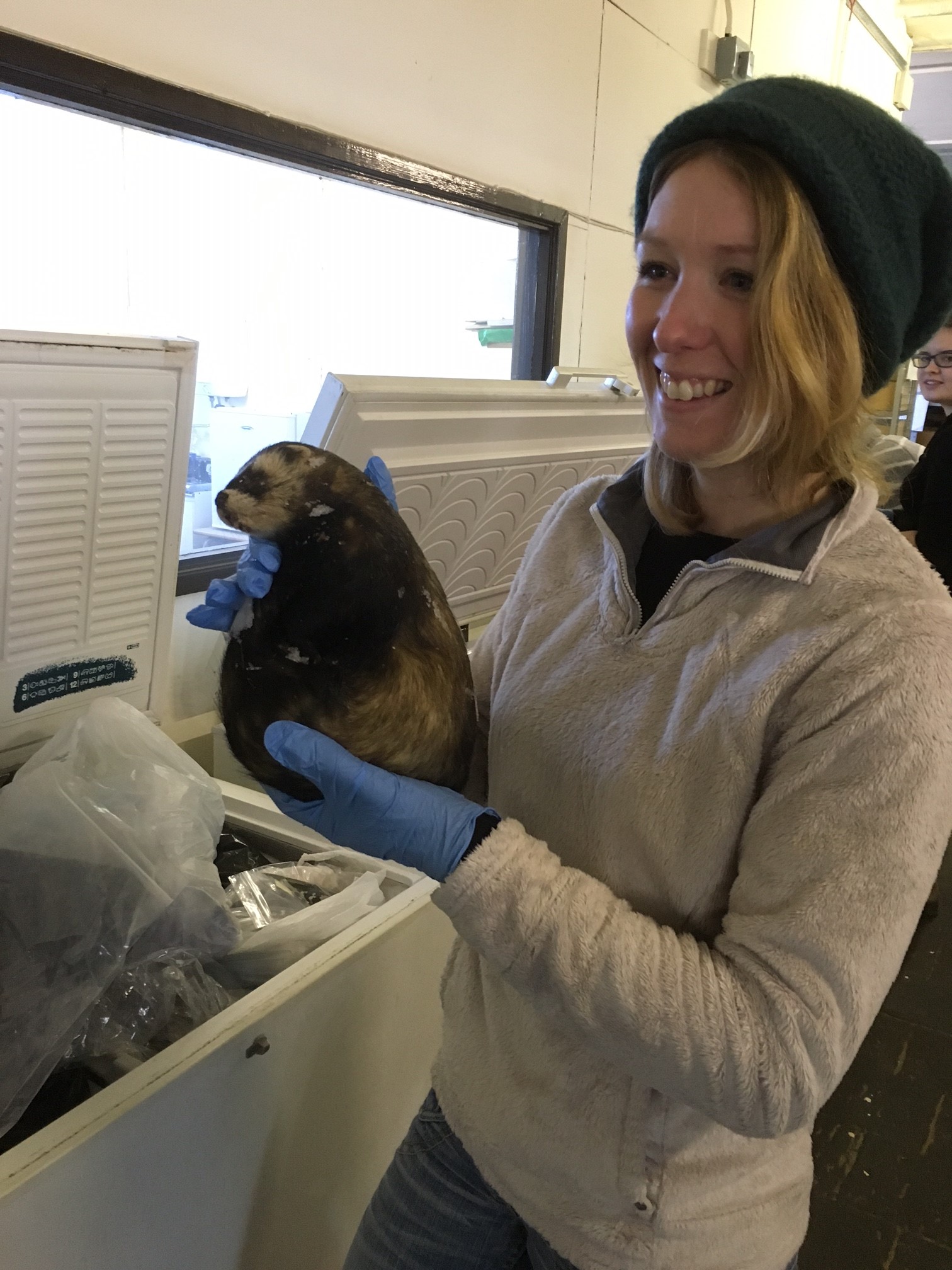
Volunteer, Jessica Mitchell proudly wielding a polecat from the freezer “faunal assemblage"

Volunteer, Jessica Mitchell proudly wielding a polecat from the freezer faunal assemblage.

Their experiences are best summarised in their own words;

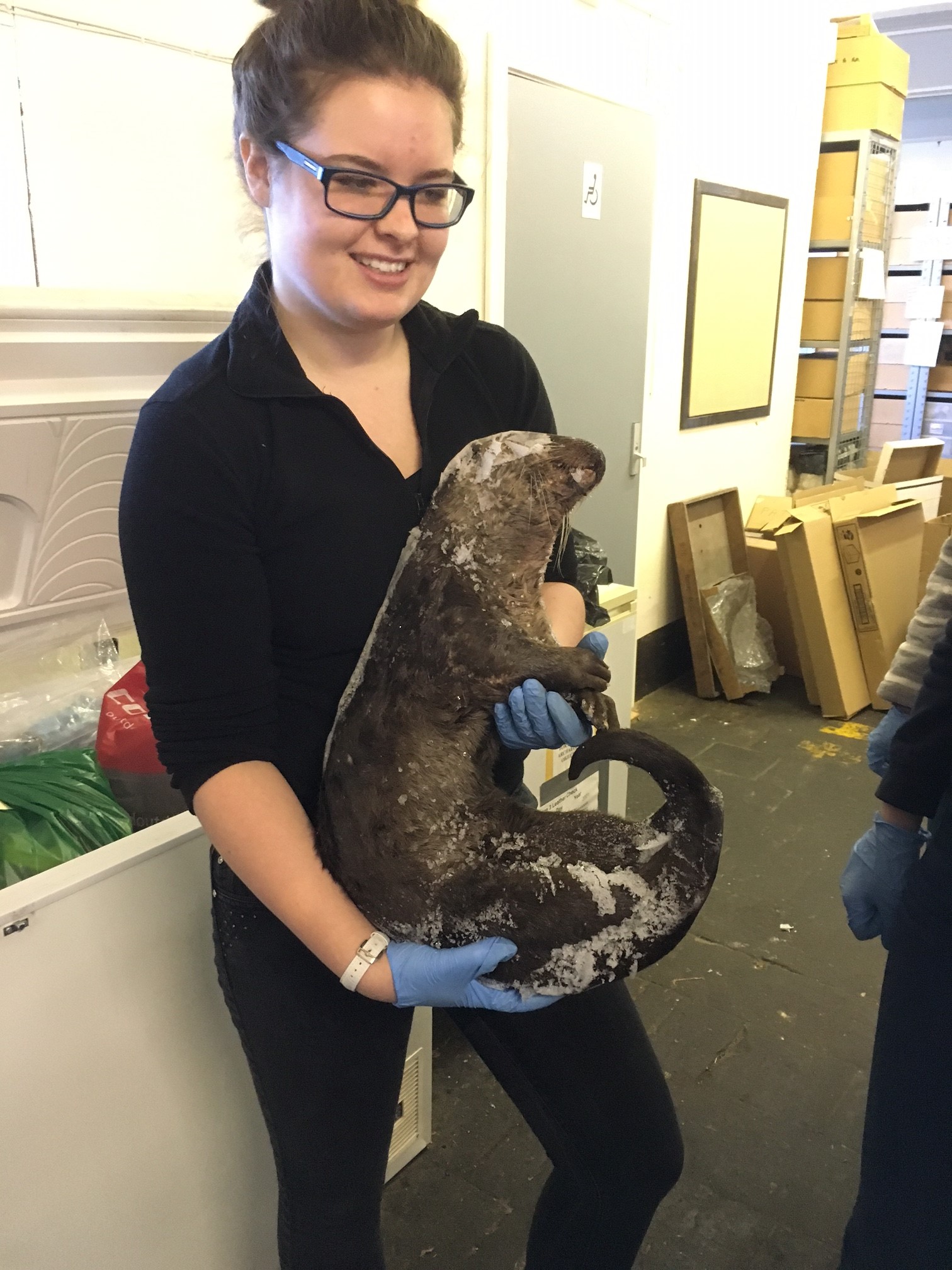
“After helping out at Tullie House with their cold case curation, recording everything they had in the freezers, we found some amazing specimens from polecats to owls, your typical garden birds to brown hares, but I have to say my favourite by far was the river otter. This otter was fantastic and it was brilliant to see it so upclose as it is a creature I have only seen from afar in the wild. This event was extremely educational and rewarding to myself as I’m studying zoology here in Carlisle”.  Volunteer, Laura Carter.
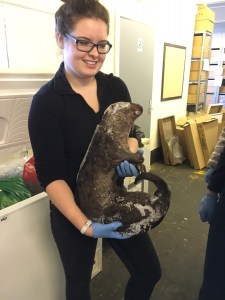
Volunteer, Laura Carter with River Otter discovery from freezer

Volunteer, Laura Carter with a River Otter discovery from the freezer.

Another volunteer, Donna Salter was also drawn to the otter:

“It’s a bit obvious to go for the big, furry, cute mammal, but my favourite has to be the otter. I was somewhat of an otter obsessed child: other girls wrote fan letters to Mark Owen or Ronan Keating while I wrote to Philip Wayre, founder of the Otter Trust (he sent back a signed visitors guide – I still have it). So for me, getting to hold and see the details of an otter can’t really be beaten!”

Cold Case Reflections; Learning from the Model

The Museum has greatly benefited from this exercise with our detailed inventories and biological records which will go into our database and ultimately end up on the Global Biodiversity Network Gateway for public access (and we also have the data we need to make more informed decisions over which specimens we decide to formally accession). However, this project proved to be a particularly successful public engagement event. It was a combination of the fact that volunteers were seeing and handling a variety of animals and that they were ‘discovering specimens’, whilst working together as a team, which is vastly more enjoyable than lone working. The event was enhanced with use of Twitter  (#coldcasecuration), which captured some of the magical moments of discovery.

This exercise illustrates how a relatively routine (inventory) collections management exercise can be turned into an exciting public engagement project, capturing critical data for the museum and inspiring a future generation of potential young scientists and curators.

By Simon Jackson, Curator, Tullie House Museum and Art Gallery Trust

Curators of the Caribbean

300-year-old plant collection brings Bristol Museum & Art Gallery and the Natural History Museum Jamaica together!

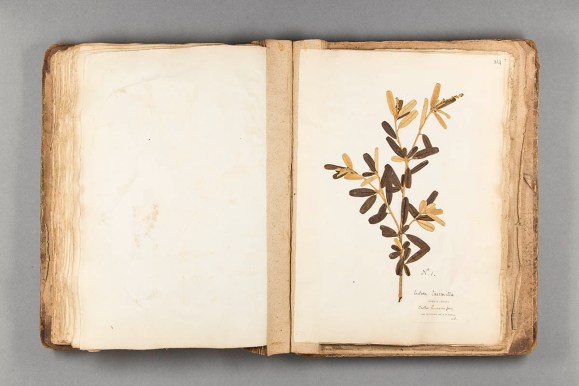
vol_3_jamaican_p324

A digitised page from Volume 4 of the Jamaican herbaria

In the autumn of 2014, I was fortunate to be contracted by Bristol Museum to conserve and digitise 4 bound volumes of plant specimens dating from the 1770s and collected by the prestigious botanist Dr Arthur Broughton. The conservation and digitisation was completed in early 2015, yet two years on I am still working with and fascinated by this fabulous collection.

slide1

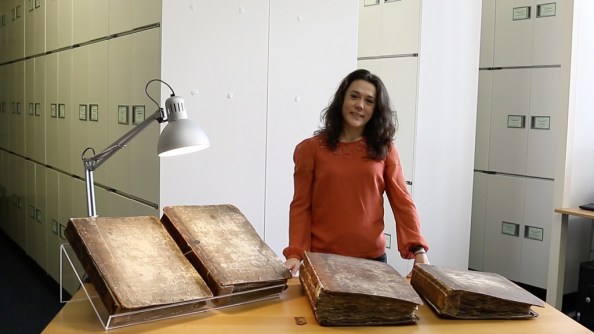
Rhian Rowson and the 4 volumes of 18th century bound herbaria

Dr Arthur Broughton, was a Bristolian who made the mammoth journey to Jamaica, due to ill health, and myself and Rhian Rowson, biology curator at Bristol Museum & Art Gallery, are trying to piece together his years studying botany in Jamaica and the impact this renowned botanist has had on the island and the world of botany. The volumes are large, heavy, leather bound books holding c. 1000 specimens including extremely rare and type material. The books were analysed for biocides, cleaned in preparation for digitisation, digitised and then each specimen was painstakingly removed from the volumes and re-mounted onto archival sheets. This project has mitigated the risk of contamination from handling the treated pages, has increased access and ease of handling but most importantly the images have been shared with other institutions. The ebook highlights some of the star specimens in the collections

The most exciting connection made during the research side of this project was with the Natural history museum of Jamaica (NHMJ). Through this collaboration, the opportunity has arisen for both me and Rhian to travel to Jamaica to collect modern material, research the historic plant specimens and illustrations held in Bristol museum and the collectors behind them. We have been extremely fortunate to gain funding from both WIRP (Working Internationally Regional Project) and the Jonathan Ruffer Curatorial Grant. Both funders were extremely supportive and constructive in helping towards our submitting a successful application.

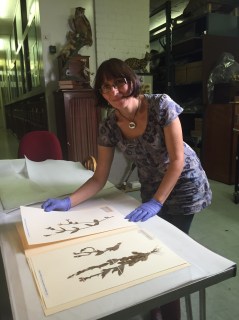
Victoria Purewal viewing Broughton plant specimens

Victoria Purewal viewing remounted specimens from one of the Jamaican volumes.

We fly into Kingston, Jamaica on Tuesday 27th September and will be gathering historical data on Dr Broughton and other prestigious botanists including Robert Long and the Reverend Lindsay, both of whom were collecting and working during this interesting time in history. We will be met by Keron Campbell, the botany curator at the NHMJ and together with the natural history team we will be escorted around the island, helping us to identify and verify plant specimens and localities. Modern day specimens will be collected to help interpret our historic material and provide a contemporary and fresh perspective that we can use to engage with our Bristol and Jamaican communities. We will be keeping active on social media whilst there, and hopefully offer some insight on the specialisms and research being conducted in Jamaica but also on the botany and the habitats on the island of Jamaica.

bmagnhmjcultureicomart


Project Airless

Project Airless’ is a three year venture that began in August 2015 at the Natural History Museum (NHM) in London, with the objective of treating and preventing pyrite decay in the Museum’s historic earth sciences collections.

Pyrite Decay

Pyrite, or ‘fool’s gold’ (iron sulphide), is a common mineral of varying crystal structure (though cubic is common) that can often be found in or around fossils. It can occur in a compact, crystallized and stable form – or as a porous, microcrystalline and unstable form.

Pyrite oxidation, or ‘decay’, can occur when the mineral reacts with atmospheric oxygen in relative humidities (RH) above 60%. The resulting by-products of this oxidation depend on the mineral composition of the fossil and matrix, but often comprise sulphuric acid and hydrated ferrous sulphates, which can be very harmful to specimens, labels, and storage media. Once pyrite has begun to oxidise, mineral hydrates will form at as low as 30% RH. Signs that pyrite oxidation is occurring include expansion cracks, white or yellowish acicular crystal formations, and a sulphurous odour.

Distressing scenes for fossil enthusiasts: a drawer of fossils with pyrite decay

Distressing scenes for fossil enthusiasts

Method

Three conservation technicians have been surveying the collections and recording where pyrite decay is occurring amongst the NHM’s 7 million fossils and 500,000 mineralogical specimens.

Hunting high and low for signs of pyrite oxidation; conservators check drawers for suffering specimens

Hunting high and low for signs of pyrite oxidation

Affected specimens are temporarily removed from the collection, photographed, and a condition report created for the specimen on the Museum’s collections database. Following this, any remedial treatments are undertaken as necessary (ammonia gas treatment, for example). The fossil is then placed in an acid-free tray within a Plastazote inlay for protection. To prevent further oxidation, the specimens are heat-sealed in a NeoEscal barrier film bag with oxygen scavenging sachets, forming an anoxic microenvironment. Once sealed, the technicians complete a process report and return the fossil to the collections. This work is being undertaken in advance of the development of a new Earth and Planetary Science building, which will have a more efficiently controlled environment.

Specimens re-housed in an anoxic microenvironment, sealed in a bag

Specimens re-housed in an anoxic microenvironment

Treatments

Once a specimen has been assessed for pyrite decay, there are some remedial treatments the conservation technicians can undertake, depending on the severity. The first of these is the removal of any white/yellowish crystals by dry brushing, followed by consolidating any cracks in both the fossil and the matrix with Paraloid B72 in Acetone.

If a figured or type specimen is exhibiting signs of severe pyrite oxidation, a cast can be made in order to preserve morphological detail before it deteriorates further. However, moulding and casting carry risks for fragile specimens.

Ammonia gas treatment is a method that successfully neutralizes sulphuric acid produced by pyrite oxidation, and involves exposing specimens to the vapour emitted by a mixture of ammonium hydroxide and PEG 400 (polyethylene glycol) within an enclosed polyethylene or glass container. The vapours from the ammonium hydroxide react with the decay products, turning the affected areas a brick-red colour.

Team Airless to the rescue!

Team Airless to the rescue!

The Future

According to current estimates, 14,000 specimens at the Museum are in urgent need of this protective measure. As the project progresses, the team hopes that they will be able to share knowledge and expertise with other museums and institutions that may be facing the same problems as the NHM. Images generated for each specimen during the project should vastly improve the Museum’s collection database – and may even limit the need to open the bags. While ensuring that these valuable specimens remain intact, and of use for years to come, the project is also increasing digital access and reducing unnecessary handling by using a web based application to associate images with each specimen’s unique barcode.

Kieran Miles, Matthew Porter, and Amy Trafford

NHM, London