NatSCA Digital Digest

natsca

Jobs and Traineeships

If, like many, your world will never be the same again once Dippy the Diplodocus retires from his position adorning the entrance hall to the Natural History Museum in South Kensington, you can at least help secure him a happy future by going for the job of Corporate Partnerships Manager- Dippy the Dinosaur on Tour at the NHM. The deadline is the 25th January so there’s still time to affect the life of this semi-retired much loved icon.

If digital engagement is more your thing then the University of Cambridge Museums (UCM) are currently looking for a Digital Engagement Specialist. The deadline for this post is also the 25th January, with interviews on the 8th February.

Events and Exhibitions

The London Transport Museum is holding an interesting half day symposium on 7th March 2016 called Contemporary Collecting. The symposium is free and includes an evening reception at the Museum. There are six areas of focus listed on the website, ranging from risks of collecting to acquisitions that ‘are inherently, and/or overtly, political’. Sounds exciting!

Around the Web

The project of digitising the Charles Lyell Fossil Collections is well underway at the Oxford University Museum of Natural History. The blog (link above) is a fun and interesting read but more importantly, if you have any Charles Lyell specimens in your collection, Sarah Joomun and Eliza Howlett at the OUMNH would love to hear from you.


NatSCA Digital Digest

natsca

Conference

We will be holding our 2016 annual conference & AGM on 21st and 22nd April, generously hosted by Derby Museums. The venues will be The Silk Mill and Derby Museum & Art Gallery. So, it goes without saying, Save The Date!

Events

On 29th October there is a talk at the Natural History Museum on one of my favourite things: curatorial research!
‘Curatorial research gets a bad name when it serves personal ends, but can it help unlock collections for wider engagement?
This talk is based on a project to understand the life and work of a Victorian ornithologist, Henry Dresser.
Held at the Flett Events Theatre, from 2.30–3.30pm. Click here for details.

Speaking of my favourite things, the Wildlife Photographer of the Year exhibition is open at the Natural History Museum. If, like me, you’ve been avoiding social media so you get to see the images for the first time at the exhibition, you can now do so.

Around the Web

Did you know Manchester Museum has an important collection of almost 17,000 earwigs? A type catalogue of this fantastic resource has been published with a description of the collection and its history and is freely downloadable here.

The Love London Awards hosted by Time Out and voted for by the general public has issued its shortlists. In the Bloomsbury, Fitzrovia and Holborn area ten museums and collections are jostling for position, you can click here to vote. Two of the ten are natural history collections, and could be voted for, by you, if you so desired, just saying…

The Symposium of Vertebrate Palaeontology and Comparative Anatomy is often referred to as the friendly conference. Not just palaeontology, the conference also covers comparative anatomy and thus attracts a natural history audience as well. However the guise under which the conference is going to continue into the future is currently under debate, and those with an interested are being invited to comment.

Derby Museums showcases 200 year old Captain Cook shells

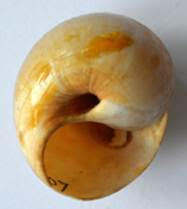
200 years after being collected, a group of sea shells with links to Captain Cook’s voyages have been fully documented and photographed for the first time, and put on display in Derby Museum & Art Gallery, thanks to one of the museum’s Super Nature volunteers, Hannah Maddix. Donated to the museum in 1961, along with original documents dating to 1815, they are key to unlocking the secrets of 18th century shell studies. Fred Woodward, former president of the Conchological Society of Great Britain and Ireland, said: “The collection could be considered an equivalent to the Rosetta Stone since it contains shells with common names and Latin names not only used by Humphrey in his catalogues but also numbered by Humphrey himself, which until now has not been known.”

Shell. Image: Derby Museums

Image: Derby Museums

The shells have a fascinating history. They were bought by a Mrs Borough in 1815 from George Humphrey, a London dealer in shells and ‘curiosities’ who in turn had bought shells collected on Captain Cook’s second and third voyages of discovery to Australia and New Zealand in the 1770s. It is almost certain that the Australian and New Zealand shells in the collection came from Captain Cook’s voyages. George Humphrey was one of the world’s first conchologists, and wrote numerous catalogues of important shell collections. The shells in Derby Museum have tiny numbers written on them by George Humphrey, and his original lists survived with the collection. This unique combination of actual specimens related to original lists provides a missing link for modern shell specialists, allowing them to translate long forgotten 18th century shell names into their modern equivalents.

Rachel Atherton, Co-production Curator at Derby Museums said:

“This wonderful collection of shells not only links to Captain Cook and the discovery of a continent, but also give us a glimpse into the early scientific study of shells.”

Shell. Image: Derby Museums

Image: Derby Museums

Hannah Maddix, who catalogued the collection, said:

“It was such a delight to research these shells and discover that we have specimens collected from all over the world. For over two hundred years they have remained desirable and beautiful objects, commonplace and yet still precious.”

The Borough family was once a prominent Derby family, originally called Borrow, living at Castlefields House, before moving to Chetwynd House, Shropshire in 1803. Mrs Borough’s shell collection was passed down in the Borough family until they were donated to Derby Museums in 1961, along with six Joseph Wright oil paintings and a portrait of Isaac Borrow, twice Mayor of Derby in 1730 and 1742.

The shells are on display in Derby Museum’s new nature gallery ‘notice nature feel joy’.

NatSCA Digital Digest


NatSCA 2

Your weekly round-up of news and events happening in the world of natural sciences

Conferences and Workshops

As PalaeoSam mentioned in the last Digital Digest, the Symposium of Vertebrate Palaeontolotgy and Comparative Anatomy is on next week. It is my personal palaeo highlight of the year and so am sad that I will miss it this year. (Though not too sad given I am missing it to be in Italy for the Grand Prix.) If you are attending and would like to do a super write up of the weeks’ events, please do let us know.  I look forward to experiencing SVPCA through the eyes of a blogger.

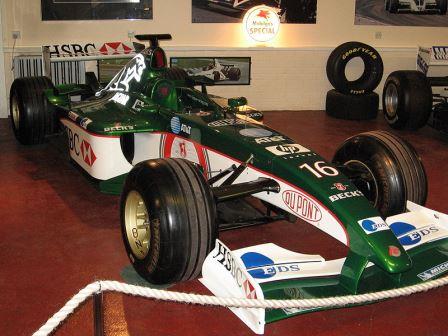
Jaguar

Those of you who are fans of F1 will know why this car is relevant to natural history (image in public domain)

News

Not really on the subject of natural history, but a topic that will touch the heart of any museum professional or visitor. ISIS have taken even more away from the us, the global nation, via the destruction of an Ancient temple in Palmyra. These open air museums are original sites of cultural heritage and are irreplaceable once gone. Not at the top of the list of the most tragic event of the last couple of weeks by any means, but a sad day for museums nevertheless.

News from the Blogosphere

The #MuseumInstaSwap phenomenon has launched as staff from some of the top museums in London (including the NHM and the Horniman) swap museums and take to social media to chat about it. An article in Time Out nicely summarises what is going on but a lot of the museums involved have their own exciting blogs on it worth looking up. Hence this is in the News from the Blogosphere section, see?

Highlights from the Papers

More and more, scientists are relying on Citizen science, as a means of collecting data. The mode of research is especially important in fields such as marine biology where the incorporation of sightings made by anglers, for example, can add significantly increase the size of datasets. An article in Nature called Rise of the Citizen Scientist explores the good the bad and the ugly of this practice as a research tool.


As ever, if you would like to write a blog for NatSCA on anything natural sciences related, give us an online shout blog@natsca.org.

NatSCA Digital Digest

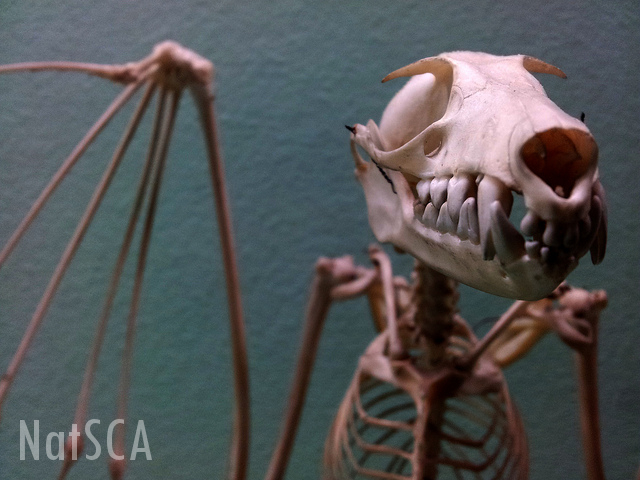
A mounted skeleton of a fruitbat leers at the cameraYour weekly round-up of news and events happening in the world of natural sciences

Jobs

Research Assistant, Vertebrate Palaeontology – University of Birmingham. 12 month post researching 375 million years of the diversification of life on land!

Curator of Microlepidoptera – NHM, London. A great opportunity for any fans of minimoths!

Curator of Natural Sciences and Collections Access ManagerTullie House Museum. Still a couple of days to apply for these two. The deadline is 10th August.

As always, see out jobs page for more opportunities.

Events

‘Digitisation’ seems to be the keyword for September…

NBN Crowdsourcing Data Capture Summit. The National Biodiversity Network is holding a one-day meeting on digitising specimen data through crowdsourcing, at Manchester Museum on 25th September.

iDigBio Vertebrate Digitization Interest Group will be holding a 4-part webinar series entitled The Value of Digitizing Vertebrate Collections. They will be held on Tuesdays in September at 3 – 4 p.m. EDT (7 – 8 pm GMT).

All webinars are 3-4 p.m. EDT and accessible at https://idigbio.adobeconnect.com/vertdigitization. Here is the schedule:
September 8: The Value of Digitizing Mammal Collections, Cody Thompson, University of Michigan
September 15: The Value of Digitizing Fish Collections, Andy Bentley, University of Kansas Biodiversity Institute and President of SPNCH
September 22: The Value of Digitizing Herpetology Collections, Chris Phillips, Illinois Natural History Survey, University of Illinois
September 29: The Value of Digitizing Bird Collections, Carla Cicero, UC Berkeley and Lead PI for Vertnet

Around the Web

Time to re-curate those canid specimens? Genetic evidence indicates that the African golden jackal is a distinct species from the European golden jackal, and is actually much more closely related to wolves! And new genomic research has clarified the status of Eastern wolves and other North American canids.

'But I'm still a fox, right?'

‘But I’m still a fox, right?’

Working with the Public: How an Unusual Museum Enquiry Turned into Travels Through Time and Space. A great example of how engaging with enquiries can lead to fascinating insights into the past.

…And Finally

A request: We would love you to get involved in the NatSCA blog! It’s been rather quiet of late. I know you’re all probably off enjoying yourselves on holiday, but if you happen to visit a museum or an interesting exhibition while you’re away, why not review it for us? We’d love to hear tales of your adventures! And don’t forget, if you’re working on any projects or specimens that you think other people would be interested in, then the blog is the perfect place to share! Email submissions to: blog@natsca.org