How Do You Do Decolonial Research in Natural History Museums?

Written by Jack Ashby, Assistant Director of the University Museum of Zoology, Cambridge.

Subhadra Das and Miranda Lowe’s paper, Nature Read in Black and White: Decolonial Approaches to Natural History Collections (2018) acted as a wake-up call to our sector, effectively founding a discipline in natural history museums. In the five years since, a lot of work has begun to address the colonial legacies underpinning collections of animals, plants, fungi and rocks.[i] The principal aims of this work include telling more honest stories about the different kinds of injustice involved in the acquisition of collections; and addressing the fact that our museums have long been prioritising narratives elevating white individuals over everyone else. In doing so, it is hoped that a greater diversity of people will feel represented by our museums, thereby enhancing the relevance of the collections.

Natural history collections dwarf those of any other museum discipline, and unlike sectors which have been thinking about this for decades, the practices underpinning their creation have not traditionally prioritised recording associated cultural or social histories. Like others who felt inspired by Subhadra and Miranda’s call to action, faced with contemplating how to begin to unpick the stories hidden behind literally millions of ‘scientific’ specimens, it was fundamental to consider the question, where do you start with decolonial research in natural history museums? Obviously, there is no one answer, but I thought it could be helpful to list a few possible approaches. One underlying element is to recognise how colonialism and its framings have shaped the way that events took place – from major historical moments to minute individual acts – and how the stories about these events have been told.

Below is a list of possible starting points for research, with examples of what that could look like in practice (in reality most of these overlap). For me, each has something to say about the entwined human and environmental costs of the colonial project – questions that natural history museums are uniquely placed to address.

Continue reading

How to Find Ectoparasites on Study Skins and Explore Natural Heritage Shared between Colonial and Provincial Museums

Written by John-James Wilson, Lead Curator of Zoology at World Museum, National Museums Liverpool & Jing Jing Khoo, Postdoctoral Research Associate at Institute of Infection, Veterinary & Ecological Sciences, University of Liverpool.

Selangor Museum was established in Kuala Lumpur by British colonial officials in 1887. A purpose-built museum building, opened in 1907, was designed by Liverpool-born architect Arthur Hubback, but there is a stronger link between Selangor Museum and Liverpool.

Selangor Museum’s early director Herbert Robinson was also born in Liverpool and had worked as an assistant at the Liverpool Museums, now known as World Museum. Selangor Museum wasn’t a large institution, with just three British curators and three museum hunters from Sarawak, one being Charles Ulok. But through the museum’s work, a European knowledge system was imposed onto the local wildlife.

The museum’s work included extensive hunting on the hill and mountains and islands of Malaysia, Thailand and Indonesia. The museum soon ran out of storage space in Kuala Lumpur and specimens were routinely sent to England. Hundreds of specimens were sent to Robinson’s former workplace, World Museum, in 1914.

https://archive.org/embed/from-selangor-museum-to-liverpool

Click link above for 3-minute video about Selangor Museum and its connection to Liverpool made for the Green Representatives Network at Monash University in Selangor.

Continue reading

William Thomas March, a Jamaican Collector, Naturalist and Early Pioneer of Biological Data Recording in Jamaica.

Written by Olivia Beavers, Assistant Curator of Vertebrate Zoology at World Museum, National Museums Liverpool.

Figure 1. William Thomas March’s bird skins stored in the Vertebrate Zoology collection at World Museum, National Museums Liverpool © National Museums Liverpool (World Museum: NML-VZ T1134, NML-VZ T760, NML-VZ T5652, NML-VZ 1989.66.1279, NML-VZ T19525, NML-VZ T12817, NML-VZ T9981, NML-VZ T1128, NML-VZ T14037, NML-VZ T14031/ Olivia Beavers)

August celebrates Jamaican independence, so what better way to celebrate than to talk about a Jamaican collector from the 1800s whose contributions to understanding Jamaican biodiversity are not yet fully recognised. 

I recently finished the project stage of the Associateship of the Museum Association (AMA). My project focused on helping to tell untold stories of the collections held at World Museum. 

Through trial and error, I started to look through World Museum’s database and Google the names of collectors to see if we had collectors who had black or brown heritage – with a focus on collectors with specimens from the Caribbean. I ended up finding William Thomas March. Only two previous papers were written about him, both by Catherine Levy (Managing Director of Windsor Research Centre, former President of the Caribbean Birds, and of BirdLife Jamaica). 

To coincide with the research and my project, I created a new dataset titled ‘Bird skins from Jamaica in the collections of World Museums Liverpool’ – now available on the Global Biodiversity Information Facility (GBIF) website. It includes specimens from William Thomas March.

Continue reading

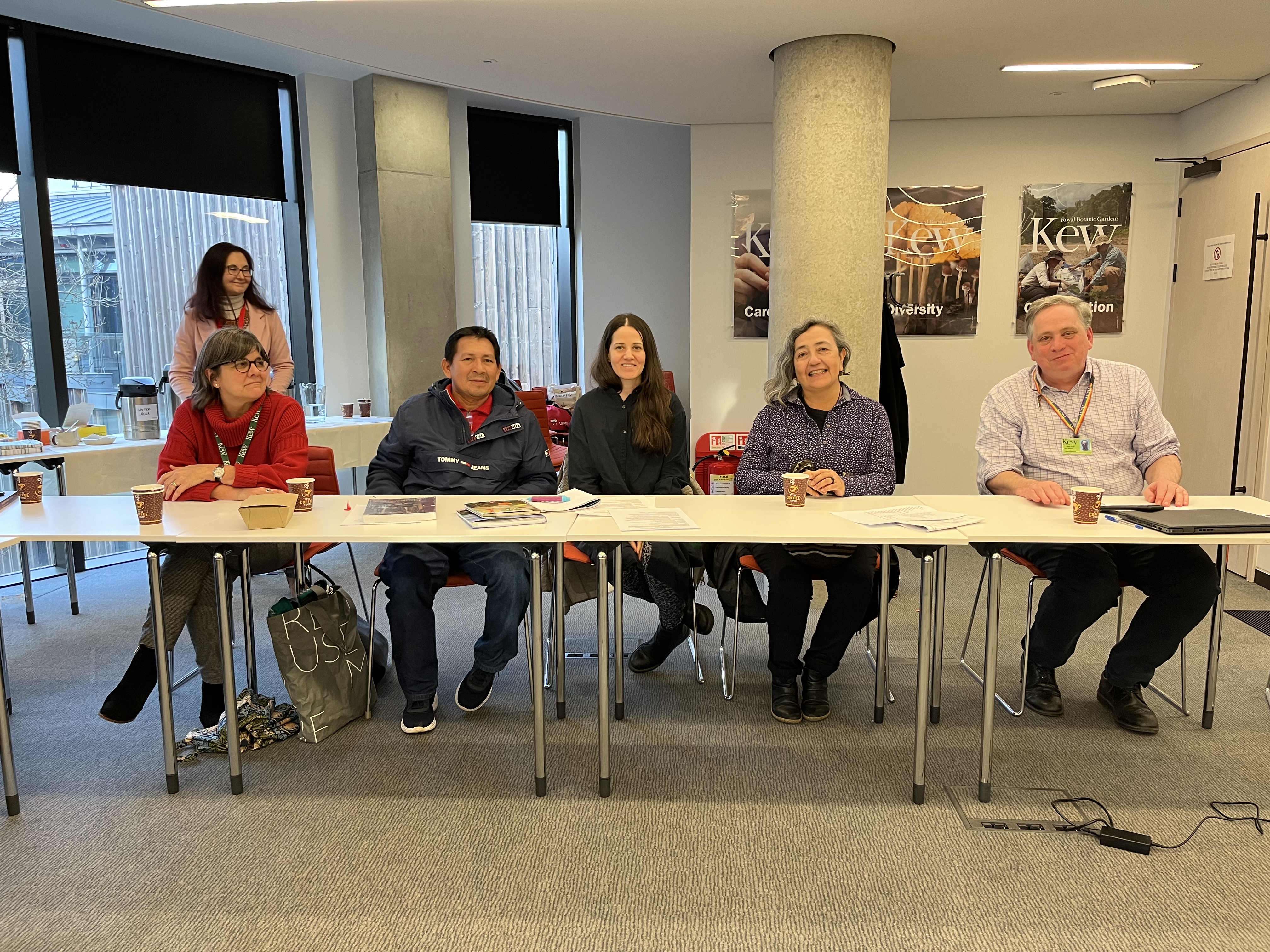
People and Plants Workshop Three: Sharing Knowledge in the Amazon

March 10th, 2023, Royal Botanic Gardens, Kew

Written by Fiona Roberts (Collaborative ESRC PhD student, Cardiff University & Amgueddfa Cymru-National Museum Wales) and Violet Nicholls (Assistant Curator in Herbarium, Portsmouth Museums).

This post is dedicated to Dr Dagoberto Lima Azevedo (1979-2023), Tukano researcher, translator, scholar, author and a voice for the Indigenous peoples of the Rio Negro in the northwestern Amazon.

The third and final workshop of a one-year project ran in March 2023, at Royal Botanic Gardens, Kew. The project, “People and Plants: reactivating ethnobotanical collections as material archives of indigenous ecological knowledge”, began in January 2022, and was supported by NatSCA (Natural Sciences Collections Association). Funded by the Arts and Humanities Research Council (AHRC), it was led by National Museums Scotland, the Powell-Cotton Museum and Royal Botanic Gardens, Kew. 

The workshop ran in partnership with Museu Goeldi, Brazil and the Department of Cultures and Languages, Birkbeck, University of London. It addressed the question, ‘how ethnobotanical collections in museums can best be used to support Indigenous communities?’. Dr Dagoberto Lima Azevedo, from the Federação das Organizações Indígenas do Rio Negro, and Claudia Leonor López Garcés (Museu Paraense Emílio Goeldi) travelled from the Brazilian Amazon for the event. They met with fellow panellists Professor Mark Nesbitt (Royal Botanic Gardens, Kew), Professor Luciana Martins (Birkbeck, University of London), Cinthya Lana (University of Gothenburg) and Dr William Milliken (Royal Botanic Gardens, Kew).

Fig. 1. Some members of the panel at the workshop with, from left to right, Cynthia Sothers, Luciana Martins, Dagoberto Lima Azevedo, Cinthya Lana, Claudia Leonor López Garcés and Mark Nesbitt. Photo by Gayathri Anand.

The Richard Spruce collection (1849-1864) was used as a case study. Spruce collected plants and recorded their uses in South America, and is considered to be an early ethnographer, as he also recorded the traditions and customs of the different communities that he met on his travels.1 He collected over 14,000 herbarium specimens in the Andes and Amazon regions, and 350 items are in his ethnobotanical collections.2

Continue reading

Unpacking the Unnatural History Museum (Season 1)

Written by Verity Burke, John Pollard Newman Fellow of Climate Change and the Arts, University College Dublin.

Blaschka Models. Image credit: courtesy of the National Museum of Ireland: Natural History.

We’re at a crucial historical moment, in which the International Union for Conservation of Nature Red List has announced a catastrophic decline in global biodiversity, and the Intergovernmental Panel on Climate Change has reported on the devastating trajectory of the climate crisis. Museums have an important role to play in communicating the value of nature. Yet nature is, necessarily, mediated in museums, through taxidermy dioramas and skeletal mounts; virtual tours and digital databases; image, text and film. While the natural world has always been mediated in the museum space, what does this mediation mean now for natural history museums and collections, and the natures they present?

These are some of the questions which drive my research into museum representations of the natural world, and was the inspiration behind putting together an event series called ‘The Unnatural History Museum: Mediating Nature in the Sixth Mass Extinction’ (part of the Irish Research Council-funded project ‘Still Lives: Organic and Digital Animals in the Natural History Museum’ at Trinity College Dublin). I was keen to make a space to have these conversations across disciplines and sectors (something which we get surprisingly few opportunities to do, despite often working on similar topics or issues), to allow us to share what we were doing and discuss why. This blog is a short overview of the topics that the first season of the Unnatural History Museum engaged with from September 2022 to April 2023, with some excitement about what arose in the first season, and in anticipation of continuing these conversations in a planned second season.

Continue reading