Resurrection 101

Written by Paolo Viscardi, Curator of Zoology, National Museum of Ireland – Natural History

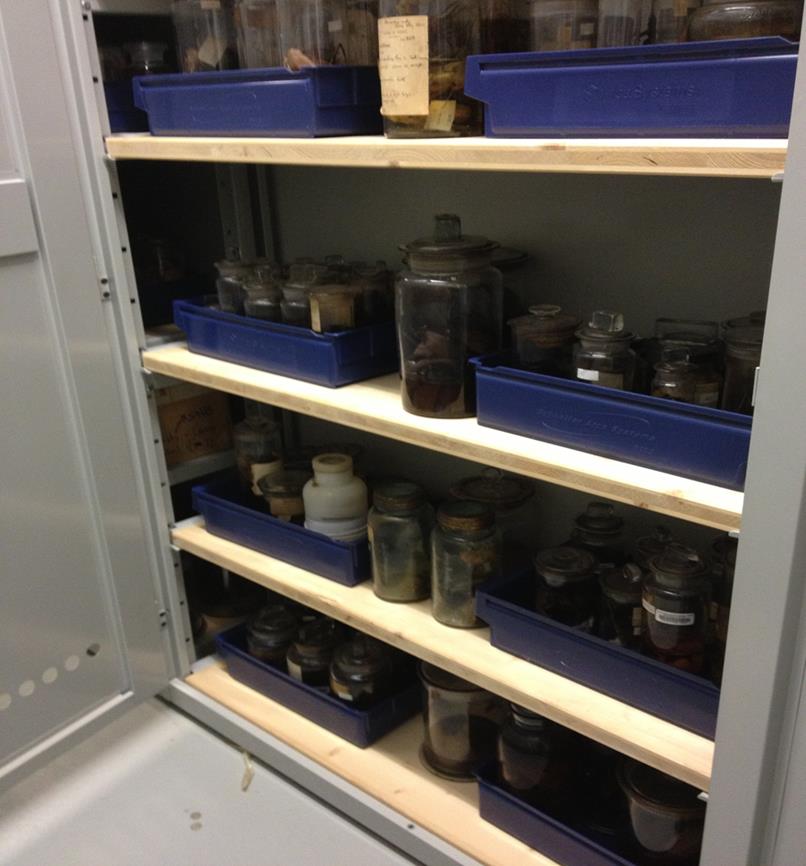
Anyone who has to deal with fluid collections, without the support of a natural history conservator, probably has nightmares about cracked jar lids and desiccated specimens. But would you sleep more easily if I told you that it’s possible to get a transformation like this using a straightforward and inexpensive method?
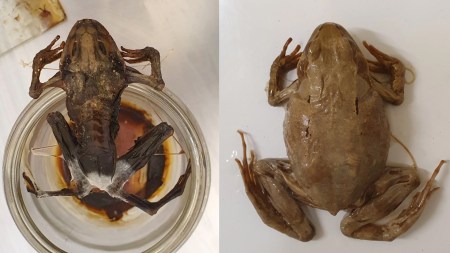
Frog_before-after

Here’s my account of how I resurrected this dehydrated specimen using stuff you probably have sitting in your museum cupboards or that you can buy for less than £20. It’s worth noting that the technique will not always work and if you plan to use it on a specimen that may have useful DNA to contribute, you should take a sample before rehydrating, since it is likely to reduce the quantity and quality of DNA you can extract.

Continue reading

Diminished Scales – The Plight of The Pangolin and The Role of Museums

Written by Dan Gordon, Keeper of Biology, The Great North Museum: Hancock.

To explain grace requires a curious hand’ wrote Marianne Moore, in her 1938 poem, The Pangolin. Moore first learned about pangolins at college in biology class and remained fascinated by them for the rest of her life. Curiosity was what first drew me to pangolins, too. Not just about their curious, clawed hands – when I first encountered a stuffed pangolin at the Great North Museum, its whole appearance was like nothing I’d ever seen. A small quadruped, clad in precisely overlapping rows of jagged scales, like steel plating welded onto a badger. A huge tail at one end, a tapering snout at the other. It was an animal that suggested a host of comparisons – a pinecone, an artichoke, a dinosaur. What on earth was it? I decided to investigate.

I soon learned it was a Ground Pangolin (Smutsia temnickii), one of eight species of pangolin that make up the family Manidae. Pangolins are the only scaled mammals and are found in tropical Africa and Asia. Most species live nocturnal, solitary lives. They’re notable for all sorts of reasons. The Ground Pangolin can walk on its back legs, like a tiny T-rex in a suit of armour. The Black-bellied Pangolin has a tail so long it has more bones than any other mammal.

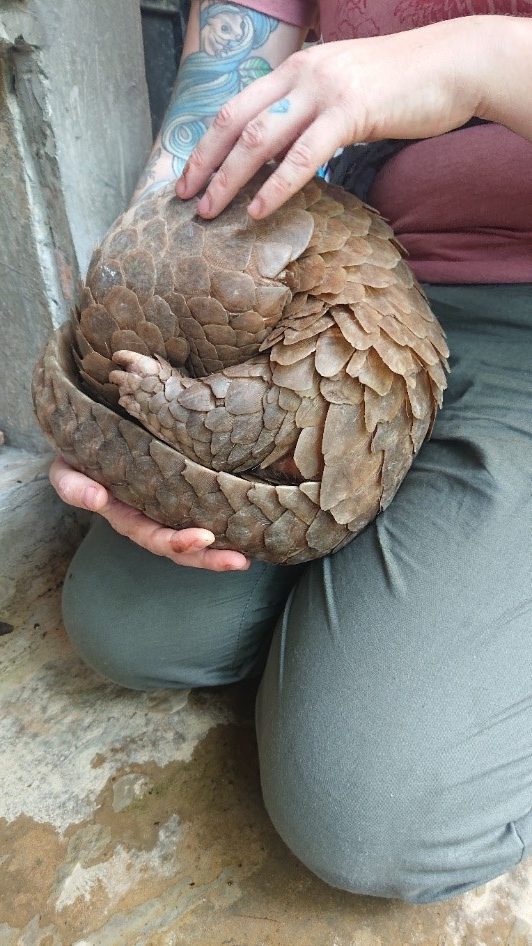
Sunda Pangolin (Manis javanica) at SVW Rescue Centre, Vietnam. When threatened pangolins curl into a defensive ball. This animal was found wedged beneath a seat on a bus travelling from Laos to Hanoi and rescued by SVW staff (© Dan Gordon)

Continue reading

Our Top Ten Blogs of 2019

Written by Jennifer Gallichan, Curator of Molluscs & Vertebrates at National Museum Cardiff.

2019 was an interesting year for me as I took on the role of NatSCA blog editor. It has been a great year and I have very much enjoyed reading all of the articles from our amazing contributors. To celebrate this, I wanted to bring together a list of our top ten most viewed blogs from 2019 in case you missed any of them.

Top scorers this year include a surprising number of botanical articles, with four of the ten written by our plant loving colleagues.

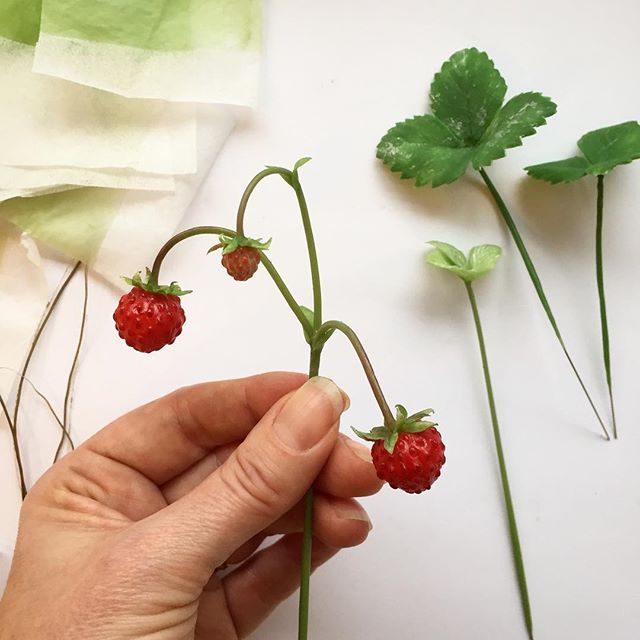
Strawberry fruits made from dressmaking beads coated in molten wax and attached to waxed wire stems. © Annette Townsend

Some of my personal favourites, although not top scorers, are actually two articles which we were kindly allowed to re-blog: Annette Townsend’s beautiful and mesmerising work in how to make a wild strawberry sculpture from honey bee wax, and John Wilson’s fantastic article about the orang-utan specimens sent to World Museum, Liverpool by Alfred Russell Wallace.

But, here are the top ten most read NatSCA blogs by your good selves…

Continue reading

Survey of Flowering Plants Stored in Fluid Preservatives Across European Herbaria

Written by Ranee Prakash, Senior Curator (Flowering Plants), Algae, Fungi and Plants Division, Department of Life Sciences, Natural History Museum, London.

A survey of flowering plant material stored in various fluid preservatives across several European herbaria/institutions was carried out a few years ago. The feedback received from the survey is shared and shows that the majority of the herbaria use 70% IMS (industrial methylated spirit) to store their collections.

Introduction

The seed plant collections (stored in various liquids such as formalin, some have unknown liquids, and some mention poison) form a relatively small yet significant part of the botanical holdings at NHM (Natural History Museum). They include some important material dating back to the mid 1800’s and type collections such as the world’s largest flower Rafflesia arnoldii collected by Robert Brown. However, these wet collections have remained a somewhat underused asset and are in dire need of curatorial attention.

In continuation to this aim, a survey of flowering plants stored in spirit collections across various institutions in Europe was carried out in 2012 so as to assess what preservatives other institutions were using and what would be the best method to store the collections at NHM for posterity. The objective of this survey was to gather information on:

  • How big the spirit collection is
  • How the collection is used
  • Which liquid preservatives the flowering plant collections are stored in

Continue reading

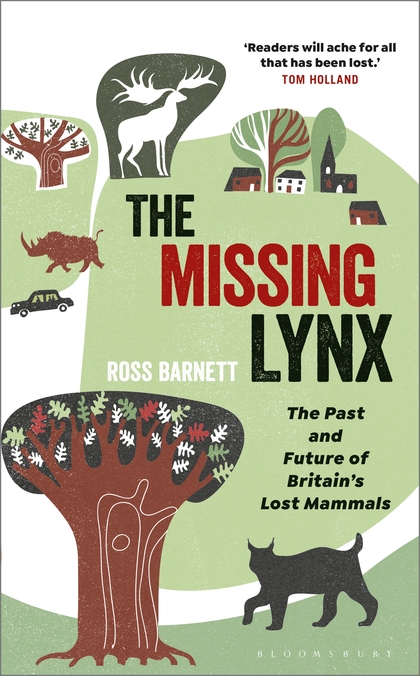
The Missing Lynx: The Past and Future of Britain’s Lost Mammals

Written by Jack Ashby, Manager of the University Museum of Zoology, Cambridge, and author of Animal Kingdom: A Natural History in 100 Objects.

A good title goes a long way, and based on that alone I was excited to receive a review copy of Ross Barnett’s new book through the post. I knew of Ross from Twitter – and I can heartily recommend following him for a whole host of natural history-related wonders, particularly around climate change, ancient mammal DNA and palaeontology. As a result, I was slightly surprised that he had written a book that I assumed – from the clever title – was about reintroducing the lynx to Britain.

That is, in fact, not what the book is about. Instead, it takes us species-by-species, chapter-by-chapter, through the incredible range of beasts that have disappeared from the British Isles in recent millennia (I should have paid more attention to the subtitle). We learn about the woolly mammoths and rhinos, the huge cave bears and their slightly smaller relatives, cave lions and cave hyenas, sabretooth cats, massive species of cattle and deer, as well as wolves, beavers and, yes, lynx. All of these stories are told in the voice of a person clearly fascinated and excited by the things he has been studying all his life, and with a dry sense of humour.

Continue reading