65 Million Years in the Making, Five Seconds to Explain

Written by Callum Smart, a natural history volunteer at Bolton Museum. He works both in the stores, documenting the collections, and in the gallery engaging with visitors using the objects to start conversations. Here he shares his experience of one afternoon with a school group.

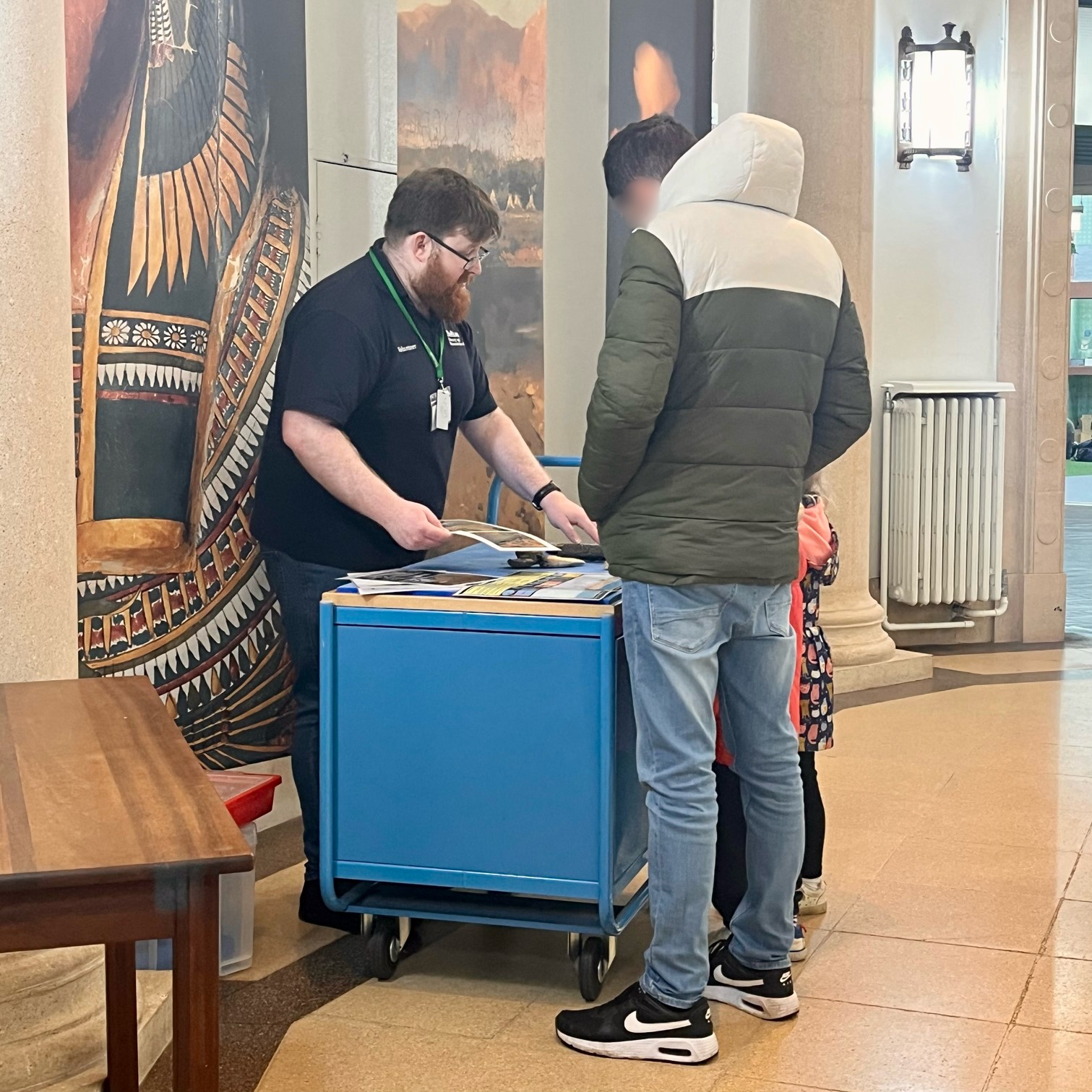
It’s Wednesday afternoon at Bolton Museum and I have just finished setting up the fossil touch tray, a selection of ancient artefacts for visitors to get hands on with. A school trip marches through the atrium, passing the gift shop with furtive glances, heading towards the wonderful Egyptian exhibits. The children clutch their worksheets, a scavenger hunt checklist filled with items from around the museum’s galleries. They whisper to each other, checking if they’ve missed anything in the Bolton’s History gallery and making bold claims over what they’ll find in the next room.

Callum at the object handling table with the fossil touch tray speaking to visitors. © Bolton Museum

A few of them spot the fossils on my trolley and start to stop, blurting out questions, weighing up whether to reach out and touch the strange rocks. I’d love for kids to interact with the fossils, it’s why I’m there. But I also don’t want to distract them from their trip, so I’m grateful when the teacher steers them on. Their teacher asks if I would be able to talk to the children about the fossils when they finish in the Egypt gallery. “Of course,” I say, “I’d be happy to.”

Continue reading

NatSCA Digital Digest – February 2025

Compiled by Ellie Clark, Collections Moves Team Leader at the Natural History Museum

Welcome to the February edition of NatSCA Digital Digest.

Digital Digest is a monthly blog series featuring the latest on where to go, what to see and do in the natural history sector including jobs, exhibitions, conferences, and training opportunities. We are keen to hear from you if you have any top tips and recommendations for our next Digest, please drop an email to blog@natsca.org.

Sector News

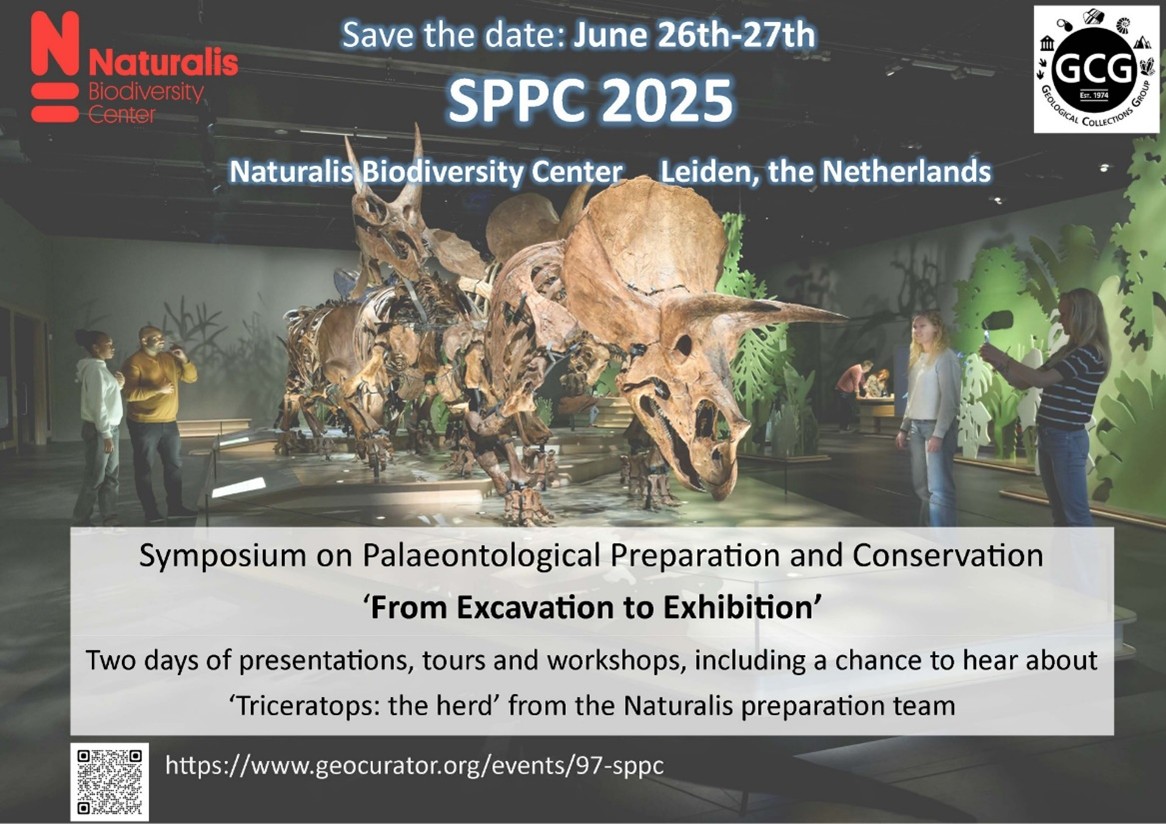
Save the Date: SPPC, June 26th – 27th 2025

The 30th Symposium on Palaeontological Preparation and Conservation will be held in the Netherlands this year on 26-27th June.

The theme will be From Excavation to Exhibition including aspects of the story of how geological collections end up on display in our museums, as well as their conservation and preparation. A call for abstracts and registration is coming soon. For more details visit: https://www.geocurator.org/events/97-sppc

Continue reading
Top NatSCA Blogs of 2024

Compiled by Jen Gallichan, NatSCA Blog Editor.

2024 was a great year for the NatSCA blog and we have seen increases in both the number of readers and number of articles submitted. We are now reaching well over 2000 views per month. I want to take this opportunity to thank everyone who contributed an article. The NatSCA blog is driven solely by your contributions, and it is stands as a testament to all the hard work you are doing. I am pleased to say that the 2025 blog calendar is open for business, so drop me a line if you would like to contribute!

To celebrate all your wonderfulness, I am taking this opportunity to highlight the top 10 most read posts from 2024. This year’s line-up feels more diverse that ever, featuring a coelacanth, live dissections, radiocarbon dating, and fluid collections!

In descending order…

Continue reading

Collecting Coventry, a Temporary Exhibition at the Herbert Art Gallery & Museum

Written by Ali Wells, Curator (Herbert Collections), Herbert Art Gallery & Museum.

This blog post details a temporary exhibition at the Herbert, how it was presented, how decolonisation and feedback were integrated into the show. This is an overview, please get in touch if you would like more information on any aspect of the exhibition.

In May 2024 the Herbert launched its latest major temporary exhibition, Collecting Coventry. The display focuses on the history of collecting in Coventry museums and showcasing the breadth of the collections.

The main aims were to

  • Present the Herbert’s collections after several years of external or predominately loan-based temporary exhibitions.
  • Get out visitor favourites like the Lowry and display stored objects for the first time.
  • Look like a museum store.
  • Give visitors the opportunity to comment on aspects of museum work and ask questions relating to collections and displays. For example, Collections Development policy, display of human remains, use of technology, future exhibitions, representation.
Continue reading

NatSCA Digital Digest – December 2024

Compiled by Olivia Beavers, Assistant Curator of Vertebrate Zoology at World Museum, National Museums Liverpool.

Welcome to the December edition of NatSCA Digital Digest.

A monthly blog series featuring the latest on where to go, what to see and do in the natural history sector including jobs, exhibitions, conferences, and training opportunities. We are keen to hear from you if you have any top tips and recommendations for our next Digest, please drop an email to blog@natsca.org.

Sector News

NatSCA Conference & AGM 2025

The 2025 NatSCA conference Call for Papers is open! The deadline to submit is 5pm GMT Friday 17th January. In the meantime, don’t hesitate to reach out to the committee with questions. (conference@natsca.org) We look forward to reading your submissions!  

Making a Difference: Showing the Positive Impact of Natural History Collections

The Annual Conference & AGM of the Natural Sciences Collections Association will be held on Thursday 8th and Friday 9th May 2025 at The University of Manchester, Manchester Museum.

Natural history collections are involved in a huge range of work that has enormous positive impacts on people and the planet – this is a conference to share these stories. The #NatSCA2025 conference invites proposals for presentations looking at impact, how our work is making a difference, how we measure it, how we show success, and how we advocate for collections.

We seek ideas from the natural history collections community, educators, collaborators, and beyond. We are interested in practical lessons, unique solutions, new collaborations, and to show what has and hasn’t worked. We are particularly looking for presentations that share the differences museums are making in:

Continue reading