Divorced or Separated? Naming the Specimens on Display at the Zoologisches and Palaontologisches Museum, Zurich.

Written by Richard Crawford, who has just completed a PhD thesis at the University of the Arts London, entitled ‘Re-presenting taxidermy, Contemporary Art interventions in Natural History Museums’.

Do people read labels in museums? If they do, what do they learn about the object on view? It has been the custom to use labels to give factual names to the things on display in scientific museum displays, but Art curators have taken a different approach and put titles to works that suggest a particular reading of the artwork. These may be suggested by the artist. A good example of this style of labelling is Damien Hirst’s ‘Mother and Child divided’, an artwork that used preserved specimens.

For this work, Damien Hirst famously sawed a cow and a calf in half and exhibited the separate halves in tanks filled with formaldehyde, which he placed apart with sufficient space for a viewer to walk between the two halves of each animal carcass so that they could observe the internal organs of both cow and calf. When it was exhibited at the Tate Gallery in 1995, it helped win him the Turner Prize. The title was ironic. Hirst’s work critiques romantic depictions of the animal as part of harmonious natural order, a place in which mothers protect and nurture their young according to supposedly universal maternal instincts. In place of natural harmony, he presented the viewer with the disjuncture and division brought about by human intervention that brought early death to these two animals, destined for the meat market.

Continue reading

NatSCA Digital Digest – March 2024

Compiled by Olivia Beavers, Assistant Curator of Vertebrate Zoology at World Museum, National Museums Liverpool.

Welcome to the March edition of NatSCA Digital Digest.

A monthly blog series featuring the latest on where to go, what to see and do in the natural history sector including jobs, exhibitions, conferences, and training opportunities. We are keen to hear from you if you have any top tips and recommendations for our next Digest, please drop an email to blog@natsca.org.

Sector News

NatSCA Annual Conference & AGM 2024

Registration is open for the 2024 Annual Conference & AGM of the Natural Sciences Collections Association. Trials and Triumphs: sharing practice across the museum sector will be held on Thursday 18th and Friday 19th April 2024 in the Oxford University Museum of Natural History. This practical conference aims to celebrate triumphs and amplify successes in museums, but also highlights pitfalls and lessons learned from situations that didn’t go as planned. Members – please remember to contact membership@natsca.org for your promotional code to release discounted tickets.

The event will be physical/digital hybrid, with attendees able to attend in person or online via Zoom. Follow the link for more details and to register.

Continue reading

What is Taxidermy? An Intimate Relationship between Death and Maker.  

Written by Jazmine Miles Long, Taxidermist. https://www.jazminemileslong.com, Twitter: @TaxidermyLondon; Instagram: @Jazmine_miles_long

For taxidermy to exist an animal must have died. This brutal truth creates unease and leaves the viewer to ponder how the death occurred. And secondly how the death and the body is managed. A fluffy rabbit, cute and cuddly in life, suddenly becomes hideous and untouchable in death. Due to my profession, I am raising a child who has been exposed to dead animals and the concept of death his whole life. This has not made him desensitised to death, I’d say the opposite. He is deeply hurt by the death of any animal; he is a self-proclaimed vegetarian and last week at the age of 4 he asked me if his job when he grows up could be to stop people eating animals. He shouts at cars to slow down in case they hit anything and one of my favourite things he asks me when we meet new people is if they are a vegetarian or a carnivore eyeing them up suspiciously. Does a good understanding of death at a young age give a person greater empathy for animals and take us closer to not seeing them as ‘other’? 

When my son is asked what a taxidermist does, he says they look after animals when they die. I get at least one phone call a week from someone mourning their dead pet, I give advice on what to do next, ideas for memorials and how to store the body in the freezer while they decide what to do. I didn’t expect as a taxidermist to be a councillor, a listening ear, someone who is qualified to talk about death. 

Continue reading

Unpacking the Unnatural History Museum (Season 1)

Written by Verity Burke, John Pollard Newman Fellow of Climate Change and the Arts, University College Dublin.

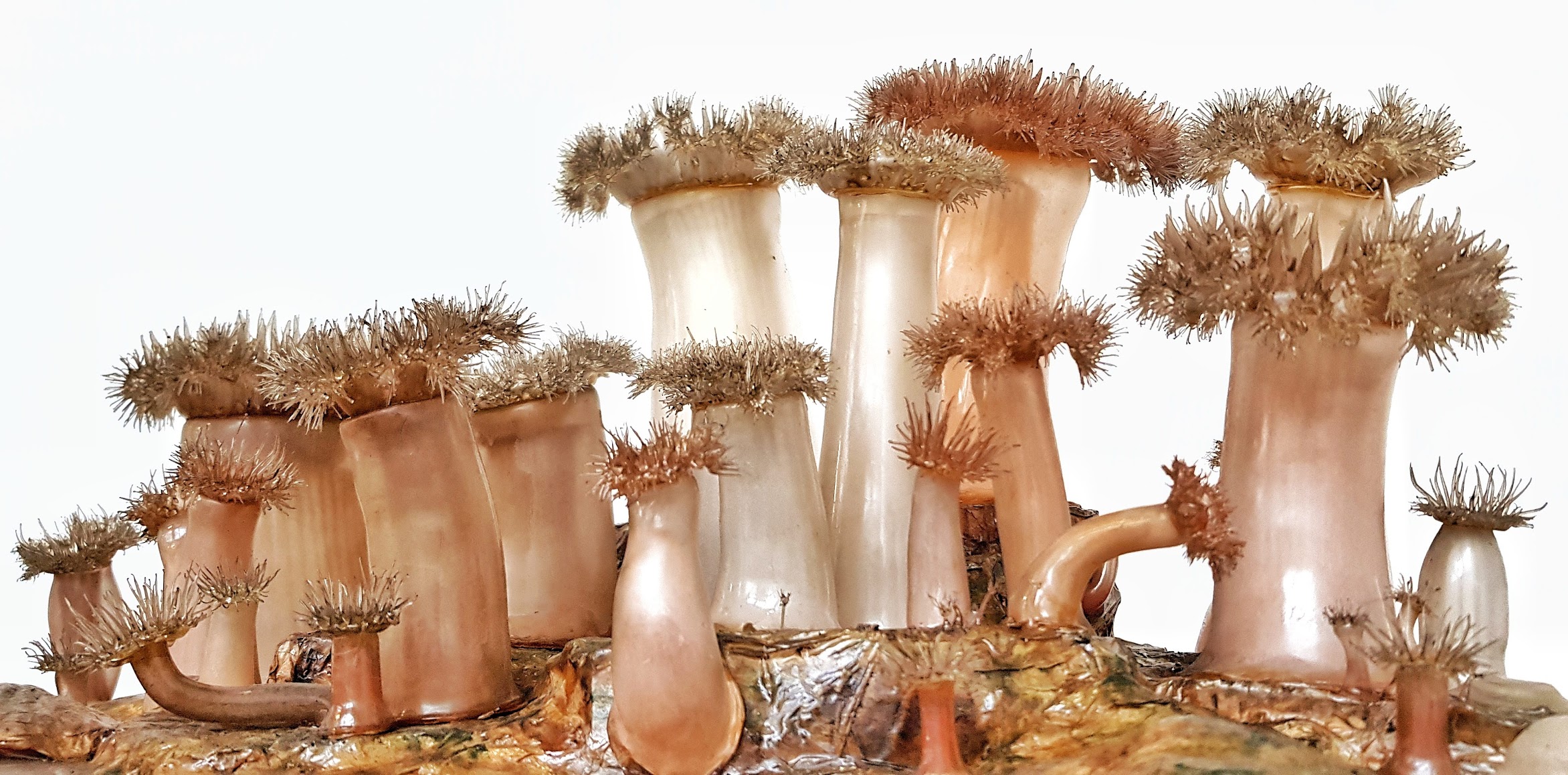
Blaschka Models. Image credit: courtesy of the National Museum of Ireland: Natural History.

We’re at a crucial historical moment, in which the International Union for Conservation of Nature Red List has announced a catastrophic decline in global biodiversity, and the Intergovernmental Panel on Climate Change has reported on the devastating trajectory of the climate crisis. Museums have an important role to play in communicating the value of nature. Yet nature is, necessarily, mediated in museums, through taxidermy dioramas and skeletal mounts; virtual tours and digital databases; image, text and film. While the natural world has always been mediated in the museum space, what does this mediation mean now for natural history museums and collections, and the natures they present?

These are some of the questions which drive my research into museum representations of the natural world, and was the inspiration behind putting together an event series called ‘The Unnatural History Museum: Mediating Nature in the Sixth Mass Extinction’ (part of the Irish Research Council-funded project ‘Still Lives: Organic and Digital Animals in the Natural History Museum’ at Trinity College Dublin). I was keen to make a space to have these conversations across disciplines and sectors (something which we get surprisingly few opportunities to do, despite often working on similar topics or issues), to allow us to share what we were doing and discuss why. This blog is a short overview of the topics that the first season of the Unnatural History Museum engaged with from September 2022 to April 2023, with some excitement about what arose in the first season, and in anticipation of continuing these conversations in a planned second season.

Continue reading

NatSCA Digital Digest – April 2023

Compiled by Milo Phillips, Assistant Curator of Entomology for National Museums Scotland.

Welcome to the April edition of NatSCA Digital Digest.

A monthly blog series featuring the latest on where to go, what to see and do in the natural history sector including jobs, exhibitions, conferences, and training opportunities. We are keen to hear from you if you have any top tips and recommendations for our next Digest, please drop an email to blog@natsca.org.

Sector News

Registration for the NatSCA 2023 conference closes on April 20th so get booking ASAP. The conference will be held on Thursday 27th and Friday 28th April 2023. Stoke-on-Trent Museums will be hosting the conference at The Potteries Museum & Art Gallery. The conference will include gallery and collection tours, presentations, poster sessions and the annual AGM. For all the info and to register, check out our webpage.

Register via Eventbrite through the NatSCA website: https://www.natsca.org/natsca2023. Members can access discounted booking rates by entering a promo code which has been distributed. If you are a NatSCA member and have not received a code via email, please contact membership@natsca.org. We look forward to seeing you later this month!

SPNHC Conference

The 38th Annual Meeting of The Society for the Preservation of Natural History Collections is being held in San Francisco, California 28 May – 2 June 2023. Early bird registration ends this Friday 15th April. See details and registration here.

Science, Gender & Sociability in a Northern City c. 1775-1820 Conference

This interdisciplinary event brings together scholars in women’s history, the history of science, literature, theatrical performance, music and historical archaeology from across the UK and the US, to contextualise and analyse the diary of Jane Ewbank (1778‒1824). More information on speakers, and links for bookings, can be found here. The conference runs Thursday 8th to 10th June 2023.

Continue reading