The Power of People and Collections in the Climate Emergency

Written by David Gelsthorpe, Curator of Earth Science Collections, The Manchester Museum and Jan Freedman, Curator of Natural History, The Box, Plymouth (formerly Plymouth City Museum and Art Gallery).

Museums are most powerful when they connect real objects and research with real people. Natural science objects elicit deep emotional responses to the climate emergency; they help people to care and when done right, empower action.

This message is central to the NatSCA conference this year:

Changing the World: Environmental Breakdown, Decolonisation and Natural Science Collections

We’d love to hear your experience in a talk at the conference, the deadline for submissions is the 7th February.

Natural science collections are unique records of past biodiversity and climate across Britain, and the world, and are essential for climate change research taking place in museums every day. They allow access to historical information about millions of different species, providing an incredible amount of detail. They show how plants and animals have responded to past climate change, they show long-term population trends, and they show what we have lost.

These are all stories essential to bring clear factual science to an emotionally-charged debate. Research on these collections has directly shaped conservation work and climate change mitigation. In short, natural science collections are a powerful way to help save the world and give people hope for a better future.

Continue reading

Decolonising Natural Sciences Collections

Written by David Gelsthorpe, Curator of Earth Science Collections, The Manchester Museum.

Decolonising museums is in the headlines a lot at the moment and so it should be. I’ve chatted to a few people about this recently and it isn’t very clear what it means, how it relates to natural science collections and how we can start to decolonise our collections, so I thought I’d share my own thoughts.

Much of the discussion in the museum sector has been around ethnography collections with some great work that goes some way to redress our colonial past (including from my own institution Manchester Museum who have returned sacred aboriginal objects). Some ethnography objects are made from bark, fur or ivory, but these materials don’t often form part of the decolonisation debate.

The reality is that many natural history collections, particularly in the western world have a colonial origin. Many objects were traded on slave ships and were an attempt to map and tame the British Empire. Miranda Lowe and Subhadra Das have done some brilliant work to highlight this and the Grant Museum’s new exhibition on their Colonial Histories is a great first step in bringing this to the public.

Continue reading

Diminished Scales – The Plight of The Pangolin and The Role of Museums

Written by Dan Gordon, Keeper of Biology, The Great North Museum: Hancock.

To explain grace requires a curious hand’ wrote Marianne Moore, in her 1938 poem, The Pangolin. Moore first learned about pangolins at college in biology class and remained fascinated by them for the rest of her life. Curiosity was what first drew me to pangolins, too. Not just about their curious, clawed hands – when I first encountered a stuffed pangolin at the Great North Museum, its whole appearance was like nothing I’d ever seen. A small quadruped, clad in precisely overlapping rows of jagged scales, like steel plating welded onto a badger. A huge tail at one end, a tapering snout at the other. It was an animal that suggested a host of comparisons – a pinecone, an artichoke, a dinosaur. What on earth was it? I decided to investigate.

I soon learned it was a Ground Pangolin (Smutsia temnickii), one of eight species of pangolin that make up the family Manidae. Pangolins are the only scaled mammals and are found in tropical Africa and Asia. Most species live nocturnal, solitary lives. They’re notable for all sorts of reasons. The Ground Pangolin can walk on its back legs, like a tiny T-rex in a suit of armour. The Black-bellied Pangolin has a tail so long it has more bones than any other mammal.

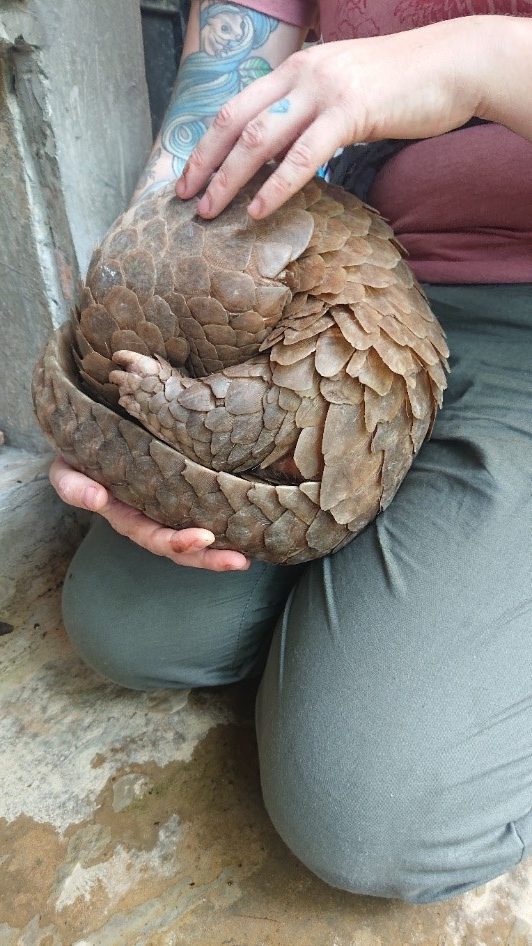
Sunda Pangolin (Manis javanica) at SVW Rescue Centre, Vietnam. When threatened pangolins curl into a defensive ball. This animal was found wedged beneath a seat on a bus travelling from Laos to Hanoi and rescued by SVW staff (© Dan Gordon)

Continue reading

Our Top Ten Blogs of 2019

Written by Jennifer Gallichan, Curator of Molluscs & Vertebrates at National Museum Cardiff.

2019 was an interesting year for me as I took on the role of NatSCA blog editor. It has been a great year and I have very much enjoyed reading all of the articles from our amazing contributors. To celebrate this, I wanted to bring together a list of our top ten most viewed blogs from 2019 in case you missed any of them.

Top scorers this year include a surprising number of botanical articles, with four of the ten written by our plant loving colleagues.

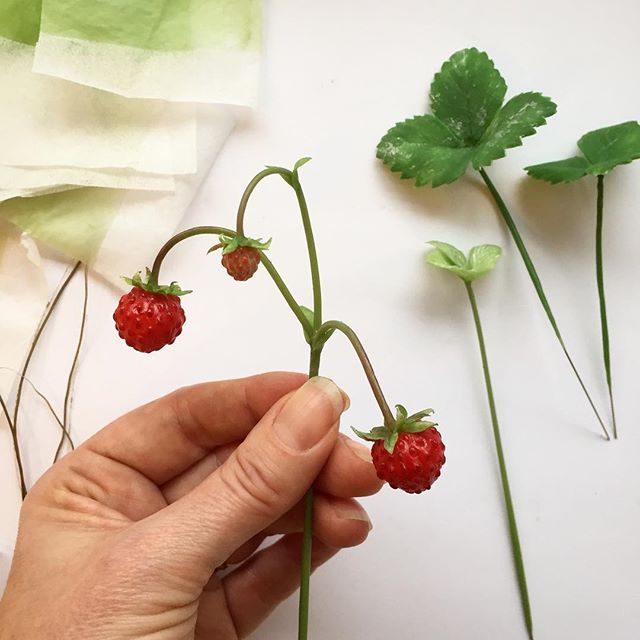
Strawberry fruits made from dressmaking beads coated in molten wax and attached to waxed wire stems. © Annette Townsend

Some of my personal favourites, although not top scorers, are actually two articles which we were kindly allowed to re-blog: Annette Townsend’s beautiful and mesmerising work in how to make a wild strawberry sculpture from honey bee wax, and John Wilson’s fantastic article about the orang-utan specimens sent to World Museum, Liverpool by Alfred Russell Wallace.

But, here are the top ten most read NatSCA blogs by your good selves…

Continue reading

Provenance, Provenance, Provenance

Written by Yvette Harvey, Keeper of the Herbarium, Royal Horticultural Society, RHS Garden Wisley, Surrey.

When all is quiet, the crowds have long-gone home and the lights have been dimmed, the back rooms come alive for the curators who have long finished their official hours. For it is the time for tracking down rogue specimens, delving into the past or anticipating the future. What I am trying to say is that it is the time for research and the inevitable Miss Marple style adventures to be discovered when finding details to add to the current knowledge of a historic specimen. I say current because invariably details will have been lost or not even deemed worthy to have been recorded on labels, or written in a language so obscure as to not be recognised by the modern eye.

Perhaps lost details are just a phenomenon of the botanical world, but I suspect not, and I will explain what I am alluding to above using just a couple of examples of specimens made by a single collector, John Forbes, who undertook a voyage from 1822 until his death in 1823, almost 200 years ago.

John Forbes was one of the Horticultural Society of London’s (now the Royal Horticultural Society) early plant collectors. Head-hunted from the Liverpool Botanical Garden for his horticultural skills, he was employed to travel to Southern Africa to bring back plants to introduce to British gardens. He sailed with Captain Owen on the HMS Leven, a voyage tasked with making a survey of the east coast of Africa, visiting (in the following order): Madeira, Tenerife, Santa Cruz, Cape Verde Islands, Brazil, South Africa, Mozambique (Forbes is noted as the second botanist to collect there (Exell & Hayes: 130)), Madagascar, Comoros, Mozambique, South Africa and finally Mozambique (where Forbes died, 16th August 1823).

Continue reading