Diminished Scales – The Plight of The Pangolin and The Role of Museums

Written by Dan Gordon, Keeper of Biology, The Great North Museum: Hancock.

To explain grace requires a curious hand’ wrote Marianne Moore, in her 1938 poem, The Pangolin. Moore first learned about pangolins at college in biology class and remained fascinated by them for the rest of her life. Curiosity was what first drew me to pangolins, too. Not just about their curious, clawed hands – when I first encountered a stuffed pangolin at the Great North Museum, its whole appearance was like nothing I’d ever seen. A small quadruped, clad in precisely overlapping rows of jagged scales, like steel plating welded onto a badger. A huge tail at one end, a tapering snout at the other. It was an animal that suggested a host of comparisons – a pinecone, an artichoke, a dinosaur. What on earth was it? I decided to investigate.

I soon learned it was a Ground Pangolin (Smutsia temnickii), one of eight species of pangolin that make up the family Manidae. Pangolins are the only scaled mammals and are found in tropical Africa and Asia. Most species live nocturnal, solitary lives. They’re notable for all sorts of reasons. The Ground Pangolin can walk on its back legs, like a tiny T-rex in a suit of armour. The Black-bellied Pangolin has a tail so long it has more bones than any other mammal.
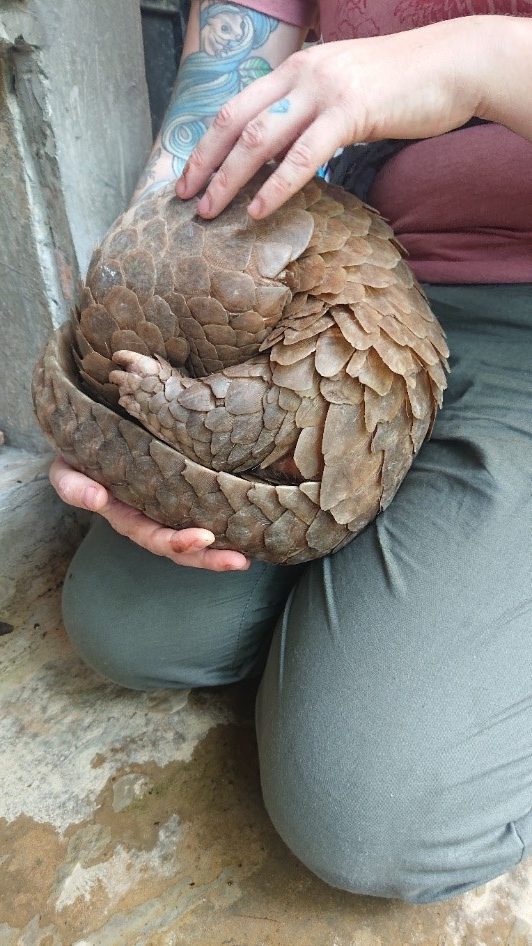
Sunda Pangolin (Manis javanica) at SVW Rescue Centre, Vietnam. When threatened pangolins curl into a defensive ball. This animal was found wedged beneath a seat on a bus travelling from Laos to Hanoi and rescued by SVW staff (© Dan Gordon)

Continue reading

Our Top Ten Blogs of 2019

Written by Jennifer Gallichan, Curator of Molluscs & Vertebrates at National Museum Cardiff.

2019 was an interesting year for me as I took on the role of NatSCA blog editor. It has been a great year and I have very much enjoyed reading all of the articles from our amazing contributors. To celebrate this, I wanted to bring together a list of our top ten most viewed blogs from 2019 in case you missed any of them.

Top scorers this year include a surprising number of botanical articles, with four of the ten written by our plant loving colleagues.

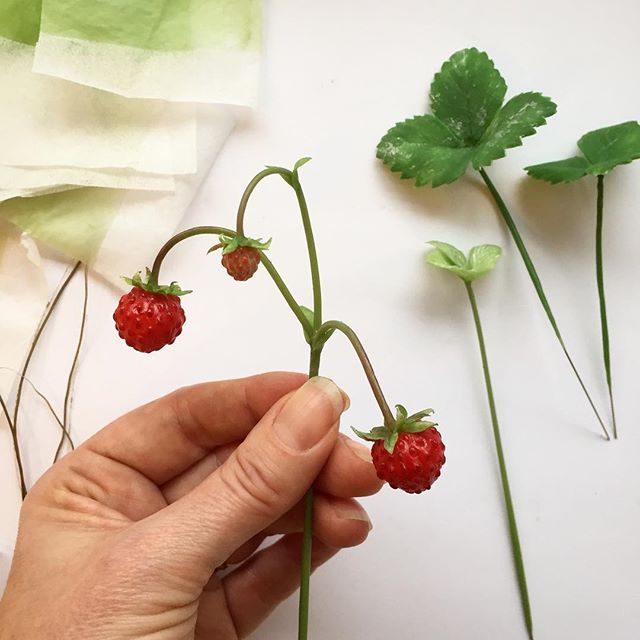
Strawberry fruits made from dressmaking beads coated in molten wax and attached to waxed wire stems. © Annette Townsend

Some of my personal favourites, although not top scorers, are actually two articles which we were kindly allowed to re-blog: Annette Townsend’s beautiful and mesmerising work in how to make a wild strawberry sculpture from honey bee wax, and John Wilson’s fantastic article about the orang-utan specimens sent to World Museum, Liverpool by Alfred Russell Wallace.

But, here are the top ten most read NatSCA blogs by your good selves…

Continue reading

Provenance, Provenance, Provenance

Written by Yvette Harvey, Keeper of the Herbarium, Royal Horticultural Society, RHS Garden Wisley, Surrey.

When all is quiet, the crowds have long-gone home and the lights have been dimmed, the back rooms come alive for the curators who have long finished their official hours. For it is the time for tracking down rogue specimens, delving into the past or anticipating the future. What I am trying to say is that it is the time for research and the inevitable Miss Marple style adventures to be discovered when finding details to add to the current knowledge of a historic specimen. I say current because invariably details will have been lost or not even deemed worthy to have been recorded on labels, or written in a language so obscure as to not be recognised by the modern eye.

Perhaps lost details are just a phenomenon of the botanical world, but I suspect not, and I will explain what I am alluding to above using just a couple of examples of specimens made by a single collector, John Forbes, who undertook a voyage from 1822 until his death in 1823, almost 200 years ago.

John Forbes was one of the Horticultural Society of London’s (now the Royal Horticultural Society) early plant collectors. Head-hunted from the Liverpool Botanical Garden for his horticultural skills, he was employed to travel to Southern Africa to bring back plants to introduce to British gardens. He sailed with Captain Owen on the HMS Leven, a voyage tasked with making a survey of the east coast of Africa, visiting (in the following order): Madeira, Tenerife, Santa Cruz, Cape Verde Islands, Brazil, South Africa, Mozambique (Forbes is noted as the second botanist to collect there (Exell & Hayes: 130)), Madagascar, Comoros, Mozambique, South Africa and finally Mozambique (where Forbes died, 16th August 1823).

Continue reading

The Land of the Oran-utan

Written by John Wilson, Curator (Vertebrate Zoology), World Museum, Liverpool

This article was first published as a blog for National Museums Liverpool, 16 August 2019.

150 years ago Alfred Russel Wallace wrote about “the land of the orang-utan” and sent specimens to Liverpool.

2019 is the 150th anniversary of the first publication of Alfred Russel Wallace’s The Malay Archipelago: The land of the orang-utan, and the bird of paradise. A narrative of travel, with studies of man and nature.

Although best known as the co-discoverer of the theory of evolution by natural selection alongside Charles Darwin, The Malay Archipelago firmly established Wallace as one of the greatest natural history explorers.

Title page of the first edition of The Malay Archipelago published in 1869, 150 years ago.

The Malay Archipelago is a vivid, first-person account of Wallace’s travels, studies and natural history collecting in Southeast Asia. During 8 years Wallace travelled over 14,000 miles and collected 125,000 specimens. Orangutans feature prominently in the book’s title, and chapter four is largely devoted to Wallace’s adventures with orangutans in Sarawak, Borneo.

Wallace wrote: “… one of my chief objects in coming to stay at Simunjon [a river in Sarawak] was to see the Orang-utan (or great man-like ape of Borneo) in his native haunts, to study his habitats, and obtain good specimens of the different varieties and species of both sexes, and of the adult and young animals. In all these objects I succeeded beyond my expectations, …”

Continue reading

Making the Most of What You’ve Got

Written by Dr Emma Nicholls, Deputy Keeper of Natural History, Horniman Museum and Gardens

The Collection

The Horniman Museum is the custodian of a collection of ca. 175,000 fossil specimens, collected by Walter Hellyer Bennett (1892-1971). A mining geologist and palaeontology enthusiast, Bennett collected somewhat indiscriminately, not pausing to favour geography, strata, or taxa, which makes it a collection of great interest to a wide variety of academics, and for other uses such as exhibitions and loans.

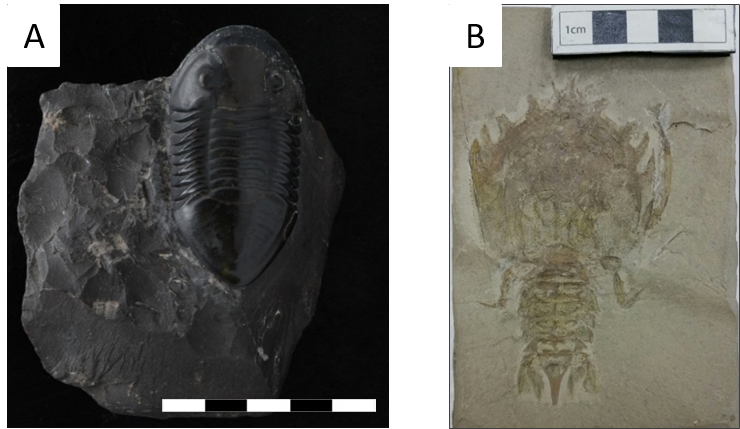
This huge collection was bequeathed to the Croydon Natural History and Scientific Society in the 1970s, where choice pieces were put out on open display whilst the rest remained stored in Bennett’s original wooden cabinets. It contains some beautiful material, such as this Isotelus gigas trilobite, and Eryon propinguus lobster.

A) Isotelus gigas, and Ordovician trilobite from the Trenton Limestone. B) Eryon propinquus, a Jurassic lobster from the Solnhofen Limestone. © Horniman Museum and Gardens.

The collection is approximately 10% vertebrate material, 85% invertebrates, and 5% plants and trace fossils. In case you are interested in particular taxonomic groups (as we are keen on facilitating research enquiries and visits… fyi) the invertebrates are mostly bivalves, brachiopods, cephalopods, corals, and gastropods, with a large variety of other taxonomic groups represented in small numbers as well (please do get in touch if you’re interested in getting more information), and the vertebrates are primarily conodonts, crocodilians, dinosaurs, fish (including sharks), ichthyosaurs, mammals, plesiosaurs, pterosaurs, and turtles. Geographically, around 87% of the material was collected within Europe, primarily from the UK (50%) and France (15%). A further 10% is from North America whilst small amounts of material were collected from across Africa, South America, the Middle East, Asia and Australasia. Notable sites include the Solnhofen Limestone and the Burgess Shale.

Continue reading