NatSCA Digital Digest

Chameleon

Events

  • The iDigBio 4-part webinar series, The Value of Digitizing Vertebrate Collections, starts on Tuesday 8th September. The first session is on mammal collections (delivered by Cody Thompson, University of Michigan), and will be held at 3 – 4pm EDT (that’s 8 – 9pm in the UK!). You can access it here: https://idigbio.adobeconnect.com/vertdigitization. The following three sessions will be at the same time each Tuesday (at the same link):

September 15: The Value of Digitizing Fish Collections, Andy Bentley, University of Kansas Biodiversity Institute and President of SPNCH
September 22: The Value of Digitizing Herpetology Collections, Chris Phillips, Illinois Natural History Survey, University of Illinois
September 29: The Value of Digitizing Bird Collections, Carla Cicero, UC Berkeley and Lead PI for Vertnet.

Around the Web

What to do when someone gives you a giant squid.

A technological revolution in museums? 3D printing and virtual reality.

A visit to Microbia, the world’s first microbe museum!

CT scan reveals fossils within fossils.

19th century Ecuadorian snail specimen is a new species.

Exciting new natural science workshops and a new book

Time is racing away, and in just a few days we will be at the NatSCA Bone Collections day in Cambridge (8th September 2015). The talks and posters promise to be really varied, interesting, and hugely informative. There is also the added bonus of a practical session to get your hands on some skeletal material, and, under the expert guidance of Bethany Palumbo, learn all about the basics of bone conservation.

Just a month later (15th October 2015), Paolo Viscardi will be leading a workshop on the identification of natural materials, a free course run by NatSCA and held at the Royal Albert Memorial Museum in Exeter (now sold out).

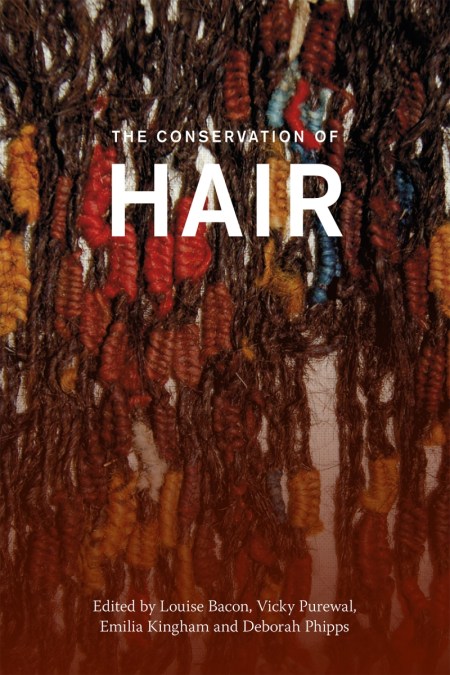
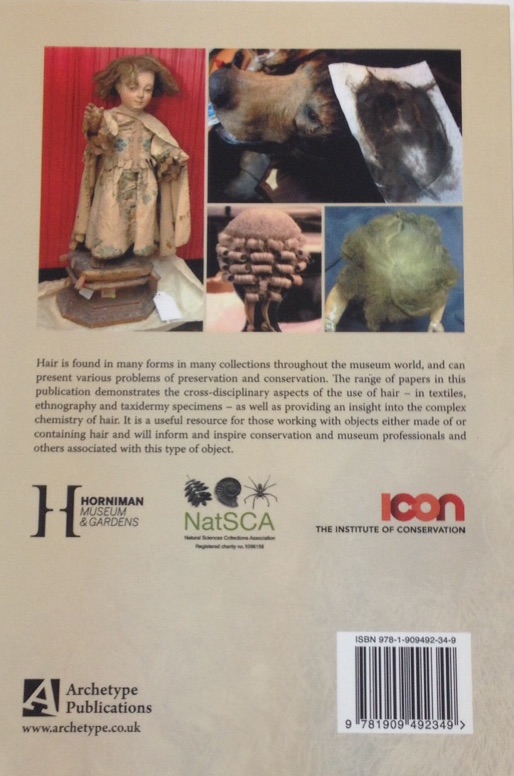
There is still more good news in that NatSCA, the Horniman Museum and Gardens, and Icon have published a book containing the full papers given at the Conservation of Hair conference held in June 2014. The book is published by Archetype books.

Conservation of Hair Publication

back_hair

NatSCA Digital Digest


NatSCA 2

Your weekly round-up of news and events happening in the world of natural sciences

Conferences and Workshops

As PalaeoSam mentioned in the last Digital Digest, the Symposium of Vertebrate Palaeontolotgy and Comparative Anatomy is on next week. It is my personal palaeo highlight of the year and so am sad that I will miss it this year. (Though not too sad given I am missing it to be in Italy for the Grand Prix.) If you are attending and would like to do a super write up of the weeks’ events, please do let us know.  I look forward to experiencing SVPCA through the eyes of a blogger.

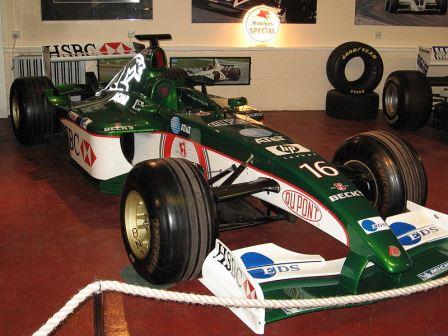
Jaguar

Those of you who are fans of F1 will know why this car is relevant to natural history (image in public domain)

News

Not really on the subject of natural history, but a topic that will touch the heart of any museum professional or visitor. ISIS have taken even more away from the us, the global nation, via the destruction of an Ancient temple in Palmyra. These open air museums are original sites of cultural heritage and are irreplaceable once gone. Not at the top of the list of the most tragic event of the last couple of weeks by any means, but a sad day for museums nevertheless.

News from the Blogosphere

The #MuseumInstaSwap phenomenon has launched as staff from some of the top museums in London (including the NHM and the Horniman) swap museums and take to social media to chat about it. An article in Time Out nicely summarises what is going on but a lot of the museums involved have their own exciting blogs on it worth looking up. Hence this is in the News from the Blogosphere section, see?

Highlights from the Papers

More and more, scientists are relying on Citizen science, as a means of collecting data. The mode of research is especially important in fields such as marine biology where the incorporation of sightings made by anglers, for example, can add significantly increase the size of datasets. An article in Nature called Rise of the Citizen Scientist explores the good the bad and the ugly of this practice as a research tool.


As ever, if you would like to write a blog for NatSCA on anything natural sciences related, give us an online shout blog@natsca.org.

NatSCA Digital Digest

ndd-b-rex

Conferences and Workshops

It’s conference season folks and I’ve been listening to the live feed of the Michigan State University Digital Archaeology Institute. This week they’re looking at how map-related frameworks can help you explain your data visually. There is a step-by-step guide as well as downloadable resources and great advice available at the #msudai tag.

Next week in Portsmouth we’ll have Flugsaurier 2015, the place to be if you love pterosaurs. I am trying to get there myself but, if you go, it would be great to have a chat with you about it. There’s going to be some great new stuff coming out of it. Watch that space.

Immediately after that we have SVPCA of course – this year in neighbouring Southampton. the two conferences are so close in space and time that they’re sharing a field trip between them! I can’t make it to SVPCA but get in touch if you’d like to write a review for us about it.

News

Good news for the California condor: their mortality rate has fallen from 37% in 2000 to an all-time low of 5.4% thanks to the efforts of conservationists. The main threats to condor survival are power lines and lead content in their diets. Aversion therapy has taught the condor to steer well clear of the power lines. You can read all about it here.

It’s take-over day – when the social media accounts of major institutions are taken over by young people. We’re looking forward to seeing what they do with them, it’s going to be a great learning experience for us all.

News from the Blogosphere

The Geological Society have launched a photography competition that is right up the GCG‘s alley. To enter, send in a picture of one of Britain and Ireland’s top 100 geosites. For the list and how to enter, click here. There’s a lot of beautiful landmarks that didn’t make the cut.

Highlights from the Papers

Dave Hone and colleagues have published on a beautiful specimen of Rhamphorhynchus – complete with soft tissue and possibly-associated coprolite. You can read the paper here.

Using Social Media as part of a Curatorial Traineeship

This post is another in our series of presentation write-ups from the 2015 NatSCA Conference, Museums Unleashed!


It felt like I was up there for hours when it was happening, but then it was over with a massive sense of relief. That’s how I’d summarise my first presentation in front of fellow NatSCA conference attendees.

We (myself and another two Natural Science Curatorial Trainees, Glenn and Lukas) had been asked to prepare a talk fitting with the conference theme of ‘Museums Unleashed’.  The conference was to focus on sharing collections using digital platforms, television and other forms of media, so we decided to present on our own use of Social Media throughout the 12 months of our Traineeships.

The presentation we came up with explored our use mainly of Twitter and WordPress throughout our year (other social media platforms are available), which we used to document our experiences and engage with the wider museum community. We were able to speak about things such as how fun Social Media can be when it’s used well, and how good of a platform it can be to engage with members of the public in order to (hopefully) dispel some of the myth about museums being so exclusive.

Presenting in full flow! (Image from Clare Brown @CuratorClare)

Presenting in full flow! (Image from Clare Brown @CuratorClare)

We also got to speak about how Social Media (from our perspective as trainees) could be used for our host museums. For example, showing the support of an institution or organisation for a trainee by letting them be there, working with collections and allowing them to further advocate said collections.

Our presentation allowed us to touch on some things that can make Social Media a challenge too, such as building a following. This can be difficult, especially when trying to expand outside the ‘Museum bubble’ – it can be hard to find those who may be interested in a particular discipline or hashtag.

Finally, I would like to take this opportunity to thank everyone at the conference who gave us great positive feedback about our talk, as especially for myself being so nervous, it was great to hear I wasn’t a complete mumbling wreck! And thanks again to NatSCA and its members for its support of myself, and my fellow trainees whom it has helped support over the years of the HLF Skills for the Future
programme.


Adam Peel, Curatorial Trainee Natural Science, 2014 – 2015