NatSCA Digital Digest

ndd-moon


Conferences and Workshops

Interest in our October Natural materials workshop has boomed and there are only a few places left. If you would like to book a place, do so now before they’re all gone.

We’re also really looking forward to seeing you all at our Osteology workshop in Cambridge in September. It too has received tons of interest and is bound to be excellent.

The subject and speaker’s list for Tetzoocon is coming along nicely – with possible book launch too! All very exciting. Check out the Facebook group for all the latest info.

Former NHM Tring curator and fine artist Katrina Van Grouw will be reprising her avian anatomy art course this year at ZSL London Zoo. I went last year and enjoyed it so much I’m going again. You can find full details and book tickets here.

News from the Blogosphere

The RVC’s John Hutchinson has written a lovely piece on museums from a researcher’s perspective. Delight in the Museum is well worth checking out.

The inimitable Jan Freedman has written a great post on public engagement for Open Quaternary. Read about how an unusual museum enquiry turned into a travel through time and space.

Highlights from the Journals

Poisonous frogs are nothing new. People have been using the toxins in amphibian skin for many purposes. Now though, it appears that at least two species of Brazilian frog need to be classified as venomous. Aparasphenodon brunoi and Corythomantis greeningi both raise interesting questions. Why does A. brunoi need venom 25 times more potent than a pit viper? Why does C. greeningi employ camouflage and venom – an unusual combination? Further research into these species will be most enlightening. You can find the paper here and a very detailed news item here.


It’s a bit of a short one this week as I’m still catching up after the holidays. If you have any items you’d like us to know about, get in touch.

 

NatSCA Digital Digest

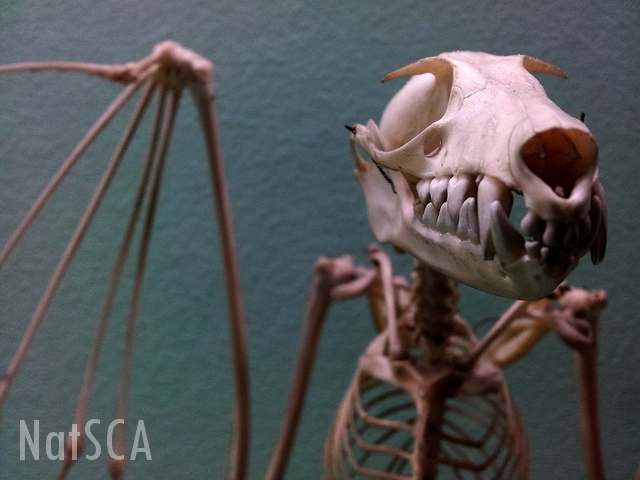
A mounted skeleton of a fruitbat leers at the cameraYour weekly round-up of news and events happening in the world of natural sciences

Jobs

Research Assistant, Vertebrate Palaeontology – University of Birmingham. 12 month post researching 375 million years of the diversification of life on land!

Curator of Microlepidoptera – NHM, London. A great opportunity for any fans of minimoths!

Curator of Natural Sciences and Collections Access Manager – Tullie House Museum. Still a couple of days to apply for these two. The deadline is 10th August.

As always, see out jobs page for more opportunities.

Events

‘Digitisation’ seems to be the keyword for September…

NBN Crowdsourcing Data Capture Summit. The National Biodiversity Network is holding a one-day meeting on digitising specimen data through crowdsourcing, at Manchester Museum on 25th September.

iDigBio Vertebrate Digitization Interest Group will be holding a 4-part webinar series entitled The Value of Digitizing Vertebrate Collections. They will be held on Tuesdays in September at 3 – 4 p.m. EDT (7 – 8 pm GMT).

All webinars are 3-4 p.m. EDT and accessible at https://idigbio.adobeconnect.com/vertdigitization. Here is the schedule:
September 8: The Value of Digitizing Mammal Collections, Cody Thompson, University of Michigan
September 15: The Value of Digitizing Fish Collections, Andy Bentley, University of Kansas Biodiversity Institute and President of SPNCH
September 22: The Value of Digitizing Herpetology Collections, Chris Phillips, Illinois Natural History Survey, University of Illinois
September 29: The Value of Digitizing Bird Collections, Carla Cicero, UC Berkeley and Lead PI for Vertnet

Around the Web

Time to re-curate those canid specimens? Genetic evidence indicates that the African golden jackal is a distinct species from the European golden jackal, and is actually much more closely related to wolves! And new genomic research has clarified the status of Eastern wolves and other North American canids.

'But I'm still a fox, right?'

‘But I’m still a fox, right?’

Working with the Public: How an Unusual Museum Enquiry Turned into Travels Through Time and Space. A great example of how engaging with enquiries can lead to fascinating insights into the past.

…And Finally

A request: We would love you to get involved in the NatSCA blog! It’s been rather quiet of late. I know you’re all probably off enjoying yourselves on holiday, but if you happen to visit a museum or an interesting exhibition while you’re away, why not review it for us? We’d love to hear tales of your adventures! And don’t forget, if you’re working on any projects or specimens that you think other people would be interested in, then the blog is the perfect place to share! Email submissions to: blog@natsca.org

NatSCA Digital Digest

natscaYour weekly round-up of news and events happening in the world of natural sciences

Jobs

Curator of Natural Sciences, Tullie House Currently seeking to become a designated collection, the natural sciences collections are looking for a curator who will get involved in ‘engagement activities, acquisitions, collections care projects, research, exhibitions and collection displays’. Deadline 10th August.

Curator, Grant Museum of Zoology Time is running out to apply for a job that has not been vacant for over ten years. If you think you could be the new Curator of this fantastic natural history collection, you have until 3rd August.

See the job page of the NatSCA website for more exciting opportunities!

News

The University Museums Group (UMG) are joining forces with the University Museums in Scotland (UMiS) to bring you Science and Society, their 2015 conference. It will take place on the 23rd and 24th September at Durham University. Bookings are now open so help yourselves to places.

Around the Web

A great blog came out recently by Jake of Jake’s Bones in which he says, I quote, “I’ve had a lot of T-rex action this week” in Learning about Tyrannosaurus. Now that’s a good week. Full of great images, Jake’s blog asks some interesting questions. He writes with the enthusiasm we all have but often don’t show, which makes the blog a great escape from the day.

Worth a look this week is an image on the National Geographic website (not that there’s ever really a day that it isn’t worth looking at). I don’t want to say much about it as it would risk spoilers, so I’ll let the image doing the impressing for itself. N.B. Make sure you read the caption, it may change what you think you’re looking at…

Something else definitely worth a gander is the tumblr page of Paleocreations. Past the impressive life-size Ichthyostega model at the top are eight images you can scroll through to show how Paleocreations produced the beautiful official artwork of Sophie, the most complete Stegosaurus skeleton ever found, for the Natural History Museum London.

NatSCA Digital Digest

A mounted skeleton of a fruitbat leers at the cameraYour weekly round-up of news and events happening in the world of natural sciences

Jobs

Curator of Natural Sciences, Tullie House Museum. Fixed term for 12 months (with potential for extentsion). Tullie House is also looking for a Collections Access Manager at the moment.

Operations and Project Officer, Lyme Regis Museum. A great opportunity to work on the iconic Jurassic Coast.

UK Flora Collections Assistant, Royal Botanic Gardens, Kew. An interesting role combining field work, lab work, and collections!

As always, see out jobs page for more opportunities.

Events

SVPCA (The Symposium of Vertebrate Palaeontology and Comparative Anatomy) is coming up on 29th August – 4th September. This year it is to be held at the National Oceanography Centre in Southampton.

#AskACurator Day is back on Twitter on 16th September. It’s a great way for people to talk to museum staff who are normally ‘behind the scenes’, and for us to get exposure for the amazing work we all do with our collections.

Around the Web

Dinosaurs on tour: Dippy the Diplodocus will be leaving his home at the NHM for a holiday, and the museum is looking for host venues. Must have large gallery.

The genome of the kiwi (Apteryx mantelli) has been sequenced, revealing insights into its strange physiology.

Giant animals that are almost impossible to find! Did you know that the largest stick insect recorded is in the collection of the Natural History Museum (NHM), and is over half a metre long?

Brymbo Fossil Forest in Wrexham has been designated as a Site of Special Scientific Interest (SSSI), protecting the future of its precious 300 million year-old fossils. Sadly, many fossils were lost in arson attacks on the site last year.

The Most Natural Science Positive Film of Recent Times?

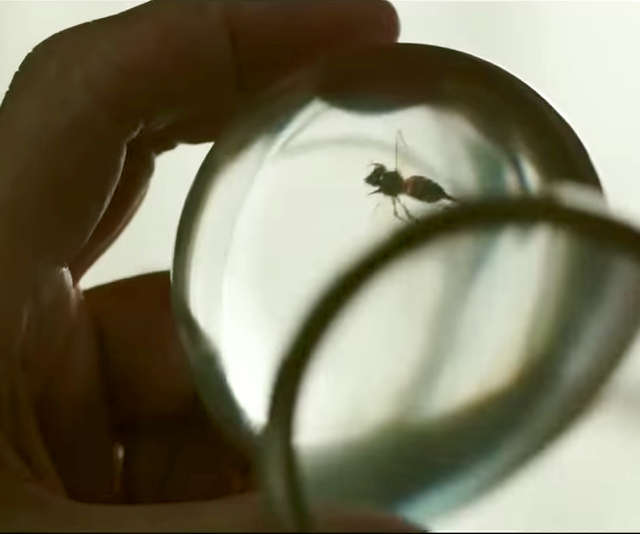
holmes-bee

Hollywood hasn’t always portrayed the natural sciences in the best light. From the entomology nerds in Silence of the Lambs to the evil taxidermist in Paddington, the people who live it daily don’t often come off looking good. Even when museums are the star of the show, it is the night watchmen, not the curators and conservators, who steal the glory. Where, then, is cinema’s role in encouraging the next generation to pursue a career in the natural sciences? Some have said they watched the original Jurassic Park and that sparked their interest in genetics. Did you watch a film and think “that’s the life for me?” If so I’d love to hear from you. Nature inspires movies all the time. It behoves the film industry to keep this passion alive.

Enter a new film into the UK top ten (no, we aren’t talking about Jurassic World). Mr. Holmes is the latest adaptation of Sir Arthur Conan Doyle’s famous detective. Set in war-ravaged Sussex, Sherlock Holmes is an old man, retired and trying to cope with the changes in his life. I won’t give away the plot for you but I will say this: The plot depends upon an accurate  understanding of the natural world, specifically botanical and entomological. The film is filled with beautiful species and fascinating facts about nature. I can quite easily see someone leaving the cinema thinking “I want to know more about this world”. Holmes’ personal collection is lovely and I want to know whose skull that is on his desk.

Further refreshing news, if you’re as sick of explosions and CGI as I am right now, this film has the fewest special effects of any new film I’ve seen for a long time. Less definitely is more in Mr. Holmes. The performances are superb – not just Sir Ian McKellen but I don’t think there’s a bad actor in the entire movie. I’d highly recommend you go and see this.