Micro to Macro: Modelling and Magnifying Insects

Written by Maria Dragoi, PhD Candidate, UCL Institute of Archaeology & NHM Science.

Insects are very numerous, and very small. Their ubiquity and importance has meant that they need to be addressed in natural history galleries, but their minute size and fragile nature can make this a challenge. Various techniques have been developed to represent insects in galleries, including projection, illustration, and sculpture. This blog looks at model making as a technique used to enlarge insects for public displays at the Natural History Museum in London in the 20th century. It reflects on what magnification as a representation and display tactic does to how we construct a relationship with an insect.

I think something that’s important to remember about when we interact with insect models is that we know and recognise them as such. We are aware that they are not the thing in itself, but a representation of it. What we don’t often realise is that there needs to be a cultural schema around us for us to know and understand these things as representations. There’s some really interesting research by Pauline Kusiak on the use of projections to teach West African communities about the dangers of malaria in the early twentieth century. French Christian missionaries used new projection technology in order to show enlarged images of mosquitoes and their larvae to create awareness within these communities about the transmission of disease. At first it didn’t go very well, because the people that were shown the projections didn’t understand them as such. They told the French missionaries they clearly had no idea what was going on, because what they had shown was huge, a monster, whereas the insects that were known by communities to cause a problem were very small. Before using the model, or projection, as an educational tactic, the missionaries realised they first had to build up an understanding of what their representation technology was.

Continue reading →

The Most Natural Science Positive Film of Recent Times?

holmes-bee

Hollywood hasn’t always portrayed the natural sciences in the best light. From the entomology nerds in Silence of the Lambs to the evil taxidermist in Paddington, the people who live it daily don’t often come off looking good. Even when museums are the star of the show, it is the night watchmen, not the curators and conservators, who steal the glory. Where, then, is cinema’s role in encouraging the next generation to pursue a career in the natural sciences? Some have said they watched the original Jurassic Park and that sparked their interest in genetics. Did you watch a film and think “that’s the life for me?” If so I’d love to hear from you. Nature inspires movies all the time. It behoves the film industry to keep this passion alive.

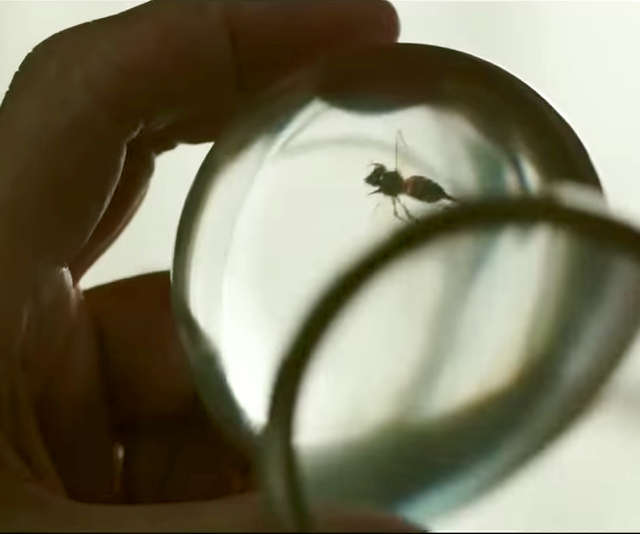
Enter a new film into the UK top ten (no, we aren’t talking about Jurassic World). Mr. Holmes is the latest adaptation of Sir Arthur Conan Doyle’s famous detective. Set in war-ravaged Sussex, Sherlock Holmes is an old man, retired and trying to cope with the changes in his life. I won’t give away the plot for you but I will say this: The plot depends upon an accurate  understanding of the natural world, specifically botanical and entomological. The film is filled with beautiful species and fascinating facts about nature. I can quite easily see someone leaving the cinema thinking “I want to know more about this world”. Holmes’ personal collection is lovely and I want to know whose skull that is on his desk.

Further refreshing news, if you’re as sick of explosions and CGI as I am right now, this film has the fewest special effects of any new film I’ve seen for a long time. Less definitely is more in Mr. Holmes. The performances are superb – not just Sir Ian McKellen but I don’t think there’s a bad actor in the entire movie. I’d highly recommend you go and see this.