Cold Case Curation

Museums have many curious objects behind closed doors. Recently, volunteers discovered some ‘cold ones’ at Tullie House Museum and Art Gallery Trust.

Behind Closed Doors

If museums are icebergs, then museum exhibits are just the tip; and the remaining 90% or so of specimens are tucked away safely behind closed doors. Many people, lucky enough to have visited these museum storage areas (‘behind-the-scenes’), will be familiar with almost endless rows of racks and shelves packed with all sorts of different objects, ranging from Chinese vases to taxidermy monitor lizards. But few non-curators would be familiar with the idea of freezers full of dead animals!

We have two large freezers, at our off-site storage facility, packed full of animals; we needed to know exactly how many animals were in there and where they were from, hence this project- Cold Case Curation. The specimens also have excellent provenance; labels with location details including specific grid references and dates. Therefore this Cold Case Curation project was as much a biological survey (albeit indoors) as a detailed museum inventory.
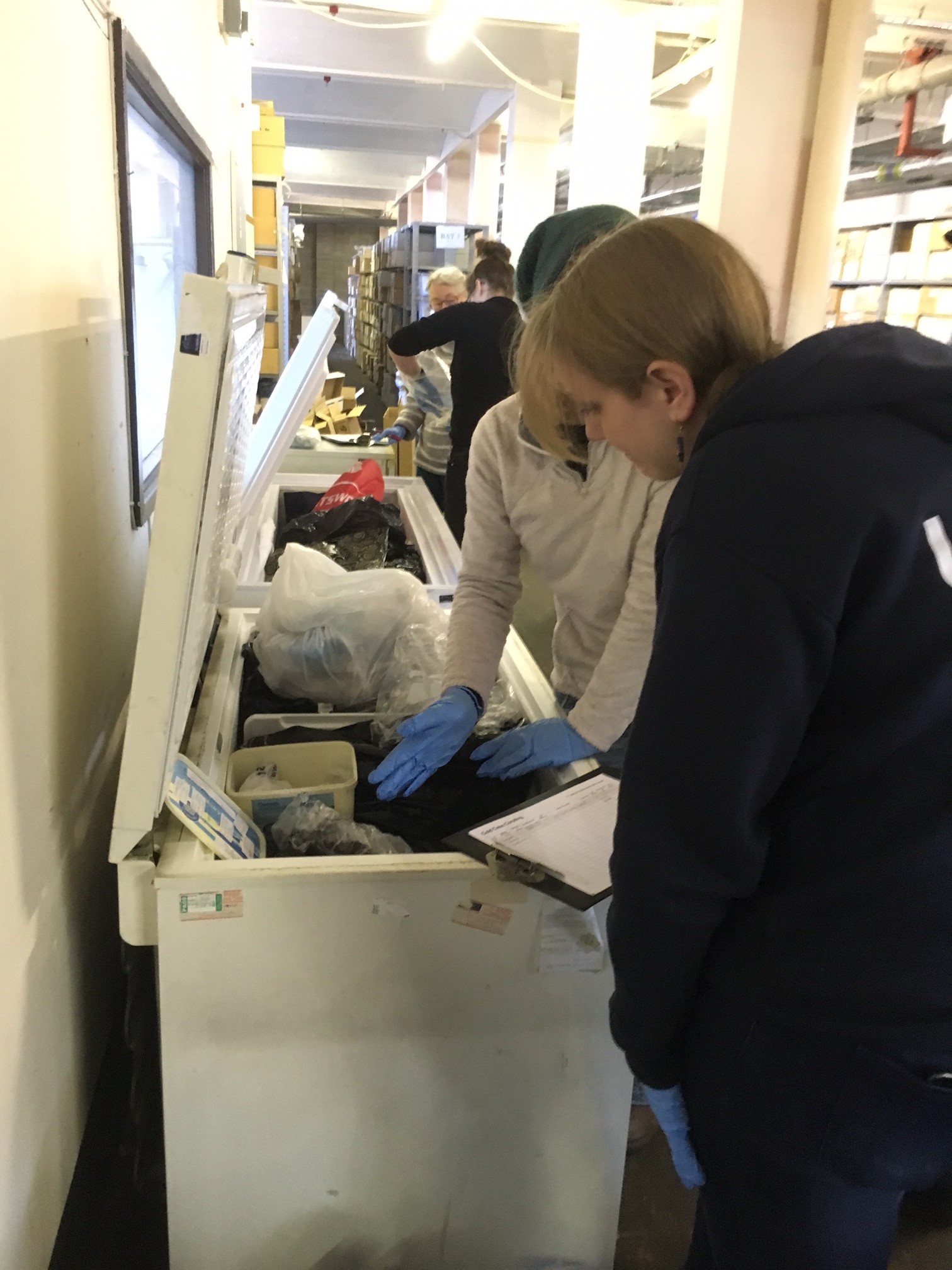
Cold Case Curation in action; the team of five volunteers “surveying” the “fauna” of our freezers

Cold Case Curation in action; the team of five volunteers surveying the ‘Fauna of our Freezers’.

Volunteer-Power

Enter our team of volunteers. They were specially recruited for a day for this Cold Case Curation task; to survey the frozen fauna, matching specimens against existing inventory records. This was a joint initiative with our Cumbria Biodiversity Data Centre (hosted at the Museum), to capture biological records. Most of our volunteers are long-term with the Museum and the Centre, and are current university students.

As our team of five volunteers eagerly crowded around the two huge freezers, they were fascinated with the idea of freezing animals to preserve them before they are stuffed and prepared as taxidermy specimens (but don’t worry, they all died naturally!).

In teams, the volunteers enthusiastically worked their way through documenting the freezer contents. 241 individual specimens later, we had documented 11 species of mammal and 48 species of bird. Interesting discoveries included a bittern, a little grebe chick, 10 waxwings and a white-tailed tropic bird (with stomach contents). Volunteers delighted in handling iconic British species including 54 red squirrels and 24 barn owls.
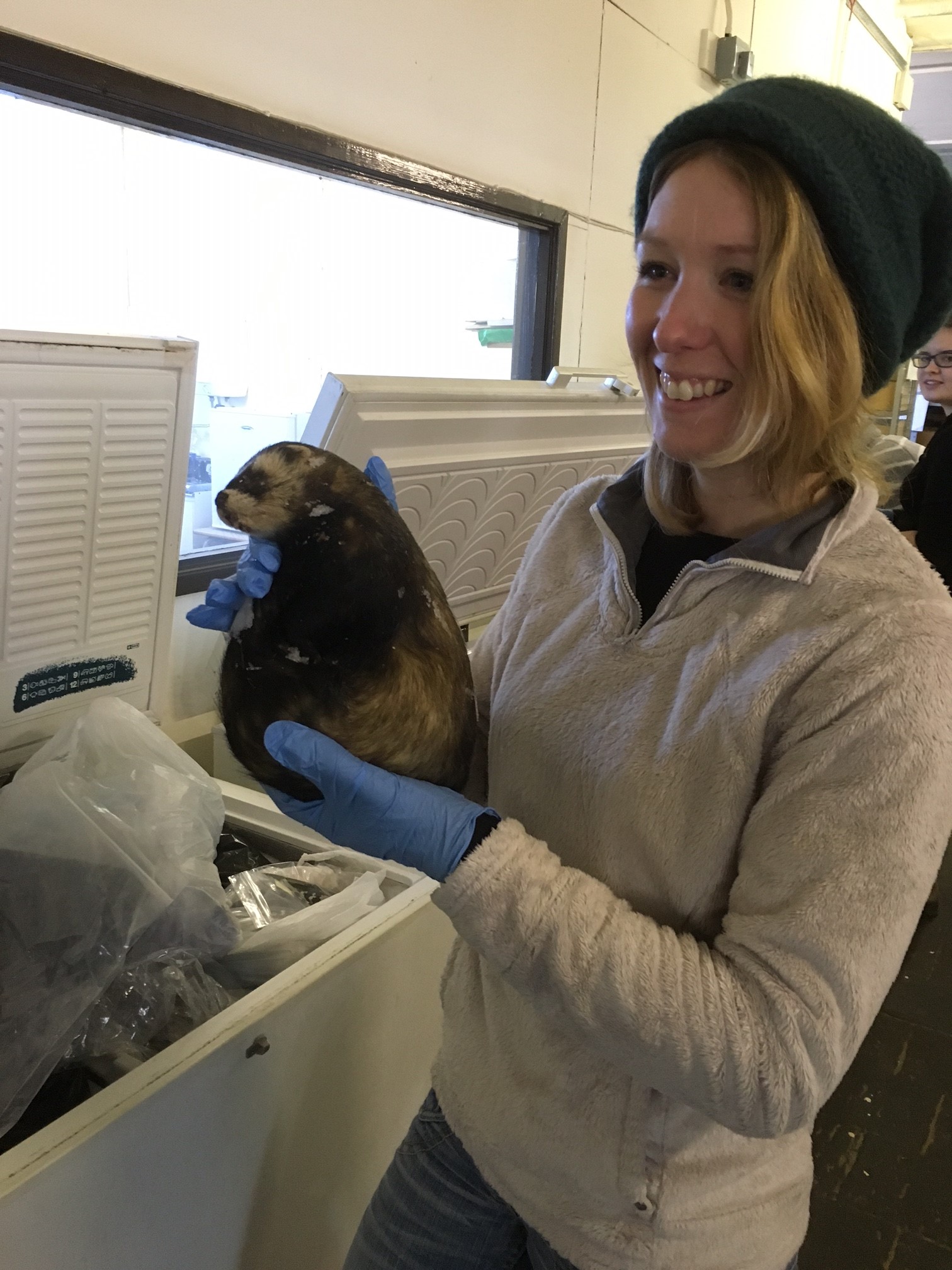
Volunteer, Jessica Mitchell proudly wielding a polecat from the freezer “faunal assemblage"

Volunteer, Jessica Mitchell proudly wielding a polecat from the freezer faunal assemblage.

Their experiences are best summarised in their own words;

“After helping out at Tullie House with their cold case curation, recording everything they had in the freezers, we found some amazing specimens from polecats to owls, your typical garden birds to brown hares, but I have to say my favourite by far was the river otter. This otter was fantastic and it was brilliant to see it so upclose as it is a creature I have only seen from afar in the wild. This event was extremely educational and rewarding to myself as I’m studying zoology here in Carlisle”.  Volunteer, Laura Carter.
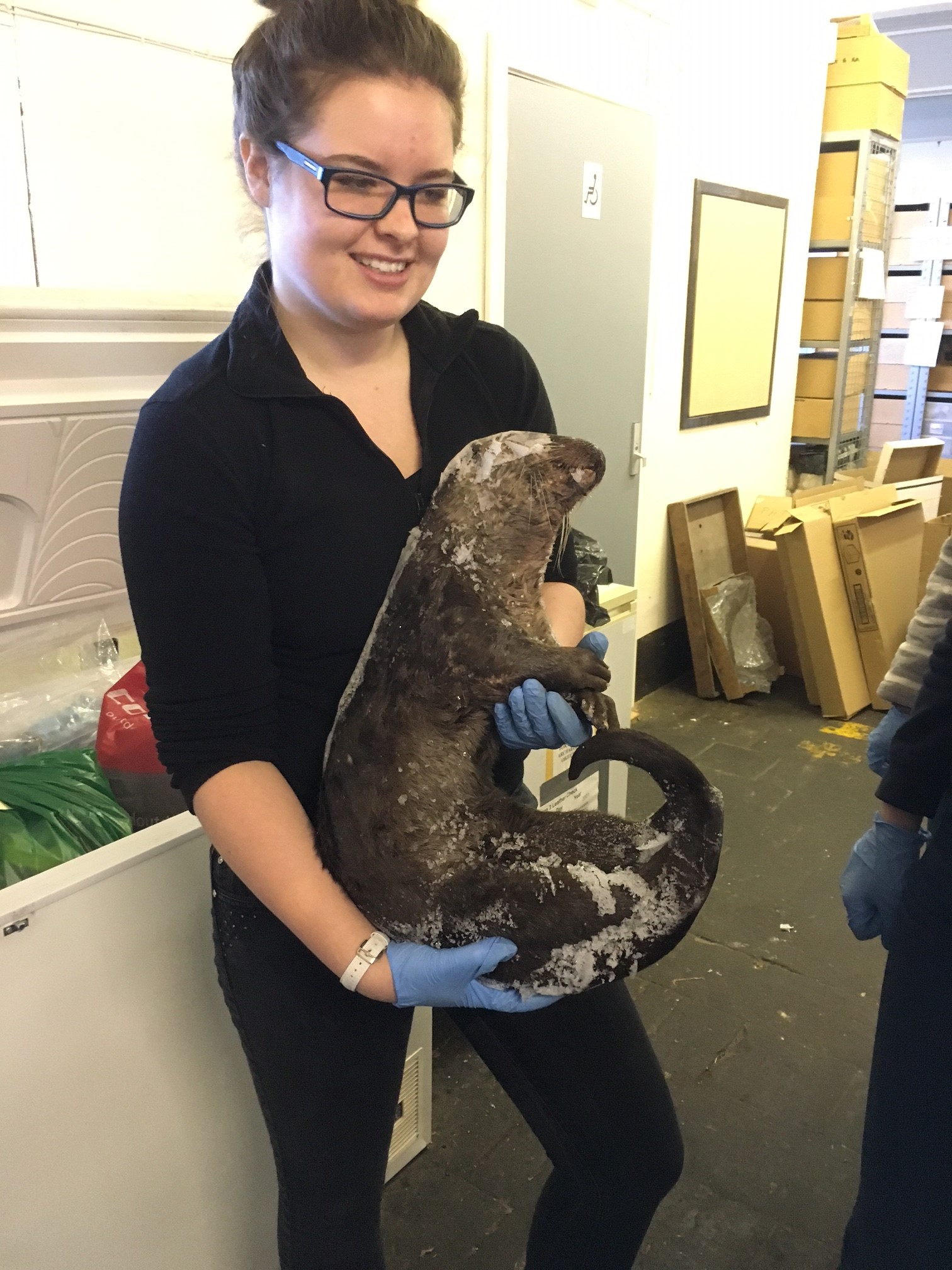
Volunteer, Laura Carter with River Otter discovery from freezer

Volunteer, Laura Carter with a River Otter discovery from the freezer.

Another volunteer, Donna Salter was also drawn to the otter:

“It’s a bit obvious to go for the big, furry, cute mammal, but my favourite has to be the otter. I was somewhat of an otter obsessed child: other girls wrote fan letters to Mark Owen or Ronan Keating while I wrote to Philip Wayre, founder of the Otter Trust (he sent back a signed visitors guide – I still have it). So for me, getting to hold and see the details of an otter can’t really be beaten!”

Cold Case Reflections; Learning from the Model

The Museum has greatly benefited from this exercise with our detailed inventories and biological records which will go into our database and ultimately end up on the Global Biodiversity Network Gateway for public access (and we also have the data we need to make more informed decisions over which specimens we decide to formally accession). However, this project proved to be a particularly successful public engagement event. It was a combination of the fact that volunteers were seeing and handling a variety of animals and that they were ‘discovering specimens’, whilst working together as a team, which is vastly more enjoyable than lone working. The event was enhanced with use of Twitter  (#coldcasecuration), which captured some of the magical moments of discovery.

This exercise illustrates how a relatively routine (inventory) collections management exercise can be turned into an exciting public engagement project, capturing critical data for the museum and inspiring a future generation of potential young scientists and curators.

By Simon Jackson, Curator, Tullie House Museum and Art Gallery Trust

Curators of the Caribbean part II: Following in Dr A Broughton’s Footsteps

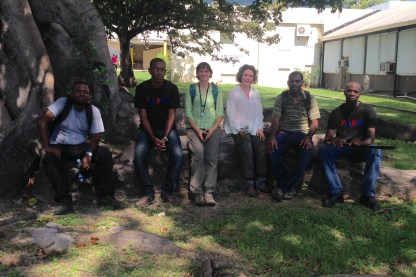
We started our first day of plant collecting early on the 28th September. Armed with data relating to the specimens collected by Broughton and the localities, we took a team of botanists with us into searing heat and high humidity to the top of a mountain and were very fortunate not to get into danger as there is plenty in the scrub. Land is reclaimed illegally for growing marijuana and producing charcoal so we had to be careful and often dogs are used to keep people away. This also meant that the habitat is much changed and so finding the necessary specimens to bring back was not always possible but we did manage to find some corresponding records.

fullsizerender

From left to right Dr Philip Rose, Patrick Lewis, Vicky Purewal, Rhian Rowson, Keron Campbell and Patrick Plummer (machete wielder, which was useful for cutting paths through the vegetation).

Prior to our expedition, Keron Campbell, botanist at the Natural History Museum of Jamaica drove us to the University of the West Indies. We met with Patrick Lewis the herbarium curator and Dr Phillip Rose, the botanical lecturer at the University. We were later joined by Patrick Plumber, the University technician. We visited the collection and learnt about the flora of Jamaica which consists of c.2,700 specimens of flowering plants and 600 ferns. The herbarium had mainly been collected in the late 1800s by renowned Irish botanist William H Harris (1860-1920) who was the former superintendent of gardens and plantations in Jamaica. He discovered a large number of species new to science. We were impressed that the 36,000 specimens were well cared for, re-mounted onto archival card and all strapped and not adhered with PVA, a practice the Jamaican botanists were not in favour of.img_1919

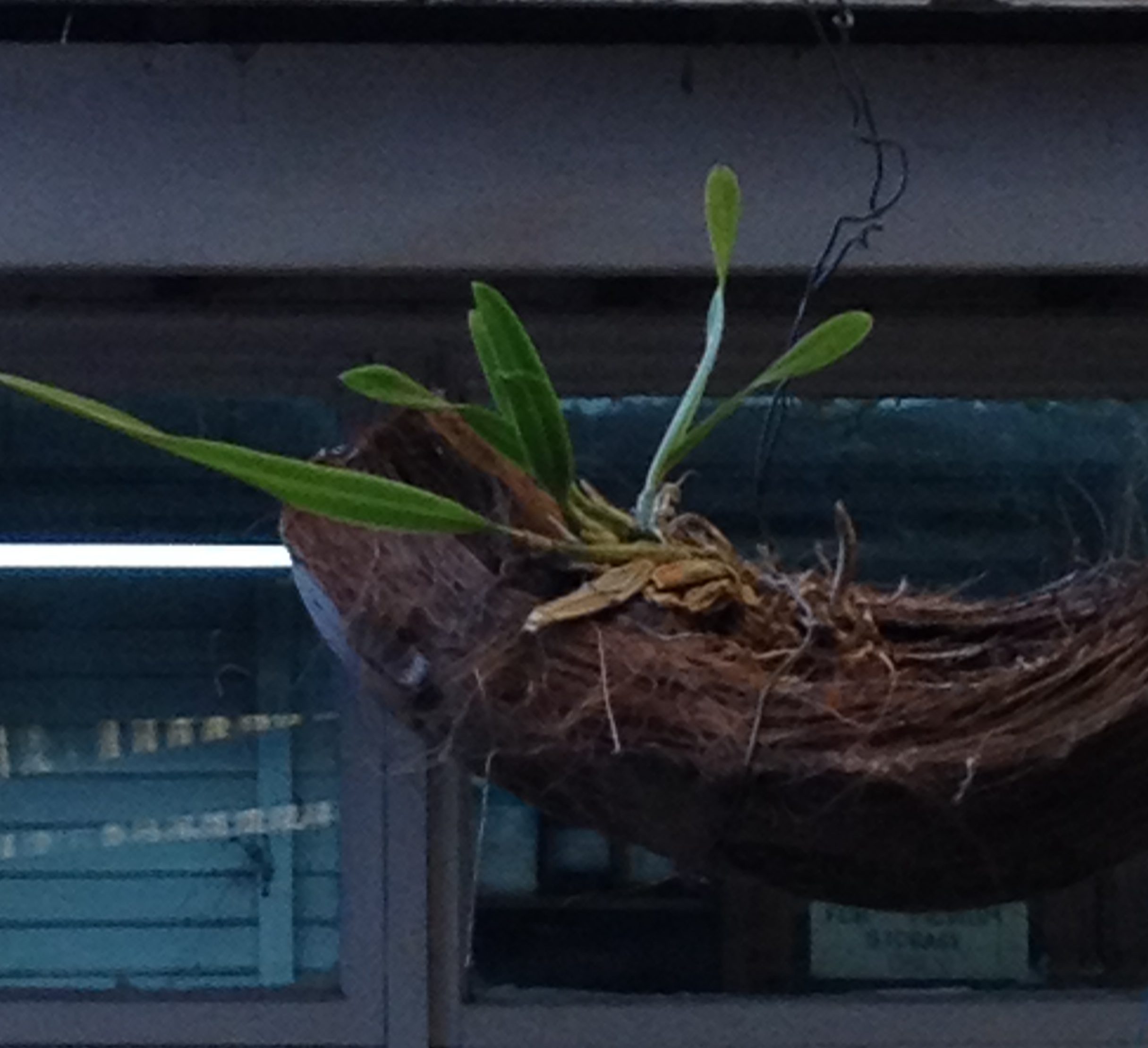
One of the first specimens we saw when entering the University was this one. Not such an impressive image I’m afraid but great to see. Patrick Lewis grew this specimen 4 years ago and it is yet to flower, but it is the endemic  Broughtonia sanguinea R.Br. This is the orchid believed to have been named after our own intrepid Dr Arthur Broughton. The R.Br. refers to the authority that named this specimen and this was Robert Brown, the very man responsible for Brownian motion and the scientific use of microscopes. Worryingly he has been quoted as referring to Broughton as a fellow Scot, however we know Broughton to have been brought up in England, and his father the Reverend Thomas Broughton moved to the parish of Bedminster, Bristol in 1744. His 5 siblings were English, but Broughton did study medicine in Edinburgh, so this could be the reason…we have gained a few more leads since being out here in Jamaica but our search for more information continues …

NatSCA Digital Digest

Three-toed sloth (C) Horniman Museum and Gardens

Three-toed sloth (C) Horniman Museum and Gardens

The October NatSCA Digital Digest is here already, where does the time go?

What’s New to Read?

Dana Andrew recently went to Jamaica to track down the original location of some museum specimens, and has reported back to ICOM. She was funded by a WIRP international travel grant, and you can read about her blustery adventures, so far, here.

Eighty full years of mourning have now taken place for the Thylacine, since it was deliberately driven to extinction in 1936. Thylacine expert, Jack Ashby, makes sure it’s not forgotten and talks about how it feels to be in the area where it happened in a tribute blog here.
What’s New to See?

On the 19th October the Grant Museum of Zoology will bring you some sex, some creativity, and some trickery. A new exhibition looks at the colourful world of reproduction in nature.

Two days later, the Wildlife Photographer of the Year exhibition opens at the Natural History Museum on the 21st October. Always a crowd pleaser, I’ve had some sneak peeks which prove this year will be no different.

And just one day after that, the Horniman Museum will also be ready to entertain with a new exhibition. This one, called Memorial: A Tribute to Taxidermy, exhibits historic Horniman Museum taxidermy specimens alongside Jazmine’s modern day interpretations. Elegant and beautiful, this exhibition is a must-see, and comes complete with a fascinating timelapse film of how she did it.
What to do with your Sawfish

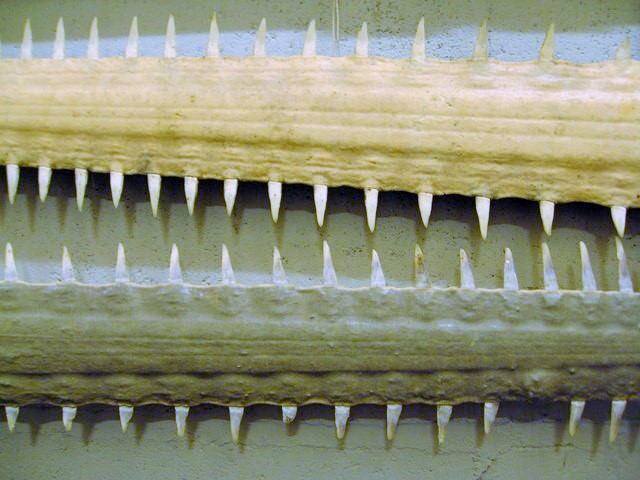
If you have any sawfish rostrums in your collection, particularly if they have locality data, there is something important you really need to do! The Sawfish Conservation Society, the Shark Trust, and The Deep (aquarium) have begun a joint venture to research museum specimens and data with the aim to protect wild populations. If you can help, please get in touch with any of the aforementioned lovely people, and to thank you for your efforts, your institution will be acknowledged in any scientific papers that get published. Double win.

Sawfish rostra (Wikimedia Commons)

Sawfish rostra (Wikimedia Commons)

Curators of the Caribbean

300-year-old plant collection brings Bristol Museum & Art Gallery and the Natural History Museum Jamaica together!

vol_3_jamaican_p324

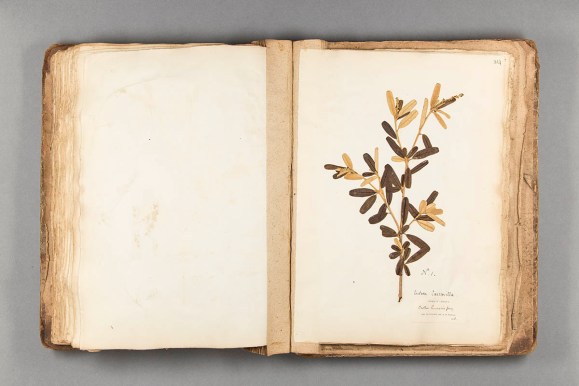
A digitised page from Volume 4 of the Jamaican herbaria

In the autumn of 2014, I was fortunate to be contracted by Bristol Museum to conserve and digitise 4 bound volumes of plant specimens dating from the 1770s and collected by the prestigious botanist Dr Arthur Broughton. The conservation and digitisation was completed in early 2015, yet two years on I am still working with and fascinated by this fabulous collection.

slide1

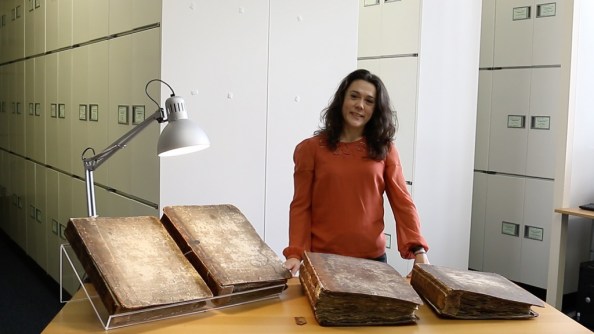
Rhian Rowson and the 4 volumes of 18th century bound herbaria

Dr Arthur Broughton, was a Bristolian who made the mammoth journey to Jamaica, due to ill health, and myself and Rhian Rowson, biology curator at Bristol Museum & Art Gallery, are trying to piece together his years studying botany in Jamaica and the impact this renowned botanist has had on the island and the world of botany. The volumes are large, heavy, leather bound books holding c. 1000 specimens including extremely rare and type material. The books were analysed for biocides, cleaned in preparation for digitisation, digitised and then each specimen was painstakingly removed from the volumes and re-mounted onto archival sheets. This project has mitigated the risk of contamination from handling the treated pages, has increased access and ease of handling but most importantly the images have been shared with other institutions. The ebook highlights some of the star specimens in the collections

The most exciting connection made during the research side of this project was with the Natural history museum of Jamaica (NHMJ). Through this collaboration, the opportunity has arisen for both me and Rhian to travel to Jamaica to collect modern material, research the historic plant specimens and illustrations held in Bristol museum and the collectors behind them. We have been extremely fortunate to gain funding from both WIRP (Working Internationally Regional Project) and the Jonathan Ruffer Curatorial Grant. Both funders were extremely supportive and constructive in helping towards our submitting a successful application.

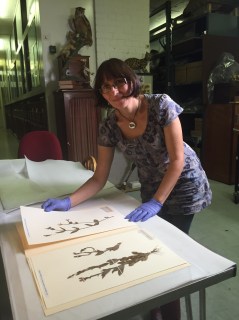
Victoria Purewal viewing Broughton plant specimens

Victoria Purewal viewing remounted specimens from one of the Jamaican volumes.

We fly into Kingston, Jamaica on Tuesday 27th September and will be gathering historical data on Dr Broughton and other prestigious botanists including Robert Long and the Reverend Lindsay, both of whom were collecting and working during this interesting time in history. We will be met by Keron Campbell, the botany curator at the NHMJ and together with the natural history team we will be escorted around the island, helping us to identify and verify plant specimens and localities. Modern day specimens will be collected to help interpret our historic material and provide a contemporary and fresh perspective that we can use to engage with our Bristol and Jamaican communities. We will be keeping active on social media whilst there, and hopefully offer some insight on the specialisms and research being conducted in Jamaica but also on the botany and the habitats on the island of Jamaica.

bmagnhmjcultureicomart


NatSCA Digital Digest

frankie-ndd


Welcome to the August 2016 edition of the NatSCA Digital Digest: an oasis of calm in a raging tempest of olympics, Trump, brexit, austerity, and celebrity deaths.

News from the Blogospbere

Hannah Cornish has been writing about the often-overlooked gems of the museum collection: the slides. You can read it here.

psyduck-spirit-collection

Image courtesy of the Oxford University Museum of Natural history

So Pokémon Go happened last month: the Smartphone game that has been an unintended boon for the museum world. Several curators have weighed in on the phenomenon; here is Jack Ashby’s take on it.
News from Nature

The organisation which used to call itself “Nature First” has just demonstrated why that name was no good. In a shock announcement last week, Natural England seems to be favouring the lives of human-reared pheasants over the lives of the wild buzzard. We have watched buzzard numbers slowly recover over the past thirty years, it would be dreadful to see all that progress lost now – and even worse if the hunters mistake other struggling raptors (the Hen Harrier, e.g.) for a buzzard. Here is the RSPB’s response.
News from the Museums

I’ve been doing some travelling lately. I visited the Natural History Museum in Doncaster. It’s a small but delightful museum which has struggled through some hard times, as so many have, but makes the most of what it has. Its collections are benefitting greatly from having a specialist curator right now – long may it continue.

A little closer to home: I visited the Natural History Museum’s new Colour and Vision exhibition, which is beautiful despite not mentioning the Tuatara anywhere. The exhibition looks at the evolution of the eye throughout nature and the beautiful ways in which nature tries to catch the visual attention of others. If you’re in the area, I highly recommend it.

trilobite-montage

A montage of Trilobite sensory organs

Announcements

I am delighted to announce that Deputy Keeper of the Horniman Museum, co-blogger, and good friend Emma Louise Nicholls is engaged to be married! I wish her and her fiance every happiness for the future.