NatSCA Digital Digest – November

What’s been Happening?

The 2017 GCG Conference in Dublin was a resounding success. Our resident blogger Emma-Louise Nicholls has been co-opted onto the GCG committee – well done Emma!. I was unfortunately unable to attend the conference but I’m hoping that someone who did will volunteer a write-up for us.

Museums everywhere have been going all spooky for Hallowe’en. The Horniman Museum in Forest Hill turned their monthly lates event into the Bloody Late, a tour-de-force of spooky music and blood-curdling tours.

The Tetrapod Zoology Convention doubled the turn-out of previous years – made possible in part due to the venue change from the London Wetland Centre (near Hammersmith) to The Venue (near Holborn). NatSCA member Heather’s talk on the History of Zoos was great, as was our patron Ben Garrod’s account of working with David Attenborough and other windows into the world of TV science communication. There were lots of other great talks besides, which we will mention as we go along. The palaeoart workshop this year was mural-themed and presented an interesting challenge to create multiple species to scale across geologic time. My animal was a Microraptor, which I drew in the foreground because it was so small. Other people had sauropods in the background and they were still so big they were escaping the paper in places. Several write-ups of this event have been made – you and find some of them here and here. If you want to be kept informed about next year’s TetZooCon, I encourage you to join the Facebook group – they already have all the speakers lined up for next year if it remains a one-day event. They might stretch it to two if there’s enough interest.

Continue reading

The Legacy of Entomologist Harold Edward Hammond

A Fellow of the Royal Entomological Society, Harold Edward Hammond, (1902 – 1963), was a keen Lepidopterist. Coupled with this affinity for butterflies and moths he was also interested in entomology generally and would take up a new order every couple of seasons, afterwards giving the carefully mounted specimens to some young aspiring student of the subject. Before his health failed a few years before his death, it was not unusual to find Hammond out in the snow on Boxing Day, splitting logs with an axe to find beetle larvae. Generous, almost to a fault, he was content with gaining new knowledge and found reward in encouraging a new generation of enthusiasts.

Hammond’s main focus was on the larvae of Lepidoptera and, as can be seen by the associated article, he became an expert in their preservation. Raising many larvae into a suitable size for mounting could be somewhat problematic, so his Birmingham garden became a cross between a sanctuary and a fattening pen for many caterpillars. This miniature farm was orderly and well maintained, where trees were pruned to the size of bushes for easy access and micro habitats were constructed to help manage conditions for more demanding food plants.

The skills that Hammond developed in preserving caterpillars were much in demand by fellow entomologists, and he would sometimes receive dozens of boxes of live larvae a week, all dutifully delivered by a postman oblivious to their wriggling contents. His fee for this service was a request that he could have a larva or two for his own collection. During his preparations he encountered many parasitic hymenopteran and dipteran larvae, so he became quite the expert on those also, co-authoring several papers in the Entomologist’s Gazette.

Continue reading

Why not apply for our £2000 Bill Pettit fund?

NatSCA is pleased to invite applications to this year’s Bill Pettit Memorial Award. Up to £2,000 of grant money, is available to NatSCA members this year to support projects including the conservation, access and use of natural science collections.

If you’re not a member, just join us then submit your application!

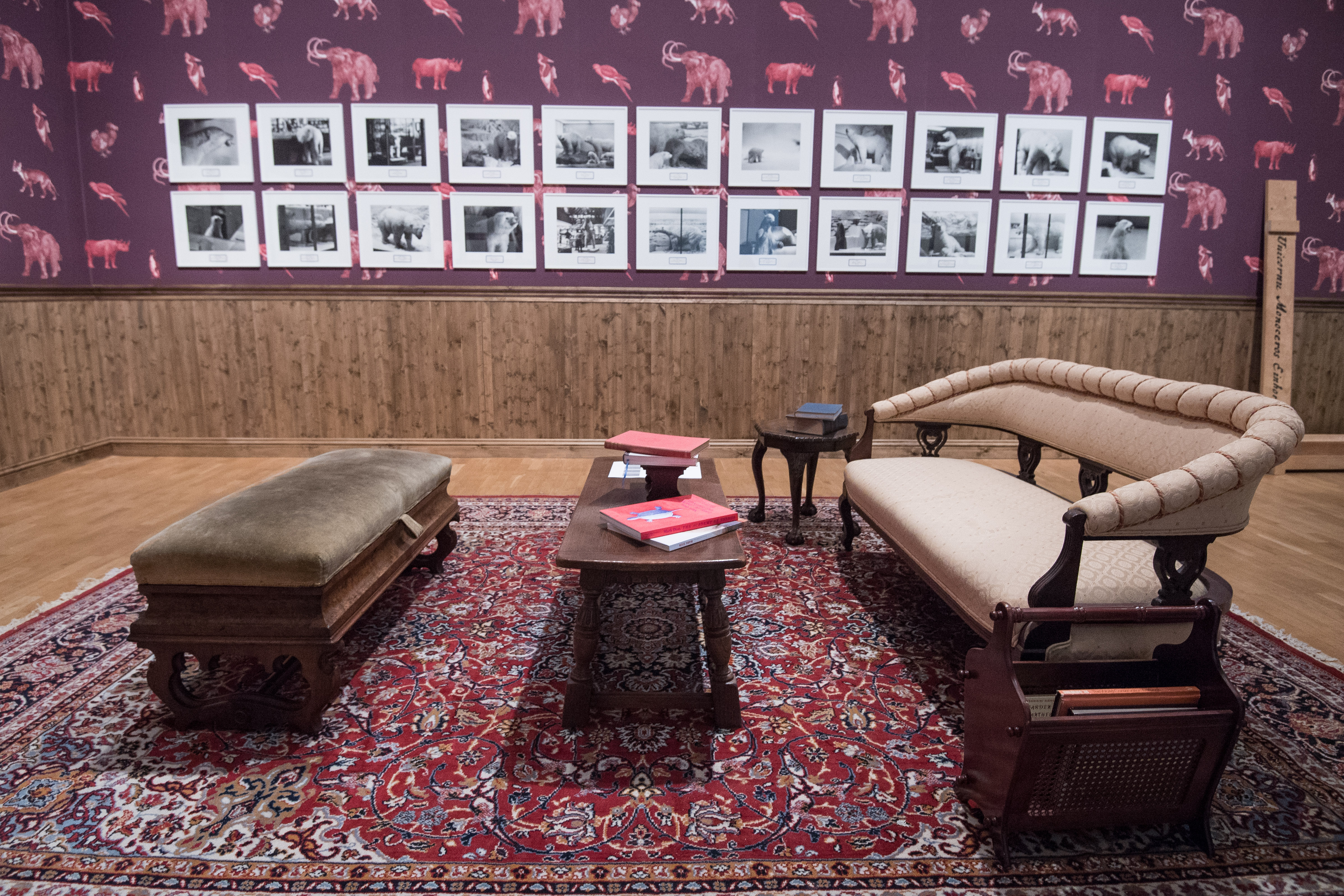
(c) Richard Ross, Museum National D'Histoire Naturelle, Paris, France 1982 2-1

(c) Richard Ross, Museum National D’Histoire Naturelle, Paris, France 1982 2-1

Charles Arthur William ‘Bill’ Pettit (1937-2009) started his career with the National Institute of Oceanography but moved to the Manchester Museum in 1975 to become Assistant Keeper of Zoology. In his time at Manchester, Bill worked tirelessly for the collections and was instrumental in projects such as FENSCORE as well as numerous publications. It is in recognition of his commitment to natural science collections that we would like to offer this annual award.

Each project will be considered on its own merits by the NatSCA committee and the committee’s decision, including not awarding any money that year, will be final. To apply please put together a 700 word project proposal, which must include:

• The name, contact details and status (e.g. charity, individual, local authority) of the applicant
• The project title and proposed outcomes and benefits
• How the project supports conservation, or access to and use of Natural Science collections
• Detailed costs
• Accurate timescale (including any work undertaken so far and the project end date)
• Details of other funding/match funding already secured for the project

Grants will be considered on an annual basis in January.

Deadline for 2017 applications: Friday 17th November

Successful applicants are required to produce a report/article on their project for publication in either NatSCA Notes & Comments or the Journal of Natural Science Collections before payment.

Applications are open to NatSCA individual or institutional members only.

Please contact David Gelsthorpe (david.gelsthorpe@manchester.ac.uk, 0161 3061601) for further information or to submit a grant application.

How a Hundred and Fifty-Year-Old Botany Collection Can Help Modern Science

This article has been re-posted from the Horniman Museum and Gardens blog.

Katie Ott, a museum studies student on placement with the Horniman, tells us about her fascinating work with our botany collection.

I’m Katie, and I’m three weeks into an eight-week work placement at the Horniman, helping the Natural History team to research and document the botany collection.

The botany collection at the Horniman is made up of around 3000 individual specimens either mounted onto herbarium sheets or bound in volumes. The flowering plant collection dates mainly from 1830-1850.

Two herbarium sheets from Flora Britannica no. 4., Katie Ott

Two herbarium sheets from Flora Britannica no. 4., Katie Ott

The main task is to transcribe the (beautiful, but squiggly) Victorian handwriting on the herbarium sheets such as the plant’s scientific name, and where it was found etc onto MimsyXG, our collections management database.

Continue reading

NatSCA Digital Digest – October

What Should I Read?

I was just thinking last week that social media has taken over the world as the most thing in existence, corporeal or not, when this article came out about how scientists should all be trained in its use; Social Media; More Scientists Needed. No hope of escape for any of us then. (I say on a social media platform).

Last Wednesday, sadly, New Walk Museum had items stolen from display; From Rhino horns to Egyptian jewels. Whilst the objects stolen last week weren’t of natural history origin, this article (if you can see it through the adverts) also reveals that rhino horn was stolen from there a few years ago. The huge rhino horn problem faced by museums, primarily in 2012, was largely curbed by museums removing all horn from display. An update on this situation was published on our website recently in Rhinos and Museums.

Finally, if you’re looking for something a little more breathing than the average museum specimen, Jack Ashby recently wrote about Australian wildlife in an article called Does an animal’s name affect whether people care about it?

Continue reading