Making Nature; at Wellcome Collection

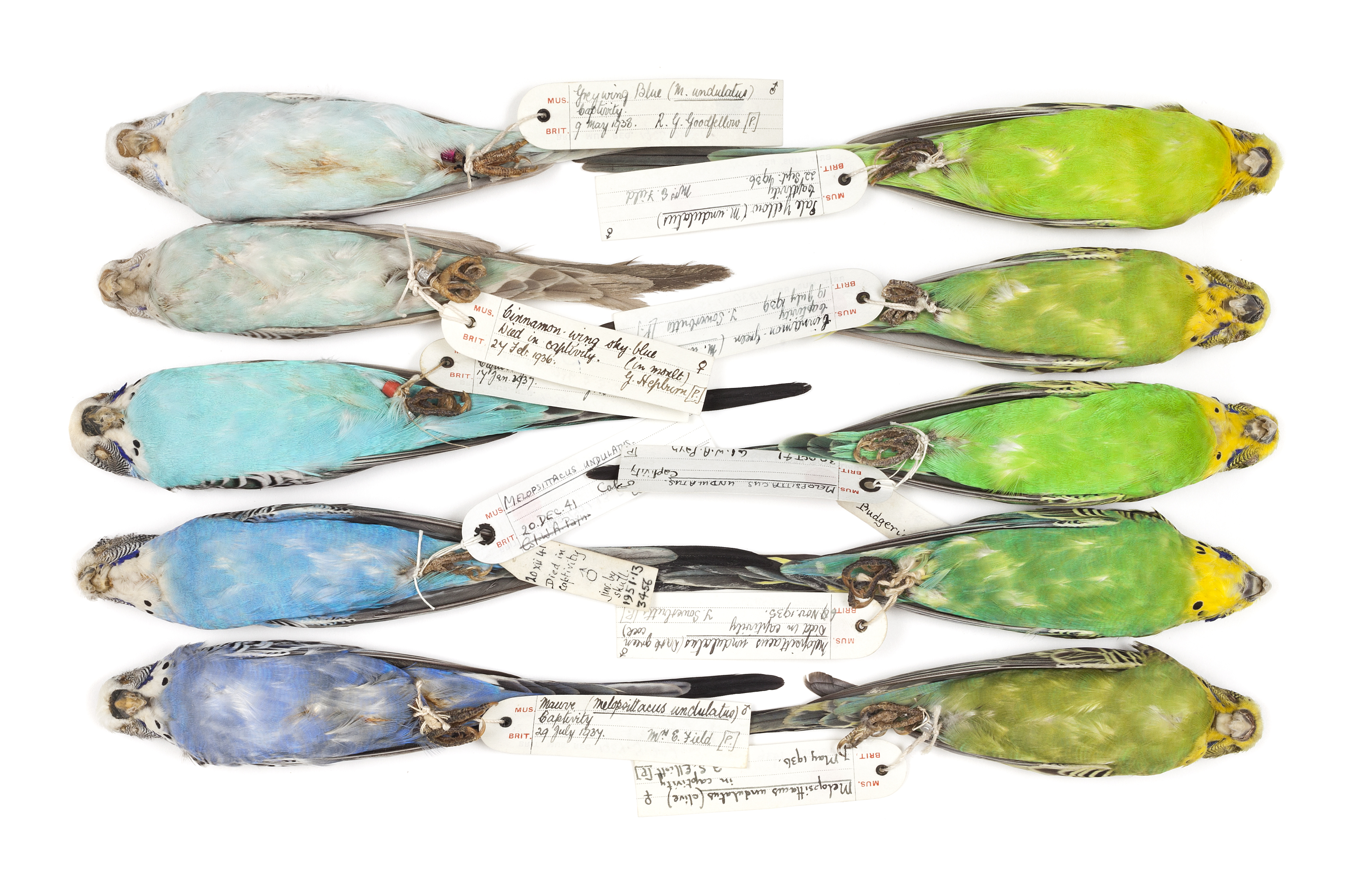
Budgie specimens illustrating colour variations (c) Trustees of the Natural History Museum

Budgie specimens illustrating colour variations (c) Trustees of the Natural History Museum

In December the exhibition Making Nature: How we see animals opened at London’s Wellcome Collection. Rather than being an exhibition of natural history (because natural history museums are better placed to provide such things), it is an exhibition about natural history. Wellcome is fundamentally interested in humans, and Making Nature explores the human perspective on nature. How do we engage with and try to make sense of the natural world?

The exhibition takes us through four different themes – ordering, displaying, observing and making nature. Together, they demonstrate that human ways of encountering, standardising and talking about nature are essentially unnatural. But it’s the only way we know how. Continue reading

Top Ten Most Read Blogs of 2016

Blogs to shout about (Dakshin, 2013, image in public domain)

Blogs to shout about (Dakshin, 2013, image in public domain)

2016 was a busy year for the NatSCA blog, we published 26 blogs from a super range of authors on an exciting variety of topics. When looking at the analytics of the blog to see what’s popular, it became apparent that people don’t just read what’s current in terms of publication date, they read what’s relevant to them at the time. This means that on top of the 26 blogs published last year, a further 102 blogs dating back to 2012 were also viewed from our archive, in 2016.

Since its inception in August 2012, there have been 182 blogs published on the NatSCA website, and so with such a large number, it’s really interesting to see what grabbed people’s attention, or search engines, the most. Continue reading

Conservation of a Venus Flower Basket

Venus flower basket. (NOAA, 2012, Image in public domain)

Venus flower basket. (NOAA, 2012, Image in public domain)

At The McManus: Dundee’s Art Gallery and Museum, a proposed case re-display was to focus on design. Thus the Art Curator and the Natural Historian got together and produced 13 grubby Venus flower baskets (a type of glass sponge).

As a trained objects conservator I have seen many items come across my desk, however these were a first. Never having seen these deep sea siliceous sponges before, I found them quite fascinating. There are 13 in our collection and at least one of them came from the Challenger Expedition of 1870. The sponges themselves offer a fascinating insight into the first date hotel; a young shrimp couple enter the skeleton of the sponge and mate for life – a jolly good love affair or entrapment? Whichever side you fall on, the actual construction of the sponge is what fascinated the Art Curator. The lattice work formation of the skeleton, which is incredibly strong and functional yet also beautiful, has inspired architects and engineers. Norman Foster’s ‘Gherkin’ building owes a lot to this design of nature. Even David Attenborough listed them in his ‘Attenborough’s Ark’ aired in 2012. Continue reading

Improving Specimen-Data Recording and Access in a Life Sciences Museum

The Museum of Life Sciences at King’s College London contains teaching and research material from King’s College London (KCL) and elsewhere. The collections include Botany, Zoology and Pharmacy specimens, including microscope slides, from around the world and a small, unique exhibition of glass sculptures recently created to commemorate the role of KCL in the discovery of the structure of DNA.

Paper and electronic (Access) databases were first created in 2003 and contained data for the then KCL Zoology and Botany Collections. In the last few years, volunteers have been recording specimens in paper (form-based) or electronic (Excel) formats and we have all been learning ‘on the job’. Inevitably specimens have been catalogued in different ways to record various kinds of information and many specimens remain uncatalogued. Some groups of specimens from a single collector/preparer or from a single source have been catalogued together as eg ‘The Daws Collection’, The Challenger Collection’.  The accumulating data were becoming unwieldy as there are now more than 8000 records. Continue reading

Nature Notes

In 2016 the Herbert held its first in-house natural history exhibition since a major redevelopment was completed in 2008. The exhibition, Nature Notes, explored the seasonal changes in local wildlife by displaying taxidermy, nests, insects, botany and fungi, botanical watercolours, oil paintings and contemporary artworks. It encouraged visitors to look at the natural world around them and the artworks aimed to inspire visitors to respond to nature in a creative way.

Nature Notes was designed to be enjoyed by all and accessibility was a key consideration in developing the interpretation and interactives. Additions to the exhibition included Makaton on the text panels and interactive tables; and the provision of accessibility aids such as torches, magnifying sheets and ear defenders. We considered contradictory needs such specific learning difficulties and visual impairments by producing lower contrast labels and providing high contrast large print text to take round the space.

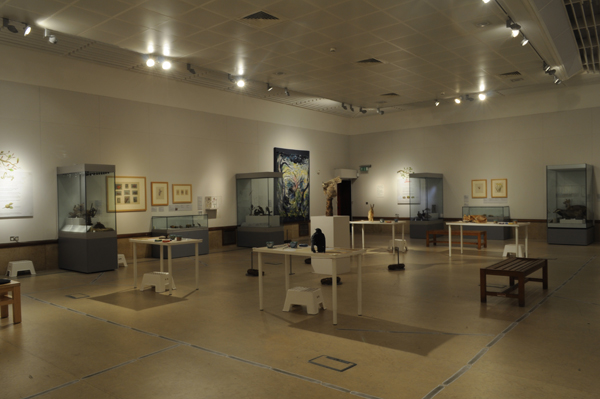
Gallery view of Nature Notes.

Gallery view of Nature Notes. The seasonal display runs around the wall, with interactives and handling specimens in the centre.

The most popular part of the exhibition was the multi-sensory interactive tables with things to touch, smell and listen to. These were created by using low cost tables with adjustable legs with a vinyl graphic applied so they tied in with the exhibition’s design. Five pieces of taxidermy were commissioned – one of each season, plus a spare mouse. We worked with a local group of disabled and non-disabled teenagers to help us choose the right smells for each table – only the brave dared to smell the otter dung! As each offered the same experience of touch, smell and sound this meant queues did not form around one table, allowing for a better visitor experience. Continue reading