NatSCA Digital Digest – March 2025

Compiled by Olivia Beavers, Assistant Curator of Vertebrate Zoology at World Museum, National Museums Liverpool.

Welcome to the March edition of NatSCA Digital Digest.

A monthly blog series featuring the latest on where to go, what to see and do in the natural history sector including jobs, exhibitions, conferences, and training opportunities. We are keen to hear from you if you have any top tips and recommendations for our next Digest, please drop an email to blog@natsca.org.

Sector News

NatSCA Annual Conference & AGM 2025: Registration Now OPEN!

Booking is open for the 2025 Natural Sciences Collections Association (NatSCA) conference. This year’s theme is: Making a Difference: Showing the Positive Impact of Natural History Collections, and it will be hosted by the University of Manchester: Manchester Museum, UK.

Due to the size of the venue there are only a limited number of spaces, so please book promptly to avoid disappointment. Visit the webpage to find out more: https://www.natsca.org/event/2881

This year’s conference meal is at Zouk and we would love to see you there. Please make sure to add the separate ticket to your basket.

Don’t hesitate to get in touch if you any questions. If you would like to become a member, which would qualify you for the conference discount or bursaries, please see our website NatSCA.org for details. 

30th Symposium on Palaeontological Preparation and Conservation: Call for abstracts

Please send abstracts of up to 250 words plus an image to sppc@geocurator.org by 10th April. Abstracts will be considered on any topic of earth science excavation, conservation, preparation mount-making and exhibition. Please state if the abstract is for a poster or platform presentation.

The 30th Symposium on Palaeontological Preparation and Conservation will be held in the Netherlands this year on 26 – 27th June.

The theme will be ‘From Excavation to Exhibition’ and they hope to broaden their usual remit to include more aspects of the story of how geological collections end up on display in our museums, as well as their conservation and preparation. Examples of previous years’ abstracts can be found online at https://www.geocurator.org/events/97-sppc

Continue reading

It’s Getting Better

Written by Dr Amy Geraghty, Assistant Keeper/Curator of aquatic zoology collections with responsibility for fluid collection management.

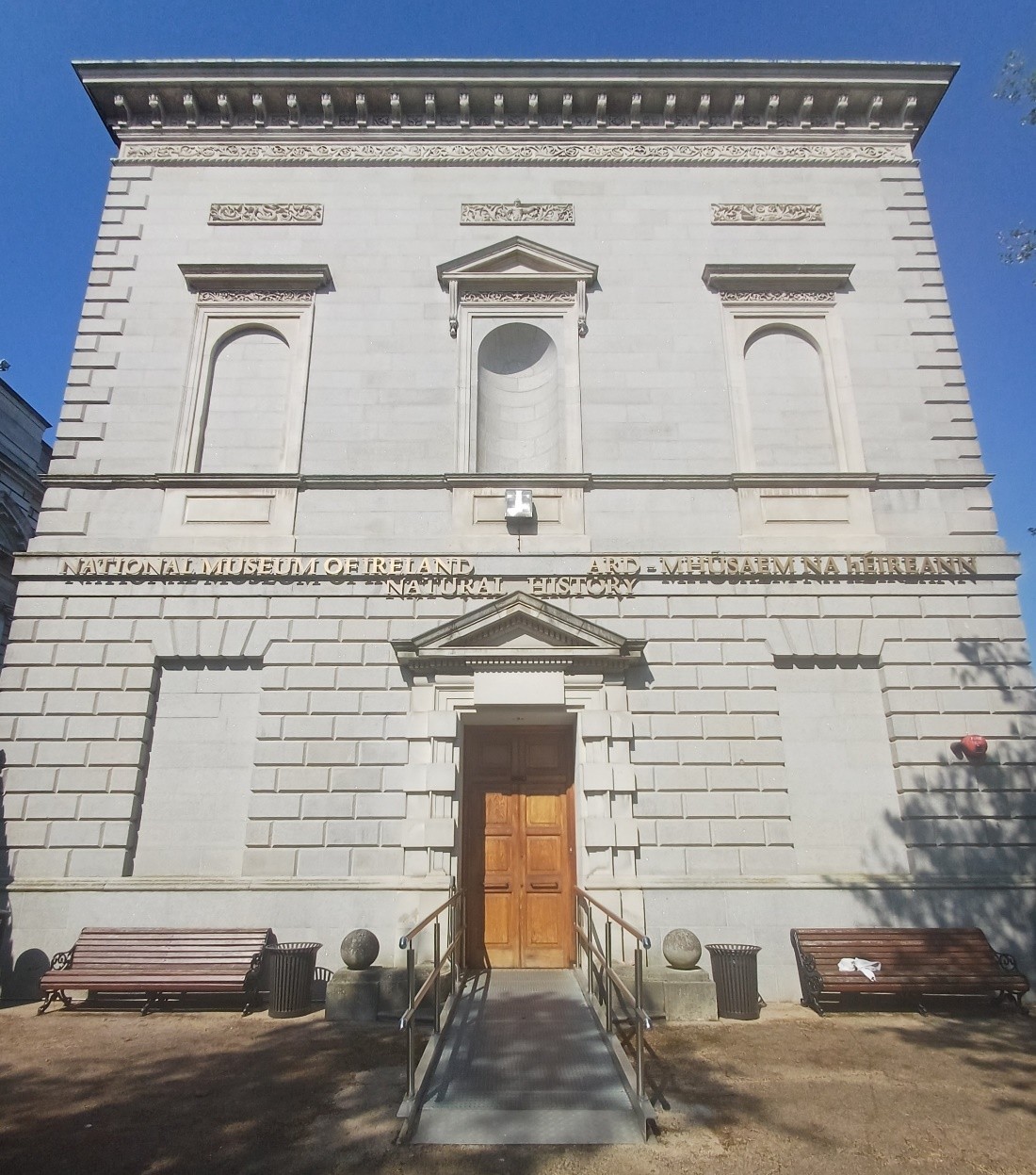
The National Museum of Ireland (NMI) Natural History Division (NHD) holds about 2 million specimens in its collection. The collection is ordinarily split between three locations: the museum and two off-site storage buildings. However, at the time of writing, nearly all specimens are in one of the two storage buildings. The museum galleries are being emptied to facilitate investigative works on and the refurbishment of building itself.

One of the National Museum of Ireland’s two storage buildings in 2006. It is an old British army barracks that now stores the fluid collection, some of the dry zoology, mineralogical and paleontological collections. (Image courtesy of Nigel Monaghan)

One of the storage buildings is a mid-nineteenth century British army barracks that came to NMI in the mid-1990s and now stores NHD collections. Retrofitting the building for collection storage has involved the installation of plasterboard ceilings, internal doors, and security and fire alarm systems. Toilets, telephones, a tearoom, shelving, and internet facilities were later installed in the 2000s.

Continue reading

65 Million Years in the Making, Five Seconds to Explain

Written by Callum Smart, a natural history volunteer at Bolton Museum. He works both in the stores, documenting the collections, and in the gallery engaging with visitors using the objects to start conversations. Here he shares his experience of one afternoon with a school group.

It’s Wednesday afternoon at Bolton Museum and I have just finished setting up the fossil touch tray, a selection of ancient artefacts for visitors to get hands on with. A school trip marches through the atrium, passing the gift shop with furtive glances, heading towards the wonderful Egyptian exhibits. The children clutch their worksheets, a scavenger hunt checklist filled with items from around the museum’s galleries. They whisper to each other, checking if they’ve missed anything in the Bolton’s History gallery and making bold claims over what they’ll find in the next room.

Callum at the object handling table with the fossil touch tray speaking to visitors. © Bolton Museum

A few of them spot the fossils on my trolley and start to stop, blurting out questions, weighing up whether to reach out and touch the strange rocks. I’d love for kids to interact with the fossils, it’s why I’m there. But I also don’t want to distract them from their trip, so I’m grateful when the teacher steers them on. Their teacher asks if I would be able to talk to the children about the fossils when they finish in the Egypt gallery. “Of course,” I say, “I’d be happy to.”

Continue reading

NatSCA Digital Digest – February 2025

Compiled by Ellie Clark, Collections Moves Team Leader at the Natural History Museum

Welcome to the February edition of NatSCA Digital Digest.

Digital Digest is a monthly blog series featuring the latest on where to go, what to see and do in the natural history sector including jobs, exhibitions, conferences, and training opportunities. We are keen to hear from you if you have any top tips and recommendations for our next Digest, please drop an email to blog@natsca.org.

Sector News

Save the Date: SPPC, June 26th – 27th 2025

The 30th Symposium on Palaeontological Preparation and Conservation will be held in the Netherlands this year on 26-27th June.

The theme will be From Excavation to Exhibition including aspects of the story of how geological collections end up on display in our museums, as well as their conservation and preparation. A call for abstracts and registration is coming soon. For more details visit: https://www.geocurator.org/events/97-sppc

Continue reading

Birds of Bolton Museum

Written by Lauren Field, Curator of Natural History, Bolton Museum.

In June 2024 Bolton Museum launched a summer exhibition titled Birds of Bolton. This exhibition celebrated the incredible variety of bird life in Bolton and beyond and was inspired by the recent donation of a large collection of sketchbooks by Bolton-born artist and naturalist Eric Gorton (1929-2001).

Eric Gorton with his illustrations. © Bolton Museum

Dating from 1947 to 1998, the sketchbooks are the record of a lifelong love of birds and other local wildlife. His drawings capture the rich diversity of Bolton’s bird population – their shapes, colours, how they behave, and where they live. Eric Gorton spent over fifty years filling his sketchbooks with observations of birds in the field.

Pages from Eric Gorton’s sketchbook. © Bolton Museum

Gorton worked for Bolton Museum from 1947 to 1976. He worked initially as the museum taxidermist and later as Keeper of Natural History, and he helped to build one of the best collections of bird skins in the country which is still held at the museum today.

Continue reading