Meet The Committee – Laura McCoy

Note from the editor: Following on from the NatSCA AGM 2021, we now have two new members on the committee. So let’s introduce the first of them.

Name

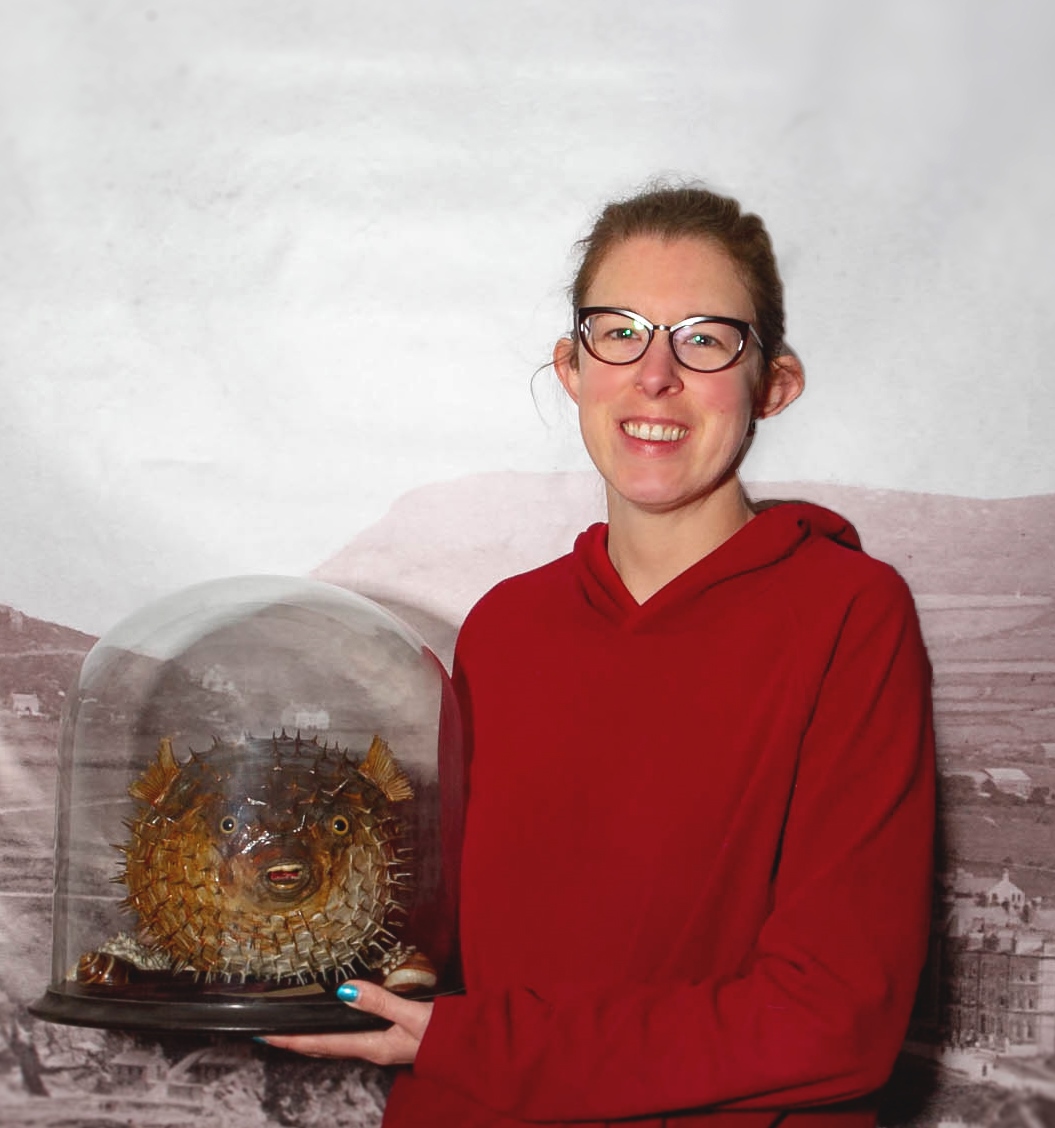
Laura McCoy

What is your role on the NatSCA committee?

As I’ve benefitted from so much training with NatSCA I’d really like to give something back and support this role, but I’m happy to get stuck in and help where needed.

Job title and institution

Curator of Natural History for Manx National Heritage.

Twitter username
@CuratorLaura

Tell us about your day job

I live and work on the Isle of Man, a small island in the middle of the Irish Sea, about 30 miles long and 15 miles wide with a population just shy of 85,000. As the Isle of Man is independent from the UK, we have our own central Government and part of my role includes sitting on committees discussing Government policy development, partnership working with environmental NGOs, land management, ecology and conservation. For the most part though I manage the natural sciences collections at the Manx Museum, including (the other) conservation, preparation, IPM, exhibitions, education and outreach, loans, enquiries, etc. As I work for an organisation that encompasses the role of a national trust and national museum, the job is varied and I work with a great team of people who all support each other. One day I may be working with an intern on reboxing and relocating the Geology collection, the next I’ll be learning how to traditionally thatch a cottage using locally grown materials, and when an unusual cetacean washes up on our shores I get to attend the beach autopsies recorded by the local Wildlife Trust (pro tip: strandings in winter tend to be a LOT less smelly…).

Continue reading

Databasing Herbarium Specimens and Ease of Use.

Written by Teagan Reinert1* and Karen L. Bacon1

1 Botany & Plant Sciences, School of Natural Sciences, National University of Ireland, Galway; * corresponding author email: t.reinert1@nuigalway.ie

One of the main aims of creating online databases of herbarium images (or any data set) is to increase the ease of access for researchers, educators, and other users who may want to obtain data from the specimens without having to physically travel to an herbarium. Online herbarium databases have become particularly useful during the global COVID-19 pandemic, when many herbaria are not allowing or greatly reducing the amount of in-person visitation.

For many herbaria, online databases are still being constructed and ease of access and use can vary significantly between collections. Additionally, while a database may list a certain number of specimens held by the herbarium, it can often be the case that only a subset of these specimens are actually imaged and available to view online. Some herbarium databases are better than others in actually allowing the user to narrow down their search to get the data they are looking for. The databases range in ease of use from ‘very easy’ to ‘usable but frustrating’. Any databases that are too difficult to use often dissuade researchers from using the digital resources available on that database.

Continue reading

Digital Digest – August

Compiled by Glenn Roadley, NatSCA Committee Member, Curator of Natural Science at The Potteries Museum & Art Gallery.

Welcome to the August edition of NatSCA Digital Digest.

A monthly blog series featuring the latest on where to go, what to see and do in the natural history sector including jobs, exhibitions, conferences and training opportunities. We are really keen to hear more about museum re-openings, exhibition launches, virtual conferences and webinars, and new and interesting online content. If you have any top tips and recommendations for our next Digest please drop an email to blog@natsca.org.

NatSCA Conference 2021: Environmental Breakdown and Natural Science Collections

In case you missed it, the NatSCA 2021 Conference: Environmental Breakdown and Natural Science Collections, which took place in May, is now freely available to view online, through our website or YouTube channel. This year’s conference focussed on how we can address global issues such as climate change and habitat loss with our collections, and featured some amazing talks and fascinating tours from across the sector. All talks, tours and Q&A sessions have captions available.

Continue reading

A Supreme, Dream Team: The American Institute for Conservation (AIC) and Society for the Preservation of Natural History Museums (SPNHC) Conference 2021

Written by Bethany Palumbo, ACR, Founder and Owner of Palumbo Conservation Services

As a Natural History conservator, I was thrilled to learn that the 2021 SPNHC conference would be a joint conference with the AIC. These two large US organizations have very different priorities and committees, but many collaborative interests. I had waited a long time for this collaboration! The theme of the conference was ‘Transformation’ seeking ideas to not only transform museums, but discuss how museums can transform the world for the better. A fitting theme for a year of massive upheaval and dramatic change.

The conference was originally due to be held in Jacksonville Florida, but the on-going pandemic meant it was moved online at the last minute. Though disappointed to not see colleagues physically, holding the conference online did allow for truly international participation and I could catch up on talks as and when I was able!

The majority of sessions were collaborative with talks from both members of AIC and the SPNHC. They were spread over 6 weeks, allowing for many more sessions than could normally be accommodated in a 5-day conference. The sessions were varied, covering not only the conservation of objects but digitization and data management, using Natural History as an educational tool, collaborating with stakeholder communities and storage and display.

Continue reading

Size Matters: Pesticides in Large Mounted Vertebrate Specimens

Written by Becky Desjardins (Senior Museum Preparator & Conservator), Georgia Kay & Kim König (MSc students Museums & Collections – Leiden University; Naturalis Interns), Naturalis Biodiversity Center.

Back in 2013, Naturalis conducted a research project about arsenic in the museums’ specimens. The goal was to determine if arsenic was spreading from the collection areas into staff and or public areas of the museum. We tested many specimens with an XRF but also tested the elevators, door handles, floors, shelves, keyboards, etc. From this testing we developed protocols about handling specimens and how we use the spaces in the collection. You can read all about that project over here.

What didn’t get tested were the large mounted vertebrates. Back in 2013 the Naturalis collections were spread over a number of warehouses around Leiden. Because these external buildings were considered depots only (meaning no offices/canteens in these spaces) there was less concern about arsenic contamination in non-collection areas. The large vertebrates were considered to be high risk specimens (so very toxic), and were handled as such, they never had their moment with the XRF.

Continue reading