NatSCA Digital Digest – November 2023

Compiled by Glenn Roadley, NatSCA Committee Member, Curator of Natural Science at The Potteries Museum & Art Gallery.

Welcome to the November edition of NatSCA Digital Digest.

A monthly blog series featuring the latest on where to go, what to see and do in the natural history sector including jobs, exhibitions, conferences and training opportunities. We are keen to hear from you if you have any top tips and recommendations for our next Digest, please drop an email to blog@natsca.org.

Sector News

GCG AGM and seminar – Building bridges between collectors and museums

The Geological Curators Group will be holding their annual AGM and seminar on November 28th – topics will include:

  • Many important specimens are held in private collections. How can museums gain an understanding of the scope of these collections and the needs of collectors?
  • How can museums gain the trust of collectors and start to find ways to work around the sometimes strict conditions imposed upon them?
  • How do collectors feel that museums can improve the way that they deal with such donations?
  • Lack of ‘proof of legal ownership’ or ‘documentation of permission to collect’ can be major sticking points for museums; however, such provenance was rarely required or given historically (or even more recently). How can we ensure that important historic specimens can be integrated into museum collections? Do we need a more flexible approach to the ‘ownership’ of geological specimens collected from casual sites that are not SSSI’s or other protected statuses?
  • What can we learn from previous experiences?
  • Can museums produce advice to help private collectors to document their collections and highlight or label specimens that might ideally end up in a museum in the future?

For more information and to register, see the GCG website: https://www.geocurator.org/events/162-50th-annual-general-meeting-and-winter-seminar

Continue reading

How Do You Do Decolonial Research in Natural History Museums?

Written by Jack Ashby, Assistant Director of the University Museum of Zoology, Cambridge.

Subhadra Das and Miranda Lowe’s paper, Nature Read in Black and White: Decolonial Approaches to Natural History Collections (2018) acted as a wake-up call to our sector, effectively founding a discipline in natural history museums. In the five years since, a lot of work has begun to address the colonial legacies underpinning collections of animals, plants, fungi and rocks.[i] The principal aims of this work include telling more honest stories about the different kinds of injustice involved in the acquisition of collections; and addressing the fact that our museums have long been prioritising narratives elevating white individuals over everyone else. In doing so, it is hoped that a greater diversity of people will feel represented by our museums, thereby enhancing the relevance of the collections.

Natural history collections dwarf those of any other museum discipline, and unlike sectors which have been thinking about this for decades, the practices underpinning their creation have not traditionally prioritised recording associated cultural or social histories. Like others who felt inspired by Subhadra and Miranda’s call to action, faced with contemplating how to begin to unpick the stories hidden behind literally millions of ‘scientific’ specimens, it was fundamental to consider the question, where do you start with decolonial research in natural history museums? Obviously, there is no one answer, but I thought it could be helpful to list a few possible approaches. One underlying element is to recognise how colonialism and its framings have shaped the way that events took place – from major historical moments to minute individual acts – and how the stories about these events have been told.

Below is a list of possible starting points for research, with examples of what that could look like in practice (in reality most of these overlap). For me, each has something to say about the entwined human and environmental costs of the colonial project – questions that natural history museums are uniquely placed to address.

Continue reading

Discovering Treasures in the Depths of the Dagnall.

Written by Ruth Cowlishaw of Liverpool School of Tropical Medicine.

This year marks Liverpool School of Tropical Medicine’s 125th anniversary. The school was the first institute of its kind back in 1898, built to help investigate some of the tropical diseases brought back to the busy port city from shipping expeditions and trade. To celebrate such a major milestone an array of events and activities have been planned by the school, including outreach events and fundraising, whilst also giving us a chance to reflect on our history. One such planned scheme was the distribution of internal funds for exciting projects, proposed by staff members that would make a difference in this very special year.

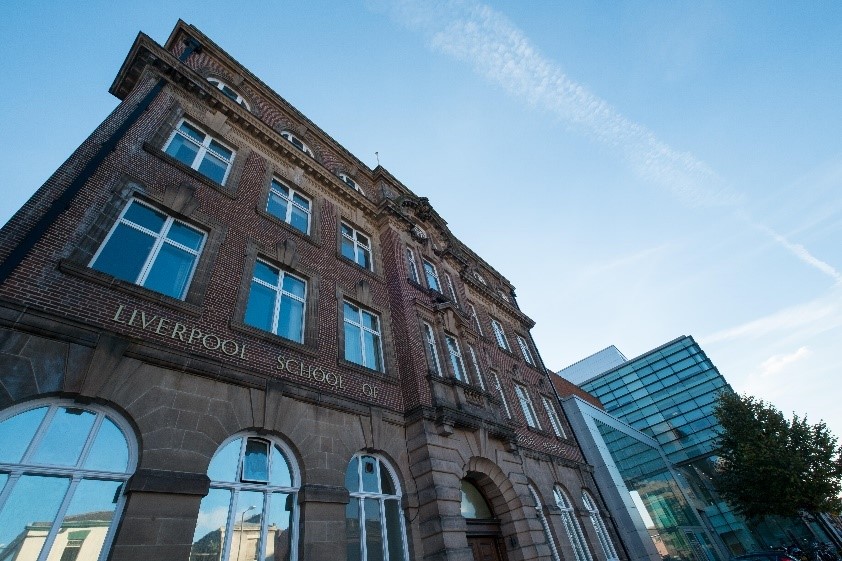
Mary Kingsley Building, LSTM. ©LSTM

The Dagnall Laboratory situated in the Mary Kingsley Building is the main teaching laboratory for the school. Within its walls it houses many historical pathological and entomological samples, from mosquito wings and blood films to seven-meter-long tapeworms. Throughout the years a selection of these samples has been used to help educate thousands of medical professionals, postgraduate students and armed forces personnel. However, a large part of the collection became forgotten and neglected as specimen preservation skills and staff were lost over time. With news of potential funding myself and the team saw an opportunity to rediscover these “lost” specimens and decided to put together a bid with the aim to reinvigorate our collection. The project not only aligned with the 125 Anniversary theme of Heritage and History but also looked forward to the future.

Continue reading

NatSCA Digital Digest – October 2023

Compiled by Milo Phillips, Assistant Curator of Entomology for National Museums Scotland.

Welcome to the October edition of NatSCA Digital Digest.

A monthly blog series featuring the latest on where to go, what to see and do in the natural history sector including jobs, exhibitions, conferences, and training opportunities. We are keen to hear from you if you have any top tips and recommendations for our next Digest, please drop an email to blog@natsca.org.

Sector News

Museum Association Conference 2023: The Power of Museums

There’s still time to register for this years’ Museum Association Conference, being held in Gateshead on 7th-9th November. The conference will explore how we can help our communities flourish by having a positive impact on health and wellbeing, placemaking, economic regeneration and by providing space to reflect on the pressing issues that we face. The cost of living crisis, discrimination and climate change are all having an impact on our communities. What do people need from us in times of upheaval and change? Follow the link to find out about the registration fees and to book your place: https://www.museumsassociation.org/events/conference-2023/

NatSCA Lunchtime Chats

The new lunchtime chats are for members only and run on the last Thursday of every month. This series is supposed to be informal; no fancy equipment is needed; it will be put out over the NatSCA Zoom platform and there is no fixed format. All members will have received a link to join via Zoom (the same link works for all sessions) – if you haven’t, get in touch with membership@natsca.org. Bring your sandwiches and a cuppa and we hope to see you on the day!

Continue reading

Deaccessioning of the Non-Manx Herbarium in the Natural History Collection, Manx Museum.

Written by Laura McCoy, Curator of Natural History, Manx National Heritage.

The Manx Museum, part of Manx National Heritage, is both the national museum and part of the National Trust of the Isle of Man, which is technically not a part of the UK, it is a Crown Dependency. Its collecting focus is to represent the Island and its history, similar to county museums in the UK. No other museum represents our Island better and that is our strength. When accessing our material, researchers are looking for something relating to the Island itself or how it sits in context to a wider geographical area. We are an Accredited museum and, like many others, we have a collections development forum, made up of curatorial and collections management staff, through which any new proposed acquisitions have to be assessed – but this has not always the case. We still have objects within the collection which would not pass our collections development policy today. 

Continue reading