Mainstreaming Biodiversity in Museums

Written by Henry McGhie, Curating Tomorrow henrymcghie@curatingtomorrow.co.uk.

Link to the guide: https://curatingtomorrow236646048.files.wordpress.com/2023/11/mainstreaming-biodiversity-in-museums_2023.pdf

‘Mainstreaming’ is a policy and planning approach that means that we don’t just create a new programme or strand of work, but that we embed it across all activities. We can embed support for biodiversity and environmental concerns across museum activities. Why is this important? Well, for a few reasons. Firstly, biodiversity is not yet fully mainstreamed into museum thinking – in terms of their goals, actions, or evaluation. Second, museums present a massive potential to support biodiversity in different ways, notably through education, research, public awareness and partnerships. Third, museums make big negative impacts on biodiversity and the environment, through their contributions to climate change (from use of energy, waste, and visitor emissions), and their involvement in environmentally damaging activities (e.g. how their investments are used). Fourth, because biodiversity is in deep crisis: species continue to decline, major challenges are getting worse, and there is no clear prospect of a change for the better. Lastly, fifth, because people and nature are interdependent: if the environment suffers, people and communities suffer.

Continue reading
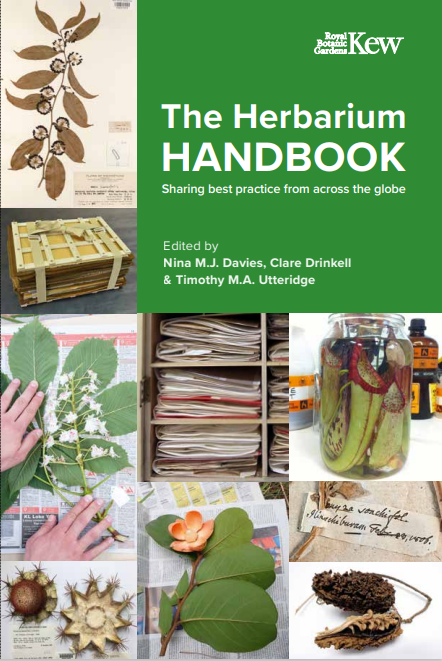
The Herbarium Handbook – Sharing Best Practice from Across the Globe.

Submitted by Clare Drinkell, Senior Curator Botanist at the Royal Botanic Gardens, Kew.

Editors: Nina Davies, Clare Drinkell, Timothy Utteridge. 290 pp, 234 x 156 mm. Over 700 colour photographs. Paperback, ISBN 9781842467695. Kew Publishing, TW9 3AE, UK 2023. £25.00. https://shop.kew.org/kew-herbarium-handbook

Cover page of The Herbarium Handbook

The new Herbarium Handbook is a key new addition to Kew Publishing’s series of handbooks, including The Plant Glossary and The Temperate Plant Families Identification Handbook. Unlike the other books in the series the Herbarium Handbook is a new version of a book first compiled and edited by Kew botanists some thirty-four years ago. The initial Herbarium Handbook came about following an extremely popular International Diploma Course in Herbarium Techniques at Kew. The demand to attend the course was so high that the number of applicants far exceeded places on the course. In view of the interest, the main information imparted during the course was published as a manual, widely recognised as an important reference for fundamental aspects of herbarium care and management.

Continue reading

NatSCA Digital Digest – December 2023

Compiled by Olivia Beavers, Assistant Curator of Vertebrate Zoology at World Museum, National Museums Liverpool.

Welcome to the December edition of NatSCA Digital Digest.

This is the last Digest of 2023 – packed full of festive activities and the latest on where to go, what to see and do in the natural history sector including jobs, exhibitions, conferences and training opportunities. If you have any top tips and recommendations for our next Digest please drop an email to blog@natsca.org.

Sector News

NatSCA Conference & AGM 2024SAVE THE DATE & CALL FOR PAPERS

The Annual Conference & AGM of the Natural Sciences Collections Association will be held on Thursday 18th and Friday 19th April 2024 in the Oxford University Museum of Natural History. The first day will include the AGM, presentations, and lightning talks. The second day will include presentations in the morning, followed by gallery and collection tours in the afternoon.

Trials and Triumphs: sharing practice across the museum sector

The #NatSCA2024 conference invites proposals for presentations on a broad range of themes. We seek ideas from the natural history collections community, educators, collaborators, and beyond. We are interested in practical lessons, unique solutions, new collaborations, and to show what has and hasn’t worked with projects.  We are looking for presentations that touch on every aspect of museum operations, including audience engagement, collections management practices, changing laws, social justice, restitution and decolonisation, environmental issues, global challenges, research and academic engagement.

This practical conference aims to celebrate triumphs and amplify successes in museums, but also highlight the pitfalls and lessons learned from situations that didn’t go as planned. We will prioritise papers that focus on sharing ideas, tools, and guidance rather than simply reporting results. We want to make this conference practical and useful, so please try to reflect this in your abstract.

While we have a focus on natural science collections, we recognise that we can learn from others in the wider museum sector, and we welcome submissions from anyone who wishes to share techniques and ideas with broader relevance and application.

Papers can be presented in any of several formats: A 20-minute presentation (consisting of a 15-minute talk followed by 5 minutes of Q&A) or a 5-minute lightning talk. Talks (both lightning and longer) can be presented in person or by submission of a pre-recorded presentation, with the option of an in-person or live stream Q&A (via Zoom).

Deadline for submission: 5pm GMT Friday 19th January. Please email conference@natsca.org with any questions.

Continue reading

Paddy the Pangolin: Conservation of a Taxidermy Museum Specimen

This article is re-posted from a piece that appeared on the Amgueddfa Cymru blog page, 3 August 2023 with permission from the author.

Written by Madalyne Epperson, MA Conservation Practice student, Durham University – when on placement at Amgueddfa Genedlaethol Caerdydd – National Museum Cardiff.

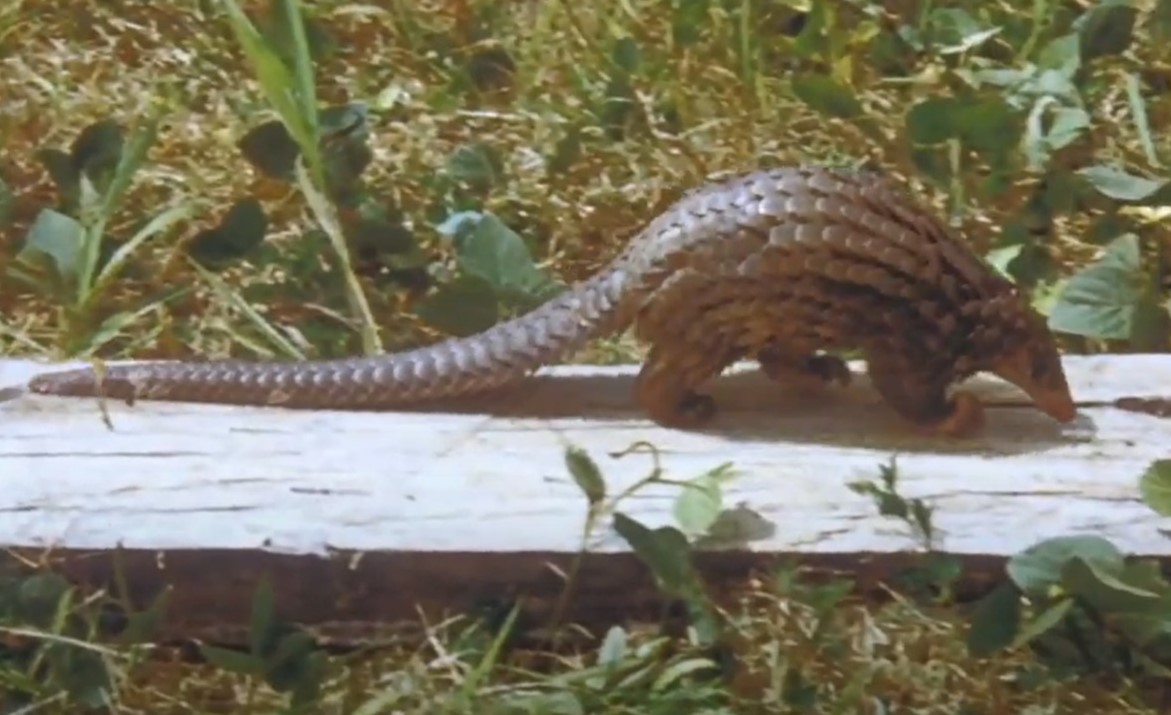
Paddy in the Wild During the Cambridge French West Africa Expedition 1957 (Pan Golin 2018)

Natural history collections are often central to our understanding of evolution, population genetics, biodiversity, and the environmental impacts of pesticide use and climate change, among other things. For this reason, caring for these collections is of great importance. A taxidermy tree pangolin – named Paddy by the conservation team – was brought to Amgueddfa Cymru – Museum Wales in 2017 in need of attention. Paddy was collected on August 4th, 1957, by researchers during Cambridge University’s French West Africa Expedition. According to the expedition diary, Amgueddfa Cymru had asked the researchers to retrieve a pangolin to make a museum specimen, as was common practice at that time. The mounted pangolin was feared lost after the expedition’s drying tent went up in flames on August 25th, 1957. Paddy was terribly singed by the fire, which greatly disheartened the expedition team. It is perhaps for this reason that Paddy never made it to the museum when the expedition concluded. It was not until 2016/2017 that Paddy was found in Staffordshire in the home of one of the expeditions members and sent over to the museum.

Continue reading

NatSCA Digital Digest – November 2023

Compiled by Glenn Roadley, NatSCA Committee Member, Curator of Natural Science at The Potteries Museum & Art Gallery.

Welcome to the November edition of NatSCA Digital Digest.

A monthly blog series featuring the latest on where to go, what to see and do in the natural history sector including jobs, exhibitions, conferences and training opportunities. We are keen to hear from you if you have any top tips and recommendations for our next Digest, please drop an email to blog@natsca.org.

Sector News

GCG AGM and seminar – Building bridges between collectors and museums

The Geological Curators Group will be holding their annual AGM and seminar on November 28th – topics will include:

  • Many important specimens are held in private collections. How can museums gain an understanding of the scope of these collections and the needs of collectors?
  • How can museums gain the trust of collectors and start to find ways to work around the sometimes strict conditions imposed upon them?
  • How do collectors feel that museums can improve the way that they deal with such donations?
  • Lack of ‘proof of legal ownership’ or ‘documentation of permission to collect’ can be major sticking points for museums; however, such provenance was rarely required or given historically (or even more recently). How can we ensure that important historic specimens can be integrated into museum collections? Do we need a more flexible approach to the ‘ownership’ of geological specimens collected from casual sites that are not SSSI’s or other protected statuses?
  • What can we learn from previous experiences?
  • Can museums produce advice to help private collectors to document their collections and highlight or label specimens that might ideally end up in a museum in the future?

For more information and to register, see the GCG website: https://www.geocurator.org/events/162-50th-annual-general-meeting-and-winter-seminar

Continue reading