Book Review: A Historical Directory of Taxidermists.

Reviewed and written by Jazmine Miles Long, Taxidermist. https://www.jazminemileslong.com, Twitter: @TaxidermyLondon; Instagram: @Jazmine_miles_long

A Historical Directory of Taxidermists: Bird and Animal stuffers, Naturalists, Beast and Bird Preservers in Southwest England and Wales. Early 19th C to Mid-20th C.

A directory complied by Kelvin Boot
Published by MPM Publishing
2022
ISBN 978-1-7397161-0-3
Contact – kelvinbootbooks@gmail.com

This book is a must have for any researcher exploring the lives and work of taxidermists from Southwest England and Wales during the 19th and 20th Century. 140 pages in black and white including some images of taxidermists trade labels.

The book is a thorough directory of the taxidermists trading in the area at the time, the introduction cites how the directory was researched, exploring printed documents, not only naturalists publications but newspapers, trade directories and census records where taxidermists may have been mentioned or advertised. Exploring what the life of a taxidermist may have been like and how just like today it was the ‘celebrity’ taxidermists that would have been more likely to be written about.

Continue reading

A Foot In The Door – Finding Collections Work As A Trailing Spouse In A Foreign Country

Written by Caroline Grounds, Freelance Zoological Collections Assistant, Musée national d’histoire naturelle, Luxembourg.

I arrived in Luxembourg 8 years ago when my husband accepted a job offer here, not knowing much about the tiny country (“where exactly is Luxembourg?”), and with a new baby in tow.

I had become accustomed to the trailing expat spouse role, so I was happy for a new adventure, though the hardest part about moving, especially to a country where you don’t speak the language, is finding your niche in which you can carve out something of your own.

As a former Biology teacher, most of my previous museum experience was in science education, as a volunteer at the NHM in London, and the George C. Page museum (La Brea Tar Pits) in Los Angeles, and I was keen to get involved in the Luxembourg Natural History Museum in any way, shape or form. Something about being around the wonders of nature, whether outside or housed in a building, is inspiring to me and, surrounded by like-minded people, where I truly feel like I’m supposed to be.

Not speaking any of the official local languages however (Luxembourgish, German and French), I quickly found that it would be difficult to find work, even on a voluntary basis as I had before. I submitted my CV to the museum anyway, and endured a rather painful phone call in very bad schoolgirl French (mine, not theirs!), which, much to my amazement, led to one of the researchers contacting me for help proofreading his research papers, which were being published in English. That schoolgirl French came in useful after all!

Continue reading

NatSCA Digital Digest – August 2022

Compiled by Milo Phillips, Assistant Curator of Entomology for Leeds Museums and Galleries.

Welcome to the August edition of NatSCA Digital Digest.

A monthly blog series featuring the latest on where to go, what to see and do in the natural history sector including jobs, exhibitions, conferences and training opportunities. We are really keen to hear more about new exhibitions, conferences and anything that you would like to promote. If you have any top tips and recommendations for our next Digest please drop an email to blog@natsca.org.

Sector News

Yorkshire Natural History Museum

The Yorkshire Natural History Museum is a new, small public museum opening in Sheffield this Saturday August 13th 2022! The museum includes geology, palaeontology and botany collections with a significant research collection of fossils from the Yorkshire Lias. Their website is still under construction but they can be found on twitter as @YorkshireNHM.

NatSCA Lunchtime Chats

After a brief hiatus, our NatSCA Lunchtime Chats are back! Last week we heard from Jazmine Miles-Long about mitigating freezer-burn when freezing your museum specimens. You can read more about it in her recent blog post if you missed the talk. Stay tuned for information on our next lunchtime chat later in the month. These lunchtime chats are for members only and normally run on the last Thursday of every month.

Continue reading

Freezing Specimens And How To Mitigate Freezer Burn.

Written by Jazmine Miles Long, Taxidermist. https://www.jazminemileslong.com, Twitter: @TaxidermyLondon; Instagram: @Jazmine_miles_long

In my opinion there isn’t one system to do things correctly in taxidermy, every museum or taxidermist may have their own preferences and strategies already in place. This is simply a guideline that works for me, and I hope it can help others to mitigate some of the problems I encounter when working with skins that have been frozen in a way that has accelerated freezer burn. Following this advice might get more time out of frozen specimens and give you a greater chance that they can be mounted once the budget or staff time is there to pay for taxidermy or processing cabinet skins.

What is freezer burn?

Freezer burn happens when the moisture is evaporated out of the animal’s skin and muscles over time in the freezer. Most specimens even if they are well packed in the freezer will still get some freezer burn over a long period of time but it will be much worse if the specimen is poorly packaged or has something absorbent (like a paper label) inside the bag with it.

You can tell if a specimen has freezer burn because it will look white and dry in areas such as the feet, hands, around the eyes, ears, and mouth. And when you start skinning the skin will be yellowed and hard to remove rather than red, fleshy, and easy to peel away.

Firstly, I advise to always freeze your specimens before handling or skinning them. At a minimum you could record the specimen’s weight before freezing as this measurement is affected slightly after freezing. I personally would not take any other measurements until after they have been thoroughly frozen (unless you want to collect live parasites). As the animal dies, any parasites on the skin of the animal will leave the body as it cools and hop onto the next willing subject which will be you or any living creature in your lab! A note that fleas are not killed over night, if you freeze a fox for example leave it in there for at least two weeks before defrosting. It completely depends on the temperature of your freezer however so if you start to defrost an animal the fleas will defrost first, so if there is movement you know to refreeze! Obviously very large animals may need to be skinned straight away, so in this case my advice is wear appropriate PPE.

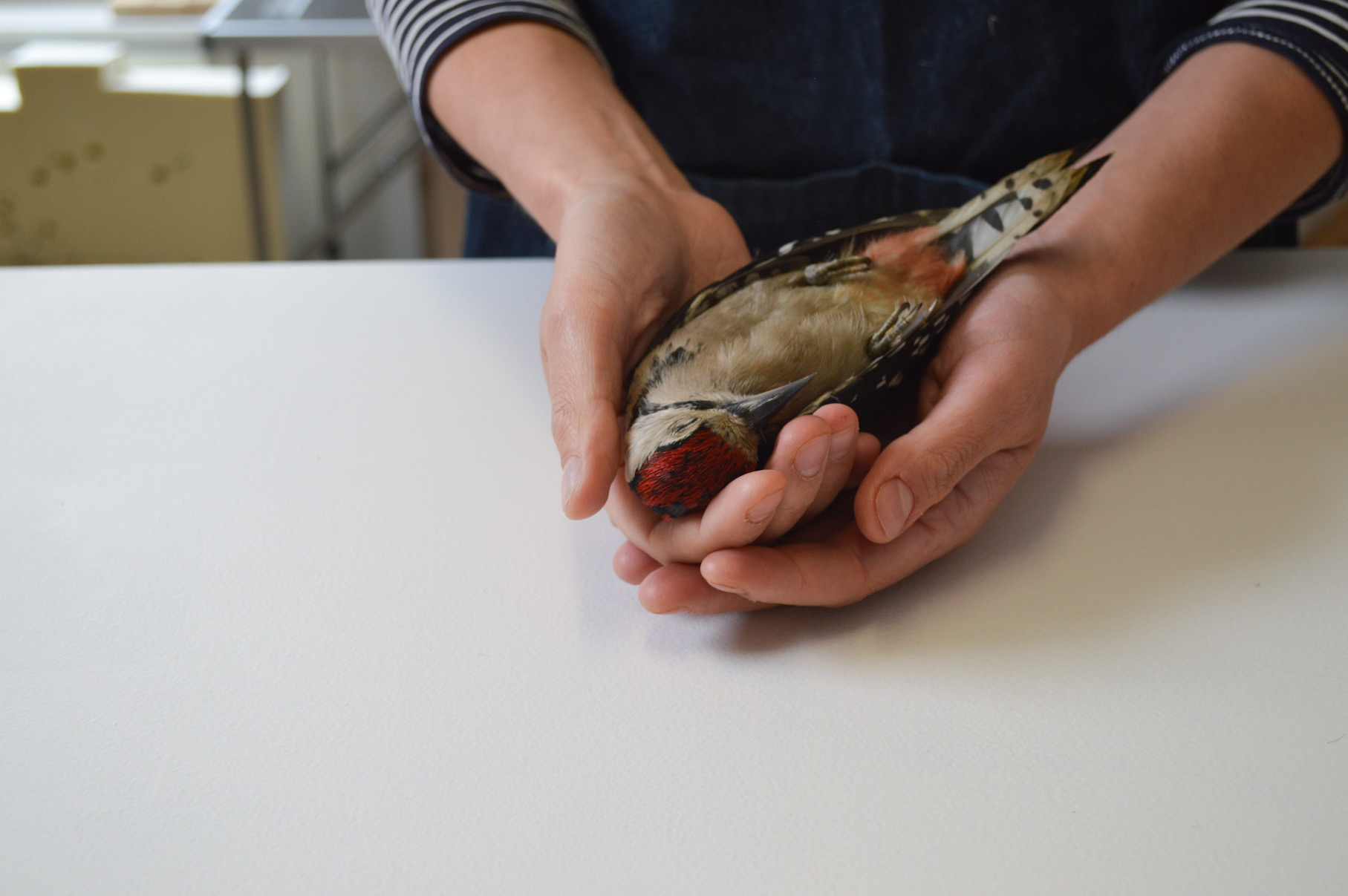
Great Spotted woodpecker. Image by Jazmine Miles Long.
Continue reading

The ‘Social History of Natural History: People and Plants’ Workshop One

March 11th 2022, Powell-Cotton Museum

Written by Alexandra Slucky (Assistant Heritage Consultant & Environmental Archaeologist, Atkins, York Office) and Fiona Roberts (Collaborative ESRC PhD student, Cardiff University & Amgueddfa Cymru-National Museum Wales).

Decolonizing collections has been at the forefront of museums for quite some time. Thinking beyond the Western museum structure, many institutions have taken new opportunities to view indigenous knowledge from indigenous perspectives by revisiting old collections of anthropological material intermixed with botanical specimens. Four years in the making, Workshop One is part of a one-year project called People and Plants: reactivating ethnobotanical collections as material archives of indigenous ecological knowledge, beginning in January 2022. It is led by National Museums Scotland, Royal Botanic Gardens, Kew, and the Powell-Cotton Museum, and funded by the Arts and Humanities Research Council (AHRC).

Entrance to Powell Cotton Museum, Birchington-on-Sea, England, Photo by Alexandra Slucky

The main aim of the project is to engage with three unique indigenous collections located in UK institutions; Somalian, Amazonian, and Aboriginal Australian. The project examines the value and relevance of ethnobotanical collections, both in the present and the future, aiming to bring academics, researchers, museum professionals, botanists and indigenous knowledge holders together in conversation. To focus on sharing authority, it gives a museum voice to women of colour through a process of reactivation, recovery, and relationships, with the result creating more inclusive conditions for future collections.

Continue reading