Exeter Shell Collection Designated by Arts Council England

Written by Holly Morgenroth, Collections Officer, Royal Albert Memorial Museum & Art Gallery (RAMM).

On 30 January 2020 Arts Council England’s (ACE) awarded Designated status to the George Montagu collection of Molluscs at the Royal Albert Memorial Museum & Art Gallery (RAMM). Just 152 collections in the country hold the coveted Designation award, and only a few of these collections are Natural History. Tullie House’s natural science collection recently received this accolade. The Designation scheme is a mark of distinction awarded to the finest cultural collections housed in non-national museums, libraries and archives across England.

Pioneering naturalist George Montagu (1753-1815)

George Montagu was the first person to collect and name British molluscs in a truly scientific manner. The shells were not just attractive curios. His work revolutionised the study of molluscs and his collection at RAMM is Britain’s most intact and taxonomically-important, early 19th-century collection of British shells (1800-1816). Today it is an essential resource for taxonomic research.

Continue reading

The Power of People and Collections in the Climate Emergency

Written by David Gelsthorpe, Curator of Earth Science Collections, The Manchester Museum and Jan Freedman, Curator of Natural History, The Box, Plymouth (formerly Plymouth City Museum and Art Gallery).

Museums are most powerful when they connect real objects and research with real people. Natural science objects elicit deep emotional responses to the climate emergency; they help people to care and when done right, empower action.

This message is central to the NatSCA conference this year:

Changing the World: Environmental Breakdown, Decolonisation and Natural Science Collections

We’d love to hear your experience in a talk at the conference, the deadline for submissions is the 7th February.

Natural science collections are unique records of past biodiversity and climate across Britain, and the world, and are essential for climate change research taking place in museums every day. They allow access to historical information about millions of different species, providing an incredible amount of detail. They show how plants and animals have responded to past climate change, they show long-term population trends, and they show what we have lost.

These are all stories essential to bring clear factual science to an emotionally-charged debate. Research on these collections has directly shaped conservation work and climate change mitigation. In short, natural science collections are a powerful way to help save the world and give people hope for a better future.

Continue reading

Our Top Ten Blogs of 2019

Written by Jennifer Gallichan, Curator of Molluscs & Vertebrates at National Museum Cardiff.

2019 was an interesting year for me as I took on the role of NatSCA blog editor. It has been a great year and I have very much enjoyed reading all of the articles from our amazing contributors. To celebrate this, I wanted to bring together a list of our top ten most viewed blogs from 2019 in case you missed any of them.

Top scorers this year include a surprising number of botanical articles, with four of the ten written by our plant loving colleagues.

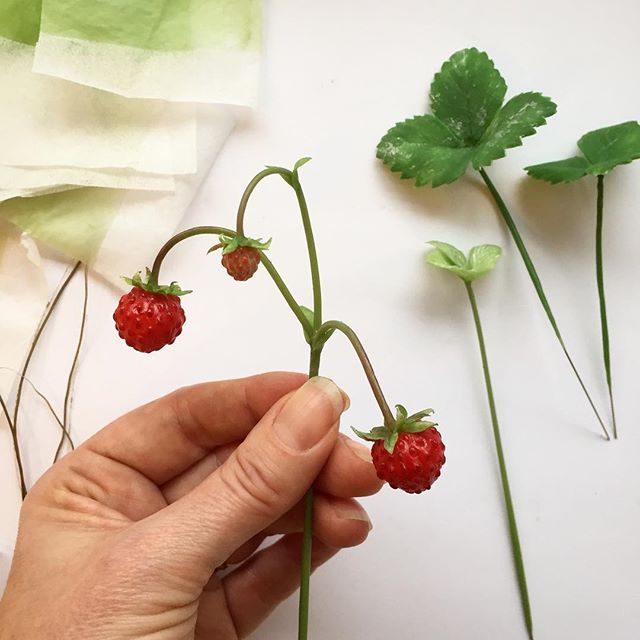
Strawberry fruits made from dressmaking beads coated in molten wax and attached to waxed wire stems. © Annette Townsend

Some of my personal favourites, although not top scorers, are actually two articles which we were kindly allowed to re-blog: Annette Townsend’s beautiful and mesmerising work in how to make a wild strawberry sculpture from honey bee wax, and John Wilson’s fantastic article about the orang-utan specimens sent to World Museum, Liverpool by Alfred Russell Wallace.

But, here are the top ten most read NatSCA blogs by your good selves…

Continue reading

The Land of the Oran-utan

Written by John Wilson, Curator (Vertebrate Zoology), World Museum, Liverpool

This article was first published as a blog for National Museums Liverpool, 16 August 2019.

150 years ago Alfred Russel Wallace wrote about “the land of the orang-utan” and sent specimens to Liverpool.

2019 is the 150th anniversary of the first publication of Alfred Russel Wallace’s The Malay Archipelago: The land of the orang-utan, and the bird of paradise. A narrative of travel, with studies of man and nature.

Although best known as the co-discoverer of the theory of evolution by natural selection alongside Charles Darwin, The Malay Archipelago firmly established Wallace as one of the greatest natural history explorers.

Title page of the first edition of The Malay Archipelago published in 1869, 150 years ago.

The Malay Archipelago is a vivid, first-person account of Wallace’s travels, studies and natural history collecting in Southeast Asia. During 8 years Wallace travelled over 14,000 miles and collected 125,000 specimens. Orangutans feature prominently in the book’s title, and chapter four is largely devoted to Wallace’s adventures with orangutans in Sarawak, Borneo.

Wallace wrote: “… one of my chief objects in coming to stay at Simunjon [a river in Sarawak] was to see the Orang-utan (or great man-like ape of Borneo) in his native haunts, to study his habitats, and obtain good specimens of the different varieties and species of both sexes, and of the adult and young animals. In all these objects I succeeded beyond my expectations, …”

Continue reading

Making the Most of What You’ve Got

Written by Dr Emma Nicholls, Deputy Keeper of Natural History, Horniman Museum and Gardens

The Collection

The Horniman Museum is the custodian of a collection of ca. 175,000 fossil specimens, collected by Walter Hellyer Bennett (1892-1971). A mining geologist and palaeontology enthusiast, Bennett collected somewhat indiscriminately, not pausing to favour geography, strata, or taxa, which makes it a collection of great interest to a wide variety of academics, and for other uses such as exhibitions and loans.

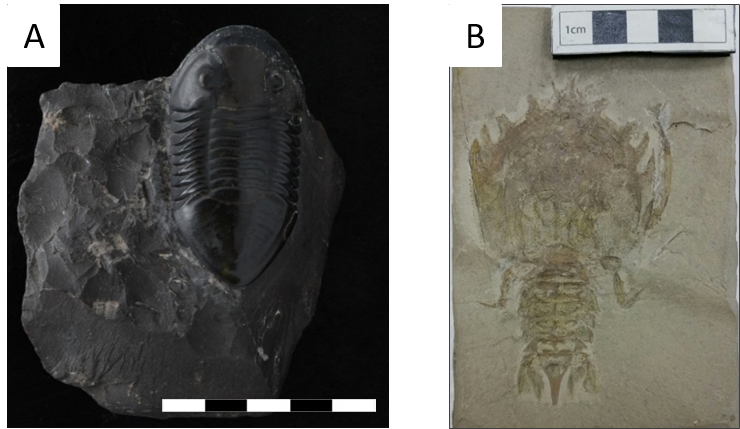
This huge collection was bequeathed to the Croydon Natural History and Scientific Society in the 1970s, where choice pieces were put out on open display whilst the rest remained stored in Bennett’s original wooden cabinets. It contains some beautiful material, such as this Isotelus gigas trilobite, and Eryon propinguus lobster.

A) Isotelus gigas, and Ordovician trilobite from the Trenton Limestone. B) Eryon propinquus, a Jurassic lobster from the Solnhofen Limestone. © Horniman Museum and Gardens.

The collection is approximately 10% vertebrate material, 85% invertebrates, and 5% plants and trace fossils. In case you are interested in particular taxonomic groups (as we are keen on facilitating research enquiries and visits… fyi) the invertebrates are mostly bivalves, brachiopods, cephalopods, corals, and gastropods, with a large variety of other taxonomic groups represented in small numbers as well (please do get in touch if you’re interested in getting more information), and the vertebrates are primarily conodonts, crocodilians, dinosaurs, fish (including sharks), ichthyosaurs, mammals, plesiosaurs, pterosaurs, and turtles. Geographically, around 87% of the material was collected within Europe, primarily from the UK (50%) and France (15%). A further 10% is from North America whilst small amounts of material were collected from across Africa, South America, the Middle East, Asia and Australasia. Notable sites include the Solnhofen Limestone and the Burgess Shale.

Continue reading