How To Get Money For Your Natural Science Collection

Written By Clare Brown, Curator of Natural Science, Leeds Museums and Galleries.

So you’ve got a lovely collection, with lots of lovely potential, you yourself have loads of lovely ideas for all the lovely things you could do with it but you have no money. It’s a pretty common situation in museums but there are ways to fund your collections and the rewards for doing so are BIG.
©Leeds Museums and Galleries

Where and How to Look

There are various companies you can subscribe to who will produce lists of funders that suit your project. People like https://www.grantfinder.co.uk/ and https://www.fundingcentral.org.uk/default.aspx but others are available. We’ve used these in the past in Leeds but haven’t kept up our subscription as museum funders rarely seem to change from year to year.

The main funders to consider in the natural science collection world are:

https://ellerman.org.uk/,

https://www.artscouncil.org.uk/funding-finder/designation-development-fund,

https://www.esmeefairbairn.org.uk/,

https://www.wolfson.org.uk/,

https://garfieldweston.org/,

https://www.museumsassociation.org/collections/esmee-fairbairn-collections-fund,

https://www.heritagefund.org.uk/

and absolutely not forgetting https://www.natsca.org/awards-and-bursaries

Continue reading

NatSCA Digital Digest – March

Compiled by Jennifer Gallichan, Curator of Molluscs & Vertebrates at National Museum Cardiff.

Welcome to the March edition of NatSCA Digital Digest!

A monthly blog series featuring the latest on where to go, what to see and do in the natural history sector including jobs, exhibitions, conferences and training opportunities. If you have visited an exhibition/museum, have something to say about a current topic, or perhaps you want to tell us what you’ve been working on, please drop an email to blog@natsca.org.

Where Should I Visit?

Monsters Of The Deep opens on 20th March at the National Maritime Museum, Cornwall. Really curious to know what people think of this exhibition exploring centuries old myths of Krackens and Giant Sharks. I have also heard that there will be a Coelocanth on display for the first time in Cornwall!

Design For Life at Surgeons’ Hall Museums, Edinburgh explores the fascinating history of Comparative Anatomy and how integral it was to the beginnings of Surgeons’ Hall Museums. The exhibition will run until Easter 2020.

Continue reading

Exeter Shell Collection Designated by Arts Council England

Written by Holly Morgenroth, Collections Officer, Royal Albert Memorial Museum & Art Gallery (RAMM).

On 30 January 2020 Arts Council England’s (ACE) awarded Designated status to the George Montagu collection of Molluscs at the Royal Albert Memorial Museum & Art Gallery (RAMM). Just 152 collections in the country hold the coveted Designation award, and only a few of these collections are Natural History. Tullie House’s natural science collection recently received this accolade. The Designation scheme is a mark of distinction awarded to the finest cultural collections housed in non-national museums, libraries and archives across England.

Pioneering naturalist George Montagu (1753-1815)

George Montagu was the first person to collect and name British molluscs in a truly scientific manner. The shells were not just attractive curios. His work revolutionised the study of molluscs and his collection at RAMM is Britain’s most intact and taxonomically-important, early 19th-century collection of British shells (1800-1816). Today it is an essential resource for taxonomic research.

Continue reading

The Power of People and Collections in the Climate Emergency

Written by David Gelsthorpe, Curator of Earth Science Collections, The Manchester Museum and Jan Freedman, Curator of Natural History, The Box, Plymouth (formerly Plymouth City Museum and Art Gallery).

Museums are most powerful when they connect real objects and research with real people. Natural science objects elicit deep emotional responses to the climate emergency; they help people to care and when done right, empower action.

This message is central to the NatSCA conference this year:

Changing the World: Environmental Breakdown, Decolonisation and Natural Science Collections

We’d love to hear your experience in a talk at the conference, the deadline for submissions is the 7th February.

Natural science collections are unique records of past biodiversity and climate across Britain, and the world, and are essential for climate change research taking place in museums every day. They allow access to historical information about millions of different species, providing an incredible amount of detail. They show how plants and animals have responded to past climate change, they show long-term population trends, and they show what we have lost.

These are all stories essential to bring clear factual science to an emotionally-charged debate. Research on these collections has directly shaped conservation work and climate change mitigation. In short, natural science collections are a powerful way to help save the world and give people hope for a better future.

Continue reading

Our Top Ten Blogs of 2019

Written by Jennifer Gallichan, Curator of Molluscs & Vertebrates at National Museum Cardiff.

2019 was an interesting year for me as I took on the role of NatSCA blog editor. It has been a great year and I have very much enjoyed reading all of the articles from our amazing contributors. To celebrate this, I wanted to bring together a list of our top ten most viewed blogs from 2019 in case you missed any of them.

Top scorers this year include a surprising number of botanical articles, with four of the ten written by our plant loving colleagues.

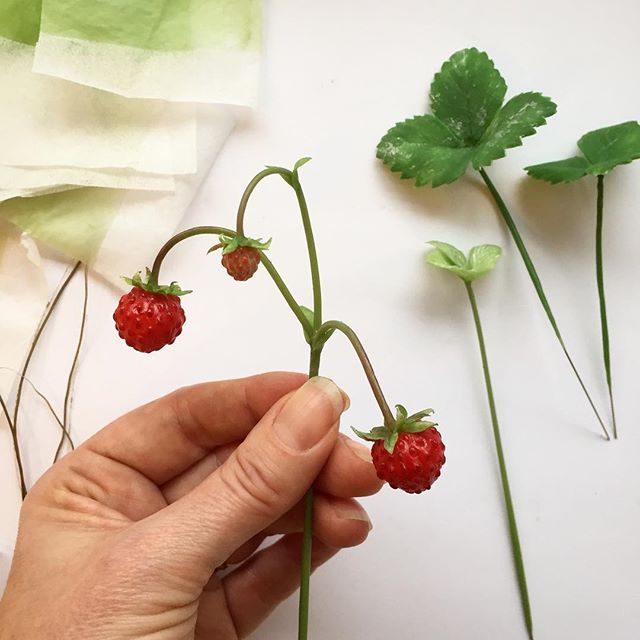
Strawberry fruits made from dressmaking beads coated in molten wax and attached to waxed wire stems. © Annette Townsend

Some of my personal favourites, although not top scorers, are actually two articles which we were kindly allowed to re-blog: Annette Townsend’s beautiful and mesmerising work in how to make a wild strawberry sculpture from honey bee wax, and John Wilson’s fantastic article about the orang-utan specimens sent to World Museum, Liverpool by Alfred Russell Wallace.

But, here are the top ten most read NatSCA blogs by your good selves…

Continue reading