Decolonise! Activations of Natural History Collections by International Contemporary Artists

Presented by Dr Bergit Arends, University of Bristol.

Abstract

Nowhere else is the encounter between Western science and the cultures of non-European peoples so evident than in the collections of European museums. These encounters are reflected in the collecting practices, the archiving and documenting, the conservation of objects and in the ordering systems through which these artefacts are interpreted. But in Western museums we need to learn how to recognise and how to acknowledge these encounters.

Museum collections are sources of both cultural and environmental knowledge (Thomas, 2018), particularly natural science collections. Moreover, taxonomic systems of the past, particularly in the natural sciences, are now considered to be one of the most important resources for understanding the interconnections of science and culture (Browne, 1989). How can historic collections be mobilised to address contemporary issues? How can the natural sciences be understood as cultural practice? How can the violence of past
scientific practices be acknowledged in natural history museums?

Continue reading

Mo Koundje: How Gorilla Histories Can Help Decolonise Our Collections

Presented by Rebecca Machin, Leeds Museums and Galleries.

Abstract

Mo Koundje (‘Mok’) is a Western Lowland Gorilla in the collections of Leeds Museums and Galleries (LMG). His taxidermied skin is displayed at Leeds City Museum, while his skeleton is in the store at Leeds Discovery Centre. At present, his remains are used as an example of ‘gorilla’ in the Life on Earth gallery, but they have the potential to tell us so much more. Using archives from the Zoological Society of London, the Natural History Museum, and the Archives Nationales d’Outre Mer, as well as French and British press archives, I have found out more about Mok’s life. His story touches on domestic life in French colonies, the interaction between colonists and colonised communities, and the illegal hunting and trade in gorillas, which continues today. The remains of animals from once colonised countries have the potential to reveal stories not only of their own experiences, but of the people whose lives were affected by colonisation. By entering colonial homes, gorillas enable us to look at racial and gendered hierarchies imposed by European colonisers from a new perspective. We can, and should, use these stories to engage our audiences with a range of political and environmental issues still relevant today.

This presentation contains distressing images.

Continue reading

Bill Pettit Memorial Award 2021

Written by David Gelsthorpe, Manchester Museum.

Do you have a great project in mind that supports the conservation, access and use of natural science collections? Well, NatSCA’s Bill Pettit memorial grant for up to £3000 is here to help!

We are looking for applications for exciting new projects for 2021. Terms and conditions and contact details to discuss your project can be found on our Awards and Bursaries page.

To apply please fill out the application form.

Projects previously supported:

2020/2021:

The Last Passenger: Conservation of the SS Great Britain Cormorant Skeleton (Awarded £1424)

Curating, Digitising and Displaying a Unique Historic Odontological Collection (Awarded £2100)

2019/2020:

University of Liverpool Zoology Redisplay Project (Awarded £1840)

Leo Conservation Project (Awarded £1105)

Continue reading

Project Update: Accessing Staffordshire Geology

Written by Glenn Roadley, Curator (Natural Science), The Potteries Museum & Art Gallery.

About this time last year, The Potteries Museum & Art Gallery was successful in a bid to the Arts Council England Designation Development Fund, securing funding of £72,500 to catalogue and display its nationally significant geology collections. The Designation Development Fund provides funding for projects which ensures long-term care of Designated collections and maximises their public value.

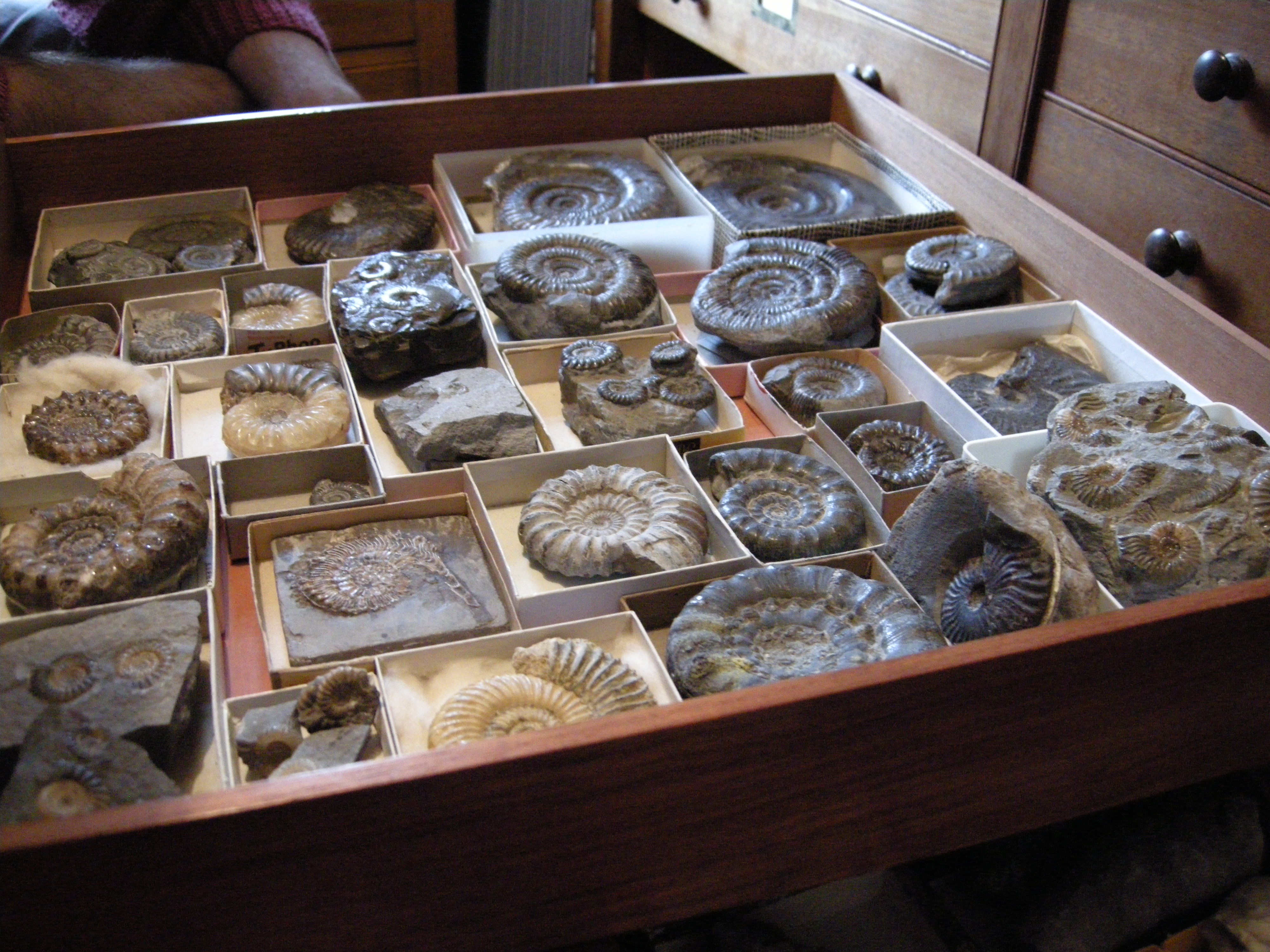
Ammonites in Ted’s collection before it was transferred to the Museum. © The Potteries Museum & Art Gallery

In early March 2020, just days before the museum closed and the country sank into lockdown due to Covid-19, I contributed a summary of the project to the Geological Curators’ Group blog (you can read it here). It really does show how quickly everything changed – at the time of writing the original blog, we were expecting the project to kick off in June 2020, beginning with the recruitment of an Assistant Curator to carry out the documentation of geological specimens bequeathed to the museum by Ted Watkin. This collection, comprised of about 2,000 fossils mostly originating from around Staffordshire, is to form the basis of the project and the new displays, highlighting the history and importance of the Carboniferous coal fields under Stoke-on-Trent.

Continue reading

Diving into a Coral Reef with Cambridge Communities

Written by Sara Steele, Museum Education Assistant, Museum of Zoology and Roz Wade, Learning Officer, Museum of Zoology.

This article was first published as a blog for University of Cambridge Museums, 1st June 2020.

Our audiences are full of creativity, something we see in bucketfuls at our events and workshops. We wanted to go further, and showcase audience creations and collaborations in our programming and displays.

As a Museum celebrating the wonders of the natural world, we have an innate desire to protect it. We have committed to embedding sustainability into our public programme : tackling the materials we use and considering the impacts of activity outputs. Not all craft day creations end up on the fridge, let alone as an item cherished for life. Could we bear the thought of our logo sitting atop a landfill?

With this focus on collaboration and sustainability in mind, and with the help of the artistic mind of volunteer Fanny Bara Moreau, we designed a summer activity with longevity at its core.

Every summer, the University of Cambridge Museums box up their wares and head out into the weather with themed activities to communities across the city with Cambridge City Council’s Big Weekend and Children and Young People’s Participation Service (ChYpPs). Summer 2019 had a tropical oceans theme at the Museum of Zoology, with the goal of inspiring conversations around the conservation of our coral reefs. We wanted to use this as an opportunity to bring audiences together through shared making and showcase their creations in our programmes and displays.

Continue reading