The First Steps Of An Epic Move

Written by Clare Valentine, Head of Life Science collections, Natural History Museum, London.

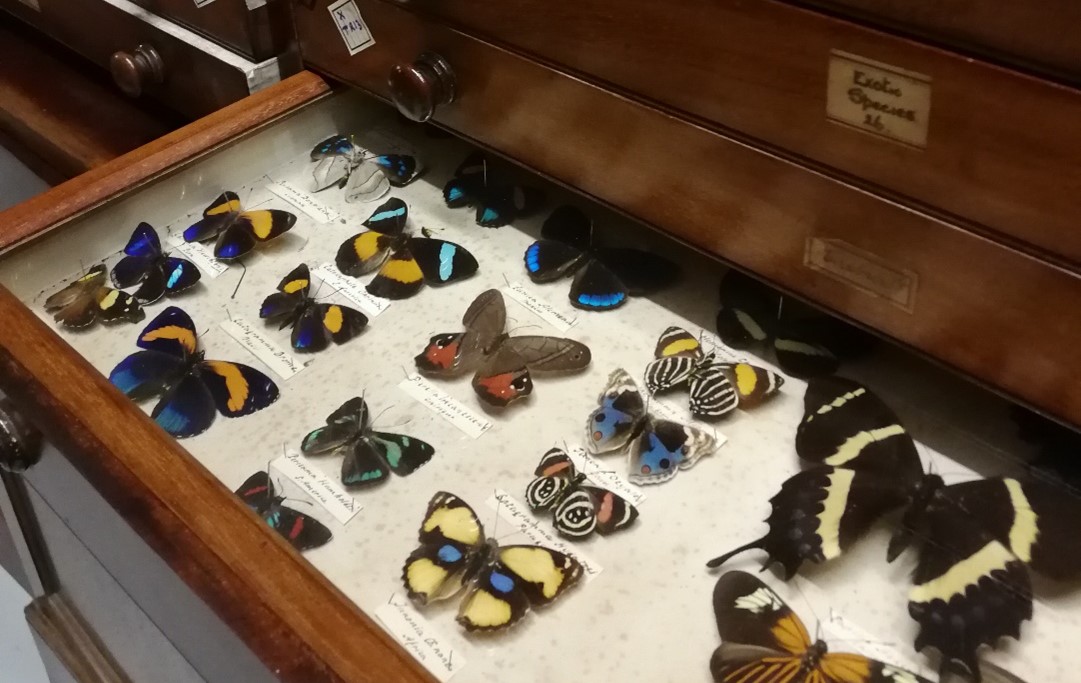
Securing £182m to build a new science and digitisation centre in March 2020 was an incredible moment for the Natural History Museum, and the culmination of many years of hard work across the organisation to make the case for better facilities for the collections and research. The support from the Department for Culture, Media and Sport provides an opportunity to secure the future of the collections by moving them into bespoke, accessible storage, to accelerate digitisation of the collections to expand access for researchers globally and transform the study of natural history through an investment in new analytical facilities, technologies and techniques.

Receiving confirmation of the funding just a matter of days before the UK shutdown for the best part of 2 years didn’t come without its challenges, but it’s been incredible to see the progress that has been made towards our immense plan to build the centre and move tens of millions of specimens there by 2027.

Continue reading

A Sunfish, a Sheriff and a Register

By Eimear Ashe, Documentation Officer, National Museum of Ireland – Natural History.

NatSCA friends, I’d like to tell you a little about our current Inventory Project in the National Museum of Ireland (NMI) – Natural History. But first, back in 2009-2017, we ran a project that allowed us to catalogue 170,000 specimens in our collections management system (Adlib). We proposed another project to continue these efforts. The start date of the project regrettably coincided with the pandemic as well as the untimely loss of a key colleague (Dr Matthew Parkes). We regrouped and decided to postpone the physical inventory of objects and instead to focus on the work that could be done remotely by the team of inventory assistants.

On this project, I manage a team of three contracted inventory assistants. The cataloguers work on Natural History for two or three days per week, and other NMI projects for the rest of their week. I spend one full day each week doing project-related work, that is, supervision, answering queries, checking work and reporting.

Continue reading

Many Hands Make Light Work

Written by Milo Phillips, Assistant Curator of Entomology at Leeds Museums and Galleries.

The past couple of years have seen a significant shift toward digital alternatives throughout the museum sector, from online exhibitions to webinars and remote conferencing, with our collections and their stories reaching a potentially global audience, more so than ever before. While much is being done to boost engagement with collections in new and exciting ways, museums on the whole have yet to harness the power of this shift when it comes to collections management.

The value of our natural science collections lies in their accessibility, in how open they are to this growing audience, from our local schools to researchers around the world and everyone in-between.

As our collections grow and our technology improves, digitization has become an important part of maintaining natural history collections. Using a citizen science approach, and bringing museum audiences on-board, we can turn collection management into a way of improving our collections, while simultaneously facilitating a deeper and more meaningful level of engagement with our objects and their stories.

Zooniverse is a free online platform built to facilitate a crowdsourced approach to large data sets and, while traditionally used by academic research groups, is an ideal solution to tackling tasks with much more efficiency than lone curators or even dedicated teams might be able to achieve. Projects can either be restricted to a specific group of users or opened up to the public for anyone to contribute their time to.

Continue reading

Size Matters: Pesticides in Large Mounted Vertebrate Specimens

Written by Becky Desjardins (Senior Museum Preparator & Conservator), Georgia Kay & Kim König (MSc students Museums & Collections – Leiden University; Naturalis Interns), Naturalis Biodiversity Center.

Back in 2013, Naturalis conducted a research project about arsenic in the museums’ specimens. The goal was to determine if arsenic was spreading from the collection areas into staff and or public areas of the museum. We tested many specimens with an XRF but also tested the elevators, door handles, floors, shelves, keyboards, etc. From this testing we developed protocols about handling specimens and how we use the spaces in the collection. You can read all about that project over here.

What didn’t get tested were the large mounted vertebrates. Back in 2013 the Naturalis collections were spread over a number of warehouses around Leiden. Because these external buildings were considered depots only (meaning no offices/canteens in these spaces) there was less concern about arsenic contamination in non-collection areas. The large vertebrates were considered to be high risk specimens (so very toxic), and were handled as such, they never had their moment with the XRF.

Continue reading

Behind The Heads: Natural History, Empire and The Abel Chapman Collection. Part 2.

Written by Dan Gordon, Keeper of Biology, The Great North Museum: Hancock.

Abel Chapman’s time in southern Africa was only the first of many visits to the continent. His next trip, in 1904, was to a very different place – British East Africa. This was a colonial protectorate roughly equivalent to today’s Republic of Kenya. It had grown out of land leased by the British East Africa Company but was now firmly under British imperial control.

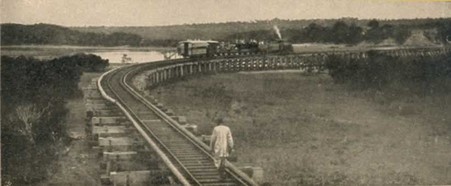
The Uganda railway, a huge feat of engineering, had been completed just three years before Chapman’s visit. This now allowed trains to travel the 800km (500 miles) between Mombasa on the east coast and the African Great Lakes. The British now had the means to extend their influence right across East Africa, disrupting the slave routes and simultaneously opening up the land to the missionaries, settlers, tourists and game hunters that were now pouring in. It was in this rapidly changing environment that Chapman strove to find the longed for wilderness that had eluded him in Transvaal, and test his skills as a sportsman, before that land too vanished under the settler’s plough.

Figure 1. An undated photo of the Uganda Railway near Mombasa (http:/www.jaduland.de, Public domain via Wikimedia Commons)
Continue reading