Conservation Matters in Wales – Christmas Conference 2023

Written by Sebastien Lherondel-Davies, 2nd year BSc student, Swansea University, whilst on placement at National Museum Cardiff and Swansea Museum.

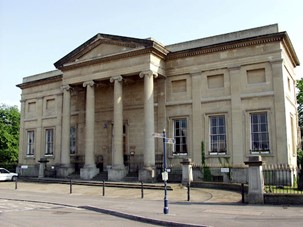
On Wednesday 13th December 2023, conservators and curators from all over Wales gathered in Swansea for the first in-person Conservation Matters Wales Christmas Conference since the pandemic. Conservation Matters Wales is a collaboration between Amgueddfa Cymru – National Museum Wales, the Federation of Museums and Art Galleries in Wales, and Cardiff University. The event, hosted by the delightful Swansea Museum, was an opportunity for professionals in the museum collections conservation sector to come together and share the wide range of projects they have been working on. The conference provided us with the chance to present our research project on a historic Lepidoptera collection. 

Swansea Museum
Continue reading

NatSCA Digital Digest – September 2024

Compiled by Olivia Beavers, Assistant Curator of Vertebrate Zoology at World Museum, National Museums Liverpool.

Welcome to the September edition of NatSCA Digital Digest.

A monthly blog series featuring the latest on where to go, what to see and do in the natural history sector including jobs, exhibitions, conferences, and training opportunities. We are keen to hear from you if you have any top tips and recommendations for our next Digest, please drop an email to blog@natsca.org.

Sector News

GCG 51st Winter Seminar and AGM – Call for Abstracts Now Open

The Geological Curators Group have announced the details for their Winter Seminar Reciprocal Relationships: how can partnerships help us and our collections develop?  and AGM taking place at Oxford University Museum of Natural History 11 – 13th November 2024. The dates include an evening icebreaker, presentations, workshops, AGM, conference dinner and a field trip.

The deadline for abstracts is October 14th 2024. Please follow the link for further details: https://www.geocurator.org/events/180-agm51 .

Continue reading

Rediscovering the Hancock Coelacanth

Written by Dan Gordon, Keeper of Biology, The Great North Museum: Hancock.

For as long as I’d worked at the museum, there’d always been a Coelacanth. People referred to it in passing, pointing out the large tub of orange tinted spirit where it lurked. I’d always rather taken it for granted; an interesting but rather mundane specimen, and I’d never been curious enough to fish it out of the murky liquid and examine it.

That is, until 2018, when staff at the National Maritime Museum Cornwall got in touch about an exhibition they were putting together called Monsters of the Deep. They’d asked us about Coelacanth fossils and I mentioned the Coelacanth in the fish collection, which was greeted with some surprise. A real one…Would we consider a loan? And as I thought about this, I came to realise that I knew very little about the Coelacanth at all.

There was next to nothing in the catalogue about it, so I decided, firstly, to get a better look. This was easier said than done. The Coelacanth is over a metre long and weighed over 20kg, sitting in a container of tea coloured alcohol bigger than a bathtub. Reaching in, I ran my gloved fingers over its flanks, which had the texture of coarse sandpaper. Lifting it out was like wrestling an alligator, but eventually it emerged, a gaping mouth with small sharp teeth, a ragged tear through the flesh of its head, and the huge eyes of a deep-water dweller.

Continue reading

Snagged Setae 2, The Sequel: Packing Materials After 14 Years in Fluid Storage

By Lu Allington-Jones (Senior Conservator), Wren Montgomery (FTIR Specialist) and Emma Sherlock (Senior Curator), The Natural History Museum, London UK

Many years ago, we undertook some research into a suitable replacement for cotton wool as bungs for vials holding small fluid-stored specimens. In 2008 we placed samples of Parafilm MTM, white Plastazote® LD45 and colourless HDPE (high-density polypropylene) lids in 10% formalin, 100% ethanol, and 80% IMS (Industrial Methylated Spirit, aka Industrial Denatured Alcohol) and allowed them to steep for 3 years. We undertook visual inspections, pH tests and FTIR analysis and concluded that Parafilm MTM was an unsuitable replacement, but that the other materials had undergone no change and had caused no contamination of the host fluids.  

We decided to revisit the samples after an additional 11 years on a south-west facing sunny lab windowsill, for a total of over 14 years of storage in the various fluids. 

The state of ParafilmTM after only 3 years: particles are visible to the naked eye in the 100% ethanol on the left. The ParafilmTM in the formalin on the right showed a thinning and perforation at its edges. ©The Trustees of the Natural History Museum
Continue reading