How to Find Ectoparasites on Study Skins and Explore Natural Heritage Shared between Colonial and Provincial Museums

Written by John-James Wilson, Lead Curator of Zoology at World Museum, National Museums Liverpool & Jing Jing Khoo, Postdoctoral Research Associate at Institute of Infection, Veterinary & Ecological Sciences, University of Liverpool.

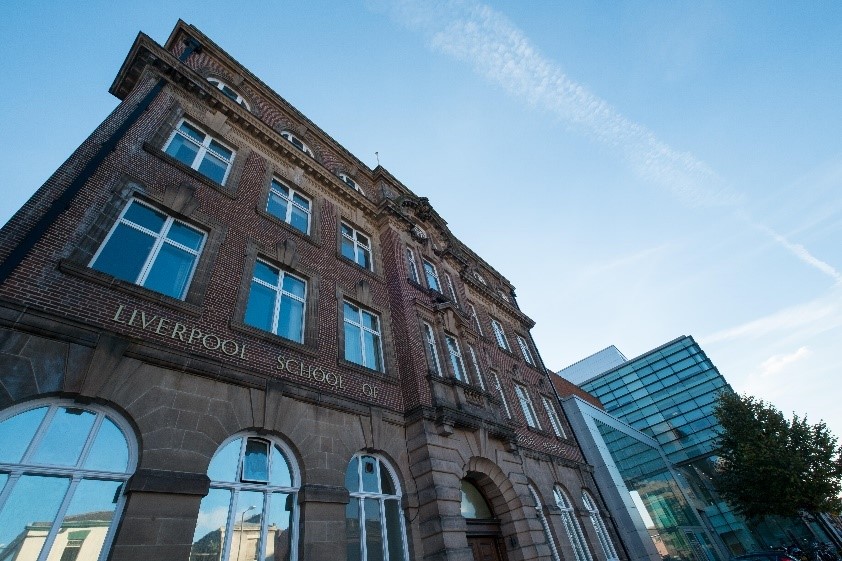
Selangor Museum was established in Kuala Lumpur by British colonial officials in 1887. A purpose-built museum building, opened in 1907, was designed by Liverpool-born architect Arthur Hubback, but there is a stronger link between Selangor Museum and Liverpool.

Selangor Museum’s early director Herbert Robinson was also born in Liverpool and had worked as an assistant at the Liverpool Museums, now known as World Museum. Selangor Museum wasn’t a large institution, with just three British curators and three museum hunters from Sarawak, one being Charles Ulok. But through the museum’s work, a European knowledge system was imposed onto the local wildlife.

The museum’s work included extensive hunting on the hill and mountains and islands of Malaysia, Thailand and Indonesia. The museum soon ran out of storage space in Kuala Lumpur and specimens were routinely sent to England. Hundreds of specimens were sent to Robinson’s former workplace, World Museum, in 1914.

https://archive.org/embed/from-selangor-museum-to-liverpool

Click link above for 3-minute video about Selangor Museum and its connection to Liverpool made for the Green Representatives Network at Monash University in Selangor.

Continue reading

William Thomas March, a Jamaican Collector, Naturalist and Early Pioneer of Biological Data Recording in Jamaica.

Written by Olivia Beavers, Assistant Curator of Vertebrate Zoology at World Museum, National Museums Liverpool.

Figure 1. William Thomas March’s bird skins stored in the Vertebrate Zoology collection at World Museum, National Museums Liverpool © National Museums Liverpool (World Museum: NML-VZ T1134, NML-VZ T760, NML-VZ T5652, NML-VZ 1989.66.1279, NML-VZ T19525, NML-VZ T12817, NML-VZ T9981, NML-VZ T1128, NML-VZ T14037, NML-VZ T14031/ Olivia Beavers)

August celebrates Jamaican independence, so what better way to celebrate than to talk about a Jamaican collector from the 1800s whose contributions to understanding Jamaican biodiversity are not yet fully recognised. 

I recently finished the project stage of the Associateship of the Museum Association (AMA). My project focused on helping to tell untold stories of the collections held at World Museum. 

Through trial and error, I started to look through World Museum’s database and Google the names of collectors to see if we had collectors who had black or brown heritage – with a focus on collectors with specimens from the Caribbean. I ended up finding William Thomas March. Only two previous papers were written about him, both by Catherine Levy (Managing Director of Windsor Research Centre, former President of the Caribbean Birds, and of BirdLife Jamaica). 

To coincide with the research and my project, I created a new dataset titled ‘Bird skins from Jamaica in the collections of World Museums Liverpool’ – now available on the Global Biodiversity Information Facility (GBIF) website. It includes specimens from William Thomas March.

Continue reading

Wikipedia, Museum Volunteers And The New Normal

By John-James Wilson, Curator of Vertebrate Zoology, World Museum, National Museums Liverpool.

Like most museums across the country, World Museum suspended its volunteer programmes shortly before the first national lockdown in March 2020. This was meant to be a short-term measure but with curators continuing to work hybridly our volunteers haven’t yet returned. Organisations like Volunteer Scotland have advised volunteers to consider if and how they can work remotely.

While some museums had existing remote volunteering activities (see great examples here and here), which saw increased participation, World Museum’s vertebrate zoology collection didn’t. An additional challenge for us has been that remote access to our collections database is limited to staff with a VDI. With the pandemic still with us for some time to come (Chris Whitty has said it will be 5 years) we have started exploring ways to engage both new and long-serving volunteers with the collection online.

During lockdown, Auckland Museum published a Wikimedia strategy citing the provocative 2018 talk by Adam Moriarty which championed the importance of collection information featuring, not solely on museum’s own webpages, but in places like GBIF and Wikipedia. This reinforced our view that we need to improve the collections’ presence in Wikipedia. Wikipedia articles are created by volunteers and can be edited by anyone with a standard web browser, potentially providing a valuable activity for remote volunteering.

Continue reading

Stepping Into The Genomics Age: A DNA Bank at World Museum, National Museums Liverpool.

By John-James Wilson, Curator of Vertebrate Zoology, World Museum, National Museums Liverpool.

From World Museum’s founding collection of study skins and taxidermy mounts bequeathed by the 13th Earl of Derby to the spirit-preserved amphibians collected by curator Malcolm Largen in the 1980s, World Museum’s Vertebrate Zoology collection has continued to expand and reflect the state-of-the-art in specimen preparation and storage.

As ethics around the sacrifice of animals for science have modernised, ‘traditional’ specimen types are no longer being prepared at the same rates, and growth of the collection has slowed abruptly. At the same time usage of the collection has diversified, including increases in requests for destructive sampling. In particular, the removal of small tissue samples, usually bird toe pad scrapes, is regularly requested for use in DNA extraction which produces a ‘pure’ DNA extract that can be used in a number of genomic investigations.

Continue reading

Time To Figure Out Where Specimens Are Really From

By John-James Wilson, Curator of Vertebrate Zoology, World Museum, National Museums Liverpool.

In 2020 the Vertebrate Zoology collection at World Museum took a step towards ‘FAIR’ data sharing and began adding datasets of specimen records to the Global Biodiversity Information Facility (GBIF). There is always a trade-off between releasing datasets as soon as possible and ensuring they contain the most precise and reliable data possible. We’ve taken the view that through releasing these datasets, and encouraging their use, a positive feedback loop will incrementally improve data quality. That said, due to restrictions on other activities, one side effect of the Covid pandemic has been a little more time for in-house provenance research.

Banded Broadbill – Eurylaimus javanicus Horsfield, 1821 [accession number: NML 31.12.14.56a]. Collected at ‘Kao Nawng’, Surat Thani, Thailand on 1913-07-21 © National Museums Liverpool (World Museum).

One collection I’ve focussed on during this time is that of prolific collecting duo, Herbert Christopher Robinson and Cecil Boden Kloss, which came to World Museum from the Federated Malay States Museums (FMSM) in 1914. Robinson, a former assistant at the Liverpool Museums, directed the FMSM from 1908 until 1926; Boden Kloss was the colleague ‘to whom he was much attached’. It seems that the FMSM specimens arrived in Liverpool without any additional documentation, so the collection locality information in our database (at National Museums Liverpool we use Mimsy XG) must have originally been transcribed from specimen labels with ‘place collected’ presumed to be Malaysia. Continue reading