NatSCA Digital Digest – January 2025

Compiled by Milo Phillips, Digitisation Co-ordinator at the Royal Botanic Garden Edinburgh.

Welcome to the January edition of NatSCA Digital Digest.

Happy New Year everyone, and welcome to the first Digital Digest of 2025.

Digital Digest is a monthly blog series featuring the latest on where to go, what to see and do in the natural history sector including jobs, exhibitions, conferences, and training opportunities. We are keen to hear from you if you have any top tips and recommendations for our next Digest, please drop an email to blog@natsca.org.

Sector News

First, we have a few conference deadline reminders for the start of the year:

NatSCA Conference & AGM 2025

The 2025 NatSCA conference Call for Papers is closing soon! The deadline to submit is 5pm GMT Friday 17th January. Get in touch with the committee with any questions (conference@natsca.org). We look forward to reading your submissions!

Making a Difference: Showing the Positive Impact of Natural History Collections

The Annual Conference & AGM of the Natural Sciences Collections Association will be held on Thursday 8th and Friday 9th May 2025 at The University of Manchester, Manchester Museum.

Natural history collections are involved in a huge range of work that has enormous positive impacts on people and the planet – this is a conference to share these stories. The #NatSCA2025 conference invites proposals for presentations looking at impact, how our work is making a difference, how we measure it, how we show success, and how we advocate for collections.

We seek ideas from the natural history collections community, educators, collaborators, and beyond. We are interested in practical lessons, unique solutions, new collaborations, and to show what has and hasn’t worked. We are particularly looking for presentations that share the differences museums are making in:

  • facing global challenges such as the biodiversity and climate crises, and environmental issues
  • improving people’s lives
  • changing laws
  • social justice, restitution, and decolonisation
Continue reading

Collecting Coventry, a Temporary Exhibition at the Herbert Art Gallery & Museum

Written by Ali Wells, Curator (Herbert Collections), Herbert Art Gallery & Museum.

This blog post details a temporary exhibition at the Herbert, how it was presented, how decolonisation and feedback were integrated into the show. This is an overview, please get in touch if you would like more information on any aspect of the exhibition.

In May 2024 the Herbert launched its latest major temporary exhibition, Collecting Coventry. The display focuses on the history of collecting in Coventry museums and showcasing the breadth of the collections.

The main aims were to

  • Present the Herbert’s collections after several years of external or predominately loan-based temporary exhibitions.
  • Get out visitor favourites like the Lowry and display stored objects for the first time.
  • Look like a museum store.
  • Give visitors the opportunity to comment on aspects of museum work and ask questions relating to collections and displays. For example, Collections Development policy, display of human remains, use of technology, future exhibitions, representation.
Continue reading

Make Plastic History

Written by Glenn Roadley, Curator of Natural Science, The Potteries Museum & Art Gallery, Stoke-on-Trent.

In May 2023, Professor Claire Gwinnett reached out to me with an opportunity to host a public event at The Potteries Museum & Art Gallery (PMAG). Claire, Professor of Forensic and Environmental Science at Staffordshire University, is an expert in the study of plastic pollution and has worked with the museum before to lead activities at our various science events, so immediately thought of us when seeing the call for applications for the British Academy’s SHAPE Involve and Engage grants. The programme offered grants of up to £8,000 for innovative engagement activities which highlight humanities research, with partnerships between academic and cultural institutions eligible to apply. Claire and I put our heads together and came up with a plan for a day of family-friendly activities aimed at raising awareness of plastic pollution and the research being undertaken to tackle it. At the centre of these activities would be a workshop run by Dan Lewis, an artist who uses plastic fragments found on the beach to create works of art.

Continue reading

Bryozoans on the Move: Trials and Challenges of Packing Collections.

Written by Abbie Herdman, Curator of Invertebrates (Non-Insects), Natural History Museum, London.

The Natural History Museum, London (NHM) is currently undertaking one of the biggest collections moves in history, around 38 million specimens total (with 28 million moving off site). A diverse range of collections are expected to move to the new site in Reading including fossils, wet, dry, taxidermy and osteological specimens. This blog will focus on some examples and challenges faced when preparing the bryozoan collections to move.

Bryozoans are an astounding yet little known phylum of predominantly colonial aquatic invertebrate animals, found in both freshwater and marine ecosystems. Known as the ‘moss animals’, for a long time, they were thought to be plants which still confounds the record of this group in aquatic collections due to their growth patterns encrusting on rocks, as seaweed-like and sometimes as gelatinous blobs. There are bryozoan reefs which support diverse marine species, they are recognised bioindicators in aquatic habitats and are ‘blue carbon’ stores (Porter, J, S. et al., 2020).

Continue reading

Creating a New Diorama at the Booth Museum of Natural History

Editors note: This is the second of two concurrent blogs about the new diorama at the Booth Museum. Click here to read the first and find out more about how the diorama was created.

Written by Su Hepburn, Head of Learning & Engagement, Brighton & Hove Museums.

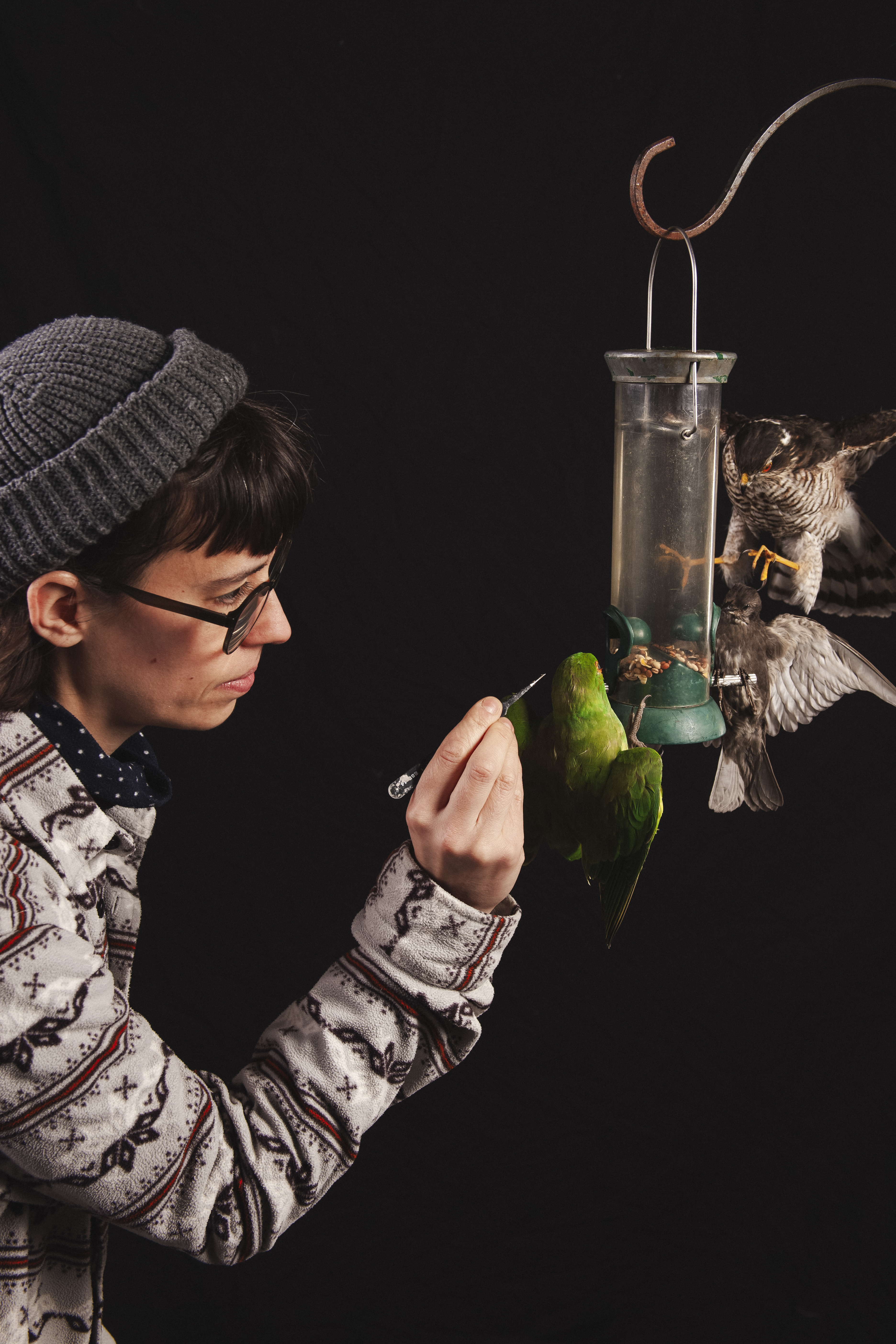
Jazmine Miles-Long, Taxidermist © Laurence Dean Photography

Why a new diorama?

In the autumn of 2022, we started our ‘Discover our Dioramas’ project at the Booth Museum of Natural History, part of Brighton & Hove Museums. Funded by an Esmée Fairbairn Collections Fund of £50,000 we set about building the first natural history diorama at the museum in 92 years. This was a significant project for a museum whose Victorian creator Edward Booth had lined every wall with dioramas of birds. Dioramas are an ideal way of storytelling. They are visual and can get a lot of key information to audiences without the need for words.

Alongside this we were also given £3000 from Rampion Windfarms to research and display more information about people especially women involved in the museum’s history. 

These projects gave us the time and space to be playful and to make friends. To impact on our audiences, our staff, our collections, and our future practices. It has brought joy to the museum, visitor and staff alike. 

Continue reading