Natural Connections

This is a modified version of two articles originally published on the Gallery Oldham webpage by Patricia Francis, Natural History Curator, Gallery Oldham. May & June 2020.
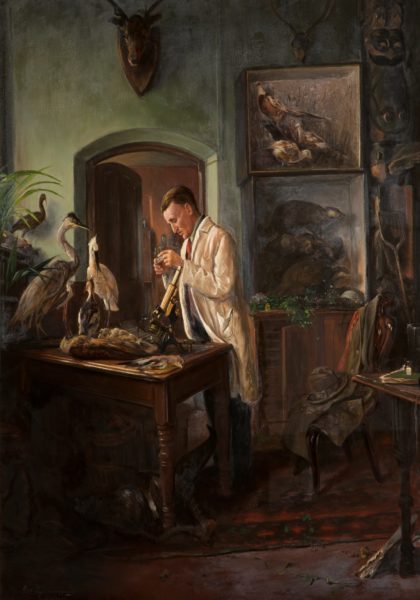
Fred Stubbs shown in The Naturalist by George Henry Wimpenny

This painting reveals a hidden Oldham story. It dates from the 1920s and has always been a great favourite with our visitors. Several years ago it inspired me to look more deeply and investigate, the person, the place and the specimens.

The person is Fredrick J. Stubbs

Fred was born in Liverpool in 1878 and moved with his family to Oldham where he became apprenticed to an upholsterer. He joined the Oldham Microscopical and Natural History Society, his first love being birds. Fred volunteered at the Oldham Municipal Library, Art Gallery and Museum which was long connected with the Natural History Society. When a vacancy arose at Stepney Museum’s Nature Study Centre, he was successful in getting the job and in 1909 left Oldham for London. Completing the booklet, ‘The Birds of Oldham’ in 1910.

Returning to Oldham in April 1919 he became the Deputy Librarian and Curator at the Library and Museum. He became president of the Yorkshire Natural History Society; was a member of the Beautiful Oldham Society and help found the Oldham Society of Artists. He worked at the Library and Museum until his death caused by pneumonia in 1932.

Continue reading

‘Tahemaa Transformed’ The Conservation of the Mummy Coffin at The Bournemouth Natural Science Society.

Written by Bethany Palumbo, ACR, Founder and Owner of Palumbo Conservation Services on behalf of the Bournemouth Natural Science Society.

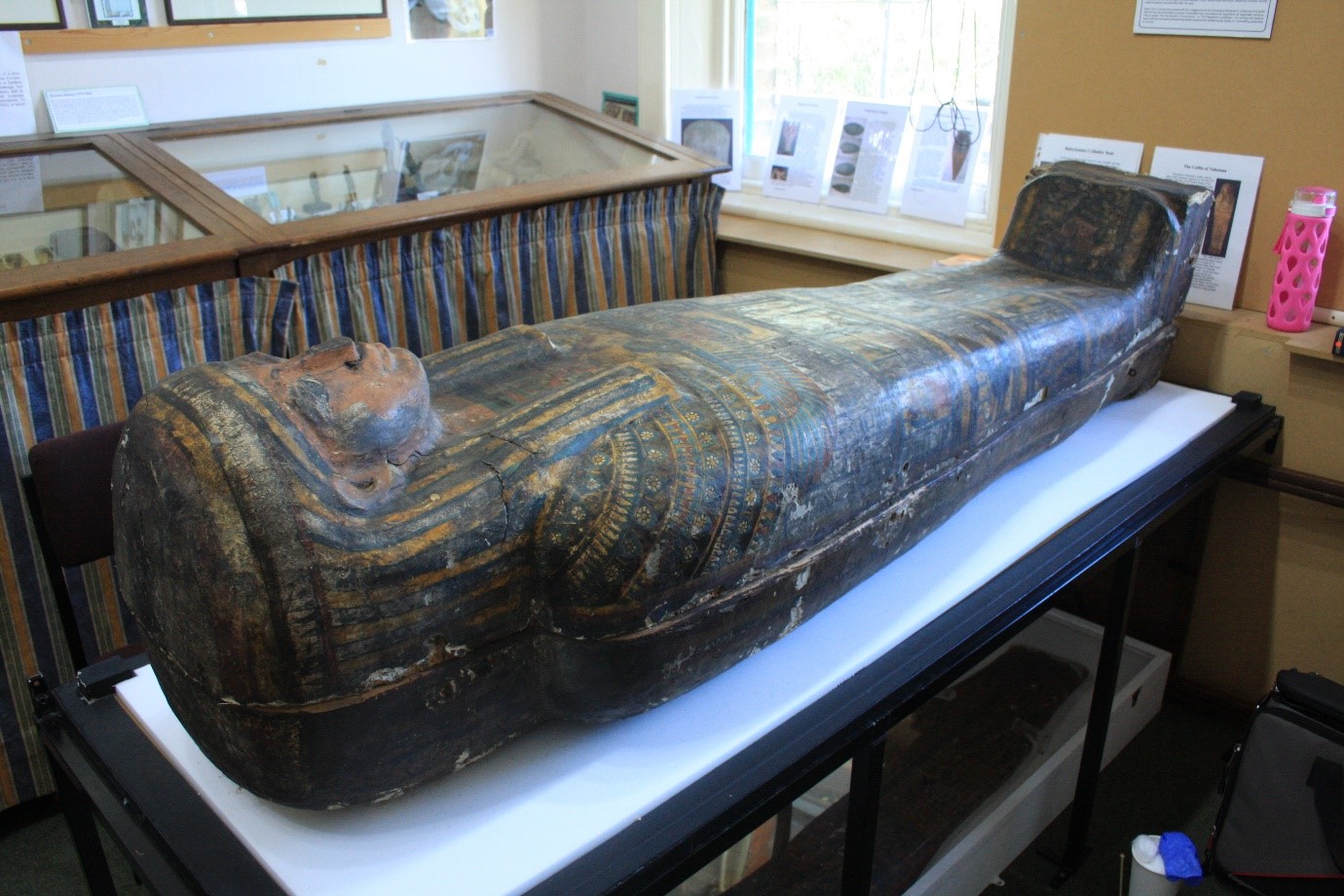
Tahemaa has been a resident of the Bournemouth Natural Science Society since 1922, when she was donated from the Salisbury museum (fig. 1). New research indicates that she arrived in the UK in 1823 from the ancient city of Thebes, now known as Luxor, on the river Nile. Her coffin is dated from 700 BC making her approximately 2700 years old. We know from the hieroglyphics on the side of her coffin that she was the daughter of a Hor a high priest of Montu, the Flacon-God of War. Other than this we know very little about her and her life in Egypt.

Figure 1. Tahemaa the Mummy at the Bournemouth Natural Science Society.

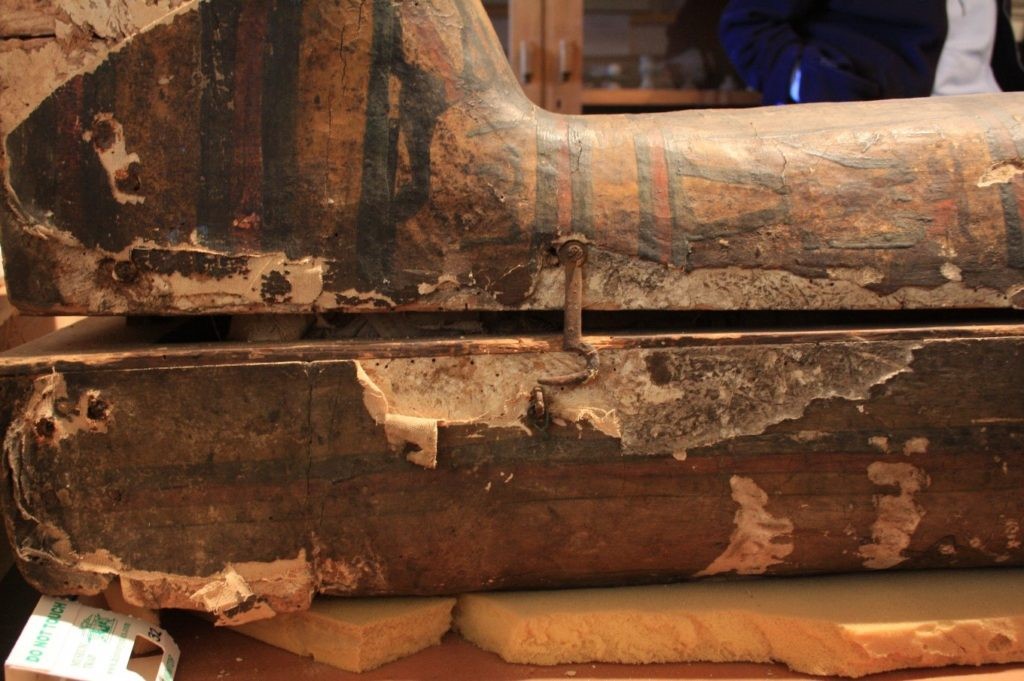
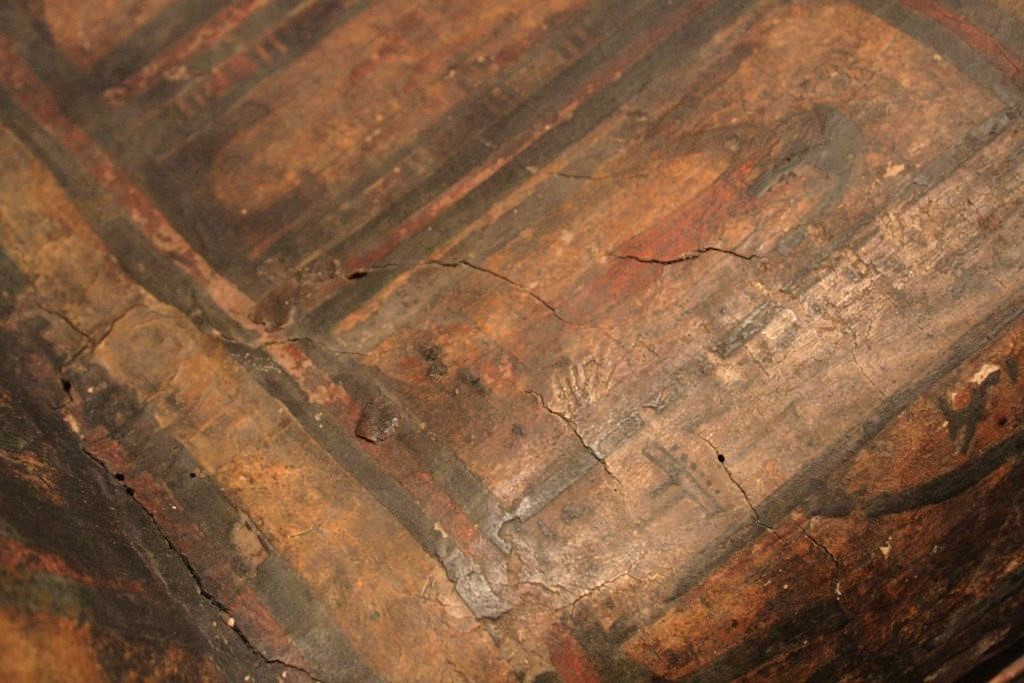
Tahemaa has been at the Society for nearly 100 years but she has spent most of this time locked away from public view. In 1993, the Society decided to put her on permanent display in the Egyptology exhibition. Since then she has been seen by thousands of admirers, however due to her age and fragile condition, she is in need of urgent conservation treatment. Hundreds of years in an unstable environment have caused significant damage to the coffin. The fluctuations have caused the wood, plaster layers and paint to crack and flake. The layers of the coffin have even separated in some areas, lifting away from the wooden frame (fig 2). Many years without a display case has also resulted in a thick layer of dark, engrained dirt concealing the original colours of her decorative paintwork (fig 3).

Figure 2. Layers of the coffin structure peeling away.

Figure 3. Original colours are darkened with the build-up of surface dirt.

Continue reading

Wild about Portsmouth – Life in Lockdown

Written by Christine Taylor (Curator of Natural History), Bradley Foster (Natural History Collections Assistant), Portsmouth Museums.

Until lockdown, the Wild about Portsmouth project, funded by the National Lottery Heritage Fund, had been a whirlwind of activity, working with volunteers to re-house, reorganise and catalogue the natural history collections, developing school sessions, putting on and attending events as well as setting up displays.

In the four weeks prior to lockdown, the curator, volunteers and the newly appointed (14 February 2020) Natural History Collections Assistant installed an exhibition, ‘D is for Dodo, E is for Extinct’; attended a work placement fair at the University of Portsmouth, a family fun day at Dinosaur Isle, a STEM fair and the HBIC Hampshire Recorders Forum. We also created a Pop-Up Museum one-day event and ran a trial school session on rocks and fossils at Cumberland House Natural History Museum.

One of the online activities created for Cumberland House Natural History Museum website © Portsmouth Museum

Continue reading

#CyclaPeople In Lockdown

Written by Claire Smith, volunteer at the University of Reading Herbarium.

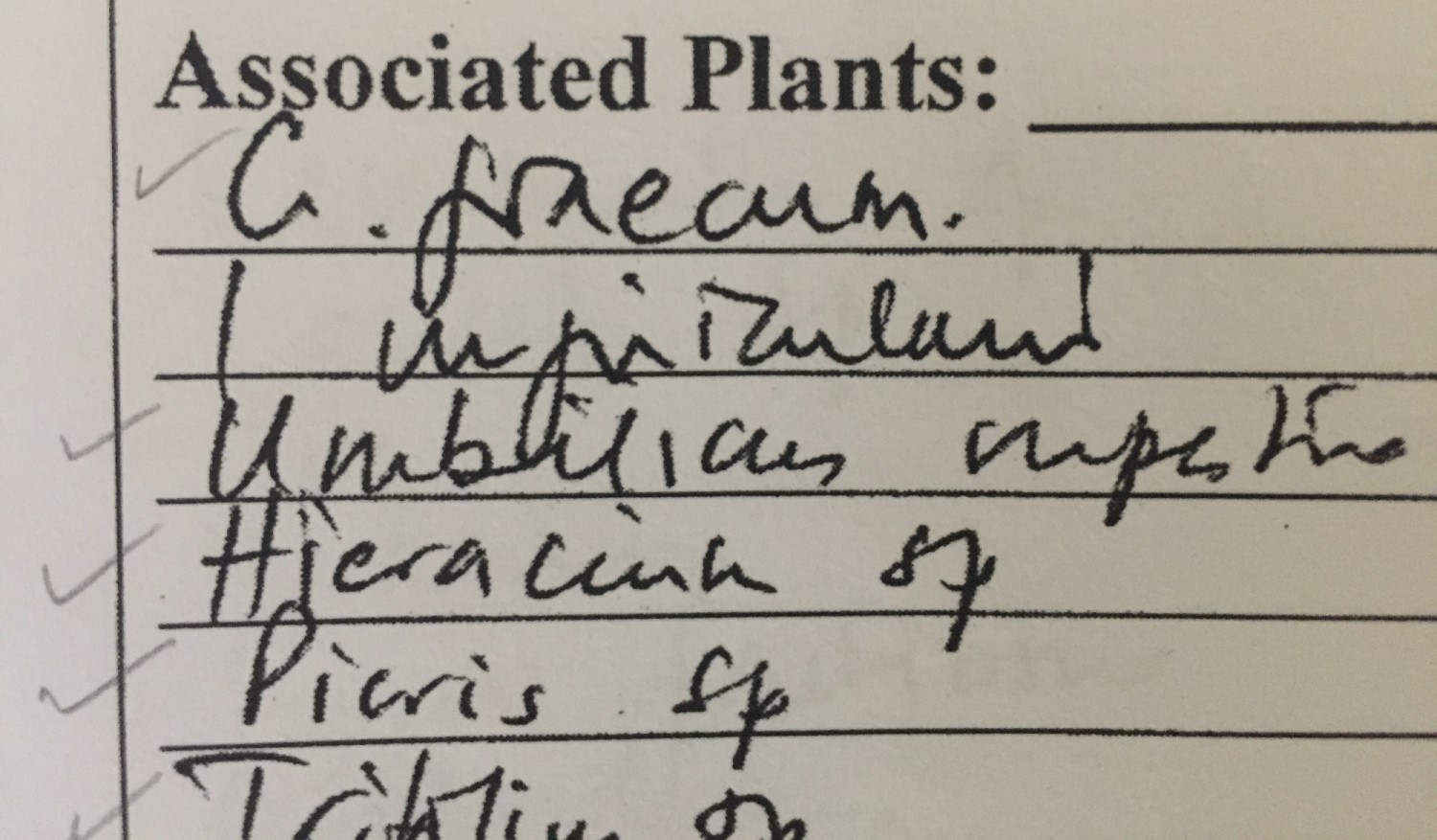
I don’t imagine that there’s an abundance of field work taking place during the unprecedented pandemic situation that we find ourselves in at the moment. However, if there was one piece of advice that I could offer to anybody taking down field notes, it would be to develop neat handwriting! Either that, or to transcribe your notes into digital form as soon as possible. Otherwise, some poor soul – who may not even be a botanist – may find themselves, a mere thirty-three years after your expedition, staring at a page of unfamiliar place names or Latin plant names, with confusion.

Some field notes are more legible than others…
© Claire Smith, 2019

That said, would anybody care to take a guess at what’s been happening with the Cyclamen Society collection during lockdown? Yes, I’m taking the opportunity to get to grips with as much of the data entry as I possibly can. As with so many other collections around the world, volunteers haven’t been into the Herbarium since the middle of March. This means that our usual tasks of mounting and photographing the collected cyclamen specimens are out of bounds. Aside from the physical though, there is always plenty of digital work to do.

Continue reading

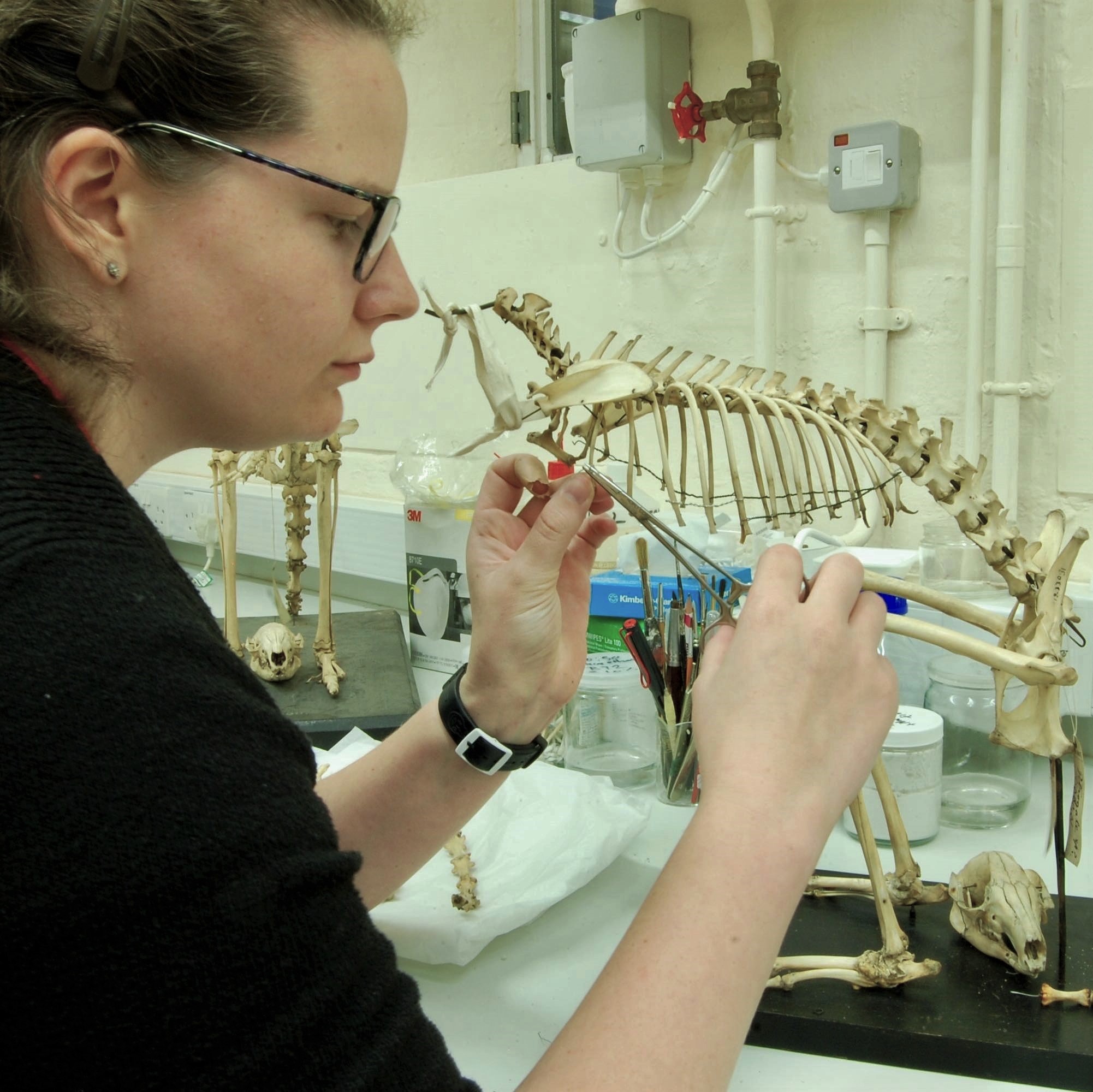
Playing with Wire: The Conservation of a Wallaby Skeleton

Written by Caitlin Jenkins, MSc Conservation Practice student, Cardiff University and volunteer at National Museum Cardiff.

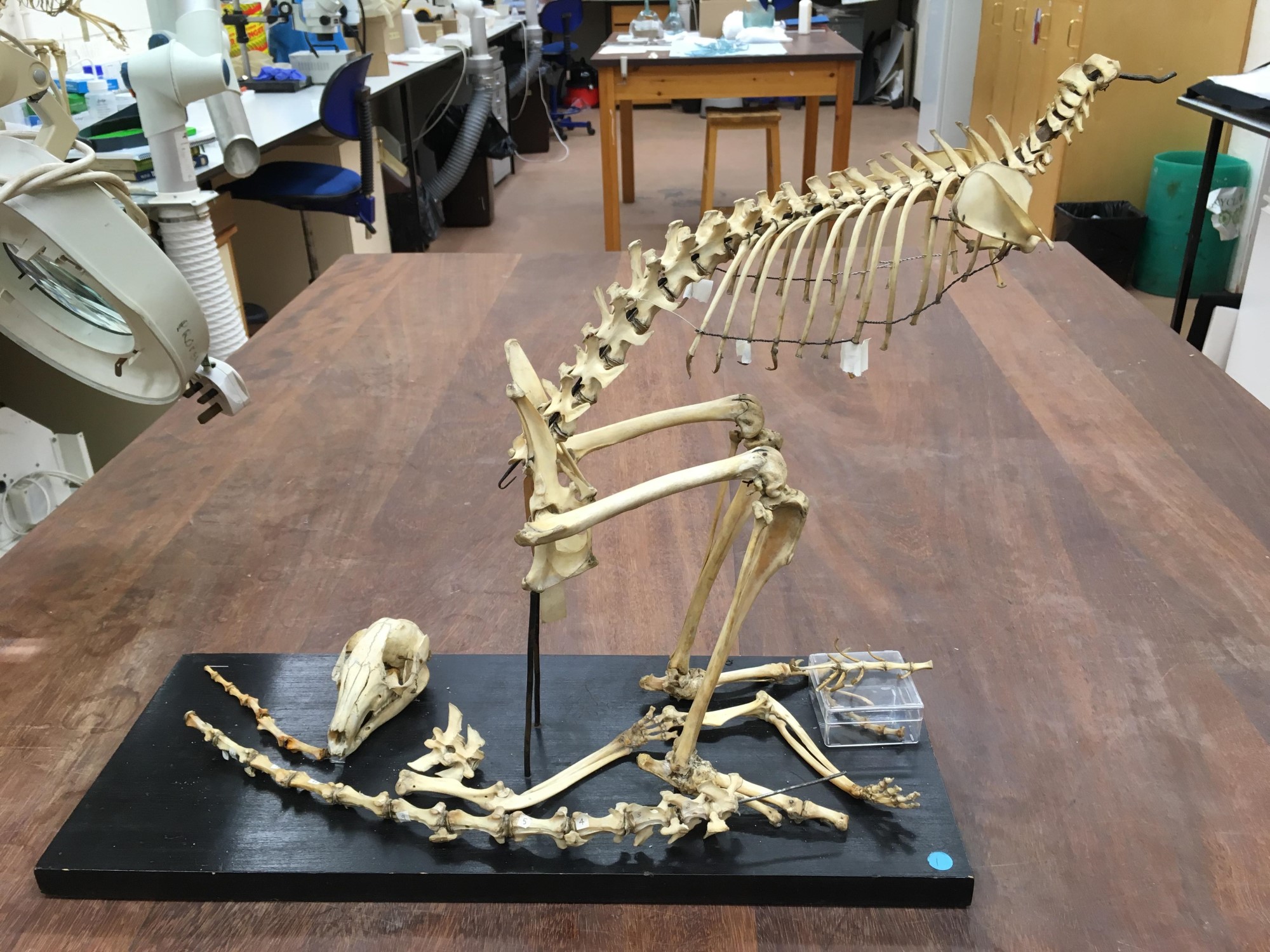
While volunteering with natural history conservator Julian Carter at National Museum Cardiff, I was given the opportunity to work on a wallaby skeleton. This was the first skeleton of any kind I had conserved. Although it initially appeared to be in relatively good condition, there were lots of small areas needing attention that made it a surprisingly complicated job.

A bony jigsaw…

The first step was to remove dirt that had built up on the bones over the years. This was cleaned away using cotton swabs and small interdental brushes dipped in a sodium bicarbonate solution; care was taken to not over-wet the bones as this can damage them.

One of the main conservation tasks was to re-wire a portion of ribcage that was hanging loose and distorting the alignment of the left side. In keeping with the pre-existing work, this required me to stabilise the free end of each rib using a single piece of wire twisted at intervals. This provided support and appropriate spacing of the bones. I had previously made jewellery using a similar technique, so my experience came in handy during the fiddliest parts!

Beginning the ribcage wiring

Continue reading