A Remarkable Collection Of Fossil Birds From The Eocene

Written by Andrew Kitchener, Principal Curator of Vertebrates, National Museums Scotland.

In November 2021 National Museums Scotland acquired a remarkable collection of fossil bird skeletons dating from the Eocene, approximately 54.6-55 million years ago. The story of how this collection ended up in Edinburgh is a very long one and began more than 25 years ago. 

Please can you show me your collection of Eocene birds?” This was the question that greeted me when I first met a Mr Michael Daniels more than 25 years ago. Visiting the museum with his wife Pam and his daughter Caroline, who lived in Edinburgh, this meeting would be the beginning of a long friendship and long-term correspondence, which ended sadly in 2021. My answer was “Well I would love to show you our collection of Eocene birds, but we don’t have any.” Michael proceeded to tell me about his remarkable collection of several hundred skeletons and part skeletons that he had discovered in nodules of the London Clay, which had eroded out of the cliffs at Walton-on-the-Naze in Essex. In later years I visited Michael and Pam at their home and got to see the collection in its countless drawers and boxes in his study. I was astonished at the amazing variety of specimens of all shapes and sizes.  Many of the bones were minuscule, requiring great patience and skill to extract from the substrate.
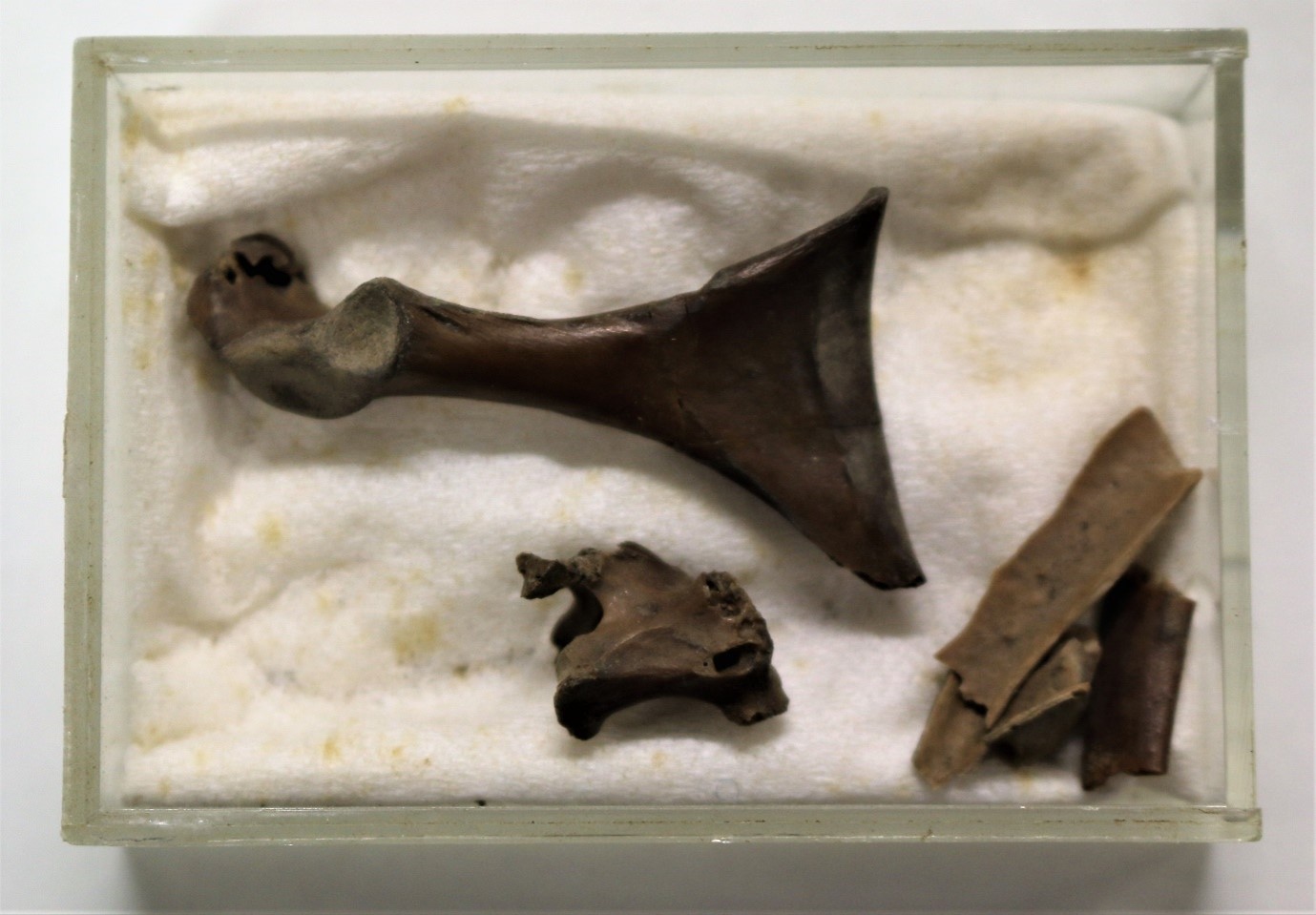
Some of the many hundreds of fossil bird bones from Walton-on-the-Naze © National Museums Scotland

Michael Daniels was a passionate self-taught palaeontologist, who visited various fossil sites outside London and further afield in southern England from his home at Loughton near Epping Forest. He developed a more specialised interest in the Tertiary Eocene London Clay in the early 1970s, having been a founder member of the Tertiary Research Group in 1969. On retirement in 1985 he moved with his wife to Holland-on-Sea, so that he could pursue this interest at Walton-on-the-Naze.

Continue reading
Reflecting on a Collections Move During the Pandemic, the Royal Horticultural Society Herbarium one year on.

Written by Clare Booth-Downs, Herbarium Curator, Royal Horticultural Society Herbarium.

Moving On Up, To Move On Out

The Royal Horticultural Society Herbarium (RHS), which holds approximately 150,000 specimens and associated ancillary collections, had outgrown its original storage space.  The building of a new dedicated science and collections centre, RHS Hilltop, which opened in late June 2021, provided a solution to this. Hilltop, the home of gardening science, includes a larger, purpose built facility, the 1851 Royal Commission Herbarium.

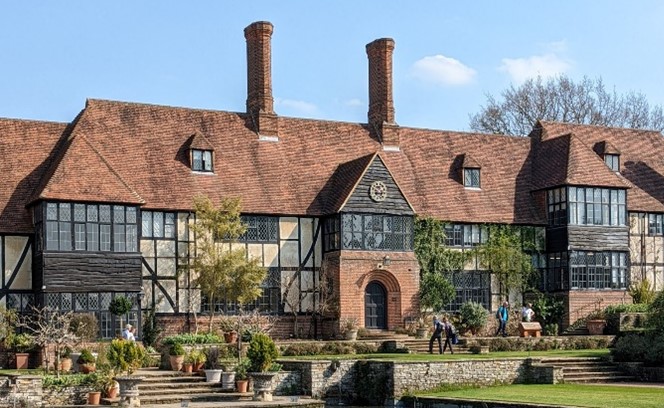
The Laboratory, RHS Wisley, Surrey. Image by Clare Booth-Downs. © Royal Horticultural Society.
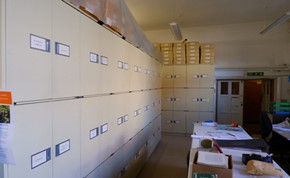
Interior of the original RHS Herbarium showing the overspill on top of the cabinets. Image: Yvette Harvey.

Increasing the capacity of the herbarium was vital as the collection is expected to expand at a fast pace over the next few years.  With a full time plant collector now in place, the RHS’ ultimate aim is to hold a specimen of every species and cultivar of garden plant growing in the U.K. It is estimated this will be a collection numbering 400,000 specimens by 2050.

This repository will act as a reference point for gardeners, breeders, students and researchers as well as for ‘non-traditional’ herbarium visitors, for example, artists and designers looking for inspiration for fabrics and jewellery.  This is alongside one of the Society’s own research foci, as described by Professor Alistair Griffiths, RHS Director of Science & Collections, “In the UK, we’ve got a massive diversity of cultivated plants, originating from around the world, and all have potential for nature-based solutions.  We’re going to work towards a database of the garden plants and their uses from an environmental, and health and wellbeing perspective”.

Continue reading

NatSCA Digital Digest – July 2022

Compiled by Olivia Beavers, Assistant Curator of Vertebrate Zoology at World Museum, National Museums Liverpool.

Welcome to the July edition of NatSCA Digital Digest.

A monthly blog series featuring the latest on where to go, what to see and do in the natural history sector including jobs, exhibitions, conferences and training opportunities. If you have any top tips and recommendations for our next Digest please drop an email to blog@natsca.org.

Sector News

SPNHC / BHL / NatSCA Conference 2022

Just over a month ago the SPNHC/ BHL / NatSCA conference was underway. As my first SPNHC and first NatSCA conferences, it was a great introduction into the sector and I enjoyed meeting all of the NatSCA members that were able to attend the event! One of the highlights were the National Museums Scotland store tours! If you missed out, you can get a glimpse of the natural history collections here.

Yorkshire Natural History Museum

The Yorkshire Natural History Museum is a new, small public museum opening in Sheffield – Saturday August 13th 2022! The museum includes geology, palaeontology and botany collections with a significant research collection of fossils from the Yorkshire Lias. Their website is currently under construction but you can check out their twitter account @YorkshireNHM.

Harnessing the Power of Natural Science Collections – Community Event

This event is currently underway, but if you’re quick you might catch the last half! The event is open to all UK natural science collection holders, interested in attending and learning more about the scoping work and the next steps in the plans for a national digitisation programme. Held via Microsoft Teams, July 14th, between 10:00-12:00. Please follow this link to access the meeting. 

Continue reading

Unravelling the Golden Thread: The Silk and Cocoon Collection at the Manchester Museum

Written by Piotr Korpak, Visitor Team Assistant, Manchester Museum, The University of Manchester.

Last August saw the Manchester Museum entering the final phase of its capital project called hello future when it closed to the public for over a year, until February 2023. Major redevelopments like this tend to be quite stressful for most institutions, but also bring a lot of excitement and many valuable opportunities for individuals. Being closed to the public meant no visitors and so I was able to support work in other departments. Always interested in natural history collections, I welcomed the chance to work with the Curatorial Team in the Entomology Department with true delight.

The Museum’s arthropod collections are amongst the top three in the UK, with over 3 million specimens, out of which about 2.5 million are insects (Logunov and Merriman, 2012). As is the case with many museums, the collections are vast, the staff numbers small, and it can be difficult for curators to catch up with the backlog of past acquisitions and historic materials. No doubt one could find boxes, cabinets, and all other imaginable storage units full of specimens still awaiting their official accessioning, cataloguing, research, and digitisation in any museum.

Continue reading

Vertebrate Collections of the Institute of Biology, UNAM, Move to the New Building of the National Biodiversity Pavilion in Mexico City.

Written by Fernando A. Cervantes, Professor and Curator of Mammals, Department of Zoology, Instituto de Biología, UNAM.

Mexico is a megadiverse country and has 10% of the world’s species. The Institute of Biology of the National Autonomous University of Mexico (IBUNAM) houses the National Biological Collections (NBC), which contain the largest and most important representation of museum specimens of Mexican biodiversity in Mexico. These include 10 zoological collections, a herbarium, and a botanical garden (Zambrano and Reynoso, 2003). Among the highlights are the National Insect Collection (CNIN), with more than 3,000,000 specimens, the National Herbarium (MEXU), with more than 1,500,000 specimens, and the living collections of the Botanical Garden. They all collaborate in the elaboration of the national biological inventory and their specimens provide knowledge on the presence, distribution, and evolution of biological diversity (Cervantes et al. 2016).

   The NBC are located at the IBUNAM facilities in the Ciudad Universitaria campus, south of Mexico City, Mexico, where they have been for approximately 22 years now. However, the rapid growth in the number of specimens in each of the collections over the last few decades has meant that the space in which they are currently housed is no longer sufficient. At the same time, the number of academic personnel associated with the NBC, students, equipment, and materials have grown in parallel and demand the need for more space to allow for the proper functioning of the NBC.

Continue reading