Splits and Distortion of a “Hisstoric” Snakeskin: Humidification as Part of Remedial Conservation Treatment of a Boa constrictor Skin”

Written by Claire Kelly, Conservator at Natural History Museum, London.
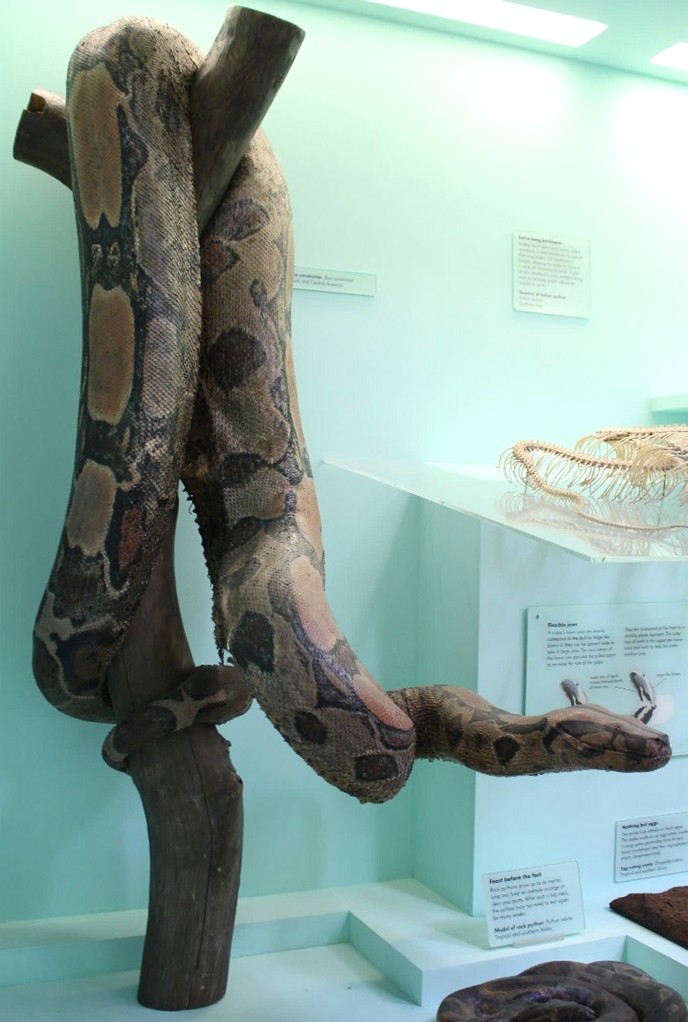
Boa Constrictor in Fishes, Amphibians and Reptiles Gallery at NHM ©The Trustees of the Natural History Museum

A Boa Constrictor on display in the Fishes, Amphibians and Reptiles Gallery at the Natural History Museum in London, UK was removed to undergo a considerable amount of remedial conservation treatment.

The taxidermy skin, dating from around the late 19th century, is mounted over a plaster form that was placed onto a wooden trunk. The skin exhibited severe deterioration with multiple splits in various areas located throughout the length of the specimen. The entire ventral seam had opened along with skin distortion and lifting around the splits without any stitched seam to hold it in situ. Most of the damage was at the ventral area of the specimen but some splits and distortion were visible whilst on display, along with material shed on to the case base.

Continue reading

Bryozoans on the Move: Trials and Challenges of Packing Collections.

Written by Abbie Herdman, Curator of Invertebrates (Non-Insects), Natural History Museum, London.

The Natural History Museum, London (NHM) is currently undertaking one of the biggest collections moves in history, around 38 million specimens total (with 28 million moving off site). A diverse range of collections are expected to move to the new site in Reading including fossils, wet, dry, taxidermy and osteological specimens. This blog will focus on some examples and challenges faced when preparing the bryozoan collections to move.

Bryozoans are an astounding yet little known phylum of predominantly colonial aquatic invertebrate animals, found in both freshwater and marine ecosystems. Known as the ‘moss animals’, for a long time, they were thought to be plants which still confounds the record of this group in aquatic collections due to their growth patterns encrusting on rocks, as seaweed-like and sometimes as gelatinous blobs. There are bryozoan reefs which support diverse marine species, they are recognised bioindicators in aquatic habitats and are ‘blue carbon’ stores (Porter, J, S. et al., 2020).

Continue reading

Chill Out: A Cautionary Note On The Use Of Aqueous Treatments On Taxidermy

Written by Lu Allington-Jones, Senior Conservator at the Natural History Museum, London.

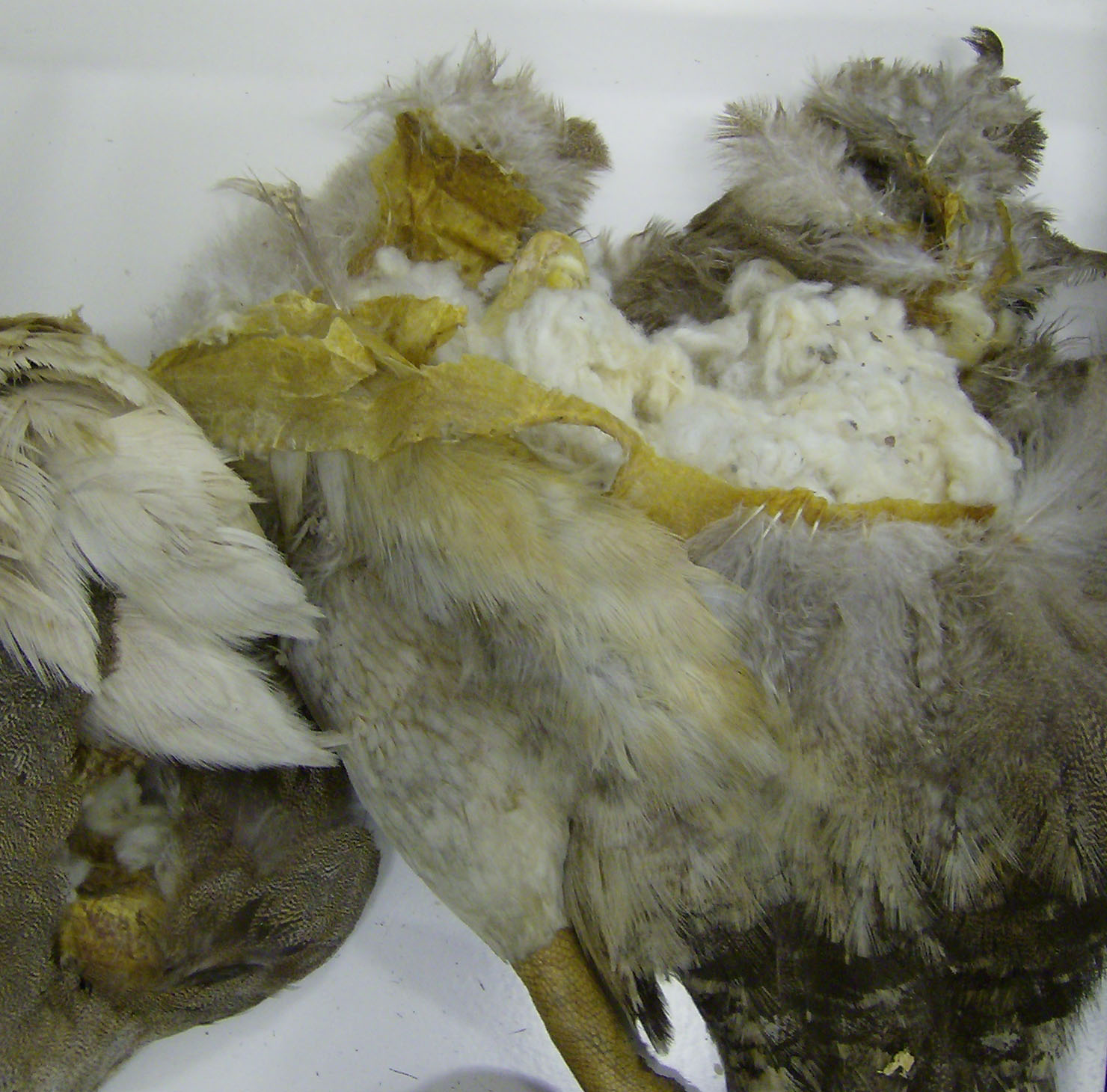
Whilst trying (not very successfully) to find a “cure” for fat burn (Figure 1), I made an unwelcome discovery: sometimes the shrinkage temperature of deteriorated skin is actually lower than room temperature. This means that the skin will irreversibly shrink as soon as any water-based treatments are applied.

Figure 1. Fat burn can cause skin to rip and specimens fall apart

Shrinkage temperature (Ts) is commonly used in leather conservation to determine the level of deterioration, and the effectiveness of treatments. Ts is the temperature at which 2 corian fibres immersed in water show simultaneous and continuous shrinkage activity. It shows the level of deterioration because it indicates destabilisation of collagen fibres. Ts of fresh skin is 65oC and in deteriorated leather this can be reduced to 30oC (Florian, 2006). Ts is measured by immersing samples of leather (or skin) in water and gradually increasing temperature until shrinkage activity is observed under a microscope (Larsen et al. 1996; Vest & Larsen, 1999). Continue reading

Nature Read in Black and White: An Update

Presented by Miranda Lowe, Natural History Museum and Subhadra Das, University College
London.

Abstract

There has been an enthusiastic uptake of ideas and practices around decolonising the natural history museum in the wake of the publication of our paper ‘Nature Read in Black and White: Decolonial Approaches to Natural History Collections’ in the NatSCA Journal in 2018. People have written blogs, there have been exhibitions relating to the topic and even the Daily Mail scare quoted cancel culture fears when they heard the Natural History Museum in London was reviewing the colonial histories of its collections. A highlight moment was when Sadiq Khan, the Mayor of London, complimented one of the co-authors of the
paper, saying he had read all sixteen pages and how it was accessible and easy to read. We are gladdened by the national and international impact of our words and research, and this has encouraged us to reflect on this success and raise some other related issues that we would like to share with you in this keynote presentation. In addition to listing recent successes within our own organisations and some plans for future work, we also plan to talk about two further topics about decolonising natural history museums. The first will consider the colonial roots and context of the environmentalist movement, while the second will examine the question of representation in the natural history museum workforce. We will consider the current state of the discourse around decolonising museums, and discuss what continues to be required in the interests of long-term, equitable change.

Continue reading

Giant Sequoia at the Natural History Museum

Written by Lu Allington-Jones, Senior Conservator & Chelsea McKibbin, Conservator, at the Natural History Museum, London.

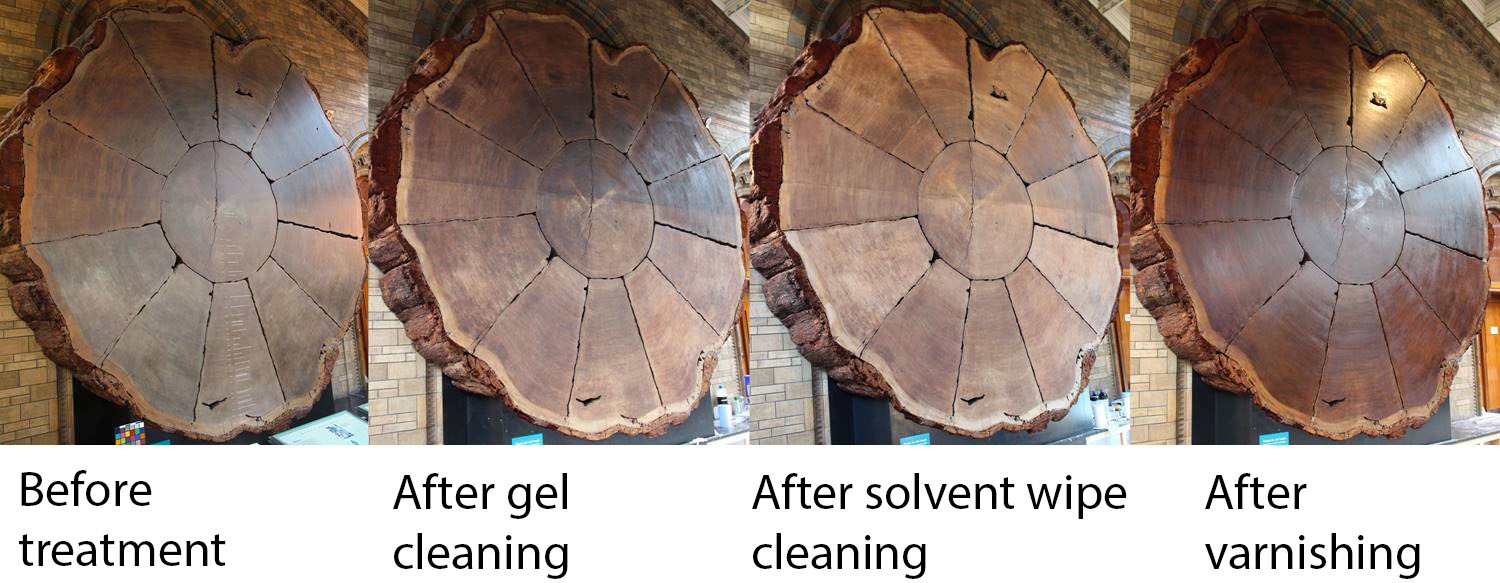
In 2016 a team undertook conservation of the slice of giant sequoia tree which is on display in Hintze Hall of the Natural History Museum in London. Following condition mapping, the treatment involved dry cleaning, removal of the old varnish with solvent gel and applying a fresh coat of varnish. A time-lapse video was taken of the whole process, which spanned 12 weeks, and can be viewed at the end of this post.

Figure 1. The stages of treatment

The Specimen

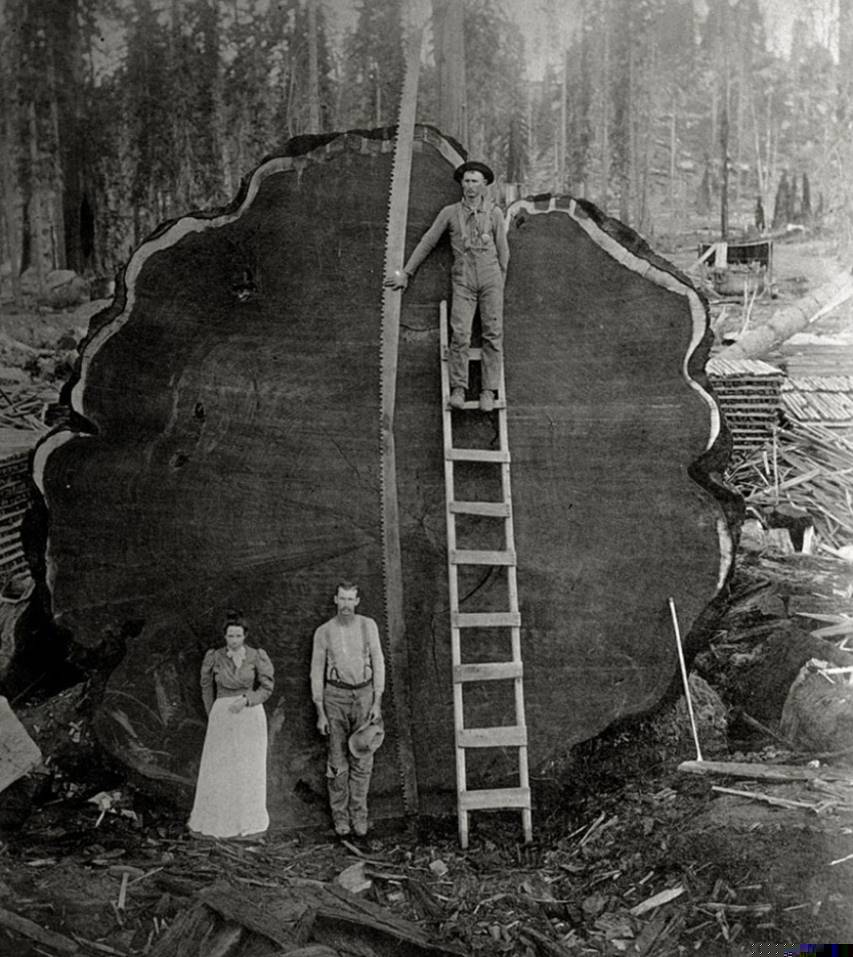
The giant sequoia (from Kings Canyon National Park, California, USA) was felled in 1891 at the age of 1,341 years. It had been 101 m tall and just over 5 m in diameter. Two sections were cut for display. The bottom and slightly larger one was sent to the AMNH while the top section was split into 12 pieces: one central disc and 11 radial segments to enable shipping to the UK. They arrived at the South Kensington site in April 1893.

Figure 2. The tree when it was felled

The giant sequoia section went on display the following year, in one of the bays of the central hall. It was moved in 1902 to stand against the wall dividing the north and central halls, and again in 1971 to its current location on the second-floor balcony.

Continue reading