Colonial Critters: Decolonising The Powell-Cotton Museum

Presented by Rachel Jennings, Powell-Cotton Museum.

Abstract

The Powell-Cotton Museum’s dioramas are visual spectacles that delight audiences, but they aren’t representations of ‘real life’. Starting in September 2020, we are undertaking a project called ‘Colonial Critters’, which will look critically at the context in which these displays were created. In this project we will delve into the history of the Museum and uncover the ‘hidden’ stories in our extensive archive,
including those of the communities with whom Percy Powell-Cotton worked across the African continent, in India, and in Kent to make this place. We will engage our staff and audiences in the process to find out what stories they would like the Museum to tell, giving the opportunity for some uncomfortable – but ultimately more rounded – histories to be displayed. The aim of decolonisation is not to re-write history, but to be more open and transparent about the origins of our collections.

This presentation will outline the Colonial Critters project, and discuss what decolonisation means to us at the Powell-Cotton Museum.

Continue reading

The Political Platypus And The Colonial Koala – How To Decolonise The Way We Talk About Australian Animals

Presented by Jack Ashby, University Museum of Zoology, Cambridge.

Abstract

Decolonisation is about breaking down systemic hierarchies, where European narratives have been considered superior to any others. In this talk, I will be asking whether this can be applied to the way we talk about Australian mammals.

My argument is that the ways in which museums and other sources represent Australian animals today are often fundamentally pejorative, and reflect an ongoing subconscious colonial bias. This attitude begins with the colonists and explorers of the 17th and 18th centuries, but remains detectable in the ways that Australian wildlife is interpreted today, in museums, TV programmes and in the popular zeitgeist. This may sound extreme, but I will be asking whether the zoological and socio-historical stories of marsupials, platypuses and echidnas may intertwine to have severe impact on global politics.

I will explore some common tropes for how Australia’s wildlife appears in our museums, and propose language and narratives to avoid perpetuating colonial narratives in museum interpretation.

Continue reading

Decolonise! Activations of Natural History Collections by International Contemporary Artists

Presented by Dr Bergit Arends, University of Bristol.

Abstract

Nowhere else is the encounter between Western science and the cultures of non-European peoples so evident than in the collections of European museums. These encounters are reflected in the collecting practices, the archiving and documenting, the conservation of objects and in the ordering systems through which these artefacts are interpreted. But in Western museums we need to learn how to recognise and how to acknowledge these encounters.

Museum collections are sources of both cultural and environmental knowledge (Thomas, 2018), particularly natural science collections. Moreover, taxonomic systems of the past, particularly in the natural sciences, are now considered to be one of the most important resources for understanding the interconnections of science and culture (Browne, 1989). How can historic collections be mobilised to address contemporary issues? How can the natural sciences be understood as cultural practice? How can the violence of past
scientific practices be acknowledged in natural history museums?

Continue reading

Mo Koundje: How Gorilla Histories Can Help Decolonise Our Collections

Presented by Rebecca Machin, Leeds Museums and Galleries.

Abstract

Mo Koundje (‘Mok’) is a Western Lowland Gorilla in the collections of Leeds Museums and Galleries (LMG). His taxidermied skin is displayed at Leeds City Museum, while his skeleton is in the store at Leeds Discovery Centre. At present, his remains are used as an example of ‘gorilla’ in the Life on Earth gallery, but they have the potential to tell us so much more. Using archives from the Zoological Society of London, the Natural History Museum, and the Archives Nationales d’Outre Mer, as well as French and British press archives, I have found out more about Mok’s life. His story touches on domestic life in French colonies, the interaction between colonists and colonised communities, and the illegal hunting and trade in gorillas, which continues today. The remains of animals from once colonised countries have the potential to reveal stories not only of their own experiences, but of the people whose lives were affected by colonisation. By entering colonial homes, gorillas enable us to look at racial and gendered hierarchies imposed by European colonisers from a new perspective. We can, and should, use these stories to engage our audiences with a range of political and environmental issues still relevant today.

This presentation contains distressing images.

Continue reading

Project Update: Accessing Staffordshire Geology

Written by Glenn Roadley, Curator (Natural Science), The Potteries Museum & Art Gallery.

About this time last year, The Potteries Museum & Art Gallery was successful in a bid to the Arts Council England Designation Development Fund, securing funding of £72,500 to catalogue and display its nationally significant geology collections. The Designation Development Fund provides funding for projects which ensures long-term care of Designated collections and maximises their public value.

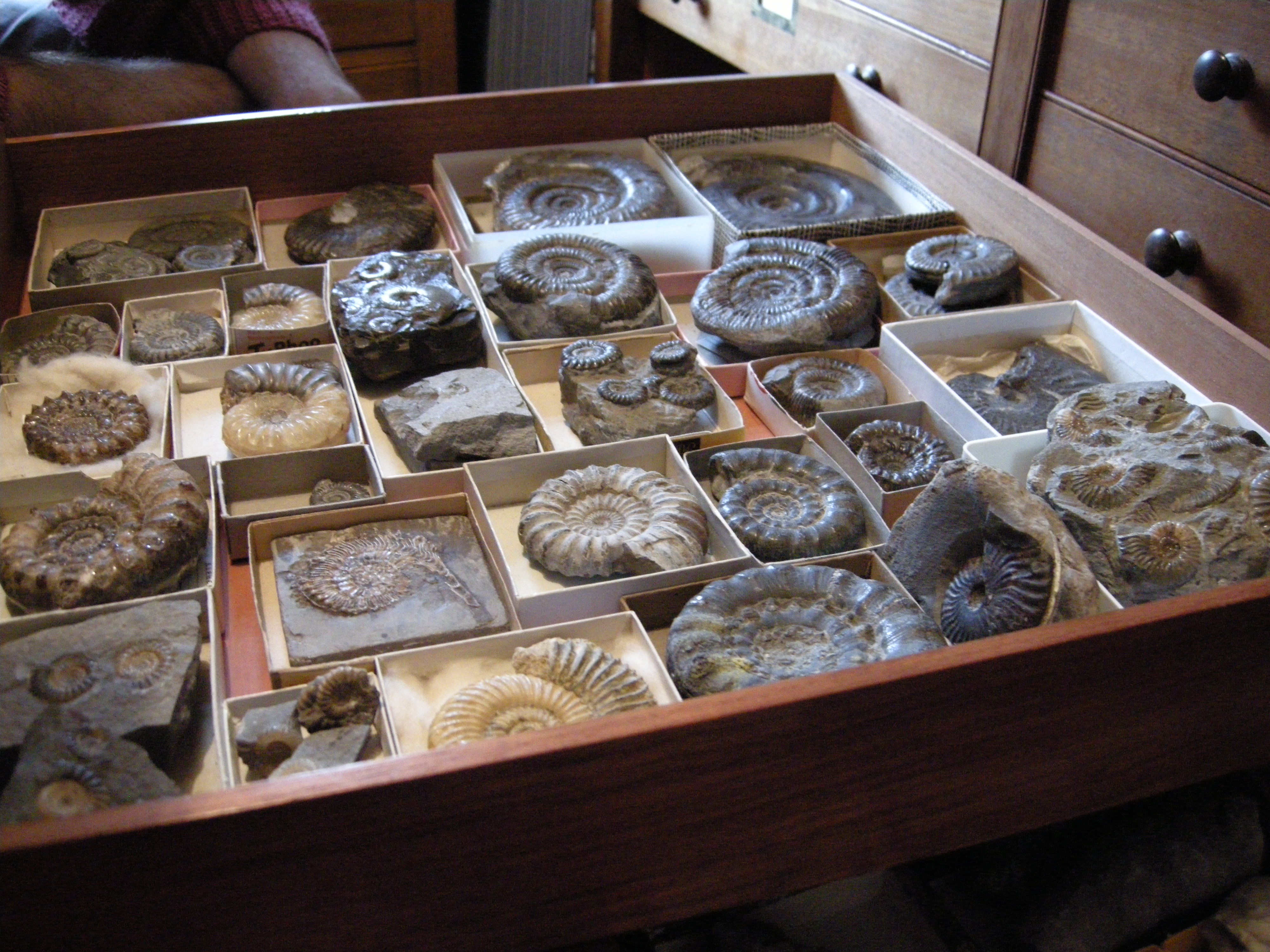
Ammonites in Ted’s collection before it was transferred to the Museum. © The Potteries Museum & Art Gallery

In early March 2020, just days before the museum closed and the country sank into lockdown due to Covid-19, I contributed a summary of the project to the Geological Curators’ Group blog (you can read it here). It really does show how quickly everything changed – at the time of writing the original blog, we were expecting the project to kick off in June 2020, beginning with the recruitment of an Assistant Curator to carry out the documentation of geological specimens bequeathed to the museum by Ted Watkin. This collection, comprised of about 2,000 fossils mostly originating from around Staffordshire, is to form the basis of the project and the new displays, highlighting the history and importance of the Carboniferous coal fields under Stoke-on-Trent.

Continue reading