What is a museum curator made of? Slugs and snails and puppy dog tails, and then some…

We’ve all been asked it – what do you actually do as a zoology curator…

Some years ago, in a post I can no longer find, @morethanadodo responded with a long list that ranged from bar-tender to expert on name-your- taxon. Oh, how we laughed… In my long service at the Hunterian in Glasgow I have had the privilege of curating all sorts of zoology material – today I am a coral expert, tomorrow I’m puzzling over pickling fish correctly…

However, over the years, in addition to curating the zoology collection, my remit expanded to include the anatomy and pathology collections and most recently a collection of materia medica. ‘Wot dat?’ you may well ask. Well, essentially it’s an apothecary/pharmacology collection and could easily be the original ‘animal, vegetable, mineral’ quiz. In University museums, unsurprisingly and quite typically you are offered and acquire collections that have been made by former or existing academic staff in the course of their research and teaching. Given the collections are made for those
purposes, they usually require processing to get up to museum standards.

The collection in question is that made by Professor Ralph Stockman, (1861-1946), Regius Professor of Materia Medica 1897 – 1937 at the University of Glasgow. Stockman, born in Leith and educated at Edinburgh University, was a medical doctor who worked as an influential and successful clinician and an academic scientist in what was then called medical chemistry.

Ralph Stockman, University of Glasgow UGSP00223

Ralph Stockman (image from University of Glasgow, UGSP00223)

Continue reading →

NatSCA Digital Digest – August

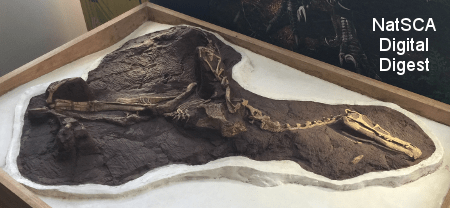
ndd-chinasaurs2

What Should I Read?

I encourage you to read Darren Naish‘s recent post on the “Mountain Beaver”, an unusual rodent which is not a member of the beaver family, nor is it mountain-dwelling. The article also goes into other members of the aplodontoidea so, if you like horned extinct cousins of the squirrel (of course you do), it’s well worth a read.

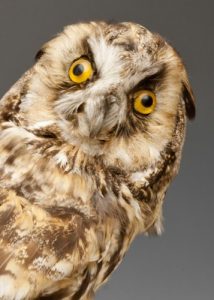
Why do all the beautiful things crack? Paintings by old masters, antique furniture, … and historical taxidermy. The Grant Museum has been running a project where they take their important taxidermy specimens in for essential conservation work and place stuffed toys on display in their place. A chance to see Jack Ashby‘s favourite teddy? You’d be crazy not to. For an example of the beautiful restoration work carried out by Lucie Mascord, check out this piece on the Owl Formerly Known as Googly-eyed.

What Should I Do?

What are you doing on the 22nd September? Keep it free if you can because we have a great workshop event coming up called Bringing the Dead to Life: How to Display Museum Natural Science. Among other things, you will hear testimonies from the Lapworth Museum, who were recently shortlisted for Museum of the Year.

Continue reading →

The formerly googly-eyed owl

The long-eared owl: BEFORE. LDUCZ-Y1604

In a move unprecedented in Specimen of the Week history, I have chosen to blogify the same specimen as I selected in my last Specimen of the Week. The reason is that in many ways it is not the same specimen as it was six weeks ago: it has undergone a profound transformation. We used to call this specimen “the googly-eyed owl”, due to its comedy wonky eyes, but it is googly-eyed no longer. This week’s Specimen of the Week is…

Continue reading →

Stirring the hornet’s nest – are natural science collections even legal?

I was wrapping up a particularly difficult male peacock with a helper a few weeks ago and we were discussing natural science collections. “Do you think one day they’ll just be made illegal?” she asked, straight-faced and sincere. I was miffed – this was someone saying to a natural science curator that really, it shouldn’t be allowed. I sighed and spent the rest of the wrapping session (porcupine was also tricky) explaining how wonderful – and legal – natural science collections are.

Continue reading →

Meet the NatSCA Committee – Lucie Mascord

Meet the NatSCA Committee: Ordinary Member

Name: Lucie Mascord

What is your role on the NatSCA Committee? I am the new Conservation Representative

Job title and institution: Conservator of Natural History, Lancashire Conservation Studios

Twitter username: @LuceGraham

Tell us about your day job: I am a specialist natural history conservator, working for a museums service and my own business. In both, I provide conservation services to the heritage and private sector. This is mainly in the North West – everywhere from Cumbria or to Cheshire, but my work has taken me all over the country which means I get to visit lots of new collections.

My role covers all scope of natural history collections but I specialise in bone, fluid preserved collections and taxidermy. My work is incredibly varied; as well as a conservator I am a preparator – preparing bone, skins, taxidermy and fluid preserved material. I can spend 200 hours plus conserving a single specimen, or carry out a whole collection survey in 72 hours! I also provide training to institutions in natural history collections care.


Visiting the Galerie de Paléontologie et d’anatomie comparée

Natural science collections are very popular with visitors. Why do you think this is?

Overall, I think it is about innate curiosity – the natural world is deeply fascinating and diverse. The reason natural history collections are popular with children is they are still in that stage of uninhibited curiosity.

Continue reading →