The Missing Lynx: The Past and Future of Britain’s Lost Mammals

Written by Jack Ashby, Manager of the University Museum of Zoology, Cambridge, and author of Animal Kingdom: A Natural History in 100 Objects.
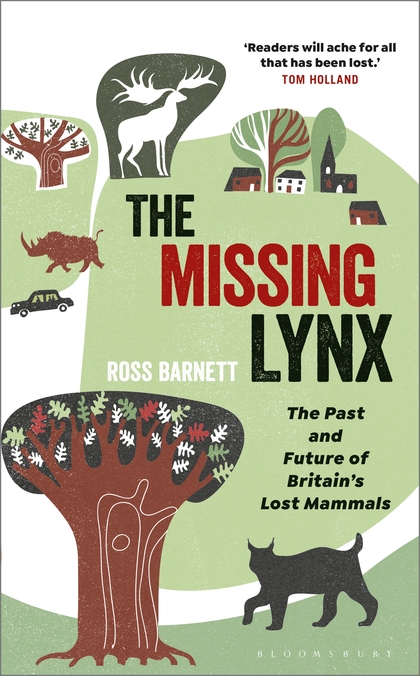
A good title goes a long way, and based on that alone I was excited to receive a review copy of Ross Barnett’s new book through the post. I knew of Ross from Twitter – and I can heartily recommend following him for a whole host of natural history-related wonders, particularly around climate change, ancient mammal DNA and palaeontology. As a result, I was slightly surprised that he had written a book that I assumed – from the clever title – was about reintroducing the lynx to Britain.

That is, in fact, not what the book is about. Instead, it takes us species-by-species, chapter-by-chapter, through the incredible range of beasts that have disappeared from the British Isles in recent millennia (I should have paid more attention to the subtitle). We learn about the woolly mammoths and rhinos, the huge cave bears and their slightly smaller relatives, cave lions and cave hyenas, sabretooth cats, massive species of cattle and deer, as well as wolves, beavers and, yes, lynx. All of these stories are told in the voice of a person clearly fascinated and excited by the things he has been studying all his life, and with a dry sense of humour.

Continue reading

Invertebrates In Vitro

Written by Paolo Viscardi, Curator of Zoology, National Museum of Ireland – Natural History

I’m not sure why, but people really seem to love Blaschka models.

Beccaria tricolor [sic] Nr.373 in Blaschka catalogue. Specimen NMINH:1886.810.1 at the National Museum of Ireland.

Beccaria tricolor [sic], Nr.373 in Blaschka catalogue. Specimen NMINH:1886.810.1 at the National Museum of Ireland. Image by Paolo Viscardi, 2018

They are the subject of a surprisingly large number of enquiries at the National Museum of Ireland — Natural History (AKA the Dead Zoo), where I look after the zoology collections.

If you’ve not heard of the Blaschkas, they were a father and son company of lampworkers based in Dresden, who supplied museums and universities around the world with glass models for teaching and display. Between 1864 and 1890 they made mail-order models of invertebrates (alongside glass eyes and medical equipment), then from 1890 until 1936 they worked exclusively for Harvard University on the Ware collection of glass flowers.

glass_flowers_gift-bouquet

Bouquet of Blaschka glass flowers made in 1889, gifted to Elizabeth C. and Mary L. Ware. Now part of the Harvard Glass Flowers exhibit. Image by Bard Cadarn, 2018.

At the Dead Zoo we have a particularly large and comprehensive collection of the invertebrates, with around 590 models acquired in lots between 1874 and 1888. I say ‘around’, because many of the models are made up of multiple parts, with different developmental stages, enlargements and details that are classed as elements of the same model.

Continue reading

Stories from Pressed Plant Books in the Botany Collections

Written by Katherine Slade, Curator: Botany (Lower Plants), Amgueddfa Cymru – National Museum Wales (AC-NMW)

This article was first published as a blog for AC-NMW, 17 May 2019.

Within Amgueddfa Cymru’s botany collections are books of dried plant specimens created by scientists and enthusiasts. Each specimen has been carefully dried and pressed, before being added to the books, sometimes with handwritten or printed notes alongside. The books are of enormous importance both in terms of modern scientific research into climate change and biodiversity, and as a way to see first hand the history of botanical exploration.

You can now look through a catalogue of the 36 books that contain non-flowering plants, fungi, lichens and seaweeds. You can read about a few of the stories surrounding these books below. For more detailed information about each book, please visit the website.

These books show the changes in how we collect, classify and name plants over two centuries from 1800 to present day. An old volume which probably dates from the 19th century entitled “New Zealand Mosses”, contains more than just mosses. Lichens, algae and even some pressed hydrozoans (tiny marine animals) have been included by the unknown collector who chose to group these superficially similar ‘moss-like’ specimens together. This donation entered the Museum’s collections after its Royal Charter was received and before work had begun on the present Cathays Park building.

Continue reading

NatSCA Digital Digest – August

Compiled by Glenn Roadley, Curator (Natural Science), The Potteries Museum & Art Gallery.

Welcome to the August edition of NatSCA Digital Digest!

What Should I Read?

We’ve got three great NatSCA blogs to read this month. Donna Young, Herbarium Curator at World Museum, Liverpool, writes of her quest to map and document botanical models manufactured by the Brendel Company of Berlin, now found in collections across the world. Be sure to fill in the survey if you have any in your institution.

A blog by Jack Ashby, Manager of the University Museum of Zoology, Cambridge, tells us about the aims and processes behind a new art exhibition at the museum, ‘Evolution as Inspiration’.

Christine Taylor, Curator of Natural History, Portsmouth Museums, writes about the HLF (or NHLF) funded project to share and raise the profile of the city’s natural history collections, ‘Wild about Portsmouth’.

The Museums Association has published articles covering a range of political issues affecting the sector. Nicky Morgan has become the latest Culture Secretary through the rotating door of cabinet members, and further cuts to local authorities have put museums in Bradford under threat of redundancies and closure. The sector-wide discussions surrounding the decolonisation of collections, human rights and corporate sponsorship continue as Ahdaf Soueif resigns from the British Museum’s board of trustees, citing the museums lack of a ‘clear ethical position’ on such issues.

Continue reading

Brendel Plant Model Survey

Written by Donna Young, Curator of Herbarium, World Museum, National Museums Liverpool

Inspired by the project led by the Corning Museum of Glass, which looked at holdings of Blaschka models, I am embarking on a project to map and document collections of Brendel botanical models worldwide.

The objective of this project is not only to provide a useful resource to be used in the curation of anatomical models, but to document their past and present use – promoting and bringing awareness of these collections to new audiences.

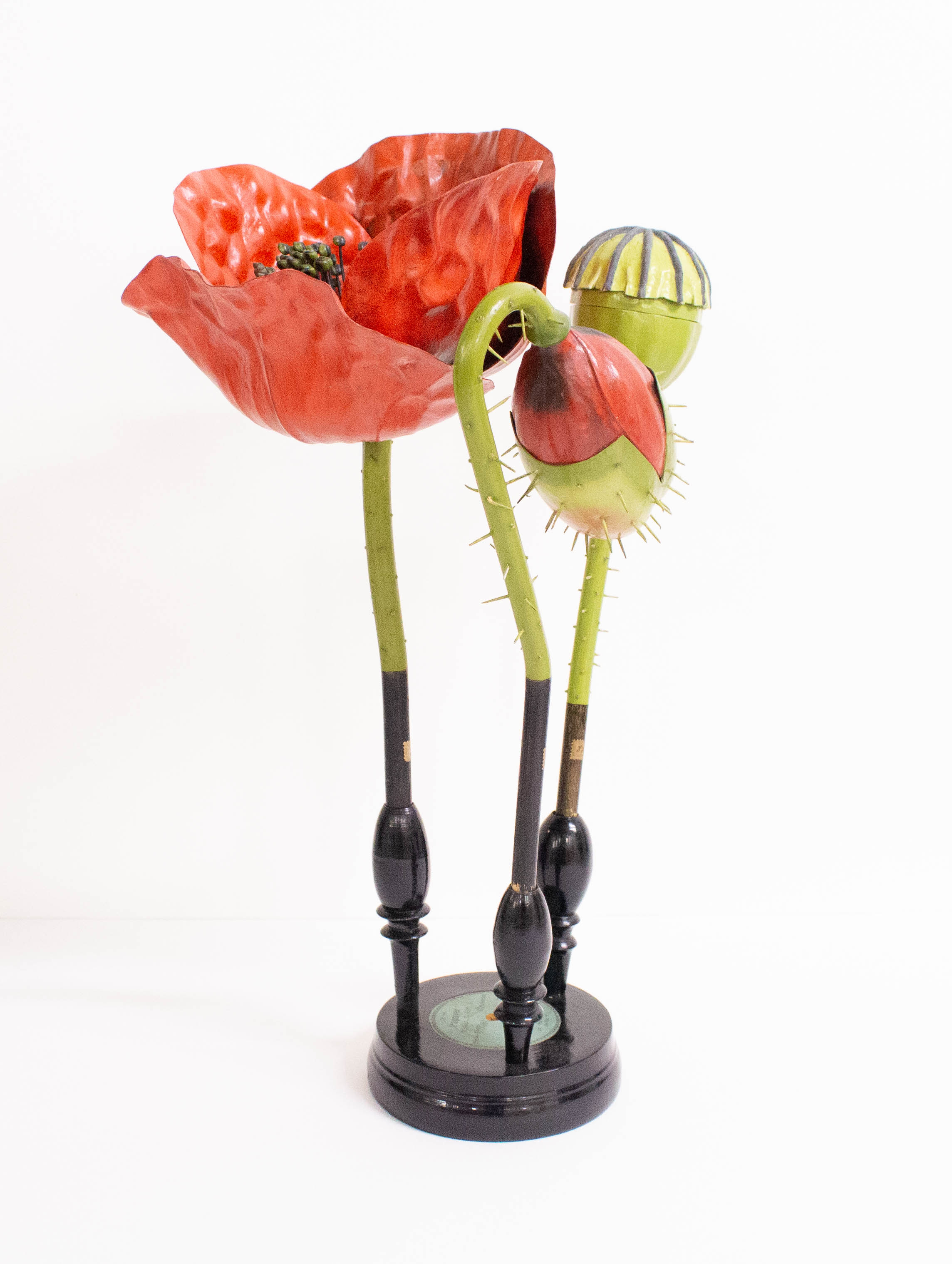
Brendel model Papaver rhoeas
© National Museums Liverpool, World Museum

Anatomical Models

The nineteenth century was the golden age of scientific discovery, and as the century progressed, the teaching of science in schools, academies and museums evolved to reach a new mass public audience. Science was no longer the exclusive preserve of an elite few.

Changing teaching techniques promoted this transformation and pedagogical inquiry was seen as a constructive and involved way of learning. The written and spoken word was supported by the use of visually instructive wall charts and classroom demonstrations. The introduction of interactive teaching models encouraged audiences to understand nature using new and original perspectives.

Botanical models were used to illustrate and demonstrate plant anatomy. Unlike living material, their use was not restricted by seasonal availability and they were ideal for demonstrating small or ephemeral details which are difficult to preserve.

In 1827 Louis Auzoux established his workshop in France, manufacturing human and veterinary anatomical models from papier-mâché. The company also produced botanical models, which were widely distributed to universities and schools in France, particularly to support the expansion in teaching agricultural science.

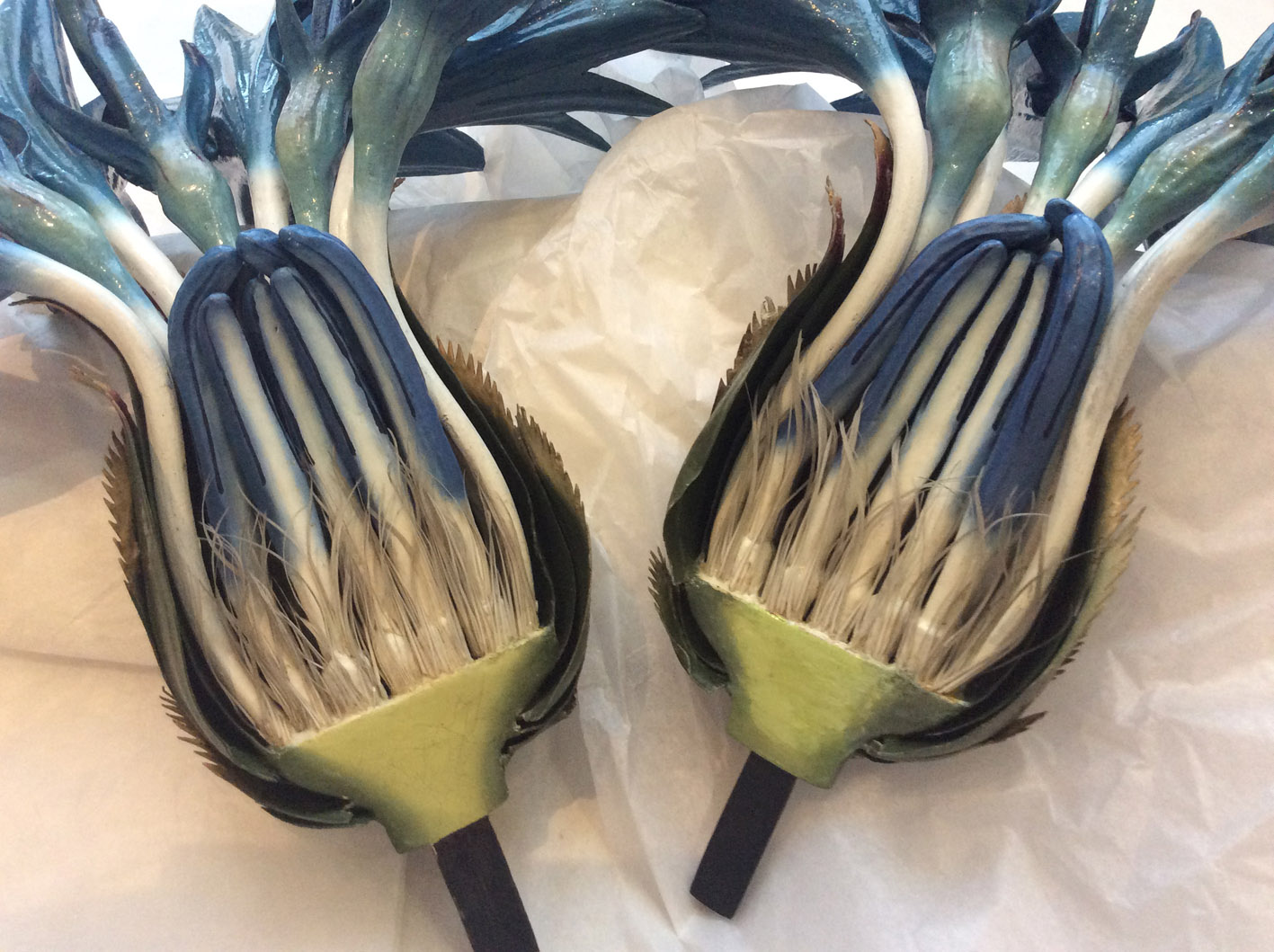
Brendel model Centaurea cyanus ‘dissected’
© National Museums Liverpool, World Museum

Continue reading