NatSCA Digital Digest – October

Compiled by Lily Nadine Wilkes. NatSCA Volunteer.

Welcome to the October edition of NatSCA Digital Digest.What can I read?

There are some wonderful posts on our blog. Patricia Francis, the natural history curator of Gallery Oldham, wrote Natural Connections an investigation of the person, place and specimens of a painting that reveals a hidden Oldham story. There is also Andrew Kitchener’s post on CryoArks, the UK’s first zoological biobank.

As we are in Black History Month, there is a lovely collection of research from the Natural History Museum into how the museums history and collections are connected to the transatlantic slave trade in Slavery and the Natural World.

Continue reading

CryoArks – Discover The UK’s First Zoological Biobank

Written by Andrew Kitchener, Principal Curator of Vertebrates, National Museums Scotland.

Many of us have probably been approached by eager PhD students and other researchers who want to snip a bit off those specimens or drill a few holes in others. As curators we start to feel somewhat uncomfortable about seeing our precious collections sliced and diced, and yet we are also keen to discover more about the genetic content of our specimens for their own sake. This is partly because collectively we can contribute to studies that benefit wild populations of species, including the conservation biology of many endangered species and the possibility of rewilding extirpated species. You may also have a chest freezer bursting with grip-seal bags or plastic tubes filled with tissue samples collected from specimens you have acquired, but you’ve no idea what to do with them, but you know they will be useful one day. Or maybe you have a freezer full of specimens you want to get rid of. CryoArks is a new initiative that just might help you to solve all these problems.

Sorting through lemur muscle samples at National Museums Scotland © National Museums Scotland

CryoArks is a BBSRC-funded project led by Professor Mike Bruford at Cardiff University, which has established the UK’s first comprehensive zoological biobank for research and conservation. CryoArks is a consortium of museums, zoos, academic institutions and biobanks, which is working together to establish common standards and working practices to store tissue and DNA samples and make them available on a common web portal, so that researchers and conservation biologists will be able to find out what is available for their research. This will help cut down on the sampling of our permanent collections by giving researchers something else to sink their scalpels into. CryoArks has two main sample storage hubs – at the Natural History Museum in London and at National Museums Scotland in Edinburgh – that currently house more than 65,000 samples, but we have room for almost a quarter of a million. The Royal Zoological Society of Scotland is also a joint CryoArks and European Association of Zoos and Aquaria biobank storage hub, bringing the zoo and non-zoo biobank communities together.

Continue reading

Natural Connections

This is a modified version of two articles originally published on the Gallery Oldham webpage by Patricia Francis, Natural History Curator, Gallery Oldham. May & June 2020.

Fred Stubbs shown in The Naturalist by George Henry Wimpenny

This painting reveals a hidden Oldham story. It dates from the 1920s and has always been a great favourite with our visitors. Several years ago it inspired me to look more deeply and investigate, the person, the place and the specimens.

The person is Fredrick J. Stubbs

Fred was born in Liverpool in 1878 and moved with his family to Oldham where he became apprenticed to an upholsterer. He joined the Oldham Microscopical and Natural History Society, his first love being birds. Fred volunteered at the Oldham Municipal Library, Art Gallery and Museum which was long connected with the Natural History Society. When a vacancy arose at Stepney Museum’s Nature Study Centre, he was successful in getting the job and in 1909 left Oldham for London. Completing the booklet, ‘The Birds of Oldham’ in 1910.

Returning to Oldham in April 1919 he became the Deputy Librarian and Curator at the Library and Museum. He became president of the Yorkshire Natural History Society; was a member of the Beautiful Oldham Society and help found the Oldham Society of Artists. He worked at the Library and Museum until his death caused by pneumonia in 1932.

Continue reading

NatSCA Digital Digest – September

Compiled by Jan Freedman, Curator of Natural History, The Box, Plymouth.

Welcome to the September edition of NatSCA Digital Digest.

What can I read?

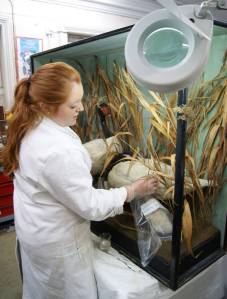
There’s a few lovely posts on our blog. Our chair, Isla Gladstone, encourages our members to have a look at our survey, for the committee to learn more about your needs from NatSCA. Bethany Palumbo takes us through the conservation of a mummy sarcophagus at the Bournemouth Natural Science Society.

There’s some nice reading on our friend’s, The Geological Curator blog. An interesting post about the discovery of a dinosaur bone on the Isle of Wight, Vectaerovenator inopinatus.

There’s a new book recently out, which is the most up to date look at our closest extinct relatives, the Neanderthals. Kindred: Neanderthal Life, Love, Death and Art is available now.

Continue reading

NatSCA User Survey 2020 – Help us Target Our Future Support for Natural Science Collections and Community

Written by Isla Gladstone, Chair of NatSCA and Senior Curator for Natural Science, Bristol Museums.

I stepped into the role of Chair for NatSCA in May this year, and it’s been a challenging but important time to consider our future activity.

The coronavirus pandemic has brought real immediate impacts to NatSCA’s work. As for many people, NatSCA’s trustees have experienced individual challenges such as furlough or juggling work and childcare. We have also had to adapt our working practice – initially focusing on how to work together effectively as a virtual committee, and moving our event content online. (Announcements on virtual events to follow soon…)

NatSCA’s trustees have also been assessing potential longer-term risks to the charity in light of the pandemic, and how to make sure our activities remain relevant and sustainable. It’s a vital time for natural science collections, with their huge scope to contribute to urgent issues such as climate and ecological crisis and decolonisation. We also have potential challenges ahead, such as reduced budgets for professional development or further loss of subject specialist posts. The shift of many in our sector to virtual working offers NatSCA new opportunities. Most importantly, we are committed to understanding the changing needs of our communities and seeking your ideas to help inform our next steps.

Continue reading